
A lot of people in diverse traditions talk about awakening, and in the context of this course, I thought it would be useful to discuss that, what that practically means, what it objectively means, and how do we cultivate it, because all religions teach the need to awaken.
Often in our modern lexicon we have inadequate definitions, and we lack an understanding of the genuine scriptures that teach how to develop our full potential. The purpose of this whole course is to discover and cultivate a deeper relationship with divinity. We have talked previously that divinity is within us. We call it the Being―many names―different religions. The reality is a state of consciousness that is very pure and very sacred. We can develop a relationship with that, but we need to know how. Unfortunately, throughout time with religious traditions, they codify and become corrupt. The essential message, like an elementary school telephone game, gets lost. Fortunately, we have had people throughout time and history who came to teach the way to know our authentic self. We are trying to synthesize many of the aspects that they taught, especially in more secular language, because the religious terms and traditions all point to the same reality. Our Focus
Our focus today is precisely to explain the nature of spiritual awakening, what it means.
We are also going to define and outline some of the parameters and principles that we can use to understand what awakening is and how to practically achieve it for awakening our full potential. We will provide some practices for being able to discriminate, and understand, differentiate between reality and illusion, because unfortunately if you have gone on the internet, we have seen lots of teachings and knowledge that contradict and are in antagonistic battle with each other. Unfortunately that demonstrates to us that if there is no consensus, then there must be falsity, so it is good to question that. We base our understanding on our own experience. What do we verify for ourselves? We will also talk about the good and the bad about what people call awakening, what that even means. 
Defining Spiritual Awakening
Some people refer to this term as a kind of inspiration. Suddenly we feel a yearning, a longing to know something spiritual. Maybe we had an experience when we were younger, like a dream, and we feel a yearning to understand what these types of states are. Or we have a sudden insight into the nature of reality that shocks us, and we want to know what that is, and so we look for religions and teachers to teach us what these insights are.
This can be based on an experience of heightened awareness. Maybe, perhaps, you are dreaming, and your consciousness expands and then you see clearly what is there, not merely a projection of our own desires, our own mind. We see a reality that is beyond physical materiality and so we want to know, “What is this?” Maybe our attention becomes clarified, and we have a sudden crispness of directed focus, and we see life in a new way. We realize that our material life in itself can be very superficial. There is more to reality than what is taught in schools or mainstream traditions. The problem is this. We may have such experiences, but we do not know how to initiate them. We may have an experience that comes to us seemingly without our will and we do not know where it came from, how it emerged, what it is, and how to repeat it. That is the challenge. How do we willingly initiate this type of experience, whether it is mystical, religious, spiritual, heightened awareness? We need tools, effective tools, tools that we can apply in our life and see the results. Some people may have a car accident where they are driving, and suddenly, they get t-boned. I remember even one instructor mentioned how in that moment, even though that instant lasted only a split second, he stated that suddenly his awareness blew up―expanded. As his car was spinning, he saw the shattered glass tinkling like rain around the circumference of his vehicle. He saw a woman walking a carriage of her baby down the street. He saw his own body, saw the vehicle, saw the other person with intensified awareness and lucidity, and suddenly, when the car parked or stopped spinning, he realized, all that vanished, and he was suddenly in shock by what happened. It did not take more than a fraction of a moment, and yet it felt like an eternity. That is something that can happen to us by accident, but that type of intensified experience of conscious awareness can be initiated but without the shock, without the trauma involved of not getting into situations like that. We can know how to enter heightened states in a balanced way, to develop that capacity to see, to perceive, and to understand. A lot of people in spiritual movements may have an experience, but it is temporary. It does not last, but then they become confused in believing that this is a permanent marker of some type of enlightenment, ignoring that it was like a vacation. We came there, maybe getting a visa, traveling to another country for three months, but we are not a citizen there. To be a citizen or an inhabitant of that kind of state is a work of a master, a fully developed human being. It is something we can aspire to. We may visit once and a while, but do we really have permanent establishment of a spiritual state of being that is divine? That is the question. This process does not happen in one moment. There is a mistaken belief that usually by having that kind of experience, suddenly one is enlightened. Some people have near death experiences, right? They see life beyond the body, and they become inspired, but they do not realize that the perfect cultivation of that state is something gradual. It takes time. The soul, the consciousness, takes time to develop. It is like a seed that can grow into a tree. A tree does not emerge out of nowhere. It takes a long progression, gentle, delicate, profound, progressive, even though those experiences can be very shocking, but really to fully perfect that reality is slow. As Milarepa from the Buddhist tradition stated, “Hasten slowly. Do not rush in.” It is also a process that is grounded in, cultivated by, and expressed from conscious ethics. It is a state of being that is very kind and selfless and compassionate. It is based upon a type of discipline that is not a stagnant, stale moral code, something to believe in. It is a way of being. Those ethics are the conscience of a master, beings like Jesus or Buddha, Moses, Krishna, the prophets who exemplified in their life how to navigate the messiness of morality and confusion. They knew how to discriminate, to see, and to understand, and to act with wisdom. That is the true self we seek to cultivate, the wisdom of navigating life with intelligence and patience, with wisdom. That process is not divorced from ethics, because some people may have an experience and suddenly, they feel inspired to do something wrong, and this has happened to many people. They commit crimes because they had a vision that they confuse with reality, when it was just the illusion of their own mind, and therefore, they make terrible mistakes. There are many crimes in spiritual movements where people have a vision of something and then they go around blaming other people, causing division. Unfortunately if we are asleep and not paying attention to our own conscience, we can get sucked in, and that is what happens with any movement. There is politics. People are fighting not because they understand what is going on in themselves, but because they think they see reality, but they do not. That is the danger. The patient method, the way that you sift through that, states of awakening, is to meditate, and to be patient and do not judge anybody. Judge ourselves, because we could be wrong, and that is a type of ethical lifestyle. It is a way of life which really is inspired by divinity and also by our own works. Those types of experiences like in dreams or meditation that you may have can come from divinity. They are gifts, but we also have to establish the proper causes and conditions by which we can receive that. Sometimes when we need real help. Suddenly we get an insight, even if we are in a moment of committing a crime. There are cases of people who are about to commit murder and suddenly, they knew in the moment how horrifying that truth or moment was, and then they stop. It happened to Paul of Tarsus, being struck by lightning, the lightning of insight on the road to Damascus. When the proper conditions and causes are right, we can receive more knowledge, experiences like that, and it takes a type of work. If the soil is not fertile, the seed can not grow. We need to establish the right environment in our spiritual practice, in our lifestyle, so we cultivate that which is best in us. This state of Being, what people call spiritual awakening, is inspired and perfected through independent work. It does not require allegiance to a group, adherence or membership to a society. It is independent. Groups are good to learn about this type of knowledge and to learn about practices that we can use to cultivate a relationship with divinity, but that work is all on us. Nobody can do it for you. It is all independent. There is value in groups, but some people believe that conforming to a spiritual community, that somehow, that is going to save them. It is good to belong and have community, but it is not everything. In fact, communities are much stronger spiritually when the individual practitioners are very effective. That way when people bring in their understandings and insights and energy to a community, people feel it. It resonates. It happens. 
What Spiritual Awakening is Not
Now we will also talk about what spiritual awakening is not. I touched on a few of these things. Some people have an experience and then they feel that they can not connect or associate with people in life. They might feel like because they have this new insight of the world in a sense, they feel disassociated from reality, from people, from communities.
They might have a problem or greater struggle in their material life, in their jobs, with their families, with their friends, or even in their marriage. People feel that because they have had some type of experience, they now have conflict. It is a weird paradox. How do spiritual experiences create conflict? While these types of insights are very inspiring and suddenly, we feel shocked by having a spiritual experience, but then, what do we do with it? How do we translate that into life? Are we going to use that as an excuse to feed our ego? Egotism? Desires? Or do we learn to use those insights with compassion? This relates to the, as I was saying, the paradox of these types of experiences, because in many cases they may feel instantaneous, although they take time to process and develop. They often are of a cataclysmic nature. I am sure we have all heard people where they had an experience, and they want to announce it to the whole world, right? Because it is so shocking and alarming. It becomes a problem when, what we talked about previously, our personality and our mind get in the way. We talked about personality: our name, our language, our culture, the mask we wear in life, our identity, so to speak, in the material sense, how we interface with people. Our mind, ego, our anger, our pride, our self in the egotistical sense, our passions, our lusts, our fears―these often get in the way. Your soul can have a very genuine experience, the consciousness or the Essence that is free of conditions, the part of us that is pure and has the potential to show us reality, the soul. But unless it is awakened, it can not manage any of this. Sometimes an experience will come to you, to your soul, that is very sacred. You are shocked. Then the mind, the personality can mistranslate, and that is where problems in spiritual groups emerge, because while the vision may be real, the experience itself may be filtered like a light through a prism. Then we misinterpret things. That is a danger too. That is in a sense not what spiritual awakening is, because it does not produce a mental, emotional, or physical disequilibrium. It does not cause mental illness, although people often associate mental illness with a spiritual experience because they do not see the difference between the two, or conflate one with the other. If one’s state of mind is more disoriented, anxious, confused, delusional, these are not spiritual. In fact, by definition spirit means divinity. It means God, the Being, the divine, that which never mixes with any impurity in our psyche. It is true that these psychological states can be a form of awakening, but they are not spiritual. It is the opposite. We will talk about that. 
Spiritual awakening is also not about attachment. The desire for, “I want to have these experiences.” It is a natural longing to want to study dream yoga, or as we talk a lot about in lectures like this image of the Jewish tradition, the Tree of Life, this map of the spiritual universe, all of its different levels of nature like we go to when we dream. It is beautiful and noble to want to study and experience that, but not with attachment, not with desire, not with craving like, “I want this,” to feed the mind. It is a different thing.
It is better to be humble and to let those experiences come to us without us grasping at them. We can still practice and strive and do our part, but it is like brushing your teeth. You just do it because you need to. In the same way, the benefits come of their accord. As I was saying, we can mistranslate these genuine visions, but as our personality and our ego get in the way, this can result in a lot of complexes for people, psychologically speaking. The idea that after having a spiritual awakening, somehow one is a god, and there are people who really believe that they are masters because they had one or two certain experiences. Their personality and their ego get very fat, heavy, and that is not what we want in the long term, especially. It may feel gratifying, but it creates conflict, manipulation, and control in the end. Spiritual awakening is also not dependency on other people. This is something very subtle to realize. We can think that we are spiritual people, and yet our sense of a self depends on what others think of us. Also there are people who, because they are not cultivating their own conscious self, their own spiritual energy on their own, and because they lack energy, they steal it from others. In a sense we were talking about that in the first lecture. We talked about the ego. The ego is like a vampire. That is where the myth comes from. Maybe not literally drinking blood, but stealing energy from people, because maybe it is a sense of pride or attachment or desire that wants something from another person. The mind can do that, steal energy. That is also something that we do not recommend, because spiritually, if we are cultivating our relationship with divinity, we naturally have our own enthusiasm, our own zeal, our own reservoir or force that we are saving, that we are cultivating and protecting. We also state very clearly from many traditions that ingesting substances or intoxicants or any elements from the outside to produce a spiritual experience or to produce what is a “spiritual experience,” or using machines or any external means is also not useful because it does not provoke the natural state of the consciousness. As we were talking about in the meditation [before this lecture], when you have a cup of water filled with sediment and you shake it or you add more things into it, what happens? It gets clouded. It is obscured. If you let it sit, if you meditate, if you let the mind rest, those layers of rock and stone will settle of their own accord, and then the water becomes clear, and you can see clearly what is there. In the same way, we do not want to add any elements into us, because we do not need them. In fact, many of the experiences we seek are an intrinsic and innate part of our soul. Therefore we do not need to rely on anything external. Lastly, we do not want to hold on to experiences that contradict the ethics, the conduct, and the scriptures conveyed by genuine, established masters. You look at the behavior of a Buddha, a Moses, a Jesus. What lifestyle do they live, and how can we emulate them? If our ways of being are inspired by any experience and go against that, we can be sure that we should question what we are doing. 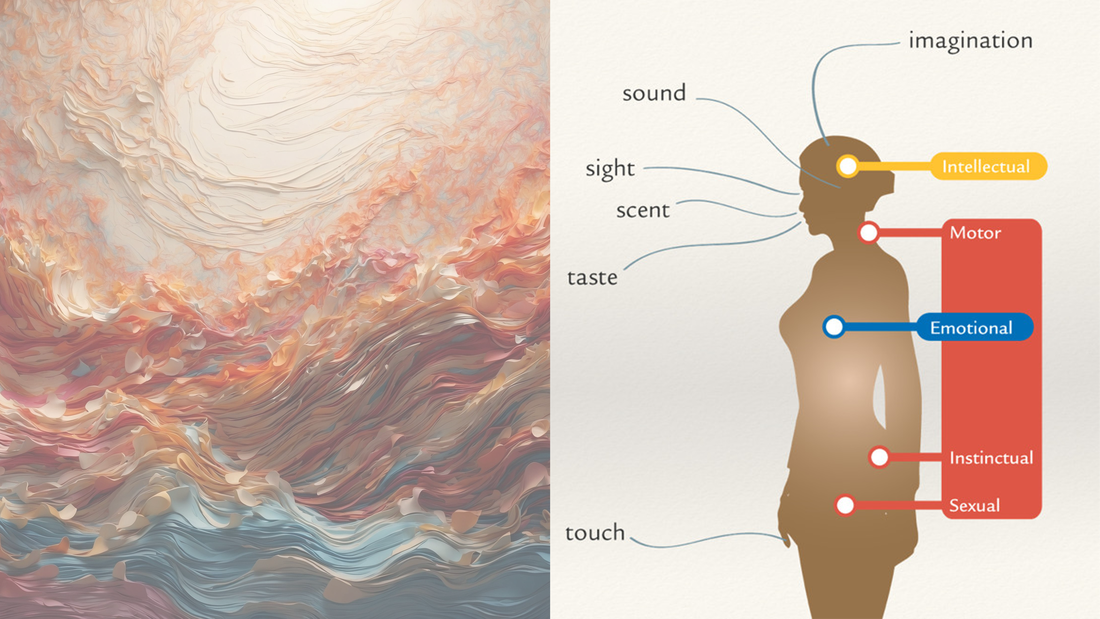
Consciousness is Conditioned
All this gets tied into the realization that our consciousness is conditioned.
We have first off, the senses: sound, sight, scent, taste, and touch. Everything we perceive through the physical senses gets filtered. Sometimes depending on our vision, maybe some of us have better hearing or better eyesight. Our perceptions of life are filtered through these conditions. More so when the impressions of life, when we experience reality itself through our senses, we also have this human machine that we talked about previously. We also have our mind where we think, our movements, our emotions, our instincts, and our sexual desires. Oftentimes our impressions of life enter into us, and then our ways of thinking, feeling, acting, doing, behaving, filter that. Many times, we approach a situation not fully perceiving what is going on and this happens all the time in social circumstances. Our perceptions of life are not only conditioned by the senses, but by our ego, and that is the problem. We said clearly earlier that ego is self and there are many. Pride is an ego, is a self. Vanity, lust, hatred, fear, gluttony, these are all defects, selves, right? Any time any one of those elements are active, they are thinking, feeling, behaving, and compelling us to do things, often without our awareness, because if we are not looking at this process, we will not see it, because we are asleep. Every time we feel or experience different things, it is because the ego is active. That ego is a shell. It is a glass, in which the light of the consciousness is trapped. We want to break the shell so we can free the light as we talked about before. We want to decondition the soul, because the soul is trapped in all these bottles, and we want to be able to perceive life as it is without misinterpreting with our anger or lust or whatever it may be in the moment. 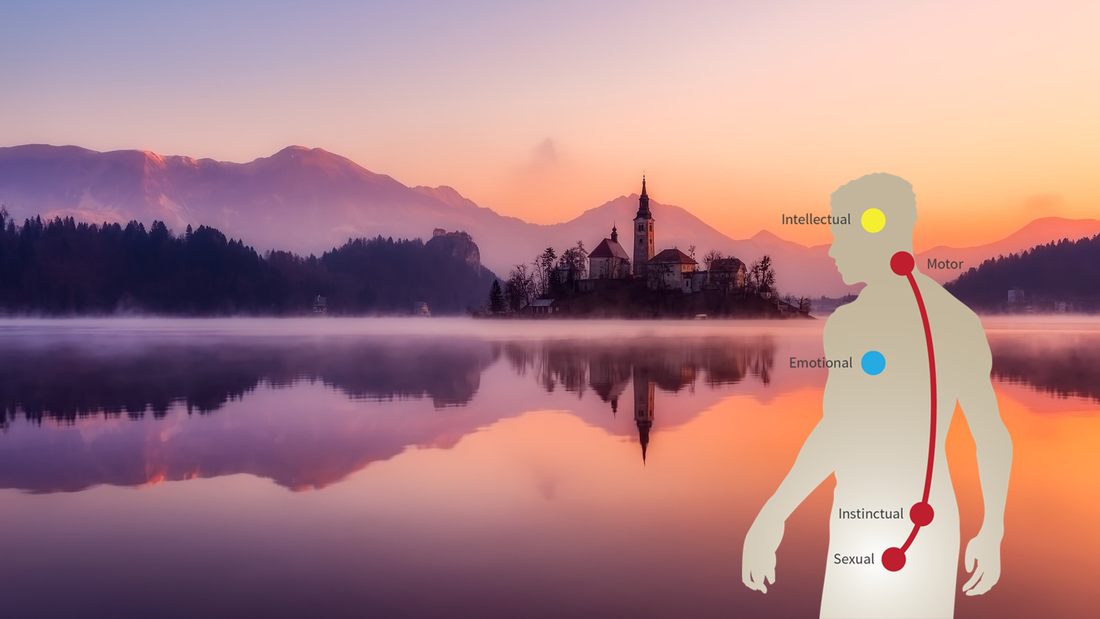
What Quality of Consciousness is Active or Passive?
The question becomes―as we are studying this image of our human machine we talked about, we call it the five centers where we experience things―what aspects of our psyche are active, and which are passive?
When we practice meditation, we notice that our mind is thinking and is moving along in a chain of associative thinking. It is chattering, talking, and our emotions too may be very active. Maybe we had a conflict with a loved one and we feel anger. We feel residual pain, resentment, and it is intense. Oftentimes emotions are more intense than thought, more difficult to control. We also may have instincts or desires that pull us to behave mechanically. We just do things without thinking, or we are driven by passion, desire. What is active in us? What part of us is in a state of activity, and what should be passive? The reality is that our consciousness, in its current state that is able to meditate and experience divine reality, is inactive. It is asleep. The free part of us, that little three percent of the psyche that could be fully perfected, the rest of it is trapped in ego. Our egos tend to be very active, but the soul is asleep, and this has to change. It has to be reversed. The soul must be active and the intellect, the emotions, the body, have to be still. It is a challenge. If you have practiced or tried meditation, you notice the mind is all over the place. The emotions are stewing with emotion. The body is itching. You want to scratch, move to adjust yourself. That is why we say in the beginning when you meditate, find a good posture to relax, sit still, and do not move, so that nothing in your psyche will shift and you can just see the process of all of this. If you let it sit and relax, these five centers, aspects of our psychology, become still like water, and when the water is perfectly calm, suddenly the images can reflect within it. Those images come from visions and dreams that are exactly the spiritual awakening that we seek, that come to you when you stop thinking and stop getting dragged along by the mind. We have to ask this question. What in us is active? What is passive? 
Four States of Consciousness
The way that we will explore this is through four states of consciousness.
In a sense, we can not think of them as gradients or steps in a sense like a plateau, where you start at the first one and after a couple years you enter the second. Likewise, the third and the fourth. These are levels of consciousness ranging from the most dense, intense and afflicted state of suffering and lack of awareness to the most enlightened and divine. If you think of light on a spectrum, you have infrared at the bottom, which means lower vibrations. Then you have higher ultraviolet at the end which is freer and more visible to our senses. In a sense, the soul is like that. It is a gradient. There are egotistical inferior states and there are conscious, free, spiritual states. If you are meditating, you can go from one to the other in one sitting, but over time it takes years to establish ourselves in the more elevated states. It takes practice, but you can fluctuate throughout your day. If you are observing yourself and being mindful, you see that during some parts of your day you are not aware of things, or more egotistical. Others were more patient and aware. It fluctuates. Let us talk about them. 
1. Sleep
Sleep, the lowest state of consciousness. In a most basic sense, sleep occurs to the body, and there are schools of yoga which teach that the first state of consciousness is the sleep of the physical body. That is the first understanding, the most basic. The most nuanced way or a more refined way of looking at it is that this is the sleep of our soul.
Our soul is not awake. Our full potential is dormant, like a seed. The qualities of a god or a buddha, a Moses, a prophet with all that compassion and patience, is dormant. While our soul is asleep, instead what you tend to have is the mind active. This is what confuses a lot of people when they approach yoga. They think that this first stage just means when you go to bed at night, eight hours pass, and you wake up, but it is more than that. The sleep of the psyche is what causes all our problems in life, when we are not fully aware and attentive. In fact, this state of sleep is associated in many schools as a state of barbarity. It is a state of mind in which one is driven by instinct, passion, hatred, violence. This is the type of state or being that propels mobs, where people go out and kill each other, war. The soul is totally absent in those states. Also, if we are going throughout our day and we can not remember large portions of it, it means that we are not conscious. We are not fully awake. You go through your day. You do certain chores. You travel places, and then at the end you wonder, “Where was I? What was I doing? What was I even thinking?” Some people get pulled in situations, like the example of the mob, and they do things that they would not otherwise do in any circumstance, but they are propelled by that instinctual drive and the hatred of the environment. They do things that they later regret, and they say, “I do not understand how I could have done that.” People who were soldiers in war, who fought and had to kill or do things they later regret, they deal with post traumatic stress syndrome, because they did things they did not know they were capable of. This is a profound state of sleep, and all of us tend to be in this state. Our mind, our personality, our ego, is at the wheel of our car, but the soul is in the back, absent, asleep. We want to understand where we are at, and with the state of sleep, most people are in this all the time, even if we are physically active. This is the challenge to think about. This is the sleep of the consciousness, not the sleep of the body, although there is that application within yoga. This is us. 
2. Dreams
We also experience what are called dreams. We all know this. Conventionally, you go to bed at night, maybe seven, eight hours pass, and then for a little bit you dream. That is the basic level. Dreaming of the soul is when we are lost in thought. We are in reverie. We may be driving our car, and our mind is in a hazy, ephemeral cloud. We are thinking about our fiancé or friend or loved ones, and we are not really paying attention at the wheel, and this explains why you have so many accidents, especially on Lakeshore Drive [in Chicago].
People are dreaming. They are dreaming of their jobs? They are dreaming of their careers. They are talking with people, but they are not present. Their mind is elsewhere. Their feelings are elsewhere. Their body is here, but are they consciously present? Every time our mind wanders, we are dreaming. We are lost in reverie, daydreaming. The soul is not fully there. We are not paying attention consciously, spiritually. 
3. Awakening
The third state is where things get interesting―awakening. This is what concerns us most.
We are talking about awakening in terms of Patanjali’s Yoga Sutras. He says that awakening is a state of, physically, we get up. Basic. Here we are talking about the awakening of the soul. At this point, the mind, heart, and body are becoming more still, and the consciousness, the soul, the Essence, is now at the wheel. You know this when if you practice some of the techniques of this tradition: self-observation, meditation, self-remembrance, where you are driving your car and you notice your mind wandering and you say, “Oh no, wait! I am going to bring it back to the wheel. I am in my body. I am aware of my breath. I am in this car. I am in this certain place. I am watching. I am paying attention. I am aware of myself and aware of other people, aware of my own mind,” trying to do that continually. It is also a state in which we begin to reevaluate our foundations. As you are observing yourself, you suddenly realize that every thought, feeling, desire, impulse, you suddenly can even see how those emerge, where they come from, like when you meditate. The memory comes to your mind. Desire emerges. You feel when you are observing the different selves, the multiplicity of selves that constitute ego, and you are watching that. You are seeing like a director watching a movie. “I am not those elements.” Serenely, not out of fear or terror, but calmly you are watching this process and seeing it all and realizing, “I am not the person I thought I was.” Perhaps we think we are patient and kind, and yet we suddenly observe ourselves and realize we have anger in abundance. Or the pride we accuse other people of having abundantly, we have even more. That is a shock. Through revision of our beliefs, our self-concept, we see that we are not the person we thought we were. This goes back to self-observation where we are not trying to know we are, for example, seated in a chair. We know we are here physically, but are we observing the fact? Knowing is passive. Consciousness or attention, self-observation, is active. Awakening gives us a shock. We realize we are not our pride, our fear, all these elements. We are something more real and substantial―patience, kindness, altruism, faith, endurance, compassion. This awakening can also occur not only in our physical life, but also in the dream state. Instead of going through those eight hours of sleep unconsciously, physically, you start to have visions and dreams. You see what is in the astral dimension. You recall it and see what is actually there, not just projecting it like a camera or like a film on a screen. That screen is your mind, but if you turn off the projector, the mind stops interfering, and you just see your environment. You see the theater that you are in, and you start to wake up and realize, “I am not in my physical body. I am in the astral world. I am no longer dreaming.” That is a type of awakening too, but that can only happen if physically we are making the effort to pay attention, self-observe, and self-remember. 
4. Being
We want to experience the heights, the Being, the divine. The Being is God. It is the reality. It is the true self that we all carry within. We map this self through this diagram called the Tree of Life, which we have available here too [as a poster at our center].
This Tree of Life from the Jewish mystical tradition is a marvelous map that we use to navigate the nature of self, the nature of who we are, from the most dense and material below, our physical body, to the heights, and as you go up this Tree vertically―not in terms of physical space, but in terms of spiritual elevation―we go to more rare states of consciousness that are very sacred and very pure, in which there is really no egotistical self there. But there is a state of Being, an identity that is real. The Being is our true self. Now obviously we are here in our physical body. Some of this I already mentioned to you. Malkuth in Hebrew means, “Kingdom.” It is the body. Yesod means, “Foundation.” It is our vital energy. When you wake up in the morning and you have more or less energy to go throughout your day, that is your vital body, your vital energy, your Yesod, the foundation of your life. Not only physically, but also spiritually, because how we use our energy determines how awake we are spiritually. We also have Hod which means, “Splendor” or “Glory,” and that is the emotions, the heart. It is also where we go when we dream, the astral world, and Netzach, meaning, “Victory,” in Hebrew, the mind, thought. Above that we have Tiphereth, which is willpower, and these top five spheres which are related to aspects of the spirit do not mix with anything egotistical. The further up you go, the rarer and more refined it becomes. The true self is up here the further you go. We want to cultivate that. As I was saying, Being is a state of consciousness that is without filter. It is reality. It is the perception of divinity and that is something we can not conceive here, but if you are patient and meditate and practice, you can cultivate that and escape the mind, like Plato’s Allegory of the Cave, in order to experience the stars for the first time, the truth. 
Spiritual Metrics of Consciousness
One thing we have to ask ourselves practically is that we have spiritual metrics of consciousness. If we want to measure how awake we are in terms of being attentive throughout the day, we want to explore these three things:
How profound is our awareness? How deep is our attention? How precise are we able to see life? With what detail? How clearly can we see our dreams? How crisp and lucid are they? If we are walking out in nature, how much can we perceive? The colors, the trees, the leaves, the bark? What are we able to perceive? What depth of field do we have? How long can we maintain that? If we are just watching and not thinking, but being present in the body, we are looking at our surroundings, being aware of our own mind, observing ourselves, how long can we maintain that state? Is it ten seconds until the mind takes over and starts thinking? Is it a minute? Is it two hours? Is it at certain points in the day? How long? We can ask these questions before we sleep. How often are we able to do it? This is the state of mindfulness. Can we maintain frequently that state of awakening? We are driving our car. Suddenly the mind wanders. We bring our attention back. How long can we remember to be attentive? To be aware? These three things. These will tell you how awake we are. 
Remembering, Clarifying, and Prolonging Consciousness with the Key of SOL
Part of that practice relies on an exercise in this tradition we call the Key of SOL. It is an acronym meaning Subject, Object, Location.
To remember ourselves, to remember our state of watchfulness and to clarify that attention, we practice this key. It also stands for the “sun.” This is the source of light. Subject: What are we thinking? What are we feeling? What are we doing? What impulses compel us? What are our desires? We are watching this. We are dividing our attention in a sense like we are both the actor and the director. You are watching yourself like a movie. You are filming a movie. Rather than tell the actors what to do, you just let them be and watch in the beginning. You want to watch to see what comes up in life. What do you see in yourself? At your job? And your career? With your spouse? Then you want to divide your attention to Object: What are the objects surrounding you? Like a mirror, you take that light into yourself, and you reflect it out. What are the things around you? The posters, the fan, the computer, the bookshelves, the different things in our space [Gnostic center]. Lastly, Location. Where are we? Do we know where we are at? We are in the office building. We are in Chicago. We are in a certain province, or if you are aware of these things, suddenly you expand your light like a mirror. As you are looking at yourself, but understanding the objects in your environment, observing it all, and knowing the location, you start to become more integral in your perception, more awake. This skill will filter out into dreams. Someday you may find that you are observing yourself. You are in a foreign place. Maybe you are in a bar in Spain, and then maybe you question, “What am I doing here? I am from Chicago.” You ask people, “Where are we?” They look at you crazy like, “España,” and then you realize, “I am dreaming. I am out of my physical body. Ok. Thank you.” Jump and go fly and do some exploration in the astral plane. That Key of SOL will help you not only physically in knowing our true self, our identity, but especially when we dream too. It is a very simple practice, but very effective. 
Retrospection Meditation
Lastly, retrospection meditation. This is an important skill. Basically, at the end of our day or when we wake up in the morning, we sit. Relax our body, mind, heart, physical body. Let the mind settle. It is good in the morning, especially because we are most relaxed. You visualize, if it is in the morning, “What did I dream?” Reflect. Go backwards in time. “What did I experience in my day before I sat to go down to go to bed?” (If it is at night). You visualize and you imagine, what did you perceive throughout the day? What did you experience? What did you understand?
As a basic practice, this is going to set up later for more deeper work on our own psychology, but this is how you know how awake you are. You sit. You try to remember your job. “Wait, there were two hours where I could not remember what I was doing here and there and there. What did I say and do?” You know that is where you were asleep unconsciously the most. Maybe the mind or ego or personality was active. You go backwards. You visualize and you try to reconstruct the day, so you have a better sense of who you were at that moment. Where did you go? That is a useful tool, a barometer, for measuring our psyche. I know these are two tools you can try. Key of SOL is very simple. Retrospective meditation is very useful too, but that is a basic outline for the skills that can help to cultivate that conscious relationship with divinity, the real Being, the real self. If we are not able to pay attention to ourselves or remember a state of watchfulness, we will not be able to experience the divine. Exercising the consciousness―first, it is asleep―now it learns to exercise its muscles. You start to see things more and more, whether in meditation or dreams, getting insights in daily life. Those are some basic techniques to receive knowledge from our true self, the divine. Are there any questions? Questions and Answers
Question: How would you handle nightmares?
Instructor: I knew one missionary whose son was afflicted with nightmares. What he would do with his son, they would stand up in the morning, go outside by the sun, in the countryside, and they would do runes for two to three hours. Got rid of it. For those who are not familiar, the runic yoga is a way of adjusting your body in certain postures in accordance with the Nordic alphabet, as we see in this poster. With certain prayers and mantra, which is sacred sounds, you vibrate the different glands of the body so certain vowels resonate with what we call the chakras, which is the centers of energy in your spinal medulla. Your vital forces and having those active and awakened, cleaned, help to stabilize the mind and the heart, especially the heart. Having that energy is really good. Do mantras like that for two hours, three hours. I know in the case of this one missionary’s son, his son no longer has that problem. Very effective. Question: Since I read the books [from Glorian Publishing], the author [Samael Aun Weor] mentioned about the Kundalini. How does it take to awaken and develop the Mother Kundalini and to make it rise? Instructor: A long time. Question: Do you have experience in how long it took you? Instructor: It happens when you are married, and you are working in a matrimony and very patiently by practicing what we call transmutation and working on your ego. It is different for different people because… Question: If you are single? Instructor: Single people can not because a single person has enough fire like a candle. You can still have light. Pranayama exercises like nostril breathing and prayer can stimulate the sparks of the Kundalini, like an ember, but to make that into a bonfire, you need the fire of a marriage. You need to know how to cultivate it, and it can take a long time. Samael Aun Weor mentioned, the founder of our tradition, that the requisites of opening, awakening that fire within this first chakra Muladhara, requires patience and tenacity. It is related to the element earth, because you have to be very firm in your practice to do it. Question: When we do the Ham-Sah pranayama, and you are doing that exercise, are you not transmuting like in marriage right? How does that Ham-Sah work? Instructor: It is magnitude. Obviously single people need to learn how to work with that fire, the creative energy, Yesod, “Foundation,” foundation of your spiritual temple. Single people need to learn how to initiate that circulation, right? Because in most people our energies tend to go out, whereas with the creative force you want to make it go in. Single people can learn how to change that flow with time. It is very patient. It takes a lot of work, but you have examples of practitioners like Yogananda who was not married, but a great Yogi, more awake than most people. He annihilated fifty percent of his ego on his own, so he had the discipline. A married couple obviously with more fire―it is more intense. There is more power, but also there is more danger, right? If the couple does not control it. Magnitude. You got the candle of the single person compared to a sun. Obviously with more power requires more responsibility. As we are talking in relation to this theme of the nature of the true self, basically working with that―we will talk later on by working with the fire of this energy, of the Kundalini, especially in a marriage―one opens the door to the real self. Obviously, there are requirements. It is very strict. It does not come about by paying ten thousand dollars to a workshop. Money has nothing to do with it. God does not, the Divine Mother, does not reward infidelity. She is very strict. We can win her favor if we follow the law. Question: So, some groups are talking about do this for two to three hours to make these things go away, so it is along those lines of, I will just give a personal example. I started doing vipashyana retreats ten, fifteen years ago, and we meditate for a very long time. So that became a habit meditating four or five hours a day. People are like, “Oh, that is amazing.” But it became a very avoidant of life, habitual meditation with dedication and what not, anything with the general gist of time commitment. I know it is not really a time thing? It is how I feel at the moment. I have retracted quite a bit on different practices. It felt like that was all I was doing. Instructor: To clarify that, there is a tendency in spiritual movements to avoid. To be “spiritual,” “awakening my true self, I am now going to be alienated from my family or distant from my relatives or have conflict within my job.” Some people think that being spiritual means avoiding the world. Question: Or it was like, you need to have so many hours in the morning of me doing this to be able to carry a little bit. Does that make sense? Not very efficient. Instructor: Yes. Obviously, we go back to the avoidant part. I mean, our spirituality has to be practical. If it is effective, it is going to improve our communities, and we will have better stability to be able to help those around us, because our impetus in this teaching is to not avoid problems, but to face them and transform them. Obviously, our schedules are going to be different by how much we practice, because sometimes our careers, we may work jobs that are very consuming. Maybe they are very difficult. Comment: Samael said that in life is a real gymnasium. You have to take practical life as, like he said, a test. Instructor: There’s a balance. I do not recommend quitting everything to go all in and try everything. You read Samael Aun Weor’s books and there are ten million practices. It is impossible to do all of them. Basic ones we can do is meditation. That is essential. Meditation, prayer, transmutation, pranayama. If you are single―pranayama. If you are married―alchemy. Obviously, that is going to be different for different people, when and how you practice, but we want to have a balanced life. It is not about avoiding the world, but we do mention going on retreats to cultivate a better relationship with our divine self, where we have time set away where all day you can just focus on that. There is a certain value to monastic life. People who abandon the world to cultivate a spiritual experience, but what often happens is that by avoiding life, when they come back into the world, they lose everything. They do not have the willpower to maintain that type of integrity, so their connection to the real self was very weak. We do not have to abandon the world to be spiritual. In fact, if we are most effective, we are going to be in the world but not of it. Question: When you say words about quality over quantity? When you could meditate for an hour and really only get five minutes, but if you become good at meditation over time, you can really do it in twenty minutes and really be mindful for twenty minutes and you do not really need to be sitting for twenty minutes. That is great if you can do two hours and do perfect mindfulness for two hours, but once you get good at it, you can have the quality of doing it for thirty minutes a day and really get that functionality through the whole day? Instructor: With practice eventually, you will naturally sit longer with it, because you are able to access that state at will, where in the beginning you are kickstarting your engine. There is a lot of downtime where you maybe scratch an itch, or you struggle with the practice, but with time it gets much more efficient. I do not recommend trying to take on a two-hour, three-hour meditation regiment in the beginning, but build into it with time. When you notice the authenticity of your meditations and the benefits you reap from them, you will naturally be more inclined to practice. Question: You will want it? Instructor: Want it rather than, “I am going to force myself to sit here.” “Here is my checklist of, I have got to do this. I have got to do that.” That kind of mechanicity does not do anything, as you know. What matters is how conscious are we when we practice? Question: But it was not even that. It was like, how am I engaging with life. It was like I used that almost as like a crutch, like “just go back to that state. Let us go back to that state,” rather than engaging. Does that make sense? I feel like alchemy is way more about engaging in letting oneself be in those states rather than like, “go to a center. Do this practice.” Instructor: The challenge becomes how do you meditate and remember your true self when you are in the world. That is what the Key of SOL is about. You are with your friends, your family. You are observing yourself. You are at a dinner party. Your aunt says a comment that annoys you, your dad (I am speaking from experience). You see these egos come up, and that is going to be the food for meditation. If you are living in a monastery avoiding all that, then you will not see yourself, and that is why many monks and ascetics have a very small sliver of a spectrum of their full understanding. Whereas if you are with your family and you are dealing with that gymnasium of, “Oh my God, this is, I have this huge ego of anger coming up!” ― good. “I am going to watch this, separate, not disassociate, but watch.” Be engaged with the consciousness. Watch the mind. What does that anger think, feel, and want to do? Later, with practice you will know how to not repress that state or avoid it, or not feed it, but understand it and be able to transform it. That is a longer process of meditation that we call transformation of impressions, which we will talk about. Question: Is it a dissociation of life? Instructor: We do not want to disassociate from life, where it is like, “This is no longer real to me.” That is not helpful, not healthy. Self-observation and self-remembering and being conscious means we are more engaged with life, not from an egotistical stance, but from a spiritual one. Question: How important is it to balance one’s meditation practice? I understand it is kind of the same thing, but I have seen people who have awakened to situations, but somehow their ego is still there. They are having all these lucid dreams and all these amazing experiences, but in their daily lives they are lying to their spouses or lying to people, stealing money and stuff. I know practicing alchemy can be very powerful, but how important is it to still be working on your ego to not live like these too? Question: Black magic? Instructor: That is part of the danger. People who can have, who still have the ability to astral project, meditate, have visions, and yet they are unethical. The long-term consequences will be those types of experiences will be taken away, or that person could be cultivating experiences that are not objective. Physical life will tell you. Their conduct will speak for themselves. “By their fruits you will know them” (Matthew 7:16). It is good not to take people’s experiences at face value. Someone says, “I had a vision or astral experience or samadhi, and let me tell you how the world works.” We have to rely on our conscience and observe their behaviors. If they are causing harm in the community or in their communities, then they are obviously mistaken. You can still respect them, have diplomacy and even distance if we need it. The way that you reconcile the two, how to understand people who are bad ethically but still have experiences, well, either those experiences are not objective or there will be a time when divinity, based on their deeds, will take those away, because God does not reward crime. Question: So, there is a congruence between someone who is working on their ego and every aspect of their mind so you can see their behavior who is really working here? Instructor: Yes. The test is, is it enough just to have experiences that are beautiful, but how does it translate to life? If it is not guiding that person in an upright way, then it is not useful, because “Initiation is your own life,” Samael says, “lived intensely, with rectitude and with love.” If one’s physical life is not improving, then experiences are useless, in the sense of, how do you ethically respond to ordeals? Because ordeals will come no matter what. How do we relate to them? How do we respond? This is also a problem in spiritual groups too. Sometimes misfortune can happen to someone. We know the story of Job. Even his wife was saying, “You are guilty.” And Job says, “Yes. I am guilty, but I receive this gladly from my divinity because I earned this.” That is how you know. Sometimes circumstances can be deceiving, but you observe their psychology, the ways of being. That is how you navigate. Do not take anyone’s experiences at face value. Learn to investigate for oneself. That is important. Question: I am realizing that I am more asleep than i thought I was, because I have been dragging over for six years now and I have a friend I encountered. He went to Tennessee driving for almost nine or ten years, and when I talked to him when he moved back home to his wife, he says, he recalls all these people he has had in his Uber. He knows all their names. He knows what happened and everything and I am like, “How do you do that?” And I am realizing he has soul, and he probably had reflected stuff that he does, you know? Because I can not think of it. I have great conversations with everyone in my car that talks to me, and those that do not, the music talks. We’ll talk. I had over sixteen thousand rides in my six years and I do not even remember a handful of them, conversations I have had with these people. If I start practicing the Key of SOL and retrospection, is it called? Instructor: Yes. Question: If I practice that, will that improve my dreams and why I cannot remember my riders? Instructor: It will improve memory, but one thing to distinguish too is that there are people with more well developed mechanical memory, which is easy, so that can explain why even though your friend may not be working spiritually with any techniques, but they have a good memory, that is one explanation. But the kind of memory I am also talking about is something a little distinct, which we will elaborate more later on [see Remember Your True Self]. It is conscious memory. How do you recall states of being and perceptions without egotistical associations? That is a delicate skill. That is what Samael Aun Weor talks about. It is work memory. The ability of the consciousness to remember.
1 Comment
Alex
7/27/2024 04:11:25 pm
What a great lecture. I’m a new to student to Chicago Gnosis and I’m so impressed with the quality of the content here. Thank you so much for what you’re doing here and blessings to you and yours 🙏🏻. Your comment will be posted after it is approved.
Leave a Reply. |
The Gnostic Academy of Chicago
Free online courses, lectures, podcasts, and transcriptions. Categories
All
|
 RSS Feed
