

We are going to begin with some classical music. This is a very powerful piece. I am pretty sure you have all heard it before, but you might not have watched it to listen to the libretto, the lyrics. It is sung in Latin, and it is originated from a medieval, I believe, collection of writings which were attributed to a certain group of monks, mendicants.
So, Carl Orff took this music, or better said, took the writings of these medieval insights to talk about a very profound reality, the reality of the heart, and music is the language of the heart. In a way, music transcends intellect, mind, theory, rationality, and hits home to a core aspect of ourselves that is more profound than thought. Music can teach us many things, especially music from great initiates: people who had a certain level of spiritual mastery. We are going to watch this piece, Carmina Burana, the first two sections, to talk about the nature of spiritual action, or to use Sanskrit words, कर्म karma (cause and effect)―to be or not to be.
We chose this piece because it is powerful, and it speaks to the heart. The value of music, especially those from initiates, is that they communicate to our soul about the drama of the spiritual path, and what is ahead of us in terms of ordeals, of struggle and strife, but more importantly, to recognize in ourselves that we have agency.
We have a choice. What behaviors do we enact? What are the decisions we make, especially in moments of great crisis, like you listen to in the piece? Great turmoil, the suffering of fate, the arbitrariness of challenges, in a way, seeming injustices. When facing great pain, do we allow that weight to pull us down, or do we in effect, rise up? Part of the reason of talking about Carmina Burana is that it is about karma. Carl Orff was communicating that in life, we inevitably must face hardship. It is our basic destiny, because in our past we enacted causes that produced the pain we experience now. Obviously, the intensity of the music shows the gravity of the situation, spiritually speaking. Where we are at? To be or not to be. I am pretty sure anyone who approaches real spirituality, any religion, has suffered a lot because we want answers. We want to know: what is the truth? What is reality? What is the spirit? What is divinity? Not from belief, but from experience, from facts. Rather than change religions or change beliefs, adopt the garb: the vesture of a religion, learning the names of the language, the lingo, the belief system, we operate on a very different level. We operate from the heart, because the mind, our intellect, can think what it wants. We have beliefs or theories, assumptions, prejudices. But what do we actually know from our heart, from experience? I am pretty sure most people have had some type of spiritual experience, especially in our youth when our mind was less developed or acculturated to a society that is very materialistic. In our youth, we had a moment in which we knew joy, real freedom, real innocence. But with time, what we always see is that we lose that. We become adults. We mature. Maybe we become jaded because of some kind of trauma, some kind of pain. It is important to understand that real knowledge is of the heart. Real wisdom is what we live. Real knowledge comes from experience, and more importantly, that experience of higher realities comes when we investigate our own heart, our own mind, our ways of living, and to look, not to assume that we know, “I am of this race, this culture, this religion, this belief system, these politics, this upbringing.” It means to really look at what is inside in terms of our emotions, our impulses, our will. This active looking is precisely what every tradition teaches about meditation: to look, to observe, to acquire new information―not to assume that we already know who we are, but to be open and to watch in a state of stillness, of observation, of clarity. It is that inner discrimination of ourselves that really helps us to distinguish right from wrong. It is our heart, our conscience, that tells us what is right and what is wrong. We may have traditions that tell us these things, but what do we know in our being about what to do? ― especially when we are faced with situations that are so complex that we are baffled. We are confused. We are overwhelmed, like you heard in Carmina Burana. When fate hits, the hammer of karma, of hardship, strikes, and we find all of those things that we typically ignore come to the surface of our mind, things we may neglect or fail to look at. 
Inner Discrimination
Inner discrimination is precisely the beginning of knowing how to experience a state of being that is truly free, in which, really, is the qualifications of divinity, divine being. It is not any figure outside, but in our heart, because our own divinity, the spark of the spirit, is inside. It is a state of consciousness, a heightened state of consciousness, one that is not limited to pain, anger, fear, pride, resentment, laziness, desire. It is free of all that, and it is a spark of being that knows how to resolve problems in the moment. It does not have to presume what to do or think or plan or conjecture, but to know spontaneously without effort.
We have to distinguish the real from the false, but not in terms of beliefs: “What sounds more correct? What argument is better? What ideology fits my appetite, spiritually, culturally?”― whatever it may be. Instead, it is distinguishing in the moment what states in us create problems in our relationships, in our career, with our families, with our children, with our grandparents. What do we do, and what states in us are the progenitors of real pain? It means to be willing to look. Looking is a very painful thing, because we see that we have a lot of garbage. We have to learn to look at that and to be willing to break, like you heard with Carl Orff's music. It is a cry of real pain, of a real sorrow, with how overwhelming situations are. When that fate strikes and we feel like we are on the cross saying, “My Father, why have you forsaken me?” and to be willing to be vulnerable and to be humble, and to be willing to look at where we do not want to. That is the power of the heart. It comes through vulnerability. It comes when we face a real trial, and that, divinity wants us to know how we will prove ourselves, because that is the way that we grow. This is why in The Voice of the Silence, Blavatsky wrote: Search for the Paths, But, O Lanoo, be of clean heart before thou startest on thy journey. Before thou takest thy first step learn to discern the real from the false, the ever fleeting from the everlasting. Learn above all to separate Head-learning from Soul-Wisdom, the “Eye” from the “Heart” doctrine. ―The Voice of the Silence
What is real? Serenity, compassion, love, sacrifice―even for those who create our greatest pain. To give to them even when they are the ones who hammer in the nails. To love despite trauma and weakness and fear. That is divinity, or in Gnostic terms, Christos, Christ―the energy of divinity who can express when we learn to distinguish that presence in our heart, and not to look to appearances, "the eye doctrine,” to what seems to be what it is, but to look at what it really is: the power of the heart.
A Lack of Real Knowledge
We suffer from this lack of knowledge, not from the intellect, not from reading, not from studying a scripture or that we lack culture, that we have not read enough or done enough comparative religion, or whatever may interest us. Instead, real knowledge is in the heart.
When we experience something for ourselves that is so real that we cannot deny it, such as having a dream, or better said, a vision. We are asleep physically, and we are awake when our body is asleep. We see life and reality with more color and vividness and intensity than our daily life. It is a state like that you can experience reality, states beyond the senses. But that has to be cultivated. That has to be developed. It has to be worked with. It has to be intentional. It cannot be sporadic. That is the purpose of these classes, so that we learn practices to develop that and know for ourselves, because when we lack real understanding, real vision about how to orient our life, we suffer. That suffering is of the soul, and the soul suffers when it does not grow. I believe that anybody who is approaching religion of any kind feels a pain in their heart, a conscience, a bite, a yearning that is really gripping our very being and tells us, “Do something!” even though that voice is very far away, and we cannot hear it. In a way, ignorance is not a lack of book knowledge. It is a lack of experience about how to wisely navigate life. Yea, ignorance is likened to a closed and airless vessel, the soul of bird shut up within. It warbles not, nor can it stir a feather, but the songster mute and torpid sits, and of exhaustion dies. ―The Voice of the Silence
What is more important than this too is balance, because in life we need knowledge. We need the intellect. We need to live in society. We need to develop our personality, how we work with people, knowledge that can effectively help us to earn our daily bread, be in the world, and to be of service to some degree. However, that alone is the problem, because many people develop that part of their equation in life, focusing on the material, meanwhile not knowing how to live, how to be happy, how to be content, how to be serene.
But even ignorance is better than Head learning with no Soul wisdom to illuminate and guide it. ―The Voice of the Silence
There is a saying by Samael Aun Weor, the founder of the tradition who says that “we need to think with the heart and feel with the head.” Personally, I have a job that is very intellectual, but over the years I have learned to use more of my heart, especially in how I work with people, my clients. Finding that balance really teaches us how to be, how to be present. In that way, we discover what is truly valuable.

Discovering the Valuable
We see this image of the wheel of fortune that was cited in Carmina Burana: the wheel of fate, destiny, cyclical existence, where there is the rise and fall of moments of success and failure, victory and defeat, good and bad.
Life is precisely this wheel. It is cyclical. It is recurrence. It is mechanical. We get up for a job. We eat our breakfast. We go to work. We spend time with our families. We go home. We rest. We sleep... repeat. We repeat all the time, but how conscious are we in the moment? Are we just going through the motions of life, or are we seeing something new in each moment? So, obviously this wheel turns not because of some arbitrary force in nature or divinity, but our own decisions, our own will. We enact behaviors that are cyclical. We repeat certain thoughts, memories, behaviors, beliefs, emotions. But are we cognizant of that? Are we aware of what we are thinking and feeling and doing in the morning, in the daytime, at work, with our spouse, in the bedroom, with our children, at home, whatever it may be? Are we conscious of all of that? Are we watching? Are we observing? Are we trying to learn about our own mind and what in us is precisely turning this wheel again and again? Because to transcend this mechanicity requires originality of the soul, the ability to originate action that is free of dualism: “yes or no, good or bad. Should I do this? Should I not do this? How do I solve this?” It happens when we look, and we watch, and we wait. Suddenly the intuition, the knowing, inspires us about how to behave with whomever we are with, and if we let that guide our actions, the mind calms. We feel more at peace with ourselves, that we did not do something that we regret, that we have remorse for. But this wheel precisely turns, it elevates the proud but humbles the arrogant and, in a way, there are two doctrines as we are insinuating here: The Doctrine of the Eye, the Doctrine of the Heart. What do we believe through appearances, but what do we really know from experience? All the great masters of spirituality from whatever religion, whatever prophets, were humble. They did not assume that they knew more than others. They only wanted to help and never attached themselves to an identity like being a great priest, a great lama, a great imam, a great rabbi, but were really exemplary figures who, truly, because of their humility, received wisdom. Because, only when we are looking actively do we receive. If we think we know, we are full. The cup cannot receive new wisdom, new wine. False learning is rejected by the Wise and scattered to the winds by the good law. Its wheel revolves for all, the humble and the proud. The “Doctrine of the Eye” is for the crowd, the “Doctrine of the Heart,” for the elect. The first repeat in pride: “Behold, I know,” the last, they who in humbleness have garnered, low confess, “thus have I heard.” ―The Voice of the Silence
Knowledge of the world is necessary to a degree, but in its essence, it is very superficial. It can resolve some of our problems, in a sense, economically, having a job or career. But what about acting from a state of consciousness that is very pure and innocent?
"Great Sifter” is the name of the “Heart Doctrine,” O disciple. ―The Voice of the Silence
It is very difficult. It is very challenging to do. This is why in history and cultures, there have been very few masters and many believers. Life is that testing ground, that wheel that sifts through the corn, through the husk, to extract and to break the shell, and that as a symbol represents something psychological: how in our own spiritual path, we have to break the husk of desire, of egotism, of pride, of hatred, because the most valuable part of us is trapped in that.
In our anger is part of our consciousness. In our fear there is part of our consciousness. In our laziness there is something that is valuable there that is trapped, and when you break those defects, you will liberate the soul like the genie from Aladdin's lamp. That is the source of real genius, real ingenuity, real power, real wisdom, because in hate is trapped sweetness. In lust there is trapped purity. In fear there is security in God. In resentment, there is forgiveness. In that duality or in that cage is the identity of who we seek to liberate and to free. The Psychological Gymnasium of Life
Life is that testing ground so that we face hardship, because we need to extract soul, wisdom, from those terrible states of suffering, so that we can become radically free. That wheel, in a sense, is governed by justice. In a sense, she is blind, not in an arbitrary sense that she just “willy-nilly” punishes people who do not deserve it, but that justice is impartial. It does not show favoritism. It does not show favor unless we have earned it by the divine law.
The wheel of the good Law moves swiftly on. It grinds by night and day. The worthless husks it drives from out the golden grain, the refuse from the flour. The hand of Karma guides the wheel, the revolutions mark the beatings of the Karmic heart. ―The Voice of the Silence
Depending on how we act really transforms our situations, because if we want wisdom and real serenity, more alignment in our conscience, we have to be very humble and willing to change.
Psychological Purity Reduces Wisdom
From that process as we are looking at ourselves, observing our own errors and understanding what real virtue is and allowing that virtue to blossom, we gain real wisdom. We leave out the superfluous, the arbitrary, the fake, especially in terms of our personality, things that we just acquire in life, but are not really the essence of who we are.
True knowledge is the flour, false learning is the husk. If thou would'st eat the bread of Wisdom, thy flour thou hast to knead with Amrita's clear waters. But if thou kneadest husks with Maya's dew, canst create but food for the black doves of death, the birds of birth, decay and sorrow. ―The Voice of the Silence
So, what are these clear waters? It is a beautiful symbol. I was mentioning to some of you that Blavatsky's scripture is really a precursor to Buddhism, but also Hinduism as well. It is very ancient, but we will use some Buddhist terms to explain the heart of compassion, the heart of real wisdom, the waters of life as symbolized in Genesis, the Babylonian myths.
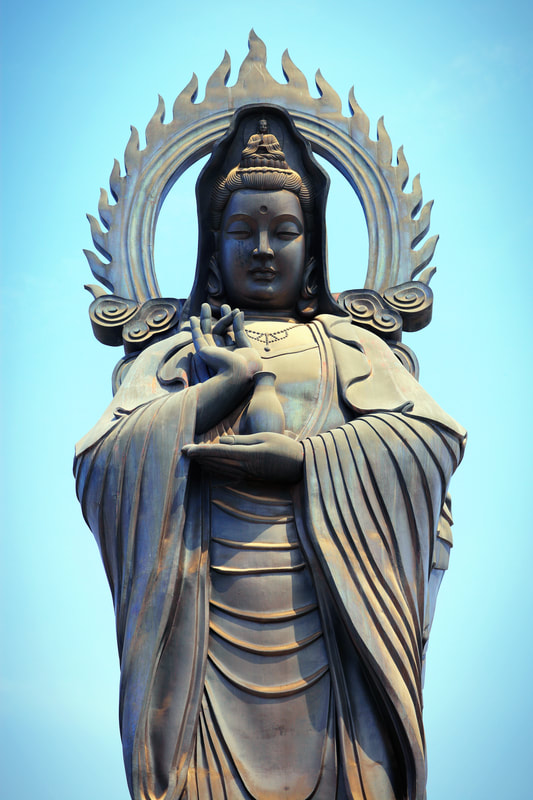
बोधिधित्त Bodhichitta
All scriptures talk about the purity of water, cleanliness, the purity of the mind, purity of the heart and the body. This term in Buddhism is बोधिधित्त Bodhichitta, and in many levels of instruction, in many levels of Buddhism, they teach that to awaken the powers of the heart real wisdom, requires understanding three levels of instruction, which you find in any tradition.
You find that there is an introductory, intermediate, and advanced path. Or in Buddhism: Shravakayana, Mahayana, Tantrayana. Or in Sufism: Sharia, Tariqa, Marifa. Amongst the Freemasons, you have the the apprentices, the journeymen, and the masters. It is all the same. They are the same steps, the same path, but just talked about in different words, different languages. Bodhi is wisdom. It is light. It is perception. It is when you see, and you understand the root of some problem and how to change it. It is enlightenment. It is knowing. Chitta is often translated as “mind.” It is better if we say consciousness, because in our common parlance, mind is intellect, thought, but chitta is really the essence, the seed, the heart. In some translations, Bodhichitta can mean “heart-mind,” “heart-wisdom,” “wisdom-love.” It is that state of being in which we are able to, again, transcend pain, to know how to solve problems. In the introductory level, this Bodhichitta is the altruistic intention to attain enlightenment for the benefit of all beings. It is the joy of saying, "I will serve in my life other people so that they are not suffering anymore," and “to make the effort to change my life to do so.” But intentions are not enough. Action is what is essential. Action is the Heart Doctrine. In Mahayana teachings―maha meaning “great,” yana meaning “vehicle”―it is an elevated state of awareness known as प्रज्ञ Prajna in Sanskrit, which directly perceives emptiness. This is a very beautiful philosophy if you have studied it. Emptiness, no self―no anger, pride, hate. It is clarity. It is not a mere absence. It is presence, but free of condition, free of our defects. It is heaven, and there is even a Sufi initiate who said that “Wherever you are, that is hell, but wherever you aren't, that is heaven.” It does not mean we do not experience it. It means that we transcend this lower self and put an end to the causes of pain. That is the quality of the heart. The heart knows reality from falsehood when it is clarified, especially with the last level of religion: Tantra. In Tantra, obviously in the West, it is the connotation about a relationship. A man and a woman in a marriage can take the most powerful energy that they have in life, the power to create, and by conserving it, transforming it, and elevating it with purity, it awakens the soul. Tantra means “continuum.” It is not just sexual connection. It is continuity of perception empowered by the power of life. It is the ability to see, to be awake, to not lose your presence, to be in that constant movement of consciousness: always watching, always learning, always seeing, always perceiving and knowing. Also, Bodhichitta refers to the seminal fluids of the body, because that fluid is the waters of life, which when transformed and never lost, can be the source of real power, real vitality, real strength. These are the waters of life mentioned in the Bible and is the source of Jesus' injunction: “You must be born again,” because it is a sexual problem. Obviously, there are levels to this. We will just touch on this briefly. In Tibetan, byan-sems, can be translated either “enlightened mind” or “semen,” and that energy can really give power if we know how. 
Heaven Cannot Mix with Hell
The Voice of the Silence emphasizes that with Tantra, purity is fundamental, and this is the great mistake of many westerners who approach Tantra with desire, with ignorance. It is very poorly taught, and actually, most schools that teach about Tantra today teach you how to take the energies of God and to feed desire, to feed lust.
Yes, there are people who awaken powers, abilities, perceptions, but not as an angel, but as a demon, because all religions teach and The Voice of the Silence teaches: desires are the root of pain―ego, pride, attachment, laziness, whatever it may be. The soul must be pure. The soul must be clean, and that is the power of the heart. But that energy depends on how we really use it, and that use determines our life. Think of it. You could have a child. You can create a human being who can change the world. One person can radically alter the fate of history because a man and a woman joined together to create that person. That is an extremely, unbelievable power. It is the power of the universe. It is the power of creation. It is the power of divinity. But there are ways to use the energy that are not taught in public, until now. That energy that can create, instead of a child, it can create a god inside. Two of the names in the Islamic faith for divinity, الودود Al-Wadud: The Loving, and الخالق Al-Khaliq: The Creator, is a reference to that sexual power. For where else do we find the power to create through love but in sex? It is the power of life, which is why the Jews toast, “L’Chaim, to Life!” ― the power of living, the power of creation. But that energy can be misused. The dew drops of heaven, of amrita, can mix with our impurities, and that is the problem. That is why in most of us, our heart is dead, because the heart is not nourished with the waters of life. It is not a fountain that flows inward and upward to the mind, to the heart. It needs energy as a circuit, as tantra, to clean out the mind, to purify it. Before that path is entered, thou must destroy thy lunar body, cleanse thy mind-body and make clean thy heart. Eternal life's pure waters, clear and crystal, with the monsoon tempest's muddy torrents cannot mingle. Heaven's dew-drop glittering in the morn's first sun-beam within the bosom of the lotus, when dropped on earth becomes a piece of clay, behold, the pearl is now a speck of mire. ―The Voice of the Silence Innocence: The End of Desire
I am pretty sure we all can think of moments in our life where maybe because we had innocence or purity. In a moment, we make a wrong decision. We give into maybe anger, desire, lust, and that purity of the soul is lost. It is extinguished. The heart is dead, but the heart could be reawakened with greater force if we cooperate with our inner divinity, with conscience, with the voice of the silence, the voice of divinity.
In our Western culture, we believe that by giving into desire we will be happy. We feel satisfaction for whatever it may be. It is precisely this belief which has made the world a mess, because everyone of every religion fundamentally ignores what the prophets taught: that desire is the source of pain. "Deny thyself, take up your cross, and follow me," said Jesus. Or “Desire is never satiated by feeding it,” according to the Laws of Manu, which is one of the oldest scriptures of Hinduism. The Voice of the Silence emphasizes these same points: Do not believe that lust can ever be killed out if gratified or satiated, for this is an abomination inspired by Mara (illusion, attachment, craving, passion). It Is by feeding vice that it expands and waxes strong, like to the worm that fattens on the blossom's heart. ―The Voice of the Silence
However, the rose of real love can be reawakened.
The rose must re-become the bud born of its parent stem, before the parasite has eaten through its heart and drunk its life sap. ―The Voice of the Silence
Again, the rose is a symbol of real purity, but purity through wisdom, because all of us, by the inevitability of life, have made mistakes, entered our karma in life, our situation, our struggle, and have erred, but that innocence can be reborn. The heart can be inflamed.
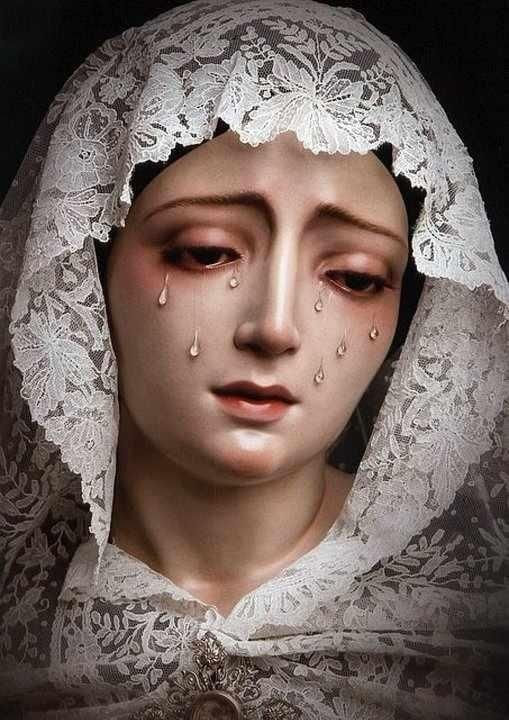
Compassion and Charity: The Seed of Awakening
In Mahayana Buddhism, especially the Heart Doctrine―which is the path of service and charity, but also our spirituality being focused on others, not ourselves―we really discover that as we awaken the heart, we feel the pain of others. We feel their sufferings. We are identified with them, and not attached to our own sense of fear and inadequacy or deficiency or pain. Instead, our spirituality, the Heart Doctrine, becomes working for the benefit of others and that helps us in many practical ways.
It really helps us to get over our own pain. We see that someone in our life is in a lot of suffering, even though we are. Our pain is alleviated when we help others. It is a basic law, the law of Christ: reciprocity; give and receive; sacrifice and be blessed. In this way, as we learn to give, even though it may hurt, there is real peace, because we know we do the right thing. In that way, the mind becomes stable. The heart becomes come strong, and compassion is the guiding force of our will. That is how we enter real serenity in silence. Many people try meditation. They sit down. They close their eyes, and they see that their mind is a mess: thoughts everywhere, associative thinking, images, memories, daydreams, passions, attachments, revenge, vengeful or spiteful images, a big conglomeration of just disturbance, dissonance. The reason why many people fail in meditation is because they do not develop their heart. They do not develop their ethics. In their daily life, they do not understand how they are perpetuating their own pain. But, if we are really observant and acting rightly in our heart, our conscience, in truth, we become like an arhat, which is a term for a meditator―stable and serene, able to deal with intense impressions in life. Maybe someone is yelling at us at our job, or our family members are cursing us out for something. We did not wash the dishes at home. Our spouses are mad at us. Someone gets really upset or angry. But in the end, we are calm. We do not feel bad. We do not feel guilt. We do not feel remorse. Let thy Soul lend its ear to every cry of pain like as the lotus bares its heart to drink the morning sun. 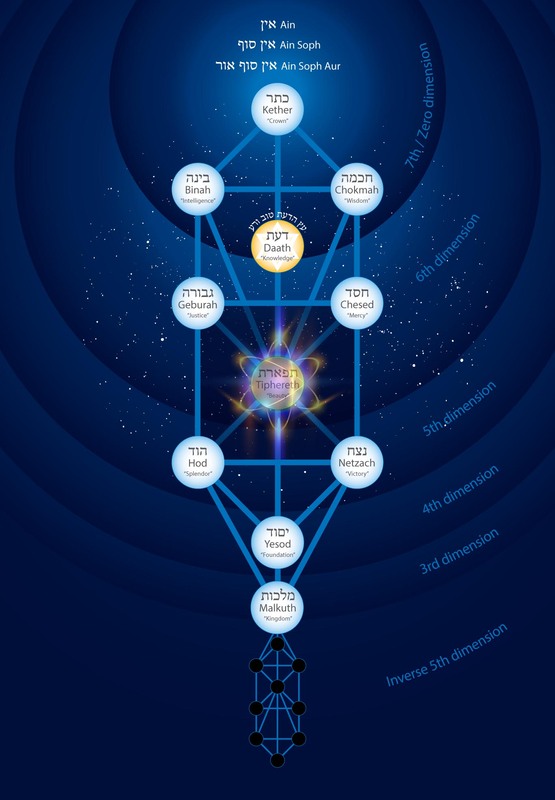
That Vogay tree is this: the Tree of Life, the kabbalah, levels of being, spheres: ten in alignment with three pillars, mapping out the highest divinity to us in terms of our physical experience, our psychology, our divinity. This Vogay tree, this Tree of Life, is born in us when we develop the heart, תפארת Tiphereth in Hebrew, meaning will, “beauty.” If you take this image and transpose it on a person, תפארת Tiphereth is the heart, our willpower, but that will needs to be guided by charity, by love.
It is the seed of freedom from rebirth. It isolates the Arhat (the meditator) both from strife and lust, it leads him through the fields of Being unto the peace and bliss known only in the land of Silence and Non-Being. ―The Voice of the Silence
So, this level of this map depicts levels of nature. In this lower sphere מלכות Malkuth, we have our physical body where we have a very strong sense of self. The higher up you go in levels of matter, energy in nature and perception, the less self you are and the more divinity is, until going even beyond that: the emptiness, the void, the Absolute, the cosmic space, which is real joy and freedom, real compassion.
It is the essence of Buddhism, especially, and even Christianity, because that Christos, that light which maps out this top glyph, emanates from that source (light from darkness, cosmology). So, the point is, charity is the way―service, giving―because the other solution for a lot of people is to develop their spirituality for themselves. 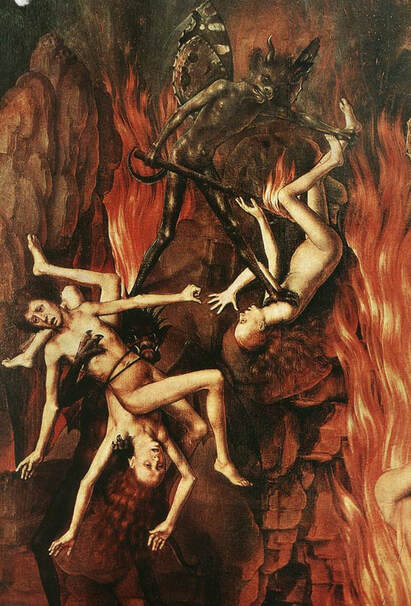
Selfish Liberation
It might seem strange. What does selfish liberation even mean? How can a spiritual person be selfish? There are some people, actually many people, who believe that only they want to liberate themselves and that the weight of real freedom, to go beyond pain, is to just concentrate on oneself―simply to try to understand what one is doing wrong and not bother with the world, and this is wrong.
Obviously, in the beginning, in the incipient levels of the path, we obviously want to change our life in some radical way so that we suffer less. But there becomes a threshold or a point in which we have to decide: are we going to go further? That really depends on whether we are willing to give to others, to sacrifice. Sacrifice is the law of Christ, the law of Buddha, the law of Muhammad, the law of Krishna, the law of Moses. Giving charity does not mean money. It does not really mean material means. It does not really mean food. Those are beautiful things, and they really help, but really from the consciousness of the heart, our Being, the state of love is really what defines us. The Voice of the Silence touches on a lot of things that many authors did talk about, that spirituality is really profound when it is not about us. It is about humanity. Those were at least the explanations of the highest initiates. This scripture emphasizes a few points about some common tendencies amongst spiritual students. If thou art told that to become Arhan thou hast to cease to love all beings ― tell them they lie.
It is a very important thing to understand, because this path is very revolutionary, and it requires foundations. Someone who is not good at home with their partner will have problems, will have conflicts. Those fights and disagreements and hate saturate and spills over into life. In a way, what goes on at home determines many things, even in schools with parents, with children, who are very vulnerable, whose hearts are really awakening and who are not given the education that they need to really be.
There are many people who think that to be spiritual, to follow the Heart Doctrine, means to not be worldly. “Oh, I don't care about money. I don't care about my father or mother. I care about being spiritual!” ― and they abandon their families and life and world, and do not realize that they are causing a lot of pain. Really, their spirituality would be authentic if they learn to take their life and where they are at to be a good person, to be a good husband, to be a good spouse, a good child, a good father, a good mother. This is not really about joining a monastery, although that could be good. We live in very different times. Obviously, it is good to go out on a meditation retreat to be away from the cities to gain some stability of mind, but in this era, we live in a time of cooperation, and because of karma and life and modern living, we have to be in the world. It does not mean that you have to be of it. 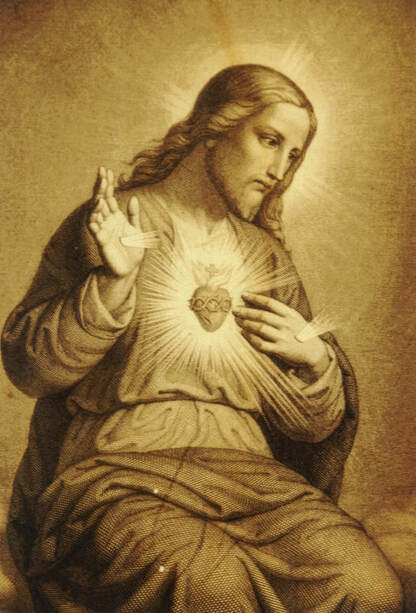
The Illusion of Duality
These Tirthikas mentioned a few things: kind of some common philosophical misconceptions about this Heart Doctrine. They often believe that any action is sinful and that by not acting, they are blissful, meaning, to avoid the world. “Go live out in the mountains. Abandon the world.” Sounds pleasing. Walden was very good in terms of getting out in nature and just being away from the cities. It is good for a time, but it is not enough.
Really, the quality of a prophet is one to maintain that high ethical ideal and live it, but also show it to others, to practice it. In this way, while they are in the world, they do not identify so much with the craziness of the world, in a sense, because life is impermanent. As intense as certain situations in life may be in modern living, these things will pass. They are not permanent. With that wisdom of emptiness that things change and are always fluctuating, one has the ability to let go, but also to know how to act clearly. That is the basic fundamental philosophy of Mahayana Buddhism and Bodhichitta: to understand that nothing is permanent. But at the same time, situations need to be changed and can be produced for the benefit of others. If thou art taught that sin is born of action and bliss of absolute inaction, then tell them that they err. Non-permanence of human action; deliverance of mind from the thraldom by the cessation of sins and faults, are not for “Deva Egos.” Thus saith the “Doctrine of the Heart.” ―The Voice of the Silence
This non-permanence of human action, the fact that things always change and that the mind can be freed from suffering and sins and faults, is not for ego, defects, vices, and errors. It is for the soul, the consciousness, the heart. So, it is a very interesting distinction, right? I mean, when pain ceases, when we get rid of anger, not repressing or hiding it or feeding it, but observing and studying it and disintegrating it and freeing love, that is really the transformation of the heart, the soul. That is the embodiment of the real. In that state, we realize that those former ways of being were illusory or a dream, false.
The Dharma of the “Eye” is the embodiment of the external, and the non-existing. ―The Voice of the Silence
…because these appearances are superficial. They change. They pass, like a wave in the ocean, like sand and foam, like a mirage.
The Dharma of the “Heart” is the embodiment of Bodhi, the Permanent and Everlasting. ―The Voice of the Silence
But to really know this requires experience. Knowing what in us is really in that state, that is very stable and secure and divine, without attachment, is everlasting and real. But obviously, we have to work, to be patient with it.
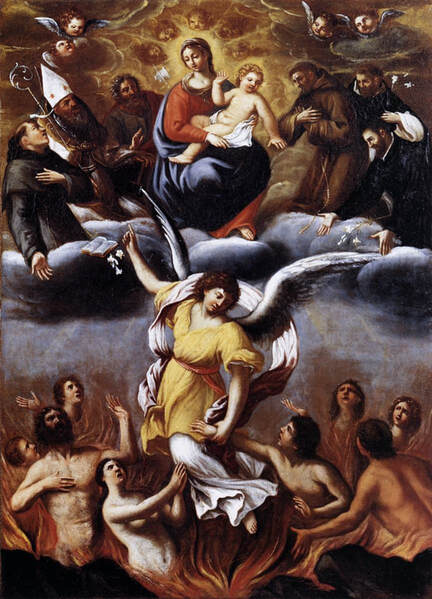
Inner Sacrifice on the Path of Spiritual Birth
The Voice of the Silence builds on a few other ideas in relation to the higher stages of the Heart Doctrine. We mentioned a few quotes about lunar bodies, right? You heard that line. There is an interesting teaching in Theosophy or by Blavatsky and also Samael Aun Weor, where they talk about the way that we inhabit our dreams. Just as we inhabit our physical body in the physical world, likewise in the dream worlds, we have a body: a dream body, an astral body.
But for most of us, it is not authentic, not spiritual. It is more of a lunar body, meaning, we are born with it by nature. We acquire it so that we can live in those dimensions when we sleep physically, and then we return to our body when we wake. They belong to mechanical nature. It is lunar because it belongs to a type of mechanicity. It was not intentionally created by us, not voluntary. There is another type of body that is something that we need to create in this Heart Doctrine so that, if we wish to go to higher states, more altered or divine states of consciousness, we create what are known as solar bodies, the soul, the Sun, the power of Christ. So again, talking about that creative energy, which is the power of life, that energy can create bodies that belong to higher levels of nature, divinity. They call them solar bodies. They are vessels or vehicles in which Christ can enter, our own inner divinity, so that we become fully developed. Those vestures are called, in terms of higher bodies, you can say at the top of the Tree of Life: Nirmanakaya, Sambhogakaya, Dharmakaya. This is Buddhism, or the essence of Tantra. In the process of sacrificing ourselves and being better people for our communities, we also learn to work with this creative energy so that we can give birth to higher states of being. If thou would'st reap sweet peace and rest, Disciple, sow with the seeds of merit the fields of future harvests. Accept the woes of birth.
These are the wedding garments of the soul mentioned in the New Testament. This top trinity is precisely those three higher bodies, which relate to the highest divinity: Dharmakaya, Sambhogakaya, Nirmanakaya: כתר Kether, חכמה Chokmah, בינה Binah. So different traditions teach the same thing.
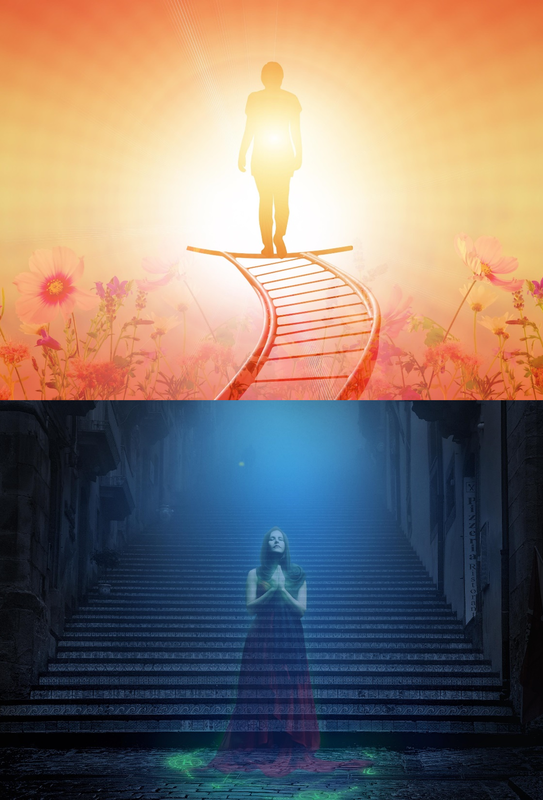
What Should Be Our Spiritual Priority?
But the reality is creating solar bodies is not enough. Obviously, being born again is not enough. There needs to be compassion.
It is a strange thing. Why is it that if we create these higher vehicles of God, that it is not enough, to be born spiritually? Obviously in life, it is not enough just to be born. We have to get educated. We go to school. We learn from our parents. We learn from our families. That knowledge of the Heart Doctrine is really what informs our understanding of how to use those vehicles in the best way, because in that development, we obviously have imperfections and defects as we gradually purify, right? Bodhichitta is fundamental, that love for others. That it is the guiding force that drives our spiritual work, because any amount of attachment or a craving can be an obstacle. This is why Samael Aun Weor stated in The Gnostic Bible: The Pistis Sophia Unveiled: The one who does not possess the Bodhichitta, even when he has created the superior existential bodies of the being, is still unconscious and absurd. ―Samael Aun Weor, The Gnostic Bible: The Pistis Sophia Unveiled
So, lunar body below, solar body above. Obviously, having those vehicles, again, is not enough. I am sure you have all heard of mythologies in which the gods are fighting. Those are beings of these higher realms who have those vehicles, have their foot up in that level of the kingdoms of nature, but they still have pride, anger, resentment, and so, they struggle with each other.
Bodhichitta is beyond that. It is beyond just creating bodies. It is the selflessness of the higher worlds. 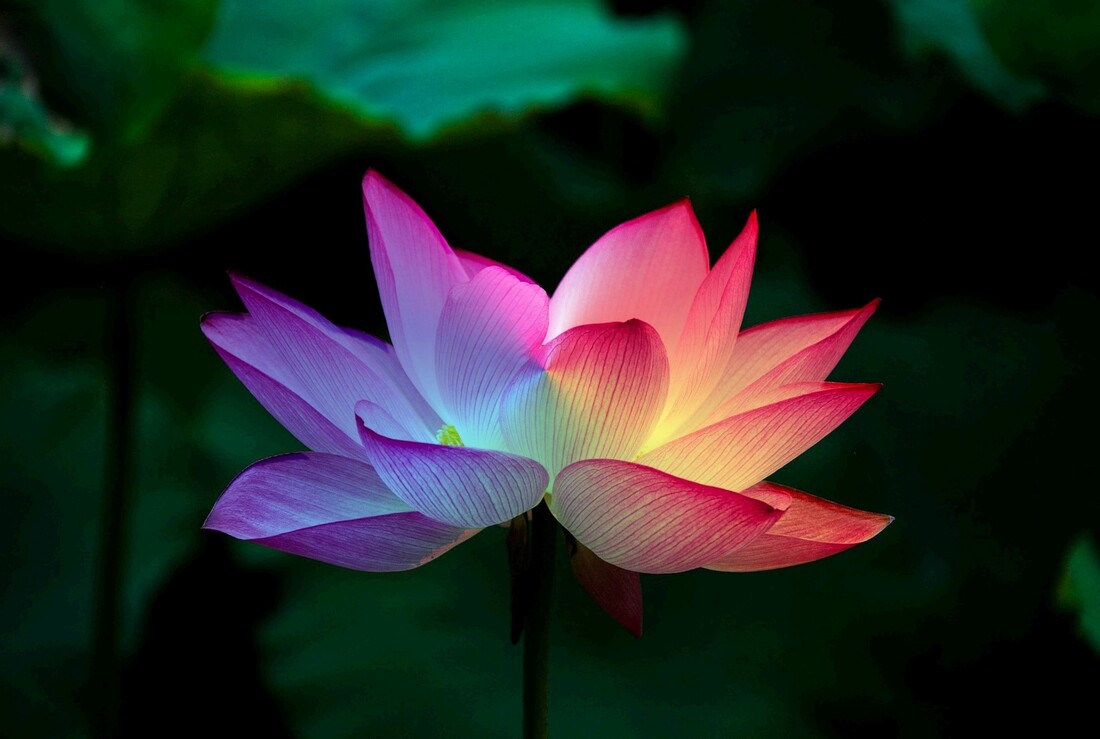
Every Conscious Effort Counts
The Heart Doctrine can seem very intimidating because it involves a lot. It is very overwhelming, but the reality is that whatever we can do now, sets the stage for later.
Whether or not we believe in reincarnation or multiple births is one thing, but the Heart Doctrine teaches what we experience. It is not a theory. Personally, I know from my experiences and dreams and visions that I was in certain places of the world past, certain cultures, which explains my affinity for certain religions. So, it is not a theory for me. It is the Heart Doctrine. But everything we do will set the stage for future existences. It may be that in this life we are not capable of being like Jesus or Padmasambhava or Buddha, then we can do what we can, and that is enough. The pace depends on us, and whether the strength of impulse that we have and will and the inspiration. Yet, if the “Doctrine of the Heart” is too high-winged for thee. It thou need'st help thyself and fearest to offer help to others ― then thou of timid heart, be warned in time: remain content with the “Eye Doctrine” of the Law. Hope still. For if the “Secret Path” is unattainable this “day,” it is within thy reach “to-morrow.” Learn that no efforts, not the smallest ― whether in right or wrong direction ― can vanish from the world of causes (which is basically תפארת Tiphereth the world of causal nature, cause and effect. The world of will.) E'en wasted smoke remains not traceless. “A harsh word uttered in past lives, is not destroyed but ever comes again.” The pepper plant will not give birth to roses, nor the sweet jessamine's silver star to thorn or thistle turn. ―The Voice of the Silence 
Cause and Effect is Certain
This is because karma is certain. Cause and effect are a reality, not only what we do physically, but what think, what we feel, and what we desire. We see this even in dreams, and most times we are unconscious. We are not aware that we are dreaming, which is driven by our desires and impulses to satisfy whatever. Still, it is cause and effect, but in different levels of nature, within הוד Hod, the astral world, the dream world, because why else would we believe it to be true in the moment, even though we wake up later and say, “It was just a dream”? Why did we not believe that in the moment when we were dreaming? ― because there is a certain level of matter, energy, and perception there. This also applies to our thinking, our emotions, and our state of being, because these are real.
So, the thing to think about too is that every good deed counts. Thou canst create this “day” thy chances for thy “morrow.” In the “Great Journey,” causes sown each hour bear each its harvest of effects, for rigid Justice rules the World. With mighty sweep of never erring action, it brings to mortals lives of weal or woe, the Karmic progeny of all our former thoughts and deeds. ―The Voice of the Silence 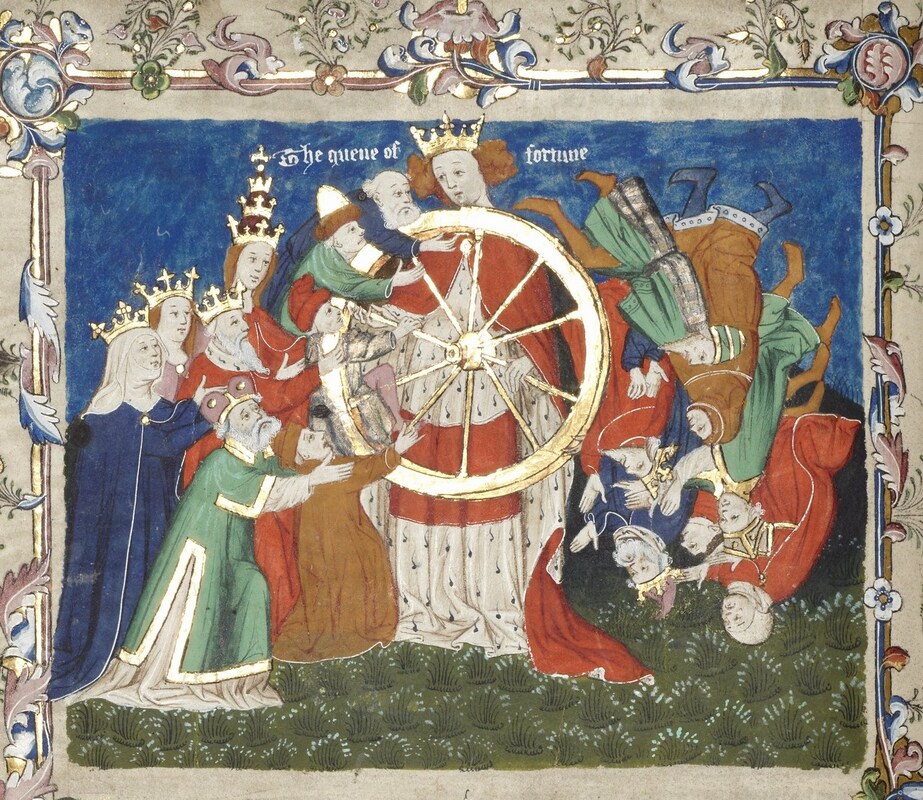
Acceptance and Aspiration
In this way, we should learn to accept our situation in life.
Obviously, we always want to improve, to aspire, to change. But contentment is a quality that really helps us to develop spiritually. Accepting what we have and being grateful for what we do have, so that by willingly bearing this karmic sorrow, that we heard in Carmina Burana, we can pay it. In a sense, we either pay with pain or we pay with negotiations, with the divine law, with the heart. We prove with our actions and our way of being how to resolve these issues. But sometimes we pay with pain, and it is inevitable. When it is over, it is good. It is done―no more. This teaches us patience, patience of the the heart, which is certain about its fate and knows that it is being guided by divinity. This is not a belief system. It is from experience. To have faith is to know. Take then as much as merit hath in store for thee, O thou of patient heart. Be of good cheer and rest content with fate. Such is thy Karma, the Karma of the cycle of thy births, the destiny of those, who, in their pain and sorrow, are born along with thee, rejoice and weep from life to life, chained to thy previous actions. ―The Voice of the Silence
So, this might seem a little bit fatalistic, right? That is the common idea about the wheel of fortune, that it just happens to you and that you just suffer, and you just go along with the flow. That tends to be the case for most people, because they are not willing to look at themselves, at what what is perpetuating that cycle. In Buddhist terms, Nirvana means “cessation,” to cut through cycling, to cut through Samsara, “repetition.” That happens in our life, moment by moment, in the decisions that we make and being awake in the heart, so that we do not repeat certain things, and we can originate new circumstances. That sets a new chain of events.
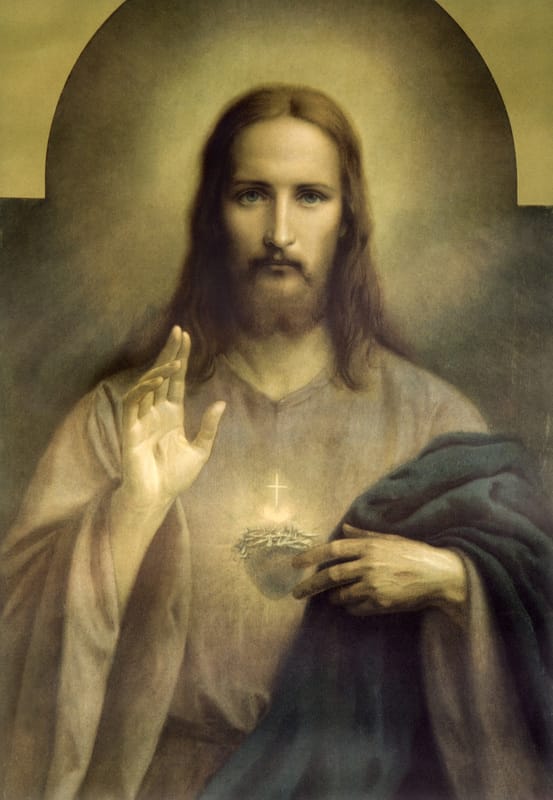
Awaken the Heart and Strive in the Spiritual Path
In this way, we learn to strive.
The fundamental axiom of religion is “Kill desire. Kill anger. Kill pride. Kill lust,” because it is the enemy. It is the unbeliever mentioned in the Qur’an, the infidels, which is not anyone outside our faith, but really, pride that does not believe in helping others, love that does not believe in serving God, because in a moment, as much as we love our traditions, when we have anger, we do not believe in God. We become an infidel, an unbeliever, and cause real havoc and pain. Kill out desire, but if thou killest it take heed lest from the dead should again arise.
Some people have spiritual ambition. We all do. We want to hear about these things, and we want to go to Nirvana and go to the highest heaven, and “I am going to make it to the end! I am so excited!” ― and then the reality hits: it is not easy.
Even the ambition has to die―to accept reality. Desire nothing. Chafe not at Karma, nor at Nature's changeless laws. But struggle only with the personal, the transitory, the evanescent, and the perishable. ―The Voice of the Silence
By desiring nothing, it does not mean don't enjoy life. The soul can enjoy life. It does not mean we become dead, such as dysphoric or zombie-like. It means that we are vivid and lucid in the heart, experiencing a rainfall without our labels or mind trying to mar the reality.
“Chafe not at Karma,” because cause and effect is certain. Certain things happen to us that may be unjust or painful. It is important to get at the root. Meditate why it happened. Find out, and “struggle with the personal, the transitory, the evanescent, and the perishable,” because really, all of our defects are that. They are not eternal. Conclusion
So, the Heart Doctrine is about personal spiritual experience, but what we outlined today was to talk about some principles that relate to many aspects of the path, because all of it is governed by the heart. Samael Aun Weor said in The Perfect Matrimony that “initiation is your own life, intensely lived, with rectitude and love,” with our heart.
Do you have any questions? Questions and Answers
Question: So, you have this slide selfish liberation, which actually was kind of a theme going through what Blavatsky's written here in this section. You said something like, some people believe that they can just work on themselves, not really worry so much about the world, but just focus on fixing what they are doing wrong, and they can reach liberation, and you said that that is wrong. I was always under the impression that, although that is kind of an introductory level of liberation, that that technique or that method actually could help a soul to reach some degree of liberation. Now, maybe that is more Shravakayana and not so much Tantrayana, but is it true that that really is wrong, and you can't reach liberation if you are just worrying about you, doing some good deeds, but not getting caught up in the world as much?
Instructor: I will clarify in terms of relativity. In terms of the higher path, it is wrong to be selfish. But obviously in the beginning, we start where we are at. In most cases, we need to fix ourselves first. Maybe take a year or two years, three years, however long to do what we have to do, and then once we have that stability, we can try to sacrifice in whatever way we can. Relative. Obviously, what is good for one person may be bad for another in the sense of life choices. But in terms of the prophets, obviously, their whole focus is on us. Beginners, we work with ourselves. Mahayana: intermediate, we try to help other people. Tantrayana, not even an inkling of self. That is how rare it is. But yeah, we have to start with where we are at. Question: So, some of these levels of being take lifetimes to develop. Is it possible that someone would spend a whole lifetime just as a monk, just working on themselves, getting separated from the world to kind of just build a foundation there and then maybe in a future lifetime they might keep going? Instructor: Yes. Question: It could still be helpful for us, but we have to kind of gauge where we are at, spiritually. How could we know if that is what we need or if we need to work with these higher teachings? Instructor: We get that answer in meditation, in our conscience. Personally, I would love to go live in a monastery. We do retreats with Glorian Publishing. We go out to Padma Samya Ling. In a sense, it is the best week and also the worst week of my life every year, because you get so much spiritual strength from the community and being out in nature with no cell phones, no technology, that you really get to settle down. It is also the worst week because you see clearly what you need to work on, and it could be tough. But there are many monks, people I have known who have gone to a monastery and they need it, and they choose, and they were guided to. Only divinity can decide. But, yeah, we have to learn to follow His will, not ours. Question: Related to the gymnasium of life, I was trying to understand that when you work on yourself, you have to stay away from the world because the world contaminates you, but at the same time we have to be in the world because that helps us to refine ourselves. So, it is very hard to put those things together and make them work. So, that has to do with that gymnasium of life? Instructor: Yes, and Samael Aun Weor mentions that for most of us, we need a gymnasium because we are at a point that we have so many defects and such heavy karma that this is probably one of our last opportunities. Divinity is exerting a lot of energy, which you see in Carmina Burana. Literally, the intensity of the music is like, literally, that karma hitting the soul, and the soul has the choice: take advantage of the gymnasium, or crumble. 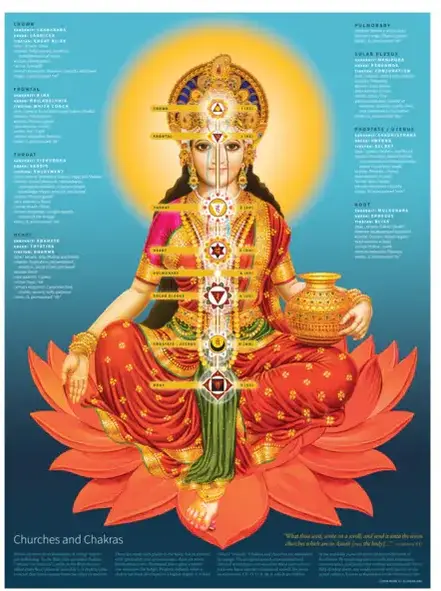
There is a line too that at the end of the first piece that is very optimistic, actually, despite the intensity, the severity the music. It says something like “pluck the vibrating string.” It is a weird line in the middle of a chorus of melancholy and pain. That string or that instrument is precisely in that image of the Divine Mother [from Glorian Publishing, available as a poster via their online store]: the chakras, the seven notes. In a way, in the midst of our pain, we need to endure it and learn to play music, which is what Carl Orff was doing. It is such a powerful, severe piece, but he obviously felt a lot of passion and joy making it because he needed to to talk about the severity of life and the gymnasium we need to face, so that we pay that Karma, but also play the music of the soul, despite it.
Seven strings, seven notes, seven chakras, right? That helps. We learn to vibrate with a higher law. Most of us, we are at the point where this might be the end, so it is all being thrown at us at once. So, we need the gymnasium, and divinity is the one who is organizing our life. So, if we need to be in that gymnasium, it is going to give us what we need, and if we need to be in the monastery, however long, He decides that. The circumstances will line up and the heart will tell, especially when we are meditating, and we get that insight. Personally for me, every time I ask for a break, I do not get one. When I need it, it comes and it is like, “Okay, I accept.” We take what we can and make music despite the the agony. That is the power of that piece, especially. Carmina Burana: कर्म Karma, Carmen [like the Virgin of Carmen, the Divine Mother], cause and effect, कर्मन् Karman in Sanskrit. Urana, Uranus, Ur, meaning “light,” Anas, meaning “water” in Chaldean. You make light, or you overcome karma by developing light and by working with the water of Bodhichitta. "Fate strikes down the strong man. Everyone weep with me!” Then there's that trumpet at the end of the first piece of O Fortuna, the trumpet, which is the trumpet of resurrection according to the Qur’an and the scriptures. That is how we find joy, by paying it. But yeah, divinity decides. Question: Are those levels you mentioned, are they related to what the teacher Samael says about the Three Mountains and how we we can spend lives in one mountain and then develop to the other, but the last one is the one when we sacrifice everything for humanity? 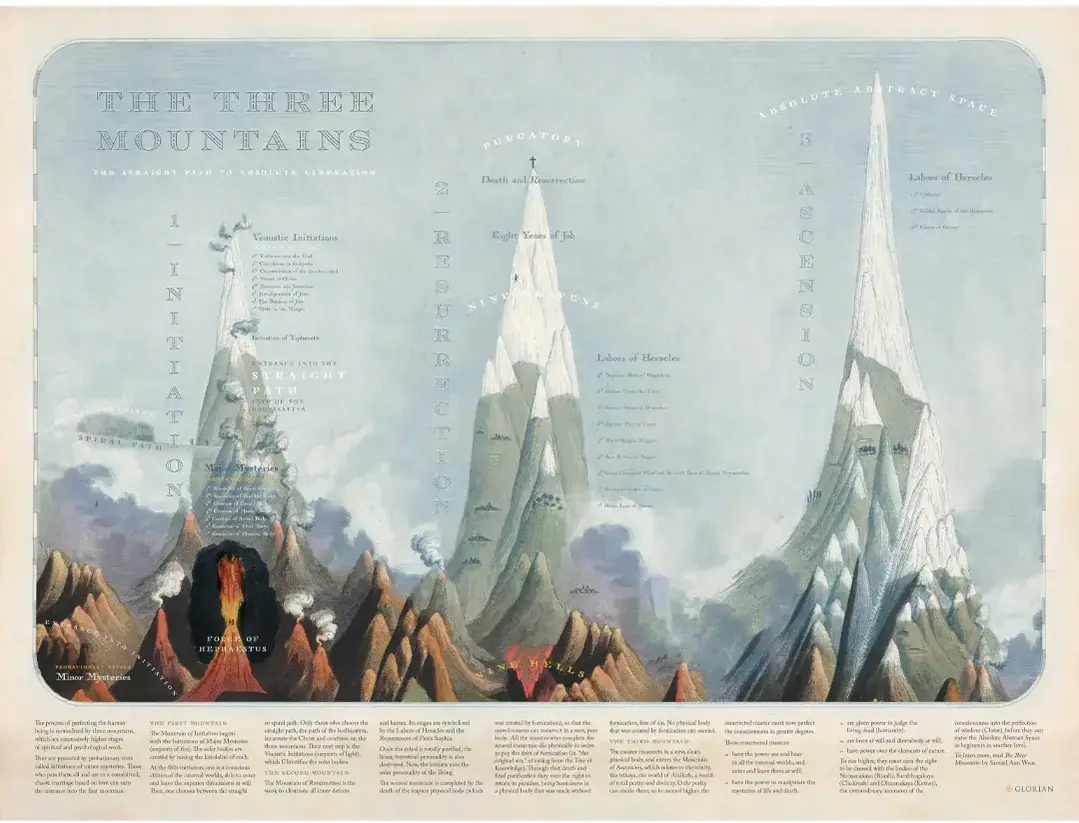
Instructor: Yeah, levels, right? I mean, in a sense, you have the Three Mountains poster, right? Glorian has this available. Three levels of initiation, or better said, three levels of spiritual work. You can even categorize them under introductory, intermediate, and advanced: Shravakayana, Mahayana, Tantrayana.
The First Mountain is the beginning. It is called Initiation. It is the path in which we first descend and face ourselves in our own hell realms. We enter what is called Minor Mysteries, nine. It is a probationary path. It is like divinity says, “Okay, you want to enter the path? Let's test you.” As the Qur’an says, truly Allah tests you to see who among you is righteous (29:2-3). This is precisely this, we get the karma and the ordeals. It happens and then we find the teaching and we suddenly face a lot of problems. Question: The dark night of the soul? Instructor: In a sense, it can be, but usually I would say the dark night of the soul occurs even later on when you have some level of development and suddenly divinity says, “Okay, here is a period in which We have to withdraw from your presence so that you face the loneliness.” Sometimes the dark night of the soul, as depicted by Beethoven's Moonlight Sonata, you know when real heavy ordeals hit. That is usually for masters, especially.
Beethoven was going deaf at that time. So, you hear his sorrow in his music that he wants to hear this prophetic work, but he cannot. It happens in many stages of the path.
But initiation is when you enter what is called the Major Mysteries. The Minor Mysteries can be performed by single persons (introductory level). But married couples can go through them very quickly and enter the Major Mysteries, which there are five major ones, which are talked about in a book called The Three Mountains. In a sense, this is all introductory in terms of scale or resolution, because for us, we have our own relative degree of introductory knowledge and intermediate knowledge, advanced knowledge, but there are higher stages of initiation. 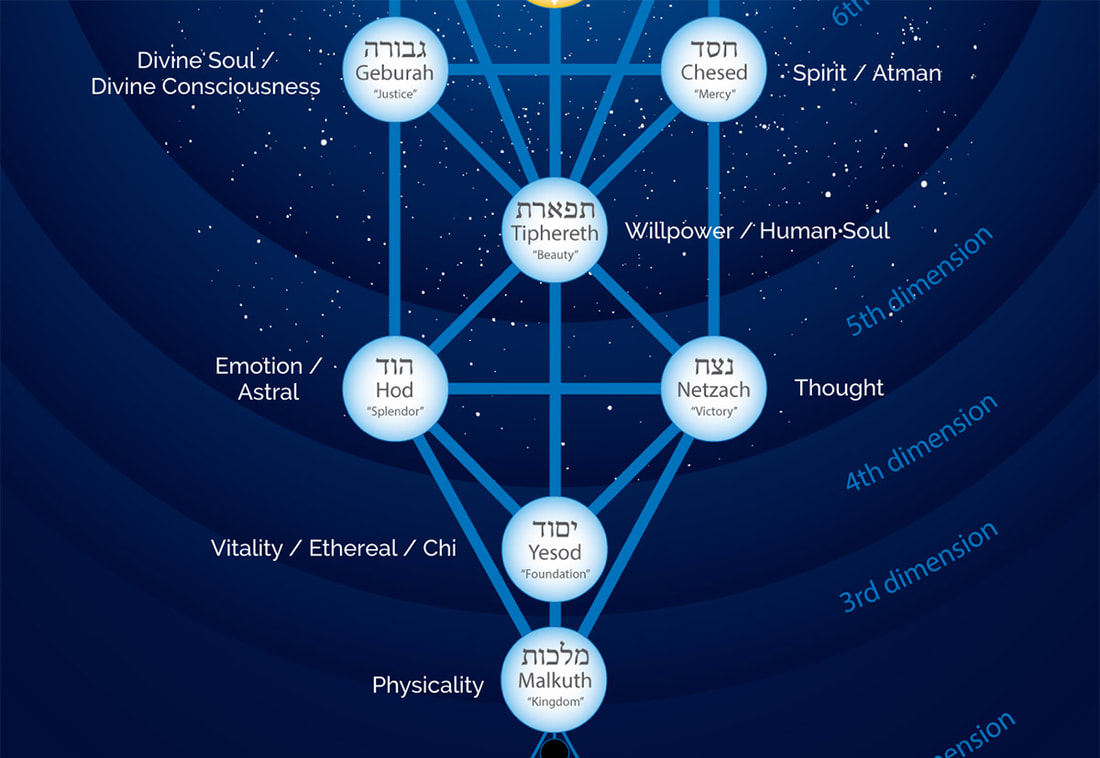
There is a decision that the initiate has to make after really working with these lower five spheres of the Tree of Life, creating the solar bodies of this lower diagram, raising what is called Kundalini of the body of מלכות Malkuth, the physical body; יסוד Yesod, the vital body; הוד Hod the astral body; נצח Netzach, the mental body; תפארת Tiphereth, the causal body. We create what is known as the wedding garment of the soul, and in a sense, at that point, the initiate has to make a decision:
Renounce everything and incarnate Christ, the light, or stay in Nirvana and take a spiral path, which is the selfish path of liberation, the path of the selfish gods, because they enjoy that level of nature. They do not return, and they stay in bliss. But an initiate who, at that point, decides to sacrifice everything and wants to return to the world, to give to humanity, to continue serving, they have the special blessing to receive what is known as the Venustic Initiation, the incarnation of Christ. They become what is known as a Bodhisattva like Jesus, Buddha. They incarnate the light. Then at that point, they enter higher development on the First Mountain, raising not only serpents of fire (Kundalini) up these lower bodies, but serpents of light. Fire and light―Ur-Anas in a sense. The Second Mountain is very elevated. The initiate has to learn to die all the ego. Imperfection and desire must be eliminated. This is the intermediate path, in a sense, because it is still very difficult. It is probably one of the most difficult parts of the work, but that is a level of work in which the soul is dying to every detail of defect. No imperfection can remain. 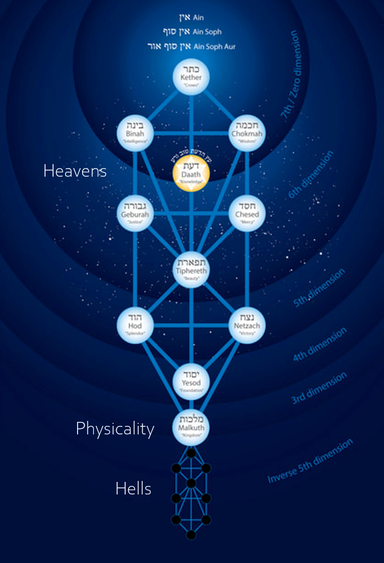
As they descend down hell realms―you can kind of see it in this glyph too, nine lower spheres mentioned by Dante, eliminating defects relating to the first sphere of hell―they then go up to the first heaven. Second sphere of hell, they go up to the second heaven, and likewise, down and up, down and up. Further down, further higher up, because every initiation is preceded by humiliation. It is challenging because the work of initiation is to eliminate all that is imperfect.
Obviously, at that point, when the ego is fully dead, the initiate prepares for what is known as resurrection, because there has to be no fault in the soul at all. That is a level of, say, Jesus, before he died. No ego left. He was crucified, but he had no ego on the cross. Dead. No defect, in a sense of a spiritual psychological state. No anger, no pride, no fear, no lust. Perfect, to a degree. But in the end, his physical body died, and he chose to resurrect. That is when the soul gets absorbed by the Holy Spirit (בינה Binah). Then there is a Third Mountain, which is for resurrected masters, which personally, I do not even understand because, I mean, I have had certain experiences, I have seen parts of this, but it is still very elevated. Even for resurrected masters, they have to go higher, from Nirmanakaya, Sambhogakaya, Dharmakaya, and even beyond. At that point, they are fulfilling the final labors in which they return to the אין סוף Ain Soph in kabbalah, which is the origin, the star of heaven, the star of Bethlehem, the synthesis of being. It is like a star that radiates light in the void, but is the real happiness of Bodhichitta, of Being. That star shone on the birth of Christ with the three magi. 
Three magi, depicting levels of work. You have a black king, a yellow king, and a white king. Those are symbols relating to alchemy, the alchemical tradition. Colors related to purification of the soul, levels. I recommend, if you are interested, obviously, for you to study The Three Mountains, but also, we have this poster available from Glorian Publishing. It maps out all the steps.
But obviously these levels are very elevated. A lot of us struggle even with just Minor Mysteries and getting our foot in the door of the Major Mysteries. Most initiates, if they get to this point, the Fifth Initiation of Major Mysteries, the causal body, create that vehicle, are tired. I had one instructor, he is from Glorian and he said that most of them weep tears of blood to get to that point, and then when they are given the choice, “You want to go to the spiral path, stay in Nirvana, enjoy your time, be peaceful up here, or take the direct path of Jesus? Renounce heaven, renounce hell… go beyond, in which you pay everything. You will pay all your karma.” In a sense like in Carmina Burana, that initiate is precisely that strong man or the strong: “Fate strikes down the strong. Let everyone weep with me!” That is the Mountain of Resurrection, because that pain is very intense. Most of them say, “I will take the spiral path.” It is not bad. It is joyful. It is peaceful. It is a good vacation. But the straight path is something else, very challenging. The next lecture we will give next week, we will talk about this in more detail, especially in The Voice of the Silence [Liberation and Renunciation]. I know it is a lot. Question: Can you expand on the law of the divine? Instructor: Sure, karma. Karma is divine. There are levels of karma too. Karma means “cause and effect.” What we do has consequences. In a sense, there are five aspects of the divine law:
Certainty, that cause, and effect, is certain. It will always happen in whatever we do. Our deeds always have a consequence. Magnification, the effect is always greater than the cause. Think of it like, you see a politician give a speech, and then people get mad because that person is speaking with a lot of hate, or any person. It is like putting a stone in the water, a lake. You throw the stone, the lake ripples, it spreads. The initial action was small, but it had a big consequence (magnification). The effect is always greater than the cause. Permanence, you cannot take back the actions that you have committed. You cannot take back a bullet. It always happens. My mind is escaping me in terms of the fourth, but there are five levels. [Compensation: you cannot receive the consequences of an action you did not perform]. But the more important one is transcendence, meaning, like a superior action overcomes an inferior one, and that is really where divine law comes into play―divine law being forgiveness. In a sense, there is karma for everybody: terrestrial people, everyone, all of us, laypeople, beginners. But there is also karma of the gods called Katancia, which is something very high. Question: Isn't it also dependent on our soul contract? Instructor: Yes, in a sense, initiation is a contract. In the beginning of the Minor Mysteries, you may have the experience in the internal worlds of being confronted by your own Being. In a vision, they say, “Do you want this?” and will show you what is ahead. In a way, divinity, the divine law, is saying, “Do you wish to move ahead? Are you going to sign this?“ Because if you do not pay up, there are worse consequences. You are more responsible. 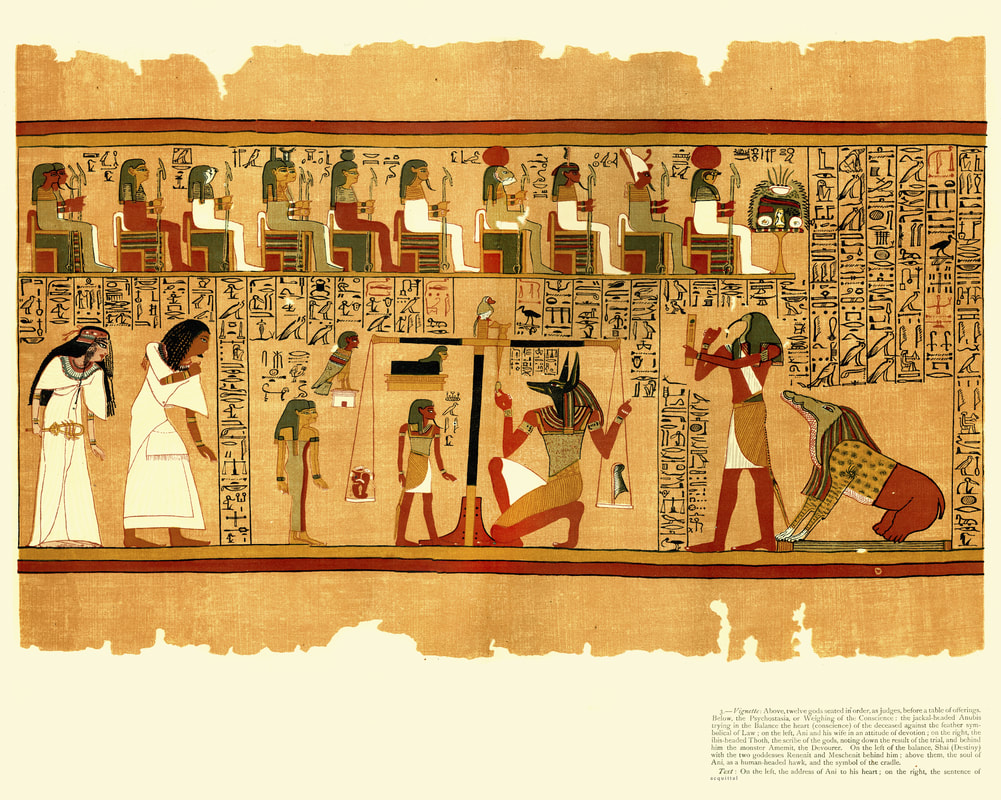
In a sense, that is Katancia, the law of initiates. The law of common people you can see in Egyptian mythology with Anubis. He has the jackal mask. He is judging the dead and the living, their souls of the defunct with a scale. He measures their heart and a feather, the equilibrium of their mind and their Bodhichitta, their Heart Doctrine or their heart. Anubis is a real being. He judges in the internal worlds the fate of humanity. He is an impartial judge. He has a mask to show that he is a divine representative, the blind justice, which is not arbitrariness, but impartiality.
But there is a higher law. In dreams, if you dream of wolves or jackals, it is a symbol of karma, the wolf of the law, the jackal (Anubis). If you dream of a lion, that is Judah, Katancia. The lion is the symbol of divine majesty, the might of God, Judea, יהשוה Yeshua, Savior, the Christ, יהודה Yehudah: י Iod, ה Hei, ו Vav, ד Daleth, ה Hei. Same letters as יהוה Jehovah, י Iod-הוה Havah, but with ד Daleth because ד Daleth in Hebrew, if you look at the Hebrew letters, they all represent principles. If you add in the sacred four-letter name of God, י Iod, ה Hei, ו Vau, ה Hei, יהוה Jehovah, י Iod-הוה Havah, you add ד Daleth, you spell יהודה Yehudah. ד Daleth refers to a “door,” and that is a door, once you cross, you can not go back. You are committed. That door is דעת Da’ath, knowledge, alchemy, the work with the creative energy, because when you start working with that, יהודה Yehudah, יהוה Jehovah, Judea, the higher law of divinity says, “You entered that door. You cannot go back. You are committed.” To dream of a lion means, you may have entered initiation in the past, but you fell, and the law, the lion, if it is calm, the law says, “We are on your side.” But if it roars, walk on eggshells―very severe―and that divine law has levels. Obviously for us in the beginning, we make mistakes. We fumble around. We are in the dark. Our mistakes are easily forgiven. But when there is more knowledge or responsibility, following divine law, that is higher, action and service of spirit, there are greater consequences, because the effects are always greater than the cause, according to Tsong Khapa in Tibetan Buddhism. That divine law is our own Being because He is a law in ourselves, the law of conscience, of what is right and what is wrong, the heart. Question: Does that develop virtue? Instructor: Yes, and those virtues are really developed when we eliminate defects, because the defects trap the virtue. You have the seven deadly sins in Christianity/Catholicism. The opposite is the virtue, but the virtues trapped in anger, like love is trapped in anger, chastity is trapped in lust, and if we eliminate the defects, we free the genie from the lamp. You break the bottle. You free the genie forever, and that is how by integrating consciousness little by little in the spiritual work, we become really virtuous. We become like Moses, a magician. Really, Moses could all these things because his power came from God, but he can only do that by getting rid of his self, so that the virtues could be spontaneous. Then also, by enacting those virtues when they are born, they get stronger. They become more powerful.
1 Comment
Emanuele
11/5/2023 05:07:01 am
Thank you for this lecture Your comment will be posted after it is approved.
Leave a Reply. |
The Gnostic Academy of Chicago
Free online courses, lectures, podcasts, and transcriptions. Categories
All
|
 RSS Feed
