
|
Welcome everybody to our continuation of this course: To Thine Own Self Be True!
Various mystical and religious traditions teach about spiritual experience, and while all religions have taught from their founders, the direct communion of the consciousness or the soul with divinity, many people in our modern era refute or criticize the potential or possibility for individuals like us to have that same experience. Unfortunately, this is a form of ignorance, and one that misses the point of the inception of these great traditions, primarily because these religious figures like Moses, Buddha, Jesus and many prophets or luminaries of humanity, all taught that we have the potential to experience these things, for what religions have called divinity, no matter the name, culture, time, or place. But, unfortunately, despite the beauty of these great religions and the practical and ethical import that they convey, many take these forms of traditions and knowledge at face value, as if they are something external. In fact, what they teach is the internal life of the true human being, who completely awakens and develops their full potential. A true human being is one who is in full communion with their true self, and that true self, as we have explained in this tradition, is divinity. Divinity is not outside, but is inside. It is important to reflect on the religious symbolism of great teachings, scriptures, and knowledge, because they reflect something about ourselves, if we have the wherewithal, the means, or the interest to explore this fact. 
So, all these religions, like as you see in this image of a church, convey great depth and beauty. What they really offer for the soul is a mirror to see ourselves, to see who we really are, our true identity. This is our innate truth, the real fundamental part of who we are, which is not tainted or contaminated by afflictions, states of suffering, egotism, desire, or, as we use in this tradition, the term “ego,” which is Latin for “I,” for self. That is not the true self we are talking about. We are talking about a state of being in which there is no impurity or affliction, a state of consciousness, our real authentic identity. But, we often do not recall or understand what this state is in ourselves, how to access it, how to cultivate it.
Our Focus
This is primarily what we will do in this lecture. We will define, describe, and demonstrate what it means to remember the true self as explained in the Gnostic tradition of Samael Aun Weor.
We will also clarify misconceptions about the nature of divine remembrance, what it is, how it pertains to the present moment, who we are now, not in some distant future or a memory of a remote past, but a state of being that is fully immersive, expansive, and integral, here and now. We will also identify the difficulties and dangers, oftentimes, the discouragement experienced by practitioners of diverse traditions who want to know the truth within themselves, what divinity is. Likewise, we will present some antidotes for how to address the challenges of this spiritual work, the path of remembering our real identity amidst the challenges and confusion, the conflicts, even within our own mind. We also explain practically how to integrate techniques we explained previously: self-observation, mindfulness, awareness, perception, with the state of remembering the self, so as to advance on this spiritual path. 
Etymology of Remembrance
It would be useful to examine some etymology about this term of remembrance, from the Middle English remembren; the old French remembrer, “to remember.” Likewise, the Latin re, which means, “again,” in the late Latin memorari, “to be mindful of”; from the Latin memor mindful ― memory. There is also the late Latin rememorari, “to remember again,” from the re + memor (mindful).
These etymologies emphasize a state of being, but unfortunately, in our conventional parlance, the term memory has many associations that are often subjective and do not really convey the spiritual depth of these deeper truths. What we want is not to nostalgically immerse ourselves in the memory of some forgone past, perhaps in our childhood or youth when perhaps we did not suffer so much. The state of remembrance that we are talking about has to do with recalling a state of being, because psychologically, who we are in the moment constitutes our reality. How we respond internally to the stimuli of life is how we qualify our particular level of being, or better said, our authentic spirituality or lack thereof. This remembrance involves a state of perception. We have talked about self-observation in which we are, as a consciousness, as an Essence, examining the contents of our psychology, whether it be through our thoughts, feelings, and body―mind, heart, and physicality. This is one step of spiritual development, a technique. Self-observation is necessary to discover ourselves, to watch the contents of our mind when we face diverse circumstances. To remember the self, the real self, is precisely to maintain that vigilance moment by moment. It is to be, to remember the state of consciousness that is not identified with egotistical desires like pride and anger, fear, laziness, and lust―egos, as we explained previously―defects, imperfections, or contaminants of mind. Self-remembrance is to remember, to evoke, to recall, a state of consciousness in which the most virtuous aspects of who we are manifest spontaneously, feely, unimpededly, and profoundly. It is not a matter of thinking. It is not an intellectual process. While we think of the word remember or remembrance, from the Proto-Indo-European mer, “to think about, to be mindful, to remember,” what we are talking about is a state of consciousness that is not determined by thought. It is the perception that examines thought, and it is the focal point, the crux, the crucible in our psychology, in which we learn to refine our purest sentiments. It is more of an emotional, superior quality, to remember virtuous states of being so that our actions, our thoughts, our mood, our body, is in service of the spirit. We use the term spirit in this context to reference divinity, the real truth within a human being, the divine. That spirit does not mix with our impurity or with our personality, our face, our language, our culture, our name, our habits, our biases, our political beliefs. Divinity is transcendent of that. To remember that state of being is precisely to manifest the best qualities that we have within: compassion, selflessness, altruism, faith or knowledge from experience, patience and endurance within hardship, love and sacrifice―the most noblest ideals we find within the founders of humanity's great traditions, all synthesized and manifest within a human being―the compassion of millions of mothers towards their children. That is the strength and power of divinity, which is a state of being that we can recall and remember, although we have conditioned ourselves greatly due to our mistaken habits. The term remember also is interesting, etymologically, relating to the Latin root membrum, which is a part or limb of the body. This is very interesting. Self-remembrance, as a state of consciousness, is almost a reconstitution of our authentic self, who we were in the past before division and conflict and discord―to put back the limbs of the body of divinity, to reunite the parts of our consciousness, our Essence, as we said previously, the term for “soul” in our tradition, that is trapped in ego. All of our defects like pride and anger are mistaken senses of self. They are what condition and cage our soul, and the Essence must be freed from all of that. We must break the shells of desire, of anger and pride, vanity and lust, so that the pure soul can be liberated from it and reintegrated back with divinity. This is also what it means to remember (to re-member or reconstitute our true self), but it is a long work. It is a patient process. We also state that remembrance of the spirit is precisely our inner intuition, our intuitive knowledge, our knowing without having to think. It is a quality of the heart in which we feel more connected with virtuous qualities of being. Really, a proper psychological state in life is perhaps the greatest weapon we can ever wield when we are faced with hardship and ordeals, situations and circumstances that would break normal people. There are ways to cultivate happiness, giving, serenity, even during torture, as is emphasized by the lives of the great martyrs. It is a state of being that is possible for us, but one that requires prudence as well as a lot of work. Samael Aun Weor, the founder of the gnostic tradition, emphasized a very beautiful teaching in his book Treatise of Revolutionary Psychology, where he emphasizes how our inner psychology determines our way of life, and by remembering a proper state of being, we can navigate the great chaos and complexities of life. This is the state of self-remembrance: The best weapon that a human being can use in life is a correct psychological state. ―Samael Aun Weor, Treatise of Revolutionary Psychology
Even the mystics of Islam, the Sufis, taught in some ancient scriptures such as Al-Risalah, Principles of Sufism, that remembrance of God is the sword of the seekers. With it, one deters bad circumstances. It is the same teaching.
Mnemosyne: Goddess of Spiritual Work Memory
In the path of self-remembrance, we also cultivate what is known as a work memory, but this type of memory is not mechanical. It is not associative in the sense that we think of it now.
Usually we think of memory as relating to recalling what we ate for breakfast, or having an association in the mind, that a relates to b. It doesn't really take much effort. Oftentimes, memories come to us without thinking or without willing it. They simply appear. We call this reverie, daydreaming, reminiscing. Oftentimes, it constitutes this psychological state of sleep. We are not really actively willing these states of perception to arrive. They come to us, and while memory in the practical, conventional sense of life is necessary―it has a utility; we need memory to be able to subsist in life, to be able to pay our bills, to know where to drive our car, to know what to put on a resume―these are all useful and necessary, but there is a spiritual type of memory which is very different and is characterized by the Greek goddess Mnemosyne. This Greek goddess Mnemosyne is the goddess of memory, but not memory of the intellect―memory of the heart. Her mythology or her story, her genesis, conveys some very deep truths for us in relation to this topic that I would like to relate. She is the goddess of memory, a Titaness, meaning, a great giant or figure of power and ability. She is the daughter of Uranus and Gaia. Uranus is the god of Heaven. Gaia is the goddess of the Earth. What is interesting is that she is a daughter of both heaven and earth, and emphasizes the practical utility of work memory. Work memory, specifically, spiritual memory, is the knowledge and data stored within the Essence, the soul, when that soul is awakening and working. The type of memory I am talking about has to do with perhaps spiritual experiences, one in which you actively navigate the superior dimensions of nature, such as in dreams, knowledge that you retain from the internal worlds. It also relates to knowledge of yourself. When you have comprehended certain defects, a different ego, perhaps like anger, you understand its mechanisms, its thought processes, its movements in the body, its food, the way it feeds, the way it acts. What series of defects do these egos or specific ego manifest? There is a whole complex range of data ascertained by the consciousness that is observing the facts. As we are studying ourselves, meaning our centers like our mind, heart, and body, we are developing spiritual work memory. We are remembering what we really need to know to walk effectively in the spiritual work. So, why is it Mnemosyne connecting heaven and earth, being the daughter of Uranus and Gaia? It is because this type of work memory, this remembrance of divinity, is the knowledge that we gain from spiritual experience, but also how we navigate our earth, our physical world. The two are not separate. They are integral, and this is known in many studies as the path of spiritual initiation: how we work practically in life and transform our daily life by remembering divinity. Mnemosyne is the mother of artistic inspiration and she is also the mother of the nine daughters, the nine muses, with Zeus. This is very beautiful. For those of you who study numerology, perhaps the teachings of Kabbalah, Jewish mysticism, especially, understand that the number nine is highly significant. Likewise, Mnemosyne is the mother of artistic inspiration. What art does she teach within us metaphorically, archetypically? This is the art of creating the soul. Artus, meaning “to join, to unite,” like heaven and earth, like within a great renaissance painting, the beauty of abstract symbols within great forms, pleasing shapes, human beings, great artistic creations that inspire the soul to want to study oneself. Then, a muse, specifically, is an inspiration. Many poets of the Greek mythology or Greek traditions have invoked the muses to compose their great works and epics, like Odysseus or Homer within The Odyssey, and even The Iliad. To muse is to contemplate that which is transcendent and pure, and really work memory does that for us. As we are awakening our consciousness and remembering a superior state of being, we have greater inspiration and joy to move forward because we see the practical results of our work. 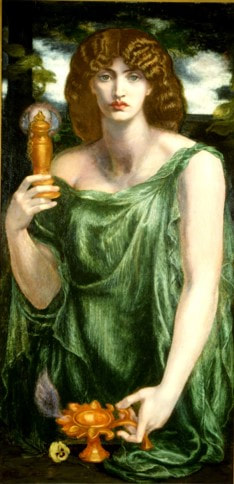
There are some other symbols that are encoded, such as in this painting of Mnemosyne. She carries the lamp of memory. For those who are familiar with teachings of Samael Aun Weor, we thought about the transcendent nature of a marital union, of a divine sexual compatibility between husband and wife, the union of male and female. You can easily pick up on this image, which has a phallic significance, also that of the woman.

The lingam-yoni within Hindu tradition and the source of real spiritual power is really encoded and found within the creative energy, which we will talk about in a future lecture called Empower Your True Self. Here we just mention it in passing because the lamp of memory, of spiritual work memory, is deeply related to the use of our creative forces, because that light, the energy synthesized within our creative organs, can be transformed and used spiritually to illuminate our psyche.
So, the name Mnemosyne is also derived from the same source as the word mnemonic. It is the Greek word mneme, which means “remembrance” or “memory.” We even know in our modern culture of memes, right? You see images with some brevitous quote to inspire some type of insight or meaning into politics or whatnot, such as you find on X or Twitter. So, a meme, or a source of memory, of remembrance, is etymologically tied there. But again, the type of memory we are talking about is spiritual, memory of divine realities that we have experienced. There is also some deeper truths with Mnemosyne. When supplicants would speak to the Oracle of Trophonios, a Greek temple of esoteric mysteries, they would first drink from the fountain of Lethe, which is forgetfulness. This is a beautiful symbol. In a sense, we need to forget our former ways of being in life, not from a sense of naivety or willed ignorance, like we are no longer going to pay our bills or go to work. In fact, what this means is to let go of our former sense of self that we were so attached to, that were really the focal point of our life, more egotistical states of suffering. One has to forget that form of life and to adopt a new way of being, to let go of worldly thoughts, and then Mnemosyne, the fountain of Mnemosyne, is related to real spiritual work memory, that they would drink from that fountain afterwards―so, forgetting the world and then remembering the divine. Again, this is metaphorical. This does not mean we become irresponsible people who don't take care of their responsibilities, to just live like a hermit, right? Forego responsibility or a job or a career or family or taking care of one's loved ones. One can be in the world and yet be not of it. It is a psychological attitude, and Mnemosyne is precisely that: remembrance of higher transcendent realities and truths within ourselves. After drinking from the fountain of Mnemosyne, these initiates of the Greek mysteries would then recall their spiritual descent. They would remember the process by which they first had to confront themselves and how to overcome it. It is a form of spiritual descent, to face oneself like Dante descending into Inferno, so as to rise up through Purgatorio and Paradiso, a beautiful metaphor and symbol. Work memory helps us to advance, spiritually speaking. The Divine Feminine
When we talk about self-remembrance, we also talk about the divine feminine.
So, in a basic level, we may know from these studies that to remember the self is not to forget one's state of watchfulness. At a basic level, we learn not to forget that we are paying attention. We are observing our three brains that we discussed previously: our intellect, our emotions and motor-instinctive-sexual centers. We watch our thoughts. We watch our moods. We watch our impulses to act. Now, primarily, that is the beginning. We want to cultivate that state of remembrance daily, moment by moment. But we also want to remember that which is called the divine feminine. Our inner Being, our inner divinity, has a derivative. 
This divine feminine, this inner goddess, was known in every tradition by multiple names. We have the Tibetan Tara, mother of compassion. We also have the Egyptian Isis, who is the priestess of Osiris, the Divine Father; Athena or Minerva who armored the Greek and Roman warriors of the great epics: The Odyssey and even The Aeneid, and also, we have mother Mary, מִרְיָם Miriam in Hebrew, which means “to raise.”
She is part of our true identity. She is the power of all the compassion within every mother of the world. She is the limitless, pervasive, and all-encompassing strength and compassion of the gods, of all those masters and prophets, buddhas, angels, whatever name we wish to give to masters, and, she is within us. She is the power of our inner divinity who can liberate the soul. She has been characterized in these great myths by a type of relentless compassion and also terrible severity. 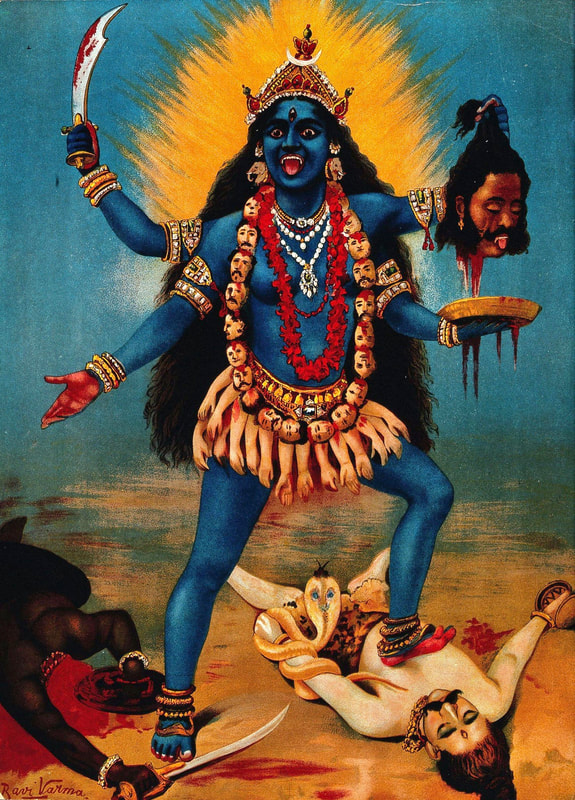
You can even think of the Indian Kali or Durga, who slays demons. These are all very beautiful metaphors for an internal reality, our own Divine Mother.
Our Divine Mother is the part of our being responsible for liberating the soul. Unfortunately, in many religions, especially Abrahamic, she has been extirpated from scripture. She has been removed, and unfortunately, religions that reject the divine feminine in their exoteric or public sense are halfway to atheism, because no child can be born from just one sex, whether it be male or female. What is necessary is the union of both. Likewise, internally, our soul is never born from a man. Our soul is born from a mother who was impregnated by the spiritual seed or potential, the divine masculine. As above, so below. We want to evoke the presence of our Divine Mother, because as we are paying attention and watching ourselves, remembering a state of watchfulness, we also want to remember those qualities that pertain to Her. A lot of people struggle with this. Many of us did not have, perhaps, a good upbringing. Perhaps it could be hard for some to identify with the divine feminine. Maybe because one's main, central maternal figure in life was contrary to the ideal. It could be very hard to try to evoke what it means to remember the divine feminine, especially if we have had bad examples in our life. I think a particular way to combat, or better said, circumvent that frustration or maybe doubt and despair, is to reflect on certain women who have truly embodied these virtues. Again, we have these mythological figures. But there also have been many female masters who embody these principles. But, regardless of one's physical sex, we all have a Divine Mother, the mother of our soul, and She is characterized by the most virtuous qualities of a human being, and more. She is absolute perfection. We learn to cultivate a relationship with Her by seeking Her in our mind and heart―to evoke and recall a state of being without thought intervening, in which we know how to act in circumstances that are perhaps quite challenging. She is that Athena who guards and guides Odysseus in his battles. She is Mary or Miriam who raises Christ. She is the Isis figure of the great temples of Egyptian Mysteries, who knows how to really lead and instruct, and She is the unrelenting compassion of Tara who, when seeing the suffering of any human eye, outstretches herself to fight for their salvation. This is all within us, and we can learn to evoke that state through practices like meditation, but also self-observation. We observe our psychology and we watch our heart. How do we feel? Are certain states of being going to be detrimental for our life? And, to observe and watch the fact. When virtuous qualities or states of being emerge within our psyche in relation to events, we have to discern with our heart and act on what is most virtuous, because that is the thread that connects us to our Divine Mother, our conscience. 
Filial Love: Remembering Osiris through Isis
This is what is known as filial love: the love of a child for its mother. We have here Jesus and Mary as well as Krishna and his mother. Likewise, Osiris, Isis, and Horus, emblematic of the eternal triad: father, mother, son. Our Essence or soul is precisely Horus, the light of being that can emerge from the depths.
Filial love is to is to have that state of consciousness in which we are inspired to act for humanity, for the of benefit of humanity, for the well-being of others. That filial love is precisely a state of being. Self-observation is not enough. Merely to watch and get data about our defects is the beginning, but self-remembrance is when we feel the joy and inspiration of behaving and acting compassionately, even if it means being severe. So, I do not want people to get the mistaken assumption that compassion is like the Hallmark card sentimentality of being a nice person in a conventional sense. This state of being is not contrived. It is not fake. It is penetrative and profound, and it is a state of love that can be cultivated, even if it means being severe and disciplinary and establishing boundaries. Love is not complacency with crime. Filial love, again, is that connection with divinity in our heart, and what we strive towards in this path is precisely to reconstitute the divine body of being. What we want is to bring back the diverse parts of Osiris. So, in the Egyptian mythology, Osiris, the divine masculine, was dismembered by his evil brother Seth, Horus' uncle, who is a demon. This figure constitutes, or better said, Seth constitutes our diverse defects, egos, and desires, our psychological errors, which have dismembered our potential. The path of filial love is precisely fulfilled by Isis. Isis, the Divine Mother, has the precise duty to collect all the parts of divinity, the soul, that is trapped within imperfection, within mistakes, and to free the consciousness. By freeing the consciousness and extracting the soul trapped in each defect, we remember Osiris. We recombine all the diverse parts of our being so that we are an integral soul, a perfected consciousness, a master. What is unique about how Samael Aun Weor specifically describes the state of remembrance is precisely by evoking the state of recollection of divine being, which are precisely those qualities of strength or compassion, love, serenity, insight, spontaneous and novel, alert, vigilant, comprehensive and profound. Those states of consciousness are within, and to develop a relationship with our inner divinity is precisely achieved through Isis, Mary, Miriam. To have love for divinity is to act on the best qualities in ourselves at the expense of our own ego. We want to renounce our own particular states of mind which are problematic and cause pain. So, we do not show filial love when we repress our anger, merely supplicating and bottle it up so that it stews and ferments. We show filial love neither by feeding into that element and giving our anger and desires what they want, but comprehending and diffusing that fire with the serenity of love. This requires real strength. That filial love is how we show, in moments of great crisis, a virtuous action, when we remember or reconstitute our divine Being by learning to renounce, psychologically, our attachments to behaviors that create pain, and thereby, act upon real virtue. It is not enough just to look at our defects and see how bad we are, and to cultivate a sour and morbid attitude. That is wrong. Self-observation is necessary, but we have to learn to develop love in our heart, proper ways of being and virtue. That only comes about by meditating, not only on our defects, but also our virtues―that which is generally good in us and creates the harmony of our communities and relationships. 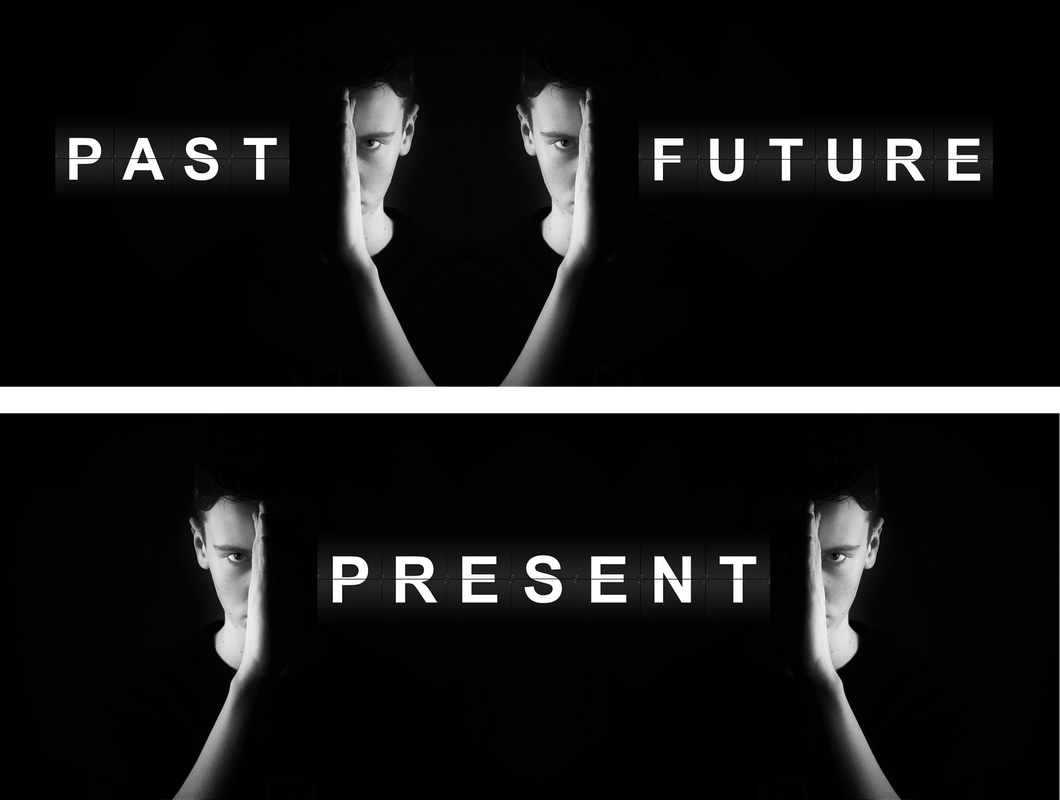
The Paradox of Divine Remembrance
This is an interesting paradox. What is divine remembrance? We can say, in a sense, that memories relate to the past, as we explained. But, what does it mean to remember the moment? We talked about this in brief.
Our memories constitute our records of the past, and oftentimes, they can be unreliable or fluctuating. They change with different circumstances or bias. Oftentimes, memories change when we look at them if we are not careful. It is very difficult to examine our memories without some type of identification, which we explained previously, to feel that we are invested in that thought or emotion of the past and to invest our energy psychologically into it. While we want to reflect on our past and understand our, perhaps, traumas of the bygone age but also our current moment, it is important not to identify with memory. Our memories also often project themselves into the present and cloud our future. We do not see what is new. Divine remembrance is not that. Divine remembrance, remembrance of divinity, is precisely found when we do not have any artificial contrivance obscuring our vision. That has to do with projections of mind or egotistical states of being―thoughts, feelings, and desires. But to look at the moment and to forget the past, in a sense, to not to anticipate the future, but look at now, is divine self-remembrance. We remember the moment, not the past or the future. This is the fundamental paradigm shift that we need if we want to cultivate a relationship with divinity. It is also the basis of self-observation. It is important not to just observe our mind, heart, and body, but also in the moment cultivate a relationship with virtue. 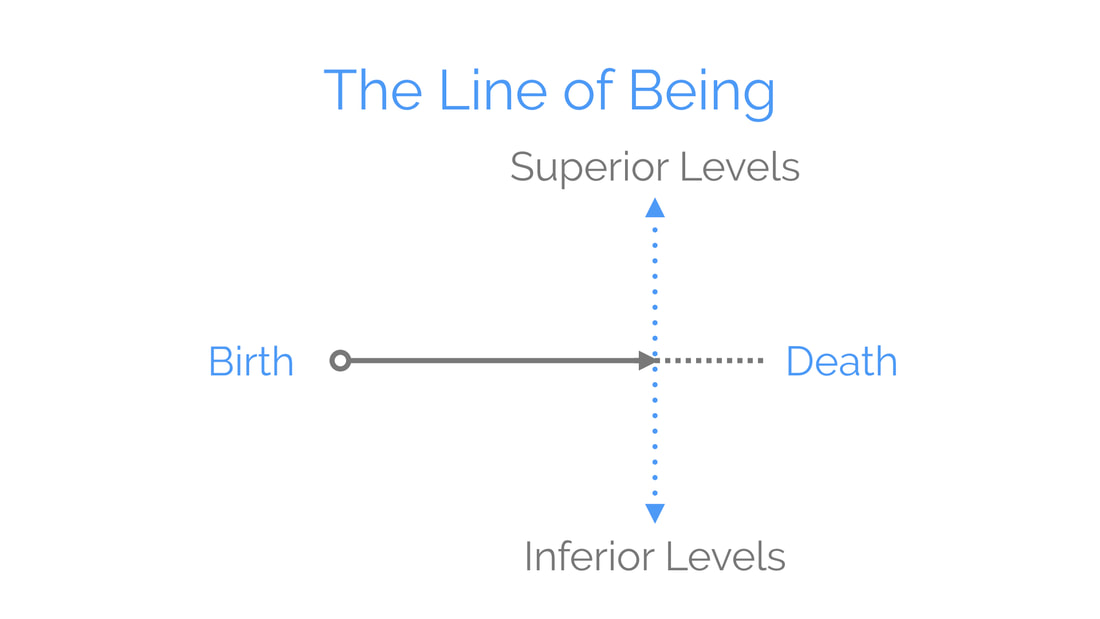
The Lines of Life and Being
This state of divine remembrance is mapped out in what we call the lines of life and being.
The horizontal line of life we all know. It is our birth, our childhood, education, teenage years, adulthood, even perhaps our marriage and family, old age, and then death. We all travel on the horizontal line of life. We all travel from birth to death, and yet, many of us fail to acknowledge that there is a vertical path. The vertical path has to do with our attitude, our psychological state of being. It is intersecting with the moment in this horizontal line. We cannot avoid life, but we can transcend our suffering in the way we approach it. This has to do with the verticality of being. This is not in literal space in terms of superior or inferior relations like heights and depths. This is metaphorical, psychological. There are virtuous states of being and there are inferior states of being. There are the qualities of the superior Essence and there are inferior qualities of being related to the ego, defects, desires. Divine remembrance is now. It is involved in the way we interact with life and how we respond to difficult circumstances. Divinity is precisely in the moment and while for a lot of us it might be difficult to conceive or conceptualize that divinity is very close to our Essence, it is important to emphasize a beautiful quote from a scripture known as the Qur'an. This is from Surah 50, verse 16, in which we find a teaching about how divinity is with us and is near to us, but oftentimes, we choose to ignore that presence because we are identified or clouded. We are attached to our own desires. We did indeed create man, and We know what his soul whispers to him, and We are nearer to him than his jugular vein. ―Qur’an 50:16
Divine remembrance is accessible to anyone if we are willing to look, but if we identify with our own mind, we are disconnected. This is why the best act of worship in any tradition is mindfulness.
The Best Act of Worship
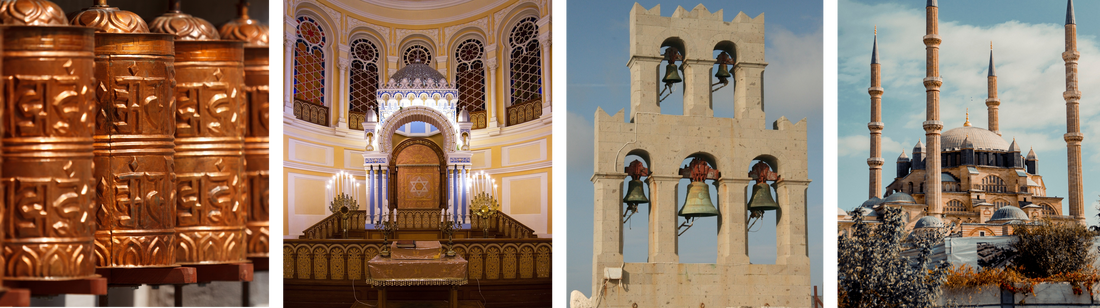
We have included some images from diverse traditions that highlight the beauty of remembrance. In the Tibetan tradition, there are mantra wheels that practitioners would move with their hands to have them roll so that, in a sense, metaphorically, one is spinning the consciousness, activating the soul, giving it power and energy through mantra or sacred sound.
Mantra means “mind protection,” to protect the mind from one's defects. In many senses, mantra has to do with sacred sounds or vocalizations, which some practitioners of different religions use different vocalizations or sacred prayers, mantras, to invoke good energy in the consciousness and to pacify the intellect, desire, and the body. This is so that the soul is more receptive and alert, awake, and vigilant and can receive intuitive insights into reality, but also ways to act ethically in life. There is also the Jewish synagogue here where practitioners will recite Torah. Hebrew is, again, another language of mantra, sacred sounds which evoke harmonious and beautiful principles. Church bells on cathedrals are also a symbol of remembrance, which is why when church bells go off at certain hours of the day, they are calling their practitioners to remember God. Likewise, with minarets, the top of mosques or masjids, you find adhan, call to prayer, used by singing melodiously in Arabic, verses from the Qur'an. These are all reminders to pay attention, to watch the moment. This is why Al-Qushayri, or al-Wasiti, in a scripture called Al-Risalah, Principles of Sufism, taught: The best act of worship is watchfulness of the moments, that is that the servant not look beyond his limit nor contemplate anything other than his Lord and not associate with anything other than his present moment. ―Al-Qushayri, Al-Risalah: Principles of Sufism
This is basically summarizing everything we have said: be present, watch, pay attention, but then follow your heart, your intuitive impulse of conscience. Do not look beyond what is not present to the future nor contemplate any other state of being other or contrary to divinity, and that is something that you taste, and we taste again and again. We discern what sentiments in our emotional center or thoughts in our mind are constructive or not, and then we do not associate with anything other than the moment― not to daydream or wander in the intellect, to look beyond the present.
Balancing Self-Observation and Self-Remembering
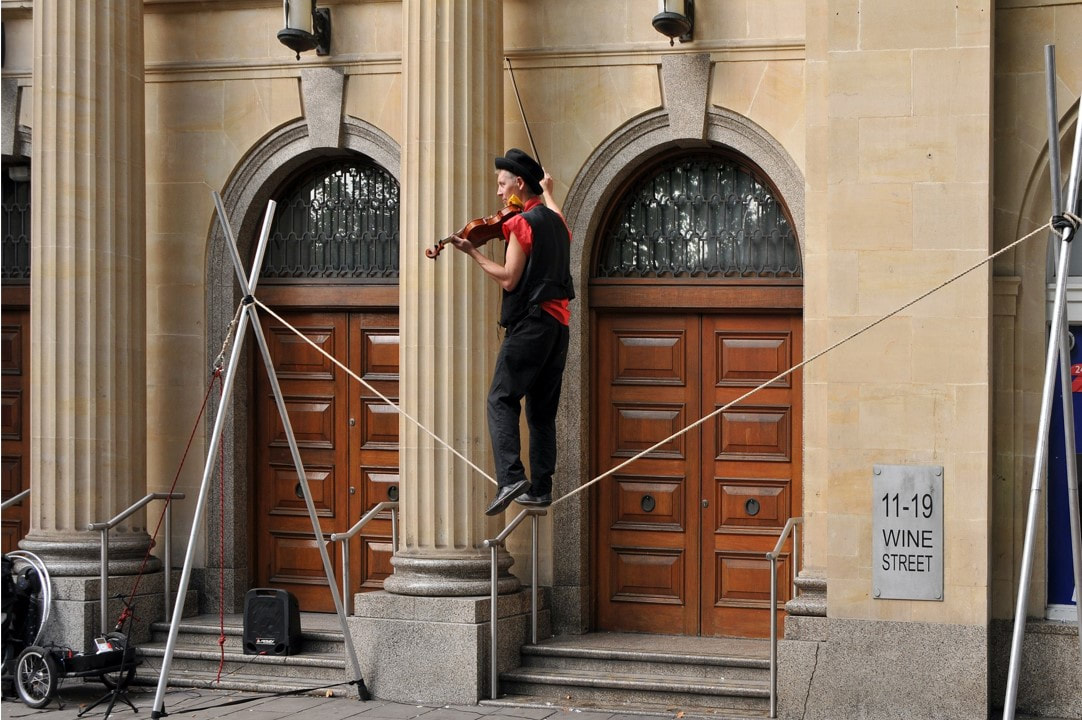
So, this is precisely the balance between self-observation and self-remembering. Self-observation is a balancing act. In a sense, it is like this violinist who is playing music, beautiful music while walking a fine line in life, that line of verticality up in space, higher levels of being.
Self-observation is like balancing yourself on a wire. It is how you use your skills to find equilibrium. You are watching yourself and being attentive, because if you do not, you fall. The same thing psychologically, in the sense that one identifies more or less with certain circumstances and may invest too much energy in problems. So, self-observation is watching all of the processes of our mind and heart and body, so that we can find equilibrium. Then, the actual joy of doing that act is self-remembering. It is the state of love and compassion in which we are guided in our deepest core for how to respond to the challenges of existence. 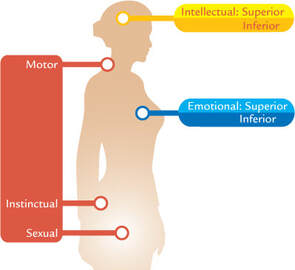
Spiritual Connection and Disconnection
But oftentimes, like I said, we may feel disconnected.
This often has to do with the fact that we may not be looking appropriately. We may be too invested in one or other of the five inferior centers of our human machine. This human machine maps out physiologically in our body, but also psychologically, because these centers is where the ego manifests. Perhaps we may be more intellectual or movement-based, maybe more instinctual or even sexual. Some of us may even be more invested in our emotions, negative emotions, negative desires, and so, we waste energy through these centers. We may be disconnected because we are too identified with the lower centers, and not in tune with the superior too. Self-remembrance involves the superior emotional center and even the superior intellectual center. These centers do not allow the ego to act. No ego can act through those centers. They belong to the Being. They are like your personal telephone or cellphone connection to divinity. It is how divinity communicates to us through hunches in the heart and through insights in the mind. These come like a shock of lightning, like an electric bolt. It comes out of nowhere even, and it sparks us into inspiration and wakefulness and vigilance. So, Samael Aun Weor mentions that we need to connect with these two superior centers, and that when we do not, we feel a lack of inspiration or strength. He relates this in Treatise of Revolutionary Psychology: It can come to pass that we are incorrectly related with ourselves. Accordingly, we suffer deeply due to the lack of inner enlightenment. Obviously, if the lamp of our room is not connected to the electrical installation, our room will be in darkness. Therefore, those who suffer from a lack of inner illumination must connect their mind with the superior centers of their being. Unquestionably, we need to establish correct relationships not only with our planetary body (physical body) and with the exterior world, but also with each of the parts of our own Being. ―Samael Aun Weor, Treatise of Revolutionary Psychology
Oftentimes, we may feel pessimistic or doubtful. Many people write to us about feeling depressed or anxious, that they cannot remember God, or they feel that they cannot remember divinity. They feel disillusioned, in pain. What happens in this case is that we are often identifying with very strong egos, and so that is why it becomes necessary to introspect even further and to cultivate acts of giving, not merely of material things, but also perhaps sacrificing our time― serving humanity in some way so that we are not so identified with ourselves.
But, oftentimes people feel lost. If we do not feel connected with virtue in the moment, then we become pessimistic, tired, exhausted, sad. We need adversities to change, but unfortunately, when hardships do occur to us, we do react and we do feel disconnected or we identify too much with our own ego. The solution is to accept the inevitable and to take responsibility for what we have caused in our lives―to look at ourselves, even when it is especially painful. 
Disillusionment and Striving in the Spiritual Path
Samael Aun Weor iterates these point about how some people may be inspired by hardship and others may crumble:
Pessimistic patients, tired of so many doctors and medicines, no longer desire to be cured. Yet, optimistic patients struggle to live. 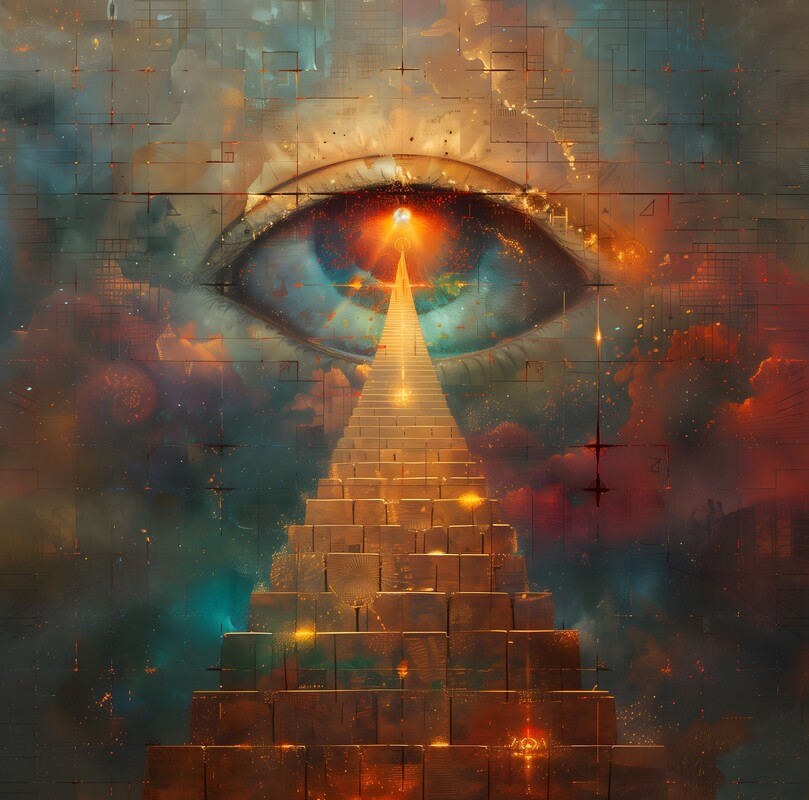
The First Conscious Shock
So, these are metaphors for psychological and spiritual life. In fact, when things are hard for us, it is even more important to attempt to remember the self and to remember divinity, primarily because this type of insight or connection, like a shock, inspires us to continue forward, to ascend the ladder of being up to the divine.
Samael Aun Weor concludes with this quote: During times of rigorous temptations, discouragement and desolation, one must appeal to the intimate remembering of the Self.
So this is food for our soul. It is a shock when we genuinely remember the self. When we stop forgetting divinity and when we forget our pains and problems for a while. Divinity is always here for us waiting in order to heal our heart. But it requires that we climb. Self-remembering, remembrance of divine and virtuous states of being, helps to really change our psychology. It even gives our body energy and enthusiasm. So, we are always nourished in mind, body, and heart by connecting with the source of life, when we are looking at our mind for what it is and being willing to see the roots of it.
Resource
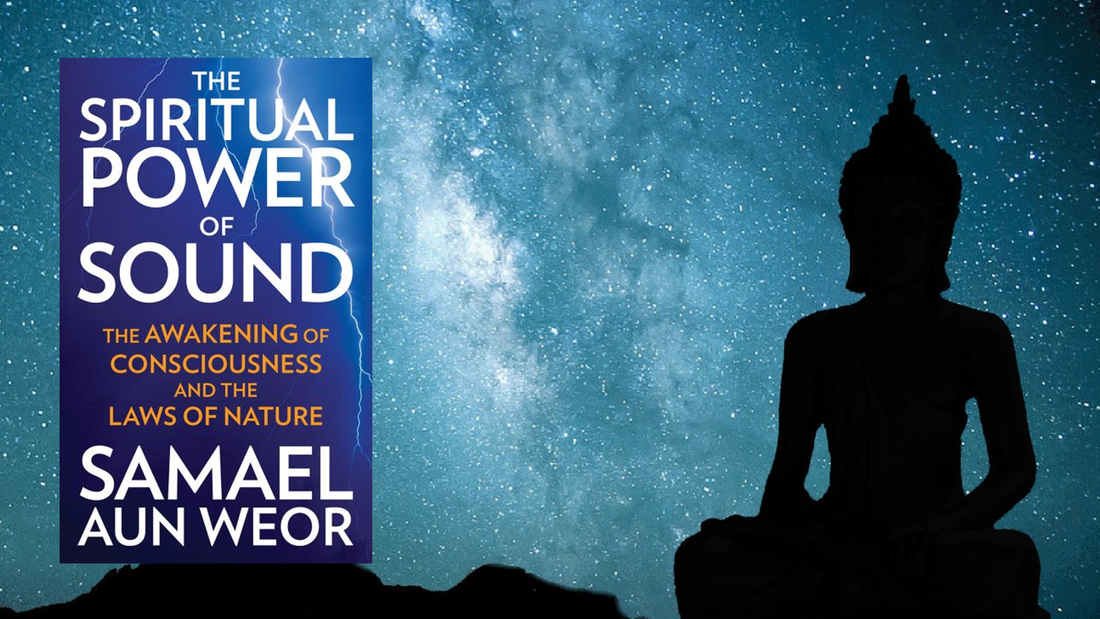
To conclude, we would like to reference a book by Samael Aun Weor. It is called The Spiritual Power of Sound: The Awakening of Consciousness and the Laws of Nature [republished as Profound Meditation]. There are some references to how sound or mantra helps to activate latent parts of our psyche, so that by giving us good energy in meditation through mantras and prayers, sacred vocalizations, we have a greater impetus and enthusiasm, greater energy to work.
So, some of you may be familiar with other aspects of this teaching like the runes, Nordic yoga, sacred rights rejuvenation, mantras. These are all very useful for accumulating energy in the the Essence, so that it has the energy and strength it needs to be able to work effectively on the mind. So, at this point I would like to open up the floor to questions. Feel free to write them in the chat. We will read them off in the order that they are given. Questions and Answers
Question: I started reading the books of Samael Aun Weor in April this year. Shortly afterwards, I was diagnosed with autism, which maybe explains why I have sensory processing difficulties. I experience sensory overload due to heightened sensitivity. I can hear, see, taste, feel, and smell things others can't. As a result, I experience physical exhaustion and burnout, which led to 25 years of addiction. I have now been sober for five years. I am thinking that if I learned to transform my unconscious and conscious impressions, start practicing sacred rites for rejuvenation, dream yoga, learning to consciously astral project, and practicing authentic meditation, it will be far more beneficial than studying books on sensory overload and synesthesia. I think one of my character defects is trying to veer me off this path and get sidetracked on this autistic awakening. What are your thoughts?
Instructor: There is benefit to conventional psychological wisdom. Obviously, there are things that we can study and read relating to disabilities like autism that can be beneficial, but obviously in your own experience, you need to discern what is practically working for you. So, what we want to emphasize is that while the Gnostic tradition gives many practical tools and techniques that can help to transform our state of mind, it is also good to acknowledge too that in Gnosis, we do not fanatically accept or reject things. We like to study and look for the core of what is useful and practical. So, if you find that there are some insights from sensory overload or autism literature that could be beneficial, I'd say be open to it. But, obviously, we tend to go a bit deeper in the Gnostic tradition, by giving us exercises that help us to really go deep into the roots of our particular psychological conditions, whether that may be related to having a physical diagnosis or not. So, I think that it is important to have one's foundation, which is our spiritual work, but that doesn't mean that one has to reject the insights of other practitioners, such as from professional psychology or medicine. There may be things there that are deep that could actually help you. I am not familiar with that literature so I can't really comment, but I'd say keep yourself open to investigating. Obviously having your core practice is going to be the most beneficial and useful for orienting your life. You know, follow your intuition. Question: When we detect an ego of lust, what is the best thing to do at that very moment, especially if the impulse is strong? Any prayer or mantra that is particularly helpful? Instructor: You know, one thing is to observe the lust in the moment, and oftentimes what can happen in many students is one feels an immense aversion, because we know from our Gnostic studies that we want to understand and eliminate lust. But unfortunately, the tendency for many individuals who are practicing the creative teachings, the sexual teachings, is that they become immensely afraid of lust and therefore develop a complex, in which one reacts towards seeing lustful desires in themselves. Now, oftentimes this can relate to repression. You see a defect emerge in yourself and then you feel aversion and try to push it away. That is also wrong. We do not want to feed the lust, but also not to hide it or run away from it. You want to comprehend it.
There are prayers and mantras that you can use like Belilin, is one mantra given by Glorian Publishing. It is a way to reject negative influences, but also lust. It is very effective, but oftentimes, you might be finding yourself reciting mantras out of fear, and this is ineffective. Fear does not make any exercise or mantra effective. If you are not calm of mind and actively looking and remembering God, oftentimes what can happen is that fear intervenes and tries to repress or suffocate the desire that is there. Meanwhile, there is no comprehension.
Belilin is a good mantra, especially, if you want to feel more connected with divinity, in order to invoke more positive influences. But, be mindful that the prayers are only as effective as our concentration and remembrance, and that we are not acting out of paranoia. So, I believe this is a teaching given in Hamlet by Shakespeare where, "My words fly up to heaven, my thoughts remain below. Words without thoughts never to heaven go." So, be mindful and remember what you are doing so that the mantras are effective. If we are doing it out of fear, then it will not be. Question: Do superior emotions such as happiness, inspiration, and hope waste energy or empower the consciousness? Instructor: Superior motions empower the soul. They rejuvenate us. So, going back to the quote we ended with, with the first conscious shock, self-remembrance produces a charging of our psychological and physical batteries. So, we will find that we have much more energy to work spiritually as we are remembering divinity. Those superior emotions give us a lot of strength. They do not waste energy like anger or pride. They give us force. That is why we call this science “hermetic sealing.” If you studied alchemy or the medieval traditions of alchemy where they talk about being hermetically sealed, it means to not let impurities into our mind, meaning, we do not act inappropriately in thought, word, or deed, and by acting appropriately, consciously with superior motions, we give us more purity of influence. We feel stronger. Question: Does eating red meat awaken the hell realms? Instructor: No. Red meat will give you fire. So, we talk about in diet that different foods will give us certain types of energy. Having a lot of sexual creative fire from red meat can be a good thing. But, if it is not controlled by our soul, then obviously, if we are very lustful, then it could be good to diminish our intake of red meat. So, I believe your question might also relate to indigestion. Some people have recommended not eating a heavy meal like red meat before bed because that can cause indigestion and indigestion can cause nightmares. So, nightmares are obviously experiences in our own hell realms, and obviously we want to avoid that, so it's good to eat light in the evening. Question: Can you explain why every time we take a decision to firmly move forward in our journey, things become more difficult and challenges multiply? Instructor: Yes, because our Divine Mother is compassionate. A real compassionate trainer of a psychological type, or better said, a trainer in martial arts, will give us the hardships and ordeals we need so that we can grow. If we don't face hardships and challenges, we will never face ourselves. So, divinity intentionally gives us obstacles so that we can overcome them, and it is important to remember in this path that when problems multiply, we are given a beautiful circumstance to see ourselves for who we are. Likewise, we do not receive hardships that we cannot resolve, or better said, if we do receive hardships that we cannot resolve, we will be given the means by which to face them. So, it is a matter of our will power and also our attitude. Question: Do you have any recommendations or ways that help on how to properly meditate on the ego or flaws without intellectually analyzing it? When I try to, I feel like I am just using one ego to analyze the other. Instructor: So, it is important to remember, I think people have a misconception about meditation that we have to abandon the intellect. Obviously, in the deeper levels, you have to transcend the mind. We should not be thinking in the deeper levels of meditation, but Samael Aun Weor makes a very interesting statement in his book The Revolution of the Dialectic that we first need to understand intellectually the defect that we want to study. We have some base level of intellectual analysis of our defects. What do we notice? What do we see? How does it act? What situations provoke it? In what series does this ego manifest within a conglomerate of different errors? What types of situations does it feed on? Those kinds of things. That is something that you can intellectually analyze in the beginning, but the way that you properly meditate even deeper is developing serenity first. So, we have to first develop concentration, the ability to focus on one thing, and have serenity of mind, but also to learn how to imagine the particular scenes of a situation in which an ego manifested. So, you need both serenity and insight to do so. There is a beautiful course from Glorian Publishing called Meditation Essentials. I recommend that you study that course because it is a very baseline, practical method of instruction going from the very bottom to the top in terms of meditation, how to really meditate on the ego. Without serenity, calmness of mind, and concentration, we will not have the stability by which we can have insight or perceive superior imagery within our visualization. So, do not think that you are going to get it perfect in one day, in the sense like it is just going to snap into place and then everything is going to work out, like the practice is just going to flow. Oftentimes, we do need to try and try again because oftentimes we do get identified and that we are flawed. We can properly meditate on the ego and flaws once we develop more concentration and the ability to perceive deeper imagery. So, study that course, Meditation Essentials. It is a beautiful course, very practical. It can give you a lot of guidance in a sequential and organized way. Question: Any recommendations of mantras or koans, etc., to connect with our inner Divine Mother, and is the Mantra Krim a call to Her? Instructor: Yes, there are mantras. I mean there are many given in the book The Perfect Matrimony by Samael Aun Weor, which can be used. One of my favorites is O AO Kakof Na Khonsa.
It is a mantra that relates to the Egyptian mysteries, the Divine Mother Isis That is a beautiful mantra you can use. There is also, one of my favorites, is just a Ram-IO, which is symbolic of Mary. The mantra Krim also works with the Divine Mother. She is the one who pulverize any defect that we have comprehended. So, the mantra Krim is used to disintegrate an ego we have understood, whether through pranayama or through alchemy.
Question: When self-remembering and being in the present moment in general and self-observation etc., is there a certain area of your body that you mainly focus or hold your attention on? Instructor: I have heard instructors mention it is good to watch from the pineal gland. We observe from that focal point. We want to feel like we are driving our car, right? When you drive your car, you get in your seat. You have your seatbelt. You adopt a certain position, and in a sense, the car becomes an extension of you. Obviously, you want to remember your body and one way you can do so is, if you find it hard to concentrate, you can also focus on the pineal gland―watching from that state, but also being aware of your heart. Those are where, in our physiology, where the two superior centers manifest: superior intellect and superior emotions. We want to remember and recall. You can focus on those points when you need to, but I would not get so focused on the sensation of the body, because that is just one source of information from our senses. We also have our psychology, our thoughts, our emotions, and moods, and also the impressions and activities of the daily existence. So, we want to be aware of all of that. One good concentration practice can be focusing on the pineal gland, especially if you are trying to develop serenity of will, concentration. You can hold your attention on that or focus on your heart. That is another form of concentration exercise where you focus on the beating of your heart. You might find that you need to do different types of concentration and attention throughout the day, because obviously our needs are diverse. Some tools are more effective for different people, and we might need to round out certain abilities of our attention and consciousness that may be deficient in us, where other people may have more development in that area. So, that is why we have exercises like concentration to help with that. So, pineal gland and the heart―that can help.
0 Comments
Your comment will be posted after it is approved.
Leave a Reply. |
The Gnostic Academy of Chicago
Free online courses, lectures, podcasts, and transcriptions. Categories
All
|
 RSS Feed
