

Shana Tovah everybody! Happy New Year in the Jewish tradition, the beginning of a new year!
It is interesting to reflect upon diverse religious traditions, especially Judaism, because many of the holidays represented in this faith are very symbolic, very profound. I thought it would be useful for the context of this lecture to discuss the nature of new beginnings. Rosh Hashanah is known as the beginning of the new Jewish year. It commemorates the beginning of the civil year, especially. It also marks the anniversary of the creation of Adam and Eve. It is also a time to reflect, to understand ourselves more deeply, and to consider how to improve ourselves in the coming year. It is also known as the Day of Judgment. This is highly significant in relation to this talk, primarily because if you have been following the sequence of these lectures, we have been exploring many practical psychological tools by which to discover ourselves and to make transformations in our daily life, how to overcome suffering, how to change our state of being, and how to change fundamentally, how to develop more equanimity and cohesion in our lives. While Rosh Hashanah commemorates the beginning of a new realization and a day of reflection upon oneself, it also culminates in ten days later from now, in the Day of Atonement. So, there are ten days from Rosh Hashanah from today until Yom Kippur, the Day of Atonement, whereby one comes to a deeper reconciliation with the divine. This lecture is primarily focused on judging our own defects. What I want to emphasize especially is that to achieve real liberation of the soul, a deeper state of equanimity and compassion, a greater unity within ourselves and our community, the old needs to die. Something old dies with every new beginning, and so, we chose this topic for this day, Rosh Hashanah, because it is about beginning a new way of life. 
We see here an image of Moses freeing the Israelites from Egypt, and while Pesach, or Passover, has to do with the liberation of Israel from slavery, it also relates to how, when we confront our own mind, represented by Moses performing miracles and feats before Pharaoh, these histories represent deep, internal, mystical, psychological truths about the liberation of the soul from the slavery of the mind, freedom from slavery from Pharaoh.
So, we have been discussing the nature of self, who and what we are, but also how to change. In this topic, we are going to explore that part of ourselves which keeps us limited and conditioned, which creates suffering in our lives, and also the way to real freedom. Our Focus
We will define and describe and demonstrate the principle of what is known as mystical death, particularly within this esoteric spiritual work, this psychological path, and spiritual traditions.
We will also emphasize the nature, role, and detriments of what we call the ego. Now we want to emphasize that this term ego is not utilized in Gnosis as in pop culture psychology. Ego really means “I” in Latin, “self.” It is everything we identify with in terms of our identity, our personality, our name, our culture, but also our feelings and thoughts, our sentiments and will. We emphasize, and this tradition emphasizes many times, that the ego, the sense of self that we currently have, is detrimental and destructive. It is by understanding this ego and also removing it, by which we learn to free the soul that is trapped in those states, within each separate sense of “I, myself, what I want and crave and desire.” We will also emphasize and explain how it is by removing defects and egotism like anger, pride, and lust that we really procure deep and lasting change. We will talk about what that looks like. We will also provide examples and practices that you can use, because in Gnosis we like to be very practical, give many exercises how to perform this work, and we will give some guidelines for comprehending and removing our own internal defects. I also think it is important to understand too that even the possibility exists that we can really radically change, but for that we need to understand ourselves and to remove our inner faults, our inner ego―our egos we could say, plural, because really what we call self is really a conglomerate of many elements, many errors, which all have a separate identity and praxis. We will also explore and map the ways to orient ourselves, how to discern and navigate and even transcend our current psychological state within this gnostic path. So again, the term gnosis has to do with experiential knowledge, that which we witness and know for ourselves from practical facts, and so we will explore what the essential practices of the gnostics are. 
What Do We Seek in Ourselves?
So, what do we seek in ourselves? We chose an image here of Christ crucified, the Master Jesus of Nazareth, who demonstrated with his life and blood a path that we need to follow within our internal reality. We included here a scripture, the Book of Romans, Chapter 8 Verses 5 through 6, which emphasized really a question or a statement, postulates that help us reflect upon what it is we really seek in spirituality, what it is we do with our own life, and what is our compass, what is our moral caliber, what do we really believe.
We do not show beliefs merely through declarative statements. We show it through our actions, and so through our actions we can demonstrate really whether our internal character is founded within spirituality, within the divine, or if it is merely a reflection of our own material identity and attachments. This is important to understand, because many people approach spirituality seeking to gain something, if not for material worldliness and attainments, perhaps for spiritual attainments, for so-called titles and recognition, for praise, for belonging, for community. Really the whole purpose of any spiritual school is to teach methods by which to change, not to be attached to the mind, desires, or a sentiment in the heart. It is about transforming that which conditions our psychology. Our psychology really has the potential to be transformed. But what energy are we investing in our psychological states? Really, Jesus taught the path of renunciation of oneself, to deny ourselves. This has to do with this particular path related to the death of our own ego. This can scare and frighten people a lot, but it is the foundation and the basis of real spirituality. The death of anger produces love, because the soul that was trapped in that anger must be liberated from its condition. It is processed in accordance with its shell, with its cage, and unless we understand the mechanism of anger so that it can be eliminated, we cannot transform and liberate the real love and spiritual compassion that is inherent within that state, that is trapped or limited and conditioned. What do we really seek to develop? Is it pride, a sense of self that craves and adores spiritual things, phenomena, traditions? Or is it humility, an understanding born from the recognition that we truly have nothing to be supremely proud about, but that the only real praise is to the divine? The soul can resonate with that divine spark of real integrity and character that does not have any self inherent within it, but is truly of the πνεῦμα pneuma in Greek, the spirit. There is some interesting points in these verses from Book of Romans that I would like to relate to you that emphasize the basis of gnostic practice that we are going to explain today, and which can help us to better understand how to move forward if we really do want the death of our own ego, so that we can be resurrected within the spirit: For they that are after the flesh do mind the things of the flesh; but they that are after the πνεῦμα pneuma (Spirit) the things of the πνεῦμα pneuma (Spirit). For to be carnally minded is θάνατος thanatos (death); but to be spiritually minded is ζωὴ zōē (life) and εἰρήνη eirēnē (peace). ―Romans 8:5-6
There are some beautiful teachings contained in these verses. Obviously, to be carnally minded does not merely refer to an addiction to lustful sensations. It could also refer to attachments and cravings in the mind, desires of any type. These desires are primarily what we call ego, egotism, defects, states of self that crave certain impressions or sensations and arise in the appropriate moment in order to satisfy themselves. To be carnally minded is to be proud, to be angry, to be lustful, to be greedy, to be avaricious. But to be minded in this way is to be within thanatos, which is death.
This is not the spiritual, mystical death we are going to talk about today, but the death of our potential. However, to be spiritually minded is to work with zōē, “life,” and we explained in a previous lecture that the power of zōē, of life, it is precisely the creative energies, the sexual force. How we utilize that power to create life, how we direct it within ourselves, determines everything. It can determine the transformation of our psyche, or it can be used to saturate our own defects through craving and attachment. Also, this creative power that we explained in the lecture called Empower Your True Self, also is what is the basis for eirēnē, peace. That creative force, when it is harnessed within ourselves and integrated in a conscious and balanced way, helps to produce serenity of mind so that we can actually begin to meditate. Most people struggle with the science of meditation in themselves because they lack serenity. We emphasize that the basis of real serenity is knowing how to work with our life forces. So, if we wish to understand better today what mystical death of our defects are or is, we need to understand how energy works, but also how to develop enough serenity in ourselves by which we can actually concentrate and not forget what we are doing. It also is the basis by which we develop our real potential. 
What Does It Mean to Be Free?
What does it mean to be free? This liberty that we are talking about is internal. It is not based or contingent upon any socio-economic status, any political party or belief, or any external cause. This term liberation is often used in the sociological domain, but really, in our spiritual studies, has to do with being free of psychological contaminants like anger or pride or fear. It is a state free from psychological affliction.
To be really free is to be able to approach very difficult crises and situations, but without reacting with so much pain. We can be working a job or career that is very challenging, very demanding, but with an upright character, a luminous and brilliant, divine personality, an intuitive and compassionate state of understanding. That is possible for us, but it means that we need to first see in ourselves, psychologically observe our own internal, afflictive emotions and thoughts, so that we can remove the roots of them and, therefore, be really free―free to do what is spiritually minded in a deep and lasting way. This freedom of mind is clarity. It means to have perceptions and states of being that are very lucid, not merely in dreams, but in our daily life, lucidity in reference to knowing how to act amidst great ordeals, and to have the agency to not react to problems. It does not mean we do not respond. It actually means that we do respond with greater wisdom in relationship to the hardships of existence. It is the ability to really have intelligence, to know how to face or “take arms against the slings and arrows of outrageous fortune,” to quote Shakespeare's Hamlet, and “by opposing,” to “end them.” It means to not be controlled by any external influence. This is why Samael Aun Weor mentioned in his book Treatise of Revolutionary Psychology: The best weapon that a human being can use in life is a correct psychological state. One can disarm beasts and unmask traitors by means of appropriate internal states. ―Samael Aun Weor, Treatise of Revolutionary Psychology
Those internal states only arrive when we learn to die to what is old in us.
What Do We Want to Liberate and Why?
So, what do we really want to liberate and why? We have emphasized in previous lectures that the soul or the potential for soul―the archetypes and blueprint, the principles, the forces, known as the Essence, the consciousness―is in a latent, inert, and conditioned state. The Essence, the real soul that can know reality and divinity, is trapped. It is conditioned. It is layered and caked over with mud, mud of the pluralized ego.
We refer to the pluralized ego as all of those defects or senses of self that we all have within, which we must learn to discover by watching ourselves. So, if you can imagine thousands of different bottles containing pure water, that is a metaphor for our own internal, psychological condition. Our essence is like that beautiful water which can refresh our thirst, our hunger for the divine. It is that state that can, when it is freed and liberated from its shell, can give us access to all those beautiful experiences of a spiritual type, and all those virtues that we may long for in ourselves, and which we see characterized in great luminaries and prophets like Jesus or Buddha, Moses, Krishna, great initiates. 
Our Essence, our soul, is trapped in all those different egos, different “I’s,” that are like the snakes of Medusa's head, to use a Greek mythological, narrative symbol. Here we have Hercules, the solar god, the great divine Greek Christ slaying the Hydra. That Hydra, with its many heads, is our pride, our lust, our fear, our fanaticism, our greed, our selfishness, our laziness, our impatience, our fear.
Our inner divinity must help us, but we have to do our part. We have to learn how to understand each ego in its manifestations in life, but also in their roots, so that we can destroy them when we comprehend them. We cannot destroy what we do not understand. In the same way that we cannot escape a prison cell without knowing that we are even in a prison ourselves, and not having the key. Really, we need the key of certain spiritual tools by which to open the door. That door is precisely our psychological understanding of ourselves, to enter a new way of perception. We have talked about this in the lecture on self-observation. We have to understand our defects, to see them in action, to study them, like we are studying some foreign creature, a strange being, like we are a director, or even watching an actor in a film. When we destroy each ego after understanding what is exactly keeping us in prison, we can then break the shell, and therefore percentages of consciousness are then free. So, in the bottle analogy, when the bottle is broken, after we learn to extract the water, we then have the material and substance by which to create what is known as the soul, or as it states in the Gospels, “With patience possess ye your souls” (Luke 21:19). This is because we have to work with the path of denying ourselves. We deny ourselves by first looking and observing our mind and emotions, our desires to act, and really understanding what these internal, mechanical, and sometimes often unconscious reactions are, which originate from ego. So, the soul or the Essence is integrated when we really break the shells that trap it. In a way, the old Arabian metaphor of the genie in Aladdin's lamp perfectly describes our predicament. If we break the bottle, we free the genie. This is the source of real genius, real intelligence, real power, real mysticism. In that way, we can deepen our understanding, and also understand other people, because when we see that our own defects keep us trapped, we can learn to free ourselves, but also help others do the same. But that can only come about if we are really studying ourselves and changing. When the ego is dead, really the Essence or the soul realizes its divine nature, and then it can experience permanent enlightenment. So, I know in many spiritual schools and movements, we all talk about spiritual enlightenment, but oftentimes we might mistake a temporary vacation in such a state with permanent residency. So, what we want in order to become permanent residents of spiritual enlightenment, is by removing all the shells that keep us trapped within hell. Only in that way can the genie perform any feat of magic that we wish. Our soul can perform that miracle, like Moses parting the Red Sea, or Jesus walking upon water―beautiful stories that hide deep truths, deep mysticism. 
Why Must the Ego Die?
Why must the ego die? So, we have already been talking about this.
Our ego, our anger, our pride makes people suffer. It also makes us suffer, even though in the moment we may feel satisfied for getting our particular appetite for pain fulfilled. It is very ironic, very paradoxical. Anger is a very destructive emotion. There really is no profound use for it, no matter the justifications or the excuses. This is not to say that by eliminating anger, we become pushovers. It means that we know how to be severe when we need to. The ego makes us suffer, and it processes our own states in accordance with the conditioning of our mind. We also explore the reasons for mystical death, because by eliminating ego, we also free ourselves in the long term with great pain. So, I know people who have read Samael Aun Weor’s writings, the founder of our gnostic tradition, where he explains how this path of mystical death is a painful process, and it is. It is painful to confront our own traumas, our own defects, our own errors. But it is also very painful not to face them, to ignore them. Then, by the end of our life, the great crises and the inevitability of death of our physical body, we have to face the reality of all that which we ignored. The truth is that if we do not willingly remove our own ego through a conscious path of spiritual work, then of course what will happen is, you know, physically we will die, we might not get another opportunity in another life. If we do not change, then nature will do it for us. This process has been known in different religions. They call it hell. I do not say this to scare people or to promote fear or the adherence to a fanatic belief. The reality of those infernal worlds mentioned in different religions, and even Dante's Divine Comedy, is an exploration of what will happen to the psyche in terms of its own process and transmigration if it does not change. The reality is that we can change in this life. We can work to remove our own ego willingly and gain a lot of knowledge from it. So, in the short term it is very painful. It can be a quicker process than postponing it for another time. It is actually a very urgent call to action. So rather than promote fear, we are trying to emphasize the urgency of our situation and that there are great benefits to eliminating anger in our lives now, rather than letting the forces of nature take us unconsciously into inferior states where eventually, through a process known as devolution, that ego will be destroyed and the soul will be freed, but after much pain, but without knowledge, without spiritual development. Authentic enlightenment is realized when the causes of suffering of the ego are annihilated. There is really two ways. One can enter an internal revolution with oneself now, remove all these problems, causes of suffering within oneself, and actually gain a lot of wisdom from it. But to ignore our own really imperfections will not remove the problem. In fact, things will get worse. So, it is a warning. It is very alarming and can be disturbing for people and it is very shocking. However, it is the reality. It is something that we can really understand by waking up, by observing our situation, but also, we can gain great hope, great inspiration when we see that we can do this work, if we have the inclination. 
Divine Inspiration through Mystical Death
In synthesis, mystical death leads to divine inspiration. So, I know a lot of people when they think about Samael Aun Weor’s teachings on mystical death, the death of the ego, the Buddhist Annihilation―which are all very severe terms―people get very frightened by that.
Unfortunately, not realizing that it is by dying to the old, dying to the ego, in which we give birth to the soul, and that real beauty is found by facing oneself. This is why Samael Aun Weor mentioned that: Death is the crown in the path of life. This path is formed by the hooves of the horse of death. ―Samael Aun Weor
Our life is crowned by all the actions we took in our life until the moment of our physical death. How we live will determine our conscience, what we will perhaps feel gratitude and happiness for, but also remorse. “Death is the crown in the path of life.”
Spiritual life is formed by eliminating the imperfections, by dying psychologically as Jesus demonstrated on the cross, by climbing the mountain of Golgotha, “the place of the skull.” We too can enter the straight and narrow way. That straight and narrow path is precisely the death of the ego. But I do want to emphasize too that while a very serious work, there also is very great joy in it. I think people get very hung up on the somewhat sour and morbid nature of death in general and its connotations. We have a lot of assumptions and fears around death, ignoring that as an inevitable reality, it also offers many promises. Samael Aun Weor made a point in The Revolution of the Dialectic, how really mystical death is the greatest joy of the gnostic. In fact, our greatest happiness comes by discovering our own errors, because by understanding the root of our problems, we can change and therefore we can celebrate. He says: For the Gnostic, the greatest joy and celebration comes from the discovery of one of his defects, because that discovered defect will become a dead defect. ―Samael Aun Weor, The Revolution of the Dialectic
So, when you are observing yourself in a situation and you see maybe a thought of pride or anger emerge, and you comprehend in the instant what it is, you say, “Aha… I have caught you! Now I can work to fully eliminate you, this error, which is creating so much pain in my life!” There is great joy in that.
I think some people get caught up in very sour thinking that they see how many defects they have and then they want to cry. There is remorse too and sadness, a type of lament and understanding our situation. But also, there is great joy when we have the tools in action. Then when we work effectively to observe this process in ourselves, there is a sense of inspiration born, really through expiration: the death of our desires. 
Principles of Retrospection Meditation
The method is this: retrospection meditation.
We have included a link in the PowerPoint, which will be available on our website too, of a former lecture we gave called Retrospection Meditation. It was the final lecture in a course on Gnostic Meditation. I am going to mention these principles briefly here, but I suggest that if you want to go even deeper, that you study that lecture. We go into great detail in full length about all these principles that you see here. I am going to synthesize them:
So, with the practice of retrospection meditation, we first want to relax. We enter a state of meditation: calm our body; calm our mind; calm our heart. Afterward, we are going to visualize our day. So, precisely the work of meditation is that we are observing ourselves all day. We are gathering data about certain defects that emerge within our mind, heart, and body. They can be related to pride, anger, fear, gluttony, whatever it may be, whatever label. These defects always emerge in relationship to certain situations that repeat. You may find that as you are observing yourself throughout the day, that you may have more or less clarity about what you are seeing. I suggest that when you are beginning this type of meditation, after you have calmed your body and relaxed, that you visualize in your imagination everything that happened in the day, everything you can remember. If you are meditating at night, you can reflect retrospectively from the moment you sat down to the moment you got up in the morning. Or if you are a meditator in the morning, you can retrospect your dreams. You can reflect on what you experience in the internal worlds. This meditation can also be performed in reverse or retrospection in reverse. If you meditate in the afternoon or evening, you can also meditate from the beginning of your day to the end―whatever is easiest for you. There is no set standard by which how to do this. What matters is that you are reviewing in your imagination what you saw in yourself, and you are trying to just recall what happened. Do not try to change the memory. Do not try to change what happened. Just recall―what did you see? What thoughts or feelings did you experience? What desires did you enact? What did you say? What did you do? Try to see with as much clarity as you can. So, in the former lecture [Imagine Your True Self], we talked about imagination as well, how to develop a robust visualization capacity, and so, if you want to go deeper into actually clarifying your imagination more, I recommend you study that previous lecture. But in synthesis, as you are visualizing and reflecting on your day, what you saw in yourself. You can also serenely reflect upon your current state of mind and mood. You will find that as you are visualizing what happened in the day, you might start to react to things, and this is very common. You might start to see your own resentment or reactivity emerge from a conflict at work. Maybe you had an argument with someone or someone said something that jarred your sentiments, “ruffled our feathers,” so to speak. While you are visualizing the event and what happened, as you are trying to be dispassionate and neutral, you also want to serenely reflect upon any reactions that emerge. So, examine what is your mental state and your mood, because your own reactions to the visualization are also very compelling, too. There is some deep relationship there. I suggest that if you are feeling some negative emotions about an event and you are stewing in the state itself, that you take the time to reflect and direct your attention to that particular reaction, because that has something to do with whatever egos you are studying. By having enough relaxation, equanimity of mind, and separation from our own associative thinking, we also have the ability to go deeper into the roots. This is psychoanalysis. We reference the term psychoanalysis not like Jung or perhaps Freud, but indicate the need for comprehending with our consciousness the roots of these defects. We not only want to understand our reactions to things, but also we want to go deeper into the real causes of these egos. As you are serenely reflecting upon a scene and maybe you saw three different egos, you could take maybe 15-20 minutes, however long it takes, to reflect on each ego separately and try to clarify your mind and watch and visualize that ego, ask for understanding from our own inner divinity to show us what is going on here. Psychoanalysis involves understanding the deep mechanisms or roots of these errors. It could involve understanding where the ego came from. You may have a vision where suddenly, as you see a past life where that ego of pride has been living very fat and very fed, and which is the originator of the current circumstances of our current life. It is possible to see that. I mean, you can get a vision or you see something in your imagination all of a sudden when you are not expecting it. That can be a bit of a reflection of the roots of that defect and can give you insight where you say: “Aha! Okay, this is where that ego came from. This pride came from then, maybe, when I was even a rabbi, a Jew, within the tradition of Israel.” Maybe we lived in certain past existences feeding a mystical type of identity. Now, psychoanalysis also can teach us not only the root of where an ego came from, but also how it feeds, what are its thoughts, what are its attitudes, what other egos does it relate to. Psychoanalysis involves understanding the series by which a chain of associative defects emerge. It is rare to find an ego that exists on its own. It has to relate to usually pride and anger and other defects. Maybe they are deeply rooted in fear. Maybe the primary emotion or defect that is running everything is a specific type of ego. We can call it our chief psychological feature, our chief psychological characteristic feature, our main error, which really characterizes our worst faults. Those can often be masked by, or really some defects could be masked or hidden or related to other errors. So, it is all interconnected. By understanding the connections between our own defects, we can become more free, and the less power these types of impulses have within the roots of our subconsciousness, our unconsciousness, or our infraconsciousness. In the process of working on this meditation too, you might find that working with a mantra can help. I know some meditators, in order to relax deeply, will chant mantra. Mantras, if you are not familiar, are sacred sounds. They are vocalizations or prayers from different religions or different languages. Some of them are from Buddhism or Hinduism or even Christianity, Islam, Sufism. Mantra means “mind protection,” and a mantra, a vocalization or prolonged vowel, or perhaps a sacred word, can help charge the mind with good energy. That good energy can help develop serenity. Now while mantra is included here as the fifth step, really, I do not want to confuse people in thinking that these eight parameters are sequential, like they are plateaus that you have to master one in order to move into the other. These are principles, and you may apply these in different aspects or parts of the meditation. They are principles by which to understand ourselves. You can do mantra when you are relaxing. You can also do mantra as you are trying to understand an ego. You have to utilize the tool when necessary, and only you can judge when that is appropriate. Perhaps you need more stability of mind or concentration, or a deeper insight into a problem. A koan is a Zen term for a riddle, and sometimes you can pose a question to the mind to make it quiet, such as “What is the sound of one hand clapping?” You present that question to the mind and wait for the result. The mind will try to answer it with many excuses, and the whole point is to evoke the actions of the mind to see them for what they are. You begin to see that it is our potential to be free that is actively looking within oneself and studying all the mechanical processes of the mind. In the same way that a child could perhaps blabber on or maybe talk for an hour, maybe you want to, in this metaphor, let the mind exhaust itself like a child. Maybe the child will talk and talk and talk. The mind will talk and chatter and reminisce and think. The whole point is not to shut it up or force it to be still, but just to watch it. Eventually, as the mind is trying to solve the riddle but can not, we will begin to quiet and relax and eventually become still. So, mantra or koans are very good for that. They help to develop silence of mind. In the process of working with mantra or even superlative analysis of our psychological states, we begin to understand really the depth of how the ego works. So, this does relate to psychoanalysis. As a principle, this analysis is not intellectual. Some people get caught up in this meditation thinking that thinking is the, well, thinking in itself, is the groundwork for this meditation. In the beginning, we need the intellect to understand and analyze the ego. There is some comprehension to be found even in having a basic intellectual analysis of our own errors. Now to go deeper, we want the mind to be quiet. So, in the beginning, yes, we need to analyze our ego. But the analysis we are also talking about here has to do with activating the consciousness. It is a conscious analysis. It is a conscious state of being. The soul must learn to analyze. It is not an intellectual process. It is a perceptive one. We learn to perceive all the mechanisms of the deep roots of our psyche, really the roots, how they function, how they operate, how they feed the whole tree of our inner tree of death. Or in Islam, we refer to it as Zaqqum, the opposite of the Tree of Life, the Tree of Being. We want to understand the roots so that by understanding the roots of ourselves, we comprehend and eliminate. Self-judgment is precisely found when we have creatively comprehended the depth of an ego. Now it is also important to remember too that certain egos have more superficial layers. Not all of them are deeply rooted. But obviously the best work is found when we go at the roots of the tree and hack it down there. Self-judgment occurs when we comprehend an ego very profoundly. You understand many things: where it came from, how it works, how it takes our energy, how it steals energy from others, how it occupies our mind, how it makes us suffer, how it makes us react. Self-judgment is precisely a creative state. That creative comprehension, the term used by Samael Aun Weor, refers to a state of understanding that creates a new way of life. Comprehension really changes us. We have to understand ourselves and that creates new conditions and new states of opportunity when we learn not to react with those egos, when we can understand them. To understood any ego, we take 15-20 minutes for a defect, to understand, perhaps, and then afterward we pray to what is known as the Divine Mother. The Divine Mother is the divine feminine, a derivative of our Being, a derivative of the divine. She has been known by many names in different religions. She is also known as Maryam in Hebrew, Mary. She is Athena. She is the goddess Minerva, who helps the Greek heroes in their battles against many hydras, monsters, defects, horrible creatures. That is a metaphor for us. She is the one who can eliminate the ego. When we pray to her, after understanding ourselves, she executes each defect. What you do is you visualize that ego and how you see it in your imagination. You can see that defect manifesting in your brain, your heart, and your body. You imagine even a sword decapitating this defect. She is Kali in Hinduism, the Divine Mother Death. She destroys any demon defect / ego, kills it, pulverizes it with the sword of her insight so that the soul can be extracted from it. We pray to Her using different mantras, such as Krim or the mantra S, as well. You prolong those vowels. How Do We Know the Ego is Dying?
Some questions that arise as we are working in this path is something that many people ask: How do we know the ego is dying?
So, it is not enough to know the method. It is also important to apply it, but also to understand the results, because sometimes I think people get caught up in expecting certain results from their lives in this practice, and maybe get disillusioned and discouraged because they do not see what they desire. Obviously that in itself can be a problem. So, I want to clarify a couple things in relation to the path of mystical death based on some common questions and answers from students and emails and messages in the forum, which arises within any student who is practically working in this. We will emphasize that comprehension of our behaviors is what can produce remorse. This state of remorse has nothing to do with shame. Shame as an ego is negative. Conscious remorse is the soul that recognizes its own shortcomings while having insight into a particular problem. It can be a painful state, but also it is an elevating one, not one born from egotism, but from understanding. We can see that we are dying to certain egos as we develop remorse. Even though we remarked how discovering our defects produces joy, it is an interesting dynamic that we also can feel remorse, joy and remorse. It is a bittersweet quality. Remorse for our errors, but also the joy of “Yes, now we know the way to change,” with the defects in ourselves dying slowly because it takes time. It is a process. We have an increased disinterest in even perpetuating wrong behaviors. So, you will find that you are really dying to certain egos when you do not act on them. You can see them for what they are whenever they emerge. Maybe a certain element of anger arises in relation to a certain situation. As you are entering that ordeal again and again, and you are watching your mind, you see that that anger has less volume. It has less influence on you. It has less control. That is a very good sign. It means that we are slowly starving the beast. It also involves the willingness to suffer consciously. I think this is something that many people do not like. There is suffering in this work, but the willingness to suffer voluntarily, to face hardship and challenges in order to change, is precisely the catalyst for real change. 
So being willing to face that situation where our anger emerges is precisely the path of Christ wearing the crown of thorns, a symbol for us of how we need to control our mind, not repress it, not gag it, but to understand it.
In the process of remorse, in a sense, we do bleed morally. It is a state of pain, but not egotistical or exacerbated by even more compounded suffering, contradictions or complexity or conflict. We have more inspiration for deep change. So even though the situation is hard, you feel a sense of inspiration that “I am going to face this ordeal today and even suffer for it. But I am going to understand the root of this anger that is causing me pain and others pain.” That is a necessary, fundamental attitude, an inversion of perhaps avoidance or wanting to run away from situations. There are also frequent and deeper recognitions of psychological states. As we are dying to our egos, we get insight. We see for ourselves that behaviors that we have are problematic, and also we understand other people better. By understanding our own errors and changing, we can better understand our humanity and therefore have more compassion, rather than judge or condemn others for not being what we want them to be. Obviously, this is very difficult to do, but as we are dying to our own defects, we have a greater equanimity of mind and we are in a better position to be of service. We also know the ego is dying as we are renouncing our specific internal states that relate to pain, or certain egos or defects that we know create problems. We directly have wisdom and perception in the moment that, you know, certain behaviors are wrong, and so we renounce them, not out of fear or shame or repression or trying to run away, but understanding. It is impossible to renounce something we do not understand. That is really avoidance. Renunciation is when we comprehend our state and the state of others, and we choose not to act in an inferior way of being, but actually enact a superior level of being, a better way of acting. It is a conscious choice born from intuition and conscience. We also see that specific habits or errors are gradually diminished or disempowered. Like I said, with time, the anger becomes less robust, has less power over us. It is slowly disintegrating because we are comprehending it more. It is disempowered. But it is also important to emphasize, too, that even in the path of mystical death, certain defects will fight back, and usually the ones that are the biggest have the most energy invested and have the most at stake. Like a lion that has denied food, certain defects will fight back. For some people, it is their lust, and this is actually very common for the majority of students. Lust is a big defect, and people may struggle with vices like masturbation because they have a big ego of lust, and so it is very painful for them. 
They repeat a process of attempting spiritual practice, but then succumbing to their own desires when that animal is not satiated, and so it is painful. It is also more painful to be stuck in the myth of Sisyphus, working to roll the stone of our spiritual work, create a force up a hill, in a sense, in a metaphor, and then letting it drop whenever we succumb to our own desires.
So, egos will fight back for nourishment if we do not feed them. Now, the goal or the way out of that vicious cycle is comprehension, to really meditate with retrospection meditation on how this particular ego is acting, to see what are its forms of food, its psychic impressions or sustenance that keep it nourished. Yes, egos will fight back, and I think the solution really is to have a lot of patience with oneself because this is not an easy process. It is possible, but it takes will. It takes repeated effort. 
How Do We Know Certain Egos are Dead?
Now, the question becomes, “How do we really know that certain egos are dead, like fully eliminated?”
The reality is that we do not repeat the same errors when we are offered the opportunity. So, if we have an addiction to coffee, perhaps we want to reduce our coffee intake. Maybe a situation arises in which we are able to get a free drink. Maybe we do not take it. We are able to practice temperance or abstinence in a more conscious sense. Now, I mean, this is a very superficial example, but on a deeper level, maybe you face a situation that repeats again and again, where your anger is provoked or used to be provoked. Now, you do not even have an inkling of anger. That is a very good sign. It means that our level of being is more stable. It is elevated. It is more intuitive. It means that we are able to understand how to act and respond to a crisis and without anger or without pride, whatever ego it is we have worked on. We also have more inspiration and understanding by which to be in the moment. In a deeper sense, there is even no temptation in the deepest levels of the mind. So perhaps to give an even better example, one could be an alcoholic, and by really comprehending and eliminating the egos of alcoholism, one can be surrounded by drinks and parties and yet not be tempted. That is a very powerful state to be in. Now, mystical death is even also confirmed through dreams. So, while the examples I gave just now are related to physical metrics of our daily life, how we measure our progress, we also can have internal experiences that confirm things. You might have a vision or a dream of being in a coffin or going to the incinerator, visions or dreams of death, cemeteries, symbols that represent that certain egos have been reduced to dust. That can give us great hope and real inspiration too. That is also possible, and those dreams will correlate with our daily life. Do not just take a dream at face value, but examine how it relates to certain circumstances in your life. There is a deep correlation there that gives us a more well-rounded understanding of things. 
The Nature, Qualities, Causes, Reasons, and Remedies for Spiritual Nights
Now, we also want to emphasize too that in the work of mystical death, many people get disillusioned. So, we have discussed this topic with many students over the years, and many people have even become very discouraged because they attempt these practices, they have practiced for a number of years, and yet feel like they are not getting results.
We often call this state the spiritual night. So, the very nature and qualities and causes, the reasons for the spiritual nights has to do with a necessary step in our spiritual evolution. It is necessary to undergo these hard moments in life characterized by intense loneliness, maybe an overbearing materialism where we forget spiritual practice or forget our spiritual life but focus more on the material. It is a state of being in which we are absent from the divine. We feel like we have been abandoned. We feel like we have no orientation. We lack understanding about what to do. This is very common: melancholy, sadness, despair.
This state was characterized by Beethoven's Moonlight Sonata, where as an initiate he was undergoing a very deep spiritual night. That spiritual night was very prolonged and had a deep relationship to his growing deafness, because Beethoven became deaf in his career as a musician, as a composer, and that was a great source of pain for him where he could not hear his music anymore, and so he suffered a lot.
But the reality is that he underwent that crisis because he had to understand something in himself. We all go through a period or many periods of disillusionment and pain, spiritual nights, because we have to develop maturity. Every initiate experiences a spiritual night, and even many of them, including the greatest masters. In fact, the greatest masters have faced the greatest depths of sorrow. This is a necessary ordeal to teach maturity. Divinity could not train us to be competent, independent, and strong-willed if we never face that feeling of Christ on the cross: Eli, Eli, lama sabachthani… My God, my God, why have you forsaken me? ―Matthew 27:46
That is a necessary step, because unless we are not challenged, we will never grow. Divinity gives us these hardships intentionally.
In a sense, maybe in the beginning of our spiritual work, we have a lot of light and wisdom. We feel inspired. We feel great joy. We feel or experience many internal mystical states. We have many visions and dreams. But then with time, divinity says, “Okay, you have seen the light, now we are going to withdraw from you to see whether or not you could handle this on your own,” or better said, “with the illusion that you are alone,” because really divinity does not leave us. Divinity withdraws in the same way that a martial arts trainer will step back and allow us to test our skills at a dojo. We have to learn to become masters of ourselves, so that loneliness is a necessary ordeal. Now, the reason why it is also painful, too, is that divinity, in a sense, does not welcome us fully because we have ego. We do not deserve it in the full sense of the word. Also, humanity may reject us in our daily life because we are different. Maybe we are working on our ego. We are enemies of the ego. Oftentimes, there is a period of disillusionment when, as we are becoming serious students of disintegration of the psychological “I,” we may have a period of dissonance with other people. Maybe we feel we do not relate to others. We do not belong, and that is a great source of pain: to be rejected by heaven and then to be rejected by humanity. Now, these periods can last months, even years, even decades. These states can compel us to escape through drinking or materialism, entering the vanities of the world, becoming more worldly. While it is important not to forget that our daily life is precisely our initiatic path, it is also in relationship to our attitude that a spiritual night, and even a spiritual day, relate. It is important to remember that we do not want to avoid the world. We want to be in the world, but also have the right approach. Initiation, the spiritual path itself, is developed precisely through the path of meditation. So, if we feel that discomfort or sadness, that despair, we lack inspiration―the solution is meditation. I suggest―meditate on virtue. If you are overwhelmed and sour with pessimism or despair, regret over a certain ego, a lot of pain and loneliness, I recommend you meditate. Meditate on virtue. What does virtue look like in your life? And if that is hard to extract from the circumstances of our existence, then meditate on the virtues of a saint. Visualize a prophet. Meditate upon a Jesus, a Buddha, and examine what character did they display even when they were fully rejected and despised. Understanding what virtuous qualities exist in ourselves but also have been demonstrated by the prophets and what is possible for us can get us out of the rut. So, while we talk about death of the ego, it is not enough to meditate on our inner defects. We have to meditate on virtues too. Because virtue is that inspiration in the moment, that remembrance of self, remembrance of divinity, that guides and orients our afflicted heart. When we see how virtue can change our lives, we are indebted to it. We will defend it and strengthen it no matter the cost, even when things are not in our favor. So, it is a real test. 
But if you want an example of an initiate who succumbed or better said, overcame the spiritual night, again look at Beethoven.
He composed the Moonlight Sonata, a very painful piece. But in the end, he composed his Ninth Symphony. The Ninth Symphony is the Ode to Joy, the most famous piece he ever wrote. He was completely deaf. He could not hear a note of his own music, and yet he composed it out of sacrifice for humanity because he loved humanity so much and was inspired to provide this teaching of music about the joy of divinity, even at the cost of his own life, at his own expense of not even being able to hear a physical note, not even once. He overcame the spiritual night and he found inspiration at the end because he meditated. He reflected on his own Divine Mother and he remembered her. 
Obstacles to Spiritual Progress and Their Remedies
These obstacles to spiritual progress often are our worst enemy. It is also good to reflect and remember that oftentimes our own metric for success is precisely what keeps us chained.
We may have impatience for immediate results. Maybe we want immediate astral projections. We read Samael Aun Weor’s books on dream yoga, but also Jinn states, his meditative experiences, his visions and dreams, and we become inspired. We want to have that. But oftentimes the desire for mystical realizations or enlightenment and wisdom is precisely the problem. Desiring powers will not give us power. In fact, it will create despair. It is good to long for change and to aspire to these heights, but not out of desire or coveting powers. In fact, the impatience for results or certain experiences often is the very obstacle that we need to work on if we are really diligent in this path. Those experiences will come as we are eliminating our ego, but not because we want them. It is like brushing our teeth. You do not have to look forward to it. You do not have to glamorize it. You just perform hygiene because you need to. It is a chore. You do it, not because it is something profound, but because it is something that you do for your well-being. In the same way, we do these spiritual practices too. The results come with time, not because we rush. In a sense, nature is gradual. Spiritual life is a seed. We have to cultivate it patiently. It only becomes a tree after many years of growth, nurturing, development. A seed does not become an oak within one day, but after many years of trial and fortitude and of careful tending on our part. If we are longing for results, even for a few years, for certain experiences, I would invite you to reflect on the desires themselves because that can often be the worst obstacle. The craving for something, the desire for a partner, the desire for an experience, the desire for a gnostic matrimony, the desire for acknowledgement or praise, desire for belonging in a spiritual community or a group, longings and desires, or better said desires―because longing we can say is a state of the soul―produces pain. The soul can long for the truth and aspire and work, and it can show us our level of being and help us get through the hard times. Now the reality is that only awakening our consciousness can really show us where we are at, not what we fear, not what we doubt, not what we disbelieve or believe, but what we know. The metric for real change comes about by examining our mind here and now, awakening ourselves, being present and watching. Only in that way can we gather the real data about what is going on and not assuming that we are one thing or not, but seeing it. That is important to reflect upon and remember, because it is easy to just get caught in doubts or disbelief, or maybe just belief, the attitude that we think we are doing it. Do not assume. Just watch, observe, because if we are asleep, we will not recognize the progress that we have actually made, nor perceive how we actually sabotage our best efforts. Some people do not give themselves enough credit. Maybe some of us are more pessimistic by nature, maybe depressive by nature, introverted, where even though we could be making great progress, we think we are not. The measurement is to study our psychological reactions to life. Are we changing in how we approach life, our attitudes, our perceptions about relationships, about ourselves, our community, how we connect with others, how we relate, how we help others? If we are not observing this process, we will often sabotage our best efforts, thinking that we are not getting the results we want, or having some kind of false ideal, a statue in our mind, an idol that keeps us hypnotized. It is good to be honest and to be self-critical when we need to, but also very patient with ourselves, too, because we need to have humility and to try and try again. 
Common Doubts and Their Rejoinders
Some questions that naturally arise as we are working in this path have to do with self-observation, self-remembering.
Now, we often get similar questions online, but also in lectures, as well as other platforms, too, about whether or not, “How we know we are doing the work correctly.” So, some questions can include, “how does one know they are doing self-observation and self-remembering correctly?” Many of us know self-observation. We are examining our thoughts, feelings, and desires. We are watching them. Self-remembering is recalling and evoking the state of virtue. It is remembering the qualities of divinity in ourselves, like happiness and compassion, patience, diligence, altruism, faith, knowing from experience, direct knowledge, intuition, serenity, diligence. Self-observation is when we extract data from our inner states, but also self-remembering is when we connect with the state of virtue. We know that we are doing it right when we get inspired. We feel that sudden “aha!” moment when we are watching ourselves and we gather data about a defect, but also we feel joy that we are connected with virtue. Some people also ask what the real spiritual metric is for measuring progress. Sometimes people think that “if I have not had an astral experience in five years, ten years, I must not be doing it right.” Well, I mean, astral projection is a skill. Dreams and visions are skills, but the important thing to remember is that divinity manages that whole process. We do our part, like brushing our teeth, doing our duties, but the results come and the measurement is found by examining our daily life. Really, the only useful benefit of a dream or vision is if it teaches us something about what is going on in our current life. Dreams and visions are not separate from daily existence. We measure our progress based on our psychological work. Are we reactive to certain situations? Are we more patient? Are we more kind? Dreams will show us that progress when divinity wants it and when we need it, not when we want it. The spiritual metric for change is examining how we are changing in our situations and circumstances that repeat. Do we repeat the same negative behaviors or do we change? That is the real surest ground of real understanding. Also, it is also important to reflect on what spiritual desires exist in our mind in relation to achieving so-called specific “results.” Again, we have talked about this already. What are the results that we really want? Do we really want profound change in our daily life to liberate our states of being from suffering or do we crave some kind of mystical ecstatic state? Also, what do we really seek from self-observation, self-remembering, and meditation in relation to our own lives? To ask the question, what do we really want from these studies? What do we want? What do we crave? What do we long for? T connect it to our life: what are the things in our life that we want to change and what are the things that we want to keep? Or if we want to change everything, what do we want to do? And to examine and ask, what can self-remembering actually do in relation to that? We have to study self-observation and self-remembering here and now, because that is the foundation of liberation of the true self, the mystical death of the ego. Also, what might self-observation and self-remembering look like practically in relation to specific events in our life? It is important to reflect on what does it practically look like to actually apply the tools and see how does it work, because when we see how it works, when we get inspired by how the tools effectively help us engage in our life and act a superior way of being, we get joy. That is a good sign. We also can examine what an effective practice looks like. If we are practicing and we are not getting the insights we long for, examine that, reflect on it and be honest. What is our approach? What attitudes do we take into the practice? Are we distracted all the time? Do we lack serenity of mind? Do we lack the ability to visualize? There are many tools in different lectures that teach us how to develop certain skills when we have a certain deficiency. I recommend studying a lecture we gave previously in the Cultivating Virtue and Conquering Vice course, the lecture called Strategies for Mind Training. We give a lot more practices about how to develop self-observation and self-remembering too, and to reflect, what does an ineffective practice look like? Maybe because we lack serenity or concentration or whatnot. Also, how do we really know we are truly failing or succeeding? I think people fail to remember too that we are very short-sighted. We do not see the full picture of our daily life. We think that if our situation is negative, like at our careers or jobs or family life, maybe even our marriage, that things are going bad for us spiritually. Now, the reality is that we could be just getting a lot of ordeals because they are helping us to see something in ourselves. Divinity is helping us to see ourselves. Look at Job in the Bible. He was persecuted to the ends of his sanity, but he held on and remembered, “Unto divinity I came and unto divinity I shall return.” We know if we are failing or succeeding based on awakening consciousness. In a sense, many times when we think we are failing, we are not. We could just be being tested very severely. Or if we think we are succeeding, maybe we are very proud. We do not know it, but we think we are getting certain results. It could be something very superficial. Now, to know where we are at spiritually requires that we awaken consciousness, examine our daily life, and even the connections with that to our dreams. Lastly, how is success and failure measured in our own daily experience? What does success look like for us? What is our criteria? What are we measuring our success by? Is it success in accordance with our mind or success in accordance with our heart, our conscience? So, at this point, I would like to open up the floor to questions. Questions and Answers
Question: I feel that if I do not eliminate my ego, then something bad will happen to me in this life. Is this a microcosmic reflection of my possibly being on my 109th life?
Instructor: Yeah, I know people have that fear too. For those who are not familiar, human beings, individuals are given 108 opportunities to change. Meaning in terms of the path of reincorporation or transmigration, we are allotted 108 existences in a humanoid body in order to perform this work. Now, to know where one is at in that process requires that we awaken consciousness. Obviously, we do give a bit of an approximation for most people. We tend to be in our last few lives because things are really complicated now. We have reached the end of our opportunities typically, and we now have the opportunity now to change. Maybe we are on our last life. Maybe we are on our 108th, maybe 107th. Rather than get preoccupied with the fear of that, or maybe even the paranoia, the despair that “maybe I am going to enter the infernal worlds and devolve and be destroyed in hell,” it is better to step back and reflect. That former statement is fully based in fear. It is not the soul speaking there. The reality is one thing. The reality is too that obviously, if we do not change fundamentally, then obviously opportunities will be lost. But the reality too is that if we are working on ourselves and are very sincere and have remorse and are trying to change on a daily basis, we get help. Divinity can extend that process in accordance with our needs and also with accordance with good deeds. So yes, there is that reality. Obviously, if we do not eliminate ego and we continue to cause suffering, then we have to face the consequences of that. That is just the reality. But as for a sinking suspicion that this is a microcosmic reflection of possibly being on the last life, I would not say that necessarily. I would say that maybe there is an intuition there, but you have to verify that through investigation. So be patient. Question: Any specific way or method to work on forgiveness?
Instructor: There is a very good meditation available within Tibetan Buddhism which is very powerful. It is called Tonglin. One meditates on the suffering of another person, even an enemy. Perhaps that enemy gets sick, someone who maybe harmed us in some way.
We learn forgiveness by learning to take on the suffering of others, even those who cause us pain. While it could be very difficult to perform this meditation, it could be very moving and upsetting, especially to recall, perhaps, the wrong that someone committed against oneself. By learning to help people, even when they hurt us, is a powerful and beautiful skill that is truly divine. Forgiveness does not necessarily mean allowing oneself to be hurt again, but it does mean that one changes one's attitude towards an aggressor or someone who maybe harmed us in some way, in any way, really. You can also meditate upon three things, three people. Pick a person that you love, pick a person that is a stranger, and then also pick a person that is your enemy, who has perhaps given you grief. You visualize each person separately. You visualize and imagine the feelings that you have for someone you love. You imagine and visualize a stranger and the and see the feelings that rise-up in relationship to a person that you have a conflict with, whom you struggle to forgive. You cross-compare the sentiments and feelings that you have for each of the three in accordance with this person. You develop forgiveness when you see that even this person, this enemy, is a person. This person suffers, has pain, and while they may have committed a great wrong against us, we learn to forgive by examining our own reactions and understanding our own traumas too, because it can be very difficult to face that in oneself. In fact, it can take many meditations to really get at the root of that pain, and many tears too. We also develop forgiveness when we comprehend and eliminate the egos of resentment. So whatever egos in ourselves that feel angry or hurt by this person, we have to retrospectively analyze and meditate upon those defects so that we can see their roots, where they came from, how they were fed, how they enacted, what they were reacting to. We may find even in a meditation that the reason why this person hurt us in this life is because we did the same to them in the past life, and that can give us a lot of intuition and understanding. I mean, that can really shock us. It can really change our attitude. We often receive situations in life because we committed those actions in the past, but maybe we are not remembering it. That is how far ego work can go, and we have forgiveness for people when we hit the roots of those defects and cut them with the ax of understanding. So retrospective meditation on that will help. Question: We have a question. Do you recommend any mantras relating to the Divine Mother in connection with this lecture other than Krim and S?
Instructor: Yes, the mantra O AO KAKOF NA KHONSA. That is an Egyptian mantra relating to the divine feminine. It was sung and pronounced by the priestesses of Egypt, as well as many initiates and priests of the initiatic order of Egypt itself, the pyramids of Giza. Also, there is the mantra RAM IO, very powerful and very beautiful.
Those mantras can help us remember our Divine Mother, but the mantras Krim and S relate specifically to annihilating defects, so those are particularly powerful for destroying any ego that we have comprehended. The other mantras RAM IO and O AO KAKOF NA KHONSA are really good for remembering the Divine Mother. Question: When you say hygiene, such as brushing your teeth, how long would that mean a meditation practice? How long would that relate to in terms of a meditation practice? Instructor: So, obviously the thing to remember is you want to start small and build from there. Do not try to meditate for an hour or two hours if you have never done it before. Take small steps, you know, build on your practice gradually as you are seeing the benefits naturally. Otherwise, you may try to do too much and burn out. So, start with 15 minutes. Start with reflecting and retrospecting for 10 minutes as a baseline and then visualize, if you can, for another 5 or 10 minutes in the beginning, a certain ego that came up in the day. Keep it simple and, you know, if you need to take a break, take a break. If you want to go back to the practice, go back to the practice. You should feel refreshed from your practices, not strained, like this is a chore or a burden, “something I do not want to do,” right? It has to be something that you engage with and feel reinvigorated by. That is a good sign that we are doing it right. Sometimes practicing for small spurts, but many frequent exercises or frequent times, can help us build the stamina that we need to go even deeper. So, you obviously want to build on the meditation gradually. Start with 15-20 minutes as a baseline. You can do more if you wish, but see the benefits of the practice from trial and error and give yourself some time. So yeah, we will also conclude a link to Cultivating Virtue, Conquering Vice, the lecture called Strategies for Mind Training. Question: There is a question. I have heard that you cannot annihilate egos at nighttime. Similar concept to you can only create solar bodies at night. Do you know anything about this? Instructor: So, this question relates to a practice within alchemy, within gnostic couples or people practicing sexual magic, where the solar bodies or vehicles of the soul that are created through the sexual act, through tantra, can only be performed at night. So solar bodies can be created only in the nighttime by practicing with our spouse in the evenings when the sun is down, because as Samael Aun Weor explained in his books, the sun is the enemy of generation. We cannot create something in the sunlight in the same way that a child cannot be born in the sunlight. That is why a child is born within the womb of its mother or a chick is born within the egg away from sunlight. In the same way, the solar bodies are only created when we work at nighttime. You can destroy egos at any time of day. Some couples, if they practice alchemy in the daytime, can only eliminate egos. They can not create the solar bodies in the day. So, if you are single or practicing as a single person, you can still annihilate egos at any time. But if you wish to annihilate egos if you are married by working with the perfect matrimony, you have to do it at nighttime. But also, you can work on the death of the ego in a matrimony. If you are practicing alchemy in the daytime, the only work you can do is annihilate the ego. You can not create the solar bodies during the day. That is the only distinction we make. Solar bodies are created at night, and if you want to practice alchemy in the daytime, you can not create the solar bodies. If you are practicing alchemy in the day, you can only annihilate ego during the sunlight hours. Question: When I misparent my daughter, I feel extreme guilt. I think this is also tied into me being unable to forgive myself. I know that remorse is helpful to change, but I can see this extreme guilt is not helpful to me, and it is causing more suffering. Do you have any advice on this? Instructor: Yes. Reflect on the love that you feel for your daughter. Examine the real virtue that you feel in your heart in relationship to her. It is important not to fixate only on defects or on mistakes. It is easy to become very morbid and sour. In fact, I think the big problem in spiritual movements is that we see a lot of our own mistakes, and we become discouraged. We make errors, and we may have a hard time forgiving ourselves.
I recommend you work with the magic of the roses. It is a very simple, beautiful practice. There is a video of it available through Glorian Publishing, their website.
We will provide a link in the chat for you at the very end here where you can perform this ritual. It is a simple practice. It involves getting roses, three roses, three glasses of water, pure water. You put a rose within each glass. You pray to the divine feminine, the divine intelligences of the planet Venus, who are the angels of love, the angels of forgiveness, of serenity. You ask for their blessing. You ask for divinity's blessing to work with the intelligence of the elementals of the rose because every plant has a soul. The souls of the roses are very evolved and very beautiful. They are living beings. Those roses or those elementals, those souls of the rose can provide medicine within the water. That is it. Roses and water. You drink the water in sequence before breakfast, before lunch, and then before dinner in order. The video has more details about that, but personally, when I have suffered spiritual emotional pain, having made certain mistakes in my own life, I would work with the magic of the roses. That radically alleviated my guilt. Now, obviously, I still had remorse because guilt is an ego, but remorse is a quality of the soul that takes accountability for its mistakes, but not out of self-flagellation and shame of morbidity and despair. Work with that exercise. The magic of the roses is very powerful. You can work with it for as long as you need. It can help alleviate your suffering to a certain degree so that you have enough stability by which to change and also to have enough strength by which to work and to make the changes that you need to. It can give you peace of mind. Question: We have a question. Do you have any references to understand ego within trauma or PTSD? Instructor: The procedure is the same with any meditation of any ego. Obviously, certain traumas are related to egos that we created in this life or maybe even past lives. I know a lot of soldiers who have been through war have experienced PTSD. It is a very terrible illness to experience. Oftentimes, many of these people have committed actions that they could not have anticipated or believed. They deal with the trauma of perhaps having killed or nearly being killed, and so that can create a lot of suffering. And so it is also very painful to relive and to remember that. Obviously, we recommend, especially if a person has suffered through a certain trauma that is experiencing PTSD, that one can rely on psychological professionals, mental health professionals. It is good to talk with experienced people who know about these conditions. There is people who have a whole living based on helping people with this problem. Now, the benefit of spiritual practice in conjunction with this can be retrospection meditation. Now, retrospection meditation can help us go deeper, and it is also much more demanding. It requires more skill and energy and effort, but also requires that we relive, in the case of a soldier, for example, the moments in their life in which one experienced that trauma. That can be very difficult to do. But even in clinical studies, they have discussed how by learning to voluntarily face one's fears or traumas from the past, even reliving them in the imagination, can cause short-term discomfort and a lot of pain. But the long-term benefits are astoundingly great because that particular psychic knot of energy that was trapped within the psyche of the person gets unloosed, and certain tensions are resolved as a result of revisiting that experience. With retrospection meditation, too, that practice can help us untie the knot of certain past traumas. It can be very painful, obviously, but it does result in good benefits because one can reconcile and understand in a deeper sense why those situations happened. Understanding can give one great peace. So same practice, retrospective meditation, but obviously with an intense trauma or suffering from PTSD, you know, certain impressions or memories can be very painful to deal with, but by voluntarily facing them and patiently studying them again and again if necessary, one can gain deeper insights and have greater stability of mind afterward as a result. Question: For those coming out of religion and having a hard time understanding the Divine Mother and, you know, who would rather pray to Jesus or Allah for the disintegration of the ego or the “I,” do you feel they can still accomplish it? Instructor: Yes, because divinity does not care what name we give to divinity. You know, the terms, the labels are just the terms. The Being is what is real, whether we call divinity Allah or Christos or Athena, there are many names and forms for that reality. Those people can still learn to disintegrate the ego if they are understanding themselves and if they pray sincerely for the divine in their heart to disintegrate what needs to be disintegrated. So, it does not matter what language we speak, what culture we come from, what beliefs we have. What matters is the reality, the reality of our situation and our experience. Declarative beliefs or postulates do not show the depth of who we are. They are merely surface level criteria for a deeper spiritual reality. We can know these truths from experience. 
Now, what is interesting even in the Muslim tradition especially, you know, and since you mentioned praying to Allah for disintegration of the “I,” there is a symbol in Islam for the Divine Mother. Al-Buraq is the mystical creature that took Muhammad, Prophet Muhammad, from Mecca to Jerusalem and, you know, there is many forms of different religions that teach the same reality.
So, I would not get caught up on the symbols but, you know, pray to whatever aspect of divinity really inspires us. You know, Jesus represents one form! but Miriam, the Divine Mother, is something very special. Obviously, we can have more power if we are more in tune with our divine feminine but, you know, even people who are averse to religion can learn this process if they are sincere. So, I thank you all for coming. Appreciate the turnout! Thank you for the attendance. Hope this lecture was beneficial to you and we will have more lectures coming online soon. Keep a lookout on our meetup page. We will be able to schedule some coming up, and thank you all for coming! 
So, thank you all for coming out on a Labor Day weekend, especially. It is good to see you all, new people as well.
We have been talking a lot about the nature of psychology, what makes up our constitution. Primarily we are thinking about our spiritual life. We study psychology from the perspective that we want to understand how to better relate to our communities, our family, our friends, our spouse, our humanity, and I think a lot of the ways we sabotage our own efforts is because we lack the energy to be able to do these forms of work. We may be inspired by a tradition, by a religion, by a faith, and yet when we implement a certain practice, we lack the energy and the zeal to follow through. We all know about New Year's resolutions, basically. So, the same thing with our spiritual work―we tend to initiate a kind of practice, but then we face the resistance, and a lot of times that is because we do not know how to empower our spirituality, our spiritual action, the way to act consciously. We have discussed this very deeply, what consciousness is, and we have been explaining that the consciousness is that part of us which is really authentic, beyond thought, feeling, will―the ability to perceive and to understand. We want to develop that, but unfortunately, we often lack the energy to first initiate that type of awakening, that state of perception or being, and then more importantly, we lack the energy to sustain it. More difficult is that we lack the energy to take it to a new octave. You think of like a musical scale, going up in a crescendo of music on a piano, the notes we hit. Each note is a psychological state, to reference Gurdjieff and Ouspensky. 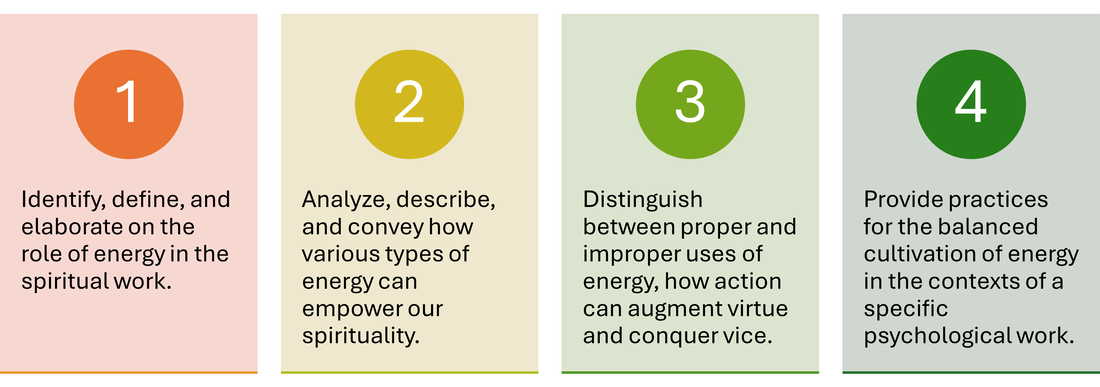
Our Focus
What we are going to talk about today is how to empower our real nature, so that it can act effectively.
We will identify and define and elaborate what the role of energy is in the work. We will also talk about how various types of energy can empower our spiritual practice, especially when we feel depleted or weak. But, also, we will study the behaviors we enact in the day which waste energy, because we want to seal, psychologically, our potential. We often waste energy in the way we interact with the world, at our jobs and careers, or with family, or with arguments. So, the thing is, we will distinguish between what proper and improper use of energy looks like and how energy can strengthen virtue and conquer vice. Lastly, we will give you some practices. After the lecture today, if you want to stay after, you are welcome to perform one of these exercises, which we will explain. 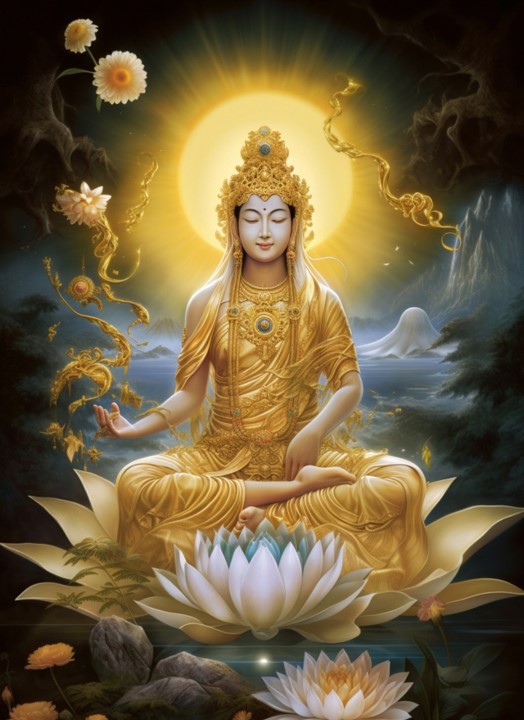
The Definition of Enthusiasm
We often talk about in our modern culture the need to feel joy and enthusiasm in life, and that we should feel a sense of purpose in what we do. Enthusiasm deeply relates to energy, and if we have more or less energy, that may determine our enthusiasm, especially as we get up in the morning to go to work (if you are not much of a morning person). But, enthusiasm is a deep word that ties specifically into empowering our true nature, because the soul or the true nature of ourselves, the consciousness, its natural state is enthusiasm, is joy, is happiness, contentment, inspiration: the ability to face obstacles and to overcome them.
It comes from the mid-16th century, the late Latin enthusiasmus, meaning “inspiration” or “frenzy.” What is more interesting is that it comes from the Greek enthousiasmos, from enthousiazein, “to be inspired or possessed by a god,” in a sense, really, to be enthused, and to have theos (God) living in us. That is really the purpose of our spiritual work. We want to bring divinity into us. We want to manifest our true nature, which is not only the soul, but really the Being, which was a term we give to in these studies to the divine. We want to be present, and we want Being to be expressed in our thoughts, in our words, in our deeds. To be in communion with that, in remembrance of that state, is to be enthused, and we need energy, obviously, to activate that state, but also maintain it, because oftentimes we waste energy. Now, there is a quote from Shantideva's Way of the Bodhisattva, which is a great scripture from Mahayana Buddhism, that emphasizes the nature of enthusiasm and the nature of energy. There is even a virtue, they call it paramitas in Sanskrit, related to diligence: the ability to work, not merely a physical job, but psychological work. He emphasizes that we cannot change if we have no energy: Having patience I should thus develop enthusiasm,
In a sense, whatever direction we take in our spiritual life depends on what energy we put into it. Action is obviously more powerful when there is more force. But, how do we maintain or manage that energy is one thing, because real virtue does not exist unless there is a type of work in ourselves that we are doing practically every day.
Levels of Energy
The way that we examine how energy works and how it empowers spirituality is through what we call the Tree of Life. So, this image, many of you are familiar with is the kabbalah: the map of our nature from the most material and dense at the bottom to the most spiritual and abstract above. These are gradations of potential and force, of matter, energy, and experience. These are places in nature, psychologically, but also places that we inhabit in our mind and emotions and being. Specifically, we can also divide these spheres we call sephiroth, meaning “emanations,” as energy.
When we study the gradations of energy from the more material to the more subtle and spiritual, we have a tool that helps us digest and dissect our life when we analyze it. What types of energy are we using? How are we using that force? Do we have more or less of it in certain times of the day? Do we have more or less of it than other people? Do we have more or less of it in our youth or old age? What behaviors use or waste certain forms of force? More importantly, how do we use these forces in us in a balanced way, so that we can incorporate them into an integral self, so that we know how to master them and not be their slave? At the base, we have physical energy. This is our mechanical body, what allows us to have movement in our muscles or breathing, our endocrine system, movement, muscular strength. Intimately related to this is our vital energy. We can say that these two are deeply married, because the physical body would not exist without vital force. This vital force, some people have called it ether, Akasha. It is a vital energy that animates the physical body. If you study Qigong or Chinese medicine, they study a lot about the nature of a vital depth, meridians, energy circuits, which are vortices or points of flow where vital force operates, and when those channels are clean and flowing, well, we have a lot of vitality in youth. But, when we are sick and depleted or if we lack that force or if there are obstructions of some kind, impurities, then our body gets sick. Our physical body is healthy in determination of how we use our vital force, and really, you do not have one without the other. That is how closely married they are. When we physically die, it is because we lose all our vital energy. There is no more life force animating the body. We will talk really in detail about what this energy is like and how we use it, especially in terms of how do we empower our spiritual work. But, above that we have emotional energy, feeling. If we examine perhaps our daily life, you can determine that there are perhaps moments in our day where our emotional energy is more active. Perhaps in a relationship or an argument or conflict at work, we feel stirred up emotionally, agitation, maybe anger or fear. Depending on how we use emotional energy shows or relates to how do we interact with people. How well do we gel with others? Emotional energy is the fuel that allows for dream yoga experience. So, certain forms of energy help with different parts of a spiritual work. Vital energy helps us to be alive physically, but emotional energy helps us to be awake in the astral plane. So, if you study dream yoga, astral travel, waking in consciousness in dreams, we call it Hod in the Tree of Life. We dream when we go to bed at night and we inhabit those dimensions when we physically sleep. Our consciousness leaves the body and we actively engage with that space, usually in an unconscious way, and because we waste emotional energy throughout the day, we do not have the surplus there to be able to activate the consciousness, to see what is going on, and therefore, we do not really see the full potential, reality, at that point. Now, what is interesting is that we also have mental energy related with intellect, the mind. Some of us have more intellectual jobs, careers, where we have to think a lot. Sometimes if we really abuse the intellect or abuse the heart, but also abuse the body, we use up too much of that energy, we either feel tired, depleted, and then perhaps after a long day of work, we go home and we remember, “I have to do my spiritual practices” (unless people are more disciplined, they get up in the morning to do that too). But, the thing is, whatever time we practice, the reality is that if we do not have these forces available to us, our consciousness has nothing to work with. But obviously, consciousness too is not mental force. It is not emotional force. It is not our vital energies, how much fuel we have in our body when we get up for the day. It is not determined by our physical body. These levels of energy are necessary through there. But, consciousness is something else. More subtle than thought is volitional energy, willpower. In the Greek we refer to it as Thelema, and Thelema is the motto of the Gnostics, meaning, willpower that knows how to obey divinity above, but also to integrate the lower forms of force and energy that we have available. We obviously have these forms of energy. We need them. We need them to exist. These forces are like the fuel we put into our car. You run out of gas, you can't drive. Now, physically, you may not not be able to stay awake emotionally and may be too tired to talk. Or, intellectually, we feel foggy. If we are studying at a university, maybe one reads too much, especially (this is our modern world). One can't really function at their optimal self. But obviously, what happens is that with that surplus of force available under our willpower, we have a drive that can really help us to awaken to our full potential. Above that we have the consciousness, which is really that part of us that knows how to perceive and to understand. That can happen in any level of nature, not merely in our physical body. You may be able to be conscious, perceptive and understanding of what is going on in the higher dimensions of nature, the Tree of Life, because these are not only forms of energy, but places that we go to when we dream, to clarify. They are spaces, psychologically, and they represent parts of our energy in our body too. Spiritual energy is obviously the most refined. That relates to our divinity. Our divinity is a force, which is very potent, and we can access and learn how to perceive and understand through exercises like meditation. But, I mentioned these levels of energy because oftentimes in New Age circles, we have this kind of a dogma that one should feel good energy, maybe perhaps in an abstract or not a very nuanced sense, and it us very much about developing energy, acquiring energy, cultivating it. But, the reality is that there are different forms of energy, they are very distinct and there are certain forms that we want to work with more than others. That also depends on our particular idiosyncrasy, our constitution, our health, but also what our weaknesses are. 
Energy Empowers All Forms of Action
How do we waste energy most?
It is important to remember this because energy empowers all forms of action. Wherever we direct attention, we spend energy. So what is that attention? In a sense, there is a lot of things going on psychologically when we pay attention to something. Perhaps we are walking down the street and a car comes up. Suddenly, barely perceiving in the periphery, they are about to hit us. So, instinctually we jump out of the way. We perceive the situation, the problem. We act mechanically, kind of a reaction, and then afterward, we feel emotionally, really, scared, followed by the thought: “That was really close.” Maybe anger, fear, and resentment for the person who was driving the car. So, these are all forms of reactions that are very intricate that happen perhaps in a moment. Some of these types of reactions have certain speeds. They are quicker. Now, what is important is that when we are examining attention, attention is a form of energy, and how we act psychologically, maybe in that example or in something as mundane as going to work, we spend energy. So, we always have an amount in our bank, so to speak, of money, or in this sense, spiritual currency. If we think too much or we feel too much or we do too much out of balance with our disposition, we get sick. We feel perhaps disempowered. The question becomes, how are we spending our energy? When we pay attention to something, are we doing it with anger? Maybe we are listening to a loved one present a different point of view, we get angry. We are listening because we want to react and to feed our anger. That is a combustion of our emotional fuel, so to speak, and we are burning it out. When we act emotionally out of anger, we are like burning our fuel. The forces that we could use to awaken within dream yoga are lost. Now, intellectually too, if we are directing our mind towards some kind of reading like study, which is good and balanced, we might waste too much intellectual energy. Or, physically we do too many sports. But, more importantly, how we react to situations determines how we use energy in all those seven gradations and forms. As Samael Aun Weor stated: Wherever we direct attention, we expend creative energy. ―Samael Aun Weor
This is a very powerful word, creative energy, because energy can create something. By definition, it is a movement of matter and potential which becomes actualized in accordance with will. In a sense, this is the definition of real magic, where consciousness is able to act on nature, not in a David Blaine sense of the word, but magic. But, I mean magic from being able to mend a difficult relationship with wisdom and patience and state of mind. A state of mind is really the best weapon we have in life, a correct psychological state.
So, that energy can create something. It can create our spirituality or it can create hell, depending on how we use it. 
Who or What is Using Our Energies
The real question becomes, who or what is using our energies?
In our first lecture in this series we talked about personality, ego, and Essence in this order. Personality, we mentioned, is like the mask we wear in life. It is our culture. It is our name. It is our language. It is our race. It is our religion that were born with. It is our traditions, our habits, the way we talk. It is our mannerisms. It is the mask that allows us to subsist in this world, to effectively be able to to live in society. Now, as a recap, personality is not something permanent. We get it when we grow up. We acquire one when we are born and then afterwards it develops. We become educated, we go to school, and eventually it will decay and die when we die. Due to the process of transmigration―which, we have explained, is the process of reincorporation and is improperly called reincarnation, because we don't choose to be here―we return mechanically unless we wake up. Personality is something that we develop when we are young and we are born in a new body. We have had many personalities―many―in different times and places throughout history. What is funny about personalities that it is only effective in a certain time and place, because if you took a Roman soldier and you time traveled a couple hundred years ago and brought them to New York, near Broadway or Times Square, they would not be able to survive. They make comedy movies about this, because this is personality. Our personality is something temporary. Sometimes our personality could be using all our energy. It is good to have personality in balance. We want to cultivate personality as we are developing, especially when we are young because we need to be able to have a job, a career, to live with friends, to know how to relate to people. But, obviously personality is something malleable. Our personality can change when we get a new job, because there are different cultures and different workspaces. But, our formative years are usually between zero and seven, especially. Is it our personality that is using our energy? Meaning, people like in Hollywood―you think of people like Robin Williams who was charismatic and funny and very bold. He had a very strong personality, had a lot of energy channeled through the personality to be able to be so successful in that sphere. So, do we use personality like that? It is a question. 
Also, ego, our defects. We picked an image of a monster because this really reflects our our defects like our anger or pride or fear or lust. These are the elements that act through our personality. So, while we have a certain appearance, name, language, custom, culture, our emotions, our negative thoughts, our defects, act through the personality in a sense, because our ego tends to be so fat in this day and age. I mean ego in the esoteric sense, not the pop-culture sense, but self, “me, who I am,” the totality of that, what we usually experience. That sense of self tends to be very much fused with the personality, because the two really deeply relate.

Is it our defects using our energy, or could it be our Essence, our soul? The Essence is the consciousness, as indicated by Gurdjieff and Samael Aun Weor. The Essence is the reality, and we chose this image of a galaxy within the heart of a human being because Samael Aun Weor made a statement that the soul or the divine within us, the real true beauty of our spiritual nature, belongs to that, to the heavens, the heights. Our Essence we want to cultivate, to use our energies properly, so that our ego and our personality are not so active.
Obviously, in the beginning, personality tends to dominate our life, ego as well. But, with our spiritual practices, we learn to activate the Essence and empower our true spirituality, our true self, so that the Essence is the one that is active, not asleep. Then, the personality is just a tool. We use it as we need to, and it becomes a useful instrument for humanity. 
How Do We Waste Our Creative Energies?
So, how do we waste our creative energies? We mentioned just a few.
Obviously, fantasy is one, and I don't mean the literary genre of fantasy (God bless Tolkien because of his great, creative imagination and beautiful stories). But, fantasy in the sense of, if someone cuts us off, when we are driving, are we thinking things about what we wanted to do to that person? Or, get into an argument and we fantasize and imagine what we would do to that person, that no one else we think can see, but we think we can indulge in without repercussions? The reality is that our divinity sees everything. We want to act in our mind as we would act in our body, and these are not just Buddhist injunctions, but also Christian. For example, Christ said, "You heard it said of old, thou shalt not commit adultery, but even if you lust after someone in your mind or your heart, you have already committed adultery with them." So, not word for word, but it is in the Christian Gospel (Matthew 15:27-28). It is the same thing in Buddhism. We become what we think. If we invest our energy, our creative energy in negative imagination, negative states, we deplete ourselves. We become very, you know, fat in our ego too, because the ego feeds off of that type of perception―daydreaming, associative thought, wandering. Lust is a big one, and perhaps this is the biggest defect that most of us face in the spiritual work, which is why you hear throughout many traditions that saints and the monks and great nuns, or perhaps great prophets, were people who were very chaste―not in the sense of not having a partner, but being pure in their sexuality. The creative energy is most potent. The creative energy really is our sexual force. Now, this term chastity or purity does not mean abstention from sexual relations. It means purity in sexual relations. It means knowing how to take the most powerful force of the body, the creative energy, the vital force, and to direct it with the soul, to know how to use it for our spirit. You have heard it said of old, “you must be born again. That which is of the flesh is flesh, and that which is born of the spirit is spirit” (John 3:3-7). Birth of a spiritual type is an energetic problem. It is a sexual problem, and that energy in truth, which can give birth to a child, when it is conserved and transformed and cultivated by the spirit, it gives birth to the soul. It creates our true power, our true strength. Really, the term virility is the origin of virtue, Virya, the strength of a warrior in Sanskrit. Virtue is born, real power and ethics, is when we cultivate the proper use of sexual force. Obviously, it is a very controversial topic, but I am just introducing it in a very synthetic way, because how we use energy determines our spiritual life. The beauty of Samael Aun Weor's writings, especially―the founder of our tradition―is that he spent a lot of time explaining that. So, obviously, if you want to know more, I have books and references that you can look at. But, oftentimes we waste energy through lust. Sometimes it is through fantasy or desire, and obviously, through the expulsion of the sexual energy. So, what we want in these teachings and what is very demanding in this teachings, and something that is a personal lifestyle choice, is that one can conserve the sexual force and never expel it through orgasm. That is the primary prohibition of the initiatic spiritual colleges of the great mystery schools from the ancients. This was always a secret that they kept, because it obviously is something, a tool that has a lot of potential to elevate or to harm, if people don't know how to use it well. But, obviously, we are in different times where this knowledge is open to everybody. Desire, obviously is not merely just sexual desire, but also the desire for money, the desire for acquisition, the desire for praise, the desire for security, the desire for acceptance, the desire for a certain person. Desire is what we call ego. Desire is synonymous with ego. I know in our modern culture we always like to talk about following our passions, following our desires, and unfortunately, I think the language misses the point, because while we want to aspire with our soul towards higher virtues and to fulfill our deepest longings in life, to empower our real potential, we have to eliminate desire if we want to be virtuous. Or, we must understand desire, how it functions, not run away from it, not repress it, not feed it, but understand it, so that you can transform it. We take the ego, our defects, our desires, we break the shell, and you free the soul. Therefore, virtue is a component of our psyche. It integrates with our divinity, and we are then truly empowered, because real power comes from divinity. But, divinity cannot mix with our impurities. Repression is another problem. Again, when people think of chastity, they think like monks and nuns who go to the monastery and avoid the world, or perhaps Catholic priests who repress their sexual force. Obviously, we know from the news that this causes great problems, because repression does not deal with the issue of desire in the mind. Avoiding sexual situations does not mean that one transcends and overcome them. It would be better if, like the Gnostic priesthood of the past, that certain missionaries or priests would learn to get married or would learn the science to get married, fall in love, and with their wife would learn to take that power and to cultivate it spiritually, to overcome their own passions, because in this work that we are talking about, is by understanding the use of sexual energy. Also as a couple, one can have the force necessary to change and to become a spiritual master. But obviously, in synthesis, you can study the book The Perfect Matrimony by Samael Aun Weor. He goes into great detail about that. Identification is a term we use, again from Gurdjieff, about whenever we have a defect emerge in our mind, in our heart, in our body, we just go along with it. We feed it our energy. So it is like we just react to situations and then our identity, our sense of self, is just stuck in that reaction, and we just get sucked into that problem or moment. That all wastes energy. How Do We Master Our Creative Energies?
But how do we master our creative energies? How do we actually empower our spiritual work?
Conservation is the beginning. Conservation means to take the sexual force and to never waste it, never expel it physically through orgasm, just to be very clear. But, conservation is not enough. There are people who do not waste their sexual energy outwardly, but they waste it in many other things. Conservation does not mean chastity in the real Gnostic sense of the word. Chasity means, to first, not waste the energy, but then to transform it. It has to be used or directed willingly, otherwise, if you just save up energy and do not know how to use it. you end up, unfortunately, like some priesthoods, with real problems, like sexual perversion and molestation of children―people using these energies, whose desires are rampant, but not faced directly. In the same way that you were to leave your car filled with gas for like three or four months without driving it, that fuel will degrade. The same thing with the sexual energy. It breaks down, and then it deteriorates the mind and the heart when it is saved and then not used. Then it is a problem. So, we agree with some of the scientific definitions of this in certain studies, that repression is bad, but some scientific studies have not really explored what it means to sublimate, and that is a whole other science. They do not have active studies measuring this (and I hope that they will), but it is also hard to get people in these studies to have their life put under a microscope and studied for what are the actual effects, although, that is another thing. Sublimation means to take that which is beneath and to raise it. Liminality means like a threshold space, in between, and so our creative sexual force, which can empower our spirituality, is obviously beneath our body, or in the creative organs themselves. To sublimate is to take that energy from our creative glands and to raise them up the spine to the mind, and then to the heart. That is the flow of the eternal fountain of youth that flows from the belly, according to Jesus in the Gospels, as an eternal spring of life. 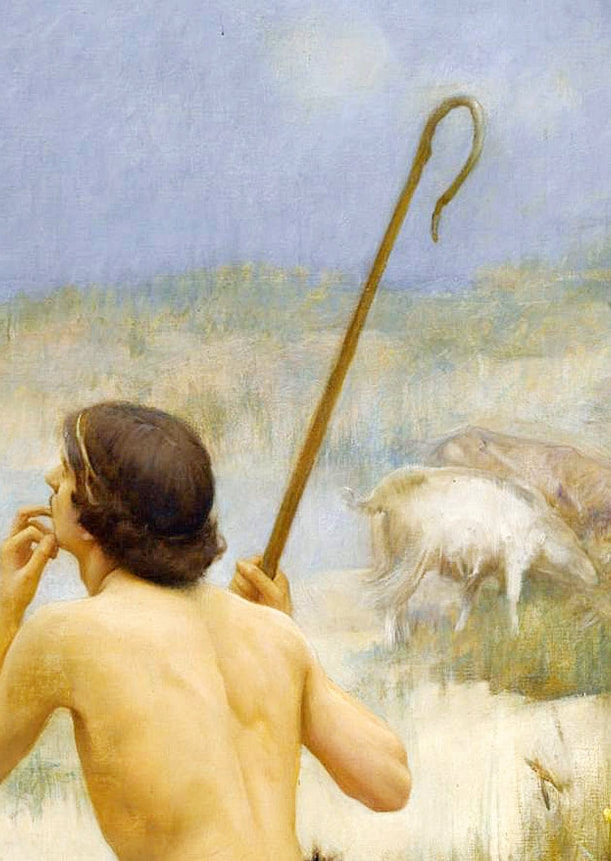
Or, the shepherd's staff, which is the spine, which rises up to the head, and then curves to the heart― that is the spinal column. That spinal column is where the energies can rise, and there are circuits that we will talk about that rise up our spine to our brain, and then there are channels that go from our brain to our heart where we can really actively direct that energy willingly.
This helps to empower our ethics. We master our energy by learning to become real, decent people in the sense of comprehending our anger and our fear and our defects, and eliminating them. That is how virtue is empowered by not only saving energy, but acting consciously. One point about that too is that we often hear in New Age circles about awareness and mindfulness, and that this is a beautiful thing, and it is a necessary skill, but mindfulness is not enough. Comprehension is essential. It is not enough to be mindful, because someone could be mindful of committing murder, but how we use that energy and direct it with virtue is another thing. 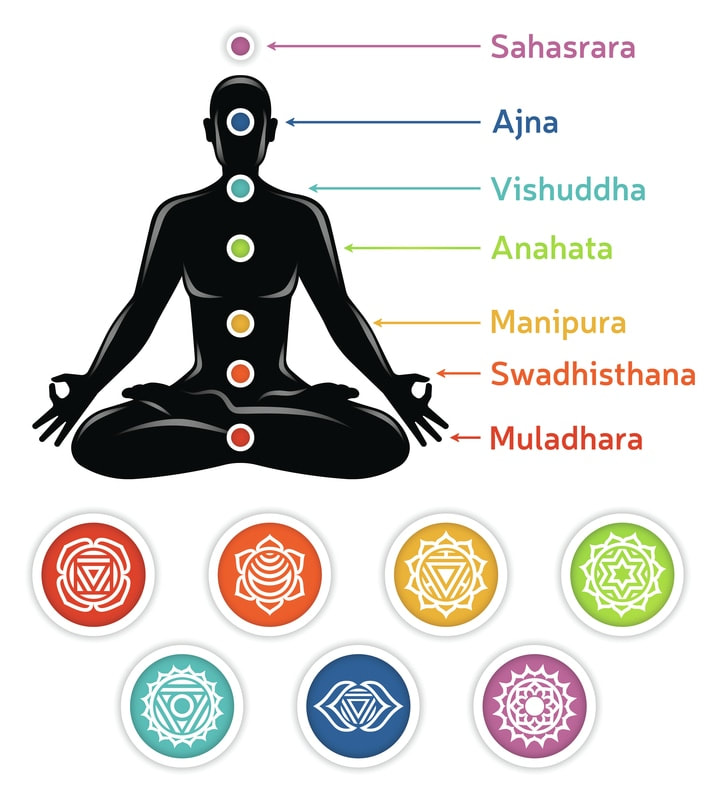
Creative Energy Empowers Our Spiritual Senses
Creative energy empowers also our spiritual senses. So, if you have ever studied yoga, Hinduism, we have the chakras. A chakra, simply in Sanskrit means “wheel,” and as I mentioned to you about the meridians of the vital body, the energetic circuits, they run throughout our vital depth and they interpenetrate our physical body to give it life.
Whenever certain number of meridians meet, you have a chakra. It is like a whirlpool. If you take two currents of water, you have the whirlpool when they meet, and the same thing with the chakras, how the energies work. The chakras, we have seven main ones in the spine, but really there are over thousands and thousands of them wherever we have meridians. So, we talk about seven because those are the main centers by which we have spiritual activity, and also spiritual ability. Now, it is also important to remember that these chakras will only activate and spin when there is proper energy. Right now in most of us, these flowers are asleep. They are folded. They are not blooming, and they are not active because we do not have the surplus of energy saved or transformed or developed to activate them. Now, single people who are doing the exercises like energy work and prayer and mantra can awaken sparks of their creative force, so that for a few moments or for maybe at night and in a dream, the chakras open, and suddenly you see the the dream state clearly. That is a temporary experience, but to make that permanent requires a lot of force, and the most force that we could ever have for our spiritual work is in a marriage. When husband and wife can unite and conserve their force and to transmute it, you have the power of a sun. You have the power of a Logos, the divine. It is the fire of a planet. It is intense. Obviously, sexual fire is the most powerful force. It can give birth to a child, but “that which is born of the flesh is flesh, but that which is born of the spirit is spirit” (John 3:6). We want to raise the energy of the base of our spine, some people refer to the Kundalini, but obviously, this force of the Divine Mother, the sacred divine feminine, which sleeps in the base in the Muladhara chakra, can only awaken when we have earned it with our heart. So, there are ethical requirements to work with this energy. But, in synthesis, when we follow the divine laws―like the virtuous qualities of the scriptures in whatever tradition we follow, and we never waste the sexual force, but conserve it and transform it and work on our mind, and by the virtues of our heart―that fire of the Divine Mother rewards us. 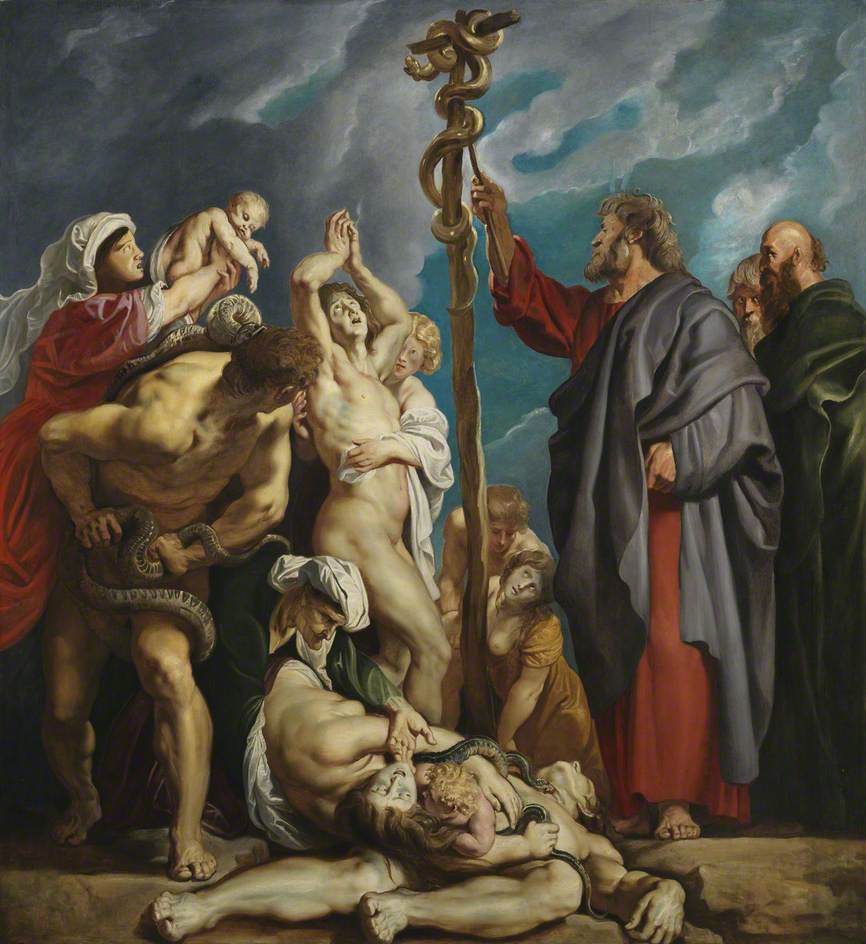
That fire is the fire of life, the serpent of brass that Moses raised upon a staff in the wilderness to heal the Israelites. It is also the serpent or the serpent with the wings of a great bird: Quetzalcoatl among the Aztecs, Kukulcan amongst the Mayans. That serpentine power, when it rises, is the one that heals.
Unfortunately for us, because our energies are abused, that energy goes downward and forms what we call the tail of the demons, not in the physical body (fortunately). I mean, it is in the astral body, in the astral world. People have that. We have that, but that can change, and that rising serpent that heals is the force of the Divine Mother, the sacred feminine that we talked about in the lecture, Remember Your True Self. When She rises, She activates these chakras and these flowers open, and then there are certain abilities and powers that are acquired. But obviously those powers are given to us with responsibility and by earning it. This is what we call the path of initiation. We have the chakra Muladhara at the base of the spine; Svadhisthana related to the sexual organs; Manipura related to the abdomen or solar plexus; Anahata related to the heart; Vishuddha related to the throat; Ajna related to the third eye; …and we can say about Sahasrara at the crown. Those are asleep in us, but they can be activated and awakened. I believe Rumi even mentioned in a poem―he is a great Sufi mystic that said―a water mill cannot turn without water. He is talking about the chakras, about the waters of life conserved in us. We cannot make that energy active and make our circuitry flow. The whole purpose of this is so that our body, mind, and heart, psychology, is a circuit that can connect with divinity. That is the path of religion, religare, reunion, yoga: to reunite. But, obviously in this path of activating these chakras and developing spiritually, we have to develop our virtues. 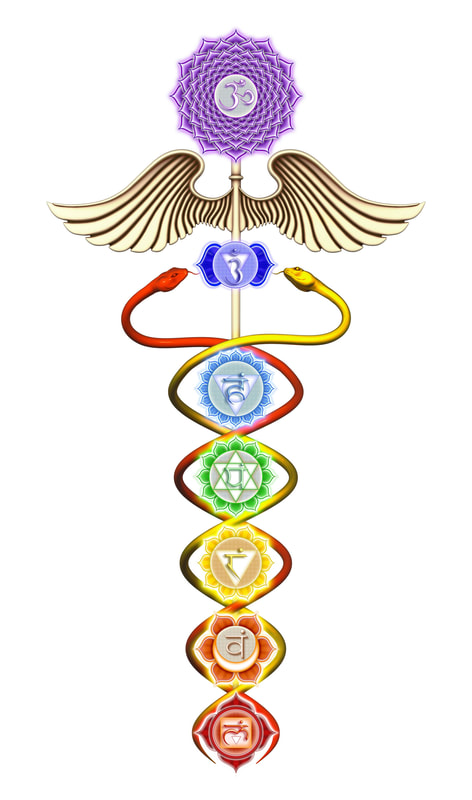
Energetic and Spiritual Circuitry
Now, as you see here in this image, there are two serpents. These are two channels of energy. They go from the coccyx to the brain. We call them Ida-Pingala in Hinduism, Adam-Eve in the Bible, Od and Obd in Kabbalah. Two serpents, two energies, which through practices like pranayama, breath work sacred sounds or mantras, or in alchemy (tantra) between husband and wife, you have really the flow of forces from the earth to above. But divinity does not give us this power unless we have earned it, because it is a great responsibility to know how to handle these forces in themselves. They have terrible consequences if they are misused, which is why Samael Aun Weor said in the book Kabbalah of the Mayan Mysteries stated:
For each step that we walk in the development of the chakras, we must also walk a thousand steps in sanctity. ―Samael Aun Weor, Kabbalah of the Mayan Mysteries
This flies in the face of many common misconceptions about the nature of Kundalini, because really, we should not be focused on developing power. It is beautiful to have astral experiences and to be able to be awake in the dream state. I mean there is a certain blessing or ability to know how to read people―we call it telepathy. It is like knowing how to help people, using that skill without admitting it or announcing it to the world. Really, there is a beauty and power and utility for that, but that should not be the focus. The real focus should be being a better person, because if we develop power and then we renege and act improperly, we have more force by which to harm ourselves and others. That is why initiation is based on laws for that fire to rise from the base of the spine to the head, and then to go to the heart. It requires a lot of sacrifice.
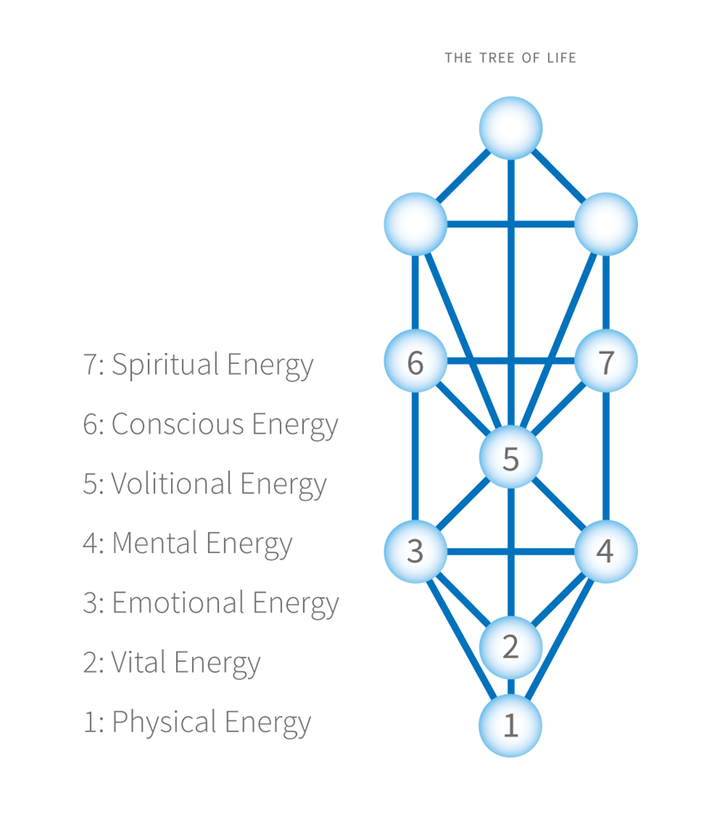
How Do We Empower Our True Self?
So, how do we empower our true self? We kind of synthesized a few points already, but if we go back to this image of the seven gradations of energy, there is a quote that Samael Aun Weor gave in The Great Rebellion that basically sums up all these points that we talked about. We can save energy, cultivate it, but if we do not know how to use them properly, we can fail. He says that having a lot of energy spiritually is not enough:
No matter how much we might increase our strictly mechanical energy, we will never awaken consciousness.
So, it might seem contradictory, right? We have these energies. We need them, and yet, no matter how much we multiply our mechanical, vital, emotional, mental, volitional, conscious and spiritual energies, we will not awaken, because you can have a lot of energy in your car, but we may not know how to drive it. So, it is a different thing.
Energies must be present, and even people who have a certain weakness, maybe mentally, emotionally, physically, with some kind of illness, just do not have a lot of surplus of energy available, they can make great progress if they know how to activate their consciousness. So, the soul has to be awake, to self-remember, to observe oneself, to be present at all times. We have to strive towards that, but the consciousness is the one that can activate the car and know how to use well. This basically contradicts many New Age assumptions about energy. There are many people who believe spirituality is about acquiring energy. But many do not ask how do we use it. So, upright efforts―the consciousness has to obey the spirit and the spirit is God, our inner divinity, our Being. In a sense, we activate consciousness when we follow our intuition, or better said, our conscience. Sometimes our heart tells us, “I should do this. I shouldn't do this. This is how I should act. This is what I should say. This is what I should think. This is what I should do.” It does not require a lot of analysis. It just comes to you, hits you, and that is at the essence of self-remembering. It is like you have remorse of conscience for mistakes, and you let that part of the heart guide our way of being. That is how we follow upright efforts. When we make the effort to follow the voice of the silence in us, the hunches we get when we do not think, then we get inspired to do what we need to do. Spiritual Exercises
We will conclude with a couple practices. I will explain some. These are available on Glorian Publishing. This exercise or series of exercises is given by Glorian and they did a video, so I can physically demonstrate here briefly, but if you need a reference, you can always access on our podcast as well as our website. We will have the PDF available. You can link the video and you can actually practice along with it, but I will just show you briefly.
These are the runes. So, we see here the rune poster. We have some images of Egyptian initiates. These exercises are Nordic, and the Nordic runes are a form of yoga. So, you take certain positions and you follow certain prayers, certain vocalizations, certain mantras where by vocalizing sacred sounds, we activate energy. These are exercises that are good to go out into nature to do because you accumulate a lot of force, especially in the early dawn when the sun is rising.
So the first series of exercises I will show you are called the seven sacred runes. What you do, if you look at the top of this poster, you see seven runes.
You start with Is. You can pray to your inner divinity, your inner God. You close your eyes. Extend your hands above your head. You pray to your inner God to give you the force that you need to do your spiritual work. You follow with a mantra “I” (pronounced “Ee”). It vibrates in the third eye and the crown chakra.
Next is the root Eihwaz. Left hand up, right hand into your side, heels together. It works with the throat chakra: “Eh.” You can step to your right, hand above your head, the rune Otthila, kind of relating to the Opera Attila by Verdi, Thelema, willpower. It develops the heart, the mantra “Oh.”
The Rune Ur, you bend downwards in the form of a u-shape, solar plexus, the mantra “Uu” as in “you.”
The Rune Ar, right arm under your right side, left foot out, left hand on your left hip or left leg. The mantra “Ah.” Pulmonary chakra, the lungs. The Rune (of the true) Man (Elhaz), the vowel M or the prostate or uterus chakra, Svadhisthana, the vowel M or the mantra M. Now what is interesting is that Samael Aun Weor calls the letter, the consonant “M” a vowel, and obviously in English, this is not the case, but in esotericism, it is. A vowel is a nucleus of a word or a letter, nucleus of a letter that binds consonants together. So, it is basically what combines other letters together to form words. So, we call it a vowel, because the letter M helps to activate this center. We call this practice the seven vowels even though we do not really think of M and S as a vowel, but that is a spiritual explanation. The last one is the rune Sig. You bend your knees, back straight! the letter S like a hiss, “Ss.”
So “S” like a serpent. It is the fire of the Divine Mother, and single people can practice the runes, obviously, to awaken sparks of Kundalini. It does not mean that one is going to awaken it fully, like you need with a marriage, but sparks can help activate, send the forces up the chakras, and then you repeat, so that you activate these centers and keep them flowing. So, you can perform that seven times.
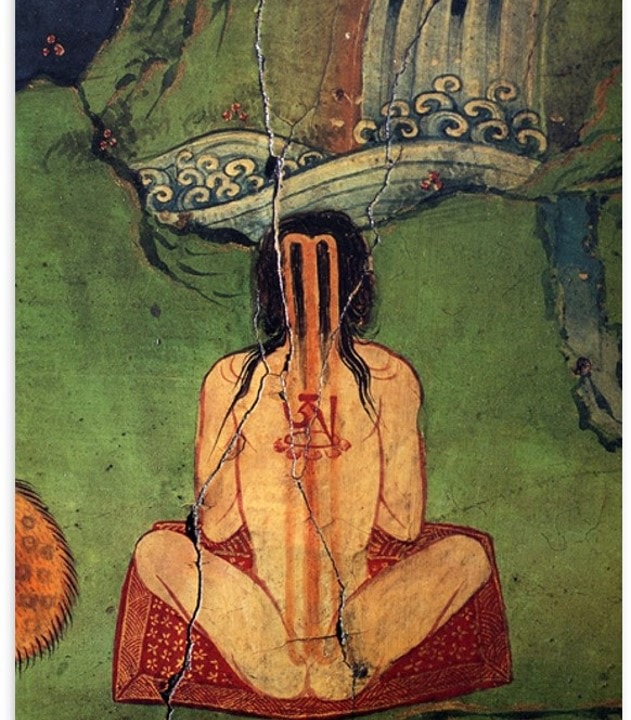
Ham-Sah Pranayama
Lastly, there is a practice called Ham-Sah pranayama. So, this is one that we will practice later today when we are done. Basically, you sit in a chair. You relax. Close your eyes. You can pray to your Divine Mother, the divine feminine, your inner God, to help you to circulate the force of the creative power, so that it goes from the base of the spine to the head and then to the heart.
First, there are two mantras: Ham-Sah. So, the mantra Ham is prolonged. You pronounce it mentally. You imagine your spine, the two channels Ida and Pingala, going up to the head, and then there should be energy going down to the heart. So, with Ham, you imagine the energy is going up. You pronounce this mentally when you inhale.
So, however long it takes for you to inhale, pronounce the mantra Ham. So, obviously the inhalation should be prolonged. It should be longer, not forced. It should be relaxed. Some people have practiced Ham-Sah with a lot of agitation like [performs quick breaths]. We want the energy to be smooth, relaxed. The energy should float from outward to inward, and when you inhale in a more prolonged way―when we are doing the mantra Ham―you teach the energies to circulate inwardly, to go up the spine, because right now with our breathing, we tend to be more focused on the exhalations, which send the energy out.
Now, it has to be in balance. Do Ham, prolonged, slow, and then, after you have inhaled your lungs to their full capacity in a relaxed way, you send the energies to your heart and do a quick exhalation: Sah.
Brief, gentle, calm. I have heard people try to do Sah really prolonged, but it has to be very quick, very gentle, and you just send the energy to the heart.
So, basically, stronger, longer inhalation. The mantra Ham prolonged mentally. Then when you send the energy outward to your heart, exhale briefly, Sah. So, later, when we are done, if you want to stay after, we will do a brief practice. You are welcome to stick around, if not, that is okay, but here is just an introduction. 
Resource
For those who want to learn more about the nature of this energy that we talked about, the chakras, as well as the role of a marriage in empowering our true self, you can study the book Kundalini: The Sacred Fire Of All Religions by Samael Aun Weor, formerly published as Kundalini Yoga.
Any questions? Questions and Answers
Question: What is the fine line between endurance and limiting yourself? You talk about being wasteful with physical, mental, and emotional energy. Where is the line in terms of developing endurance? For instance, in the first year of my job, using my brain a lot, after work I would be zombified. But now as I am a few years in, I am starting to develop endurance, and so after I am done with work, I can’t read. I can still use my intellect. But what should I do with my mind? Should I be resting? Is it in splotches? Do I really want to use it?
Instructor: You have to find your balance, and based on a read of your own mind and body, to see what is it that you can do reasonably and establish reasonable goals. So, Gurdjieff said, and this is true of every one of us, is that you cannot expect from a weak person what a strong person can do. You know, we all have weaknesses. We are riddled. So, some things we can try and then see, maybe that is too much, so you take it down a notch. The goal is to be able to build up the practice, but we have to find first what practices work and resonate most with us and gauge your body. Gauge your mind. Gauge your heart. Some things are going to be too much, and we should not feel the fear of, “Oh God, I have to do the spiritual practice because what will people think of me?” Some people have that fear. Some people have the assumption when they join a religion or group. It is like, “what if I don't follow the practice or do certain things?” The reality is that we want to experiment first. See what exercises we really need, because when Samael Aun Weor gave his books, which have, really, thousands of practices, we cannot practice all of them. We work with the ones that are most essential. One of them is basically Ham-Sah pranayama. Now, obviously, I would recommend to build endurance. We start with 10 minutes a day. That is good enough. Start small. See what you can do, and I wouldn't beat myself up over it. I know in the beginning, when I first started, I would feel, “I have to do this, this, and this,” and it was overwhelming. But in reality, it is like with time, you say, “Okay, there are certain practices for our mental and spiritual hygiene we should do, like practice meditation, especially work with our creative energy in some degree.” For some it may be mantras, which is why I gave the runes. For some of us, it may be Ham-Sah, and really Ham-Sah is a really good start. The fine line between endurance and when is it too much, you can only gauge that by trying, and if it is too much, then okay, step back for a bit. Give yourself some grace, and be patient, because this science is very difficult. I mean, it is difficult at first in the beginning, to judge, like “What are my weaknesses?” We all have blind spots about what we really need. Most of us do not want to consider or look at the places that we need the most change in. That is a natural quality of our psychology as a species, and that is also the resistance of the ego that doesn't want us to see. You know the mind fighting back, right? But, you gauge your capacity through experimentation and looking at, what are your limits? Then, saying, “Okay, maybe it is too much.” Enthusiasm grows when we see the benefits. When you sit up trying to do six hours of meditation, and I tried this in the beginning because I was so excited and gung-ho, but trying six hours of meditation in the beginning actually burned me out. So, what I did was take it down a notch. I started with 20 minutes, built up to 21 minutes the next day. 22... and, as I saw the benefits, extended it. It was not forced. It wasn't like, “Oh, I am straining myself.” It is a fine line between strain and endurance. We also want discipline, but it does not mean that we push ourself so much that eventually, “This is too much,” and then we gave up the practice. So, you have to gauge. You'll find out. You gauge your limit and when you feel the enthusiasm and joy from a certain practice, you wil be able to extend it if you need to. Question: I am trying now to go back again. So, how do you find the inspiration to go back again, because I got a little bit more busy. Has this happened to you or how do you get motivated to continue? Instructor: So, the question is, how do we get ourselves motivated when we initiate a practice but then we face the resistance? And then, how do we get over those hurdles?
Samael Aun Weor referred to this as the dark night of the soul. Beethoven depicted it in his Moonlight Sonata as the the sorrow of the soul, that you feel you are in darkness or you feel like you do not have much insight or inspiration or joy. Samael Aun Weor said the remedy for that is meditation. So, even if we do not want to meditate, for however long it takes, just take 20-30 minutes, whatever you need―you still do it. That is the endurance piece.
Obviously, we have to find joy in the practices and actually feel that alert novelty and inspiration, because that is what the practices should be. A good practice, we can identify a good practice when we see something new and feel a bit of a spark. We feel more happiness and enthusiasm. We all face this where we lack enthusiasm or joy to continue forward. Comment: Most of the time I get distracted from outside noises, or I want to go out. Or I live with other people who are sensitive to noises. There are just too many obstacles. Instructor: With vocalizations, if you do not have a living condition that is is a conducive for that like you cannot do mantras out loud, do them mentally. They are just as effective. Swami Sivananda said that physical vocalizations are good, whispered are even better, and silent is the best, because it requires the most concentration. In the beginning, if you need to start with whispering because it is too disruptive, then you can try that, but you can also do it mentally. Many yogis have mentioned that it is good to do a mantra mentally in the day. So, not just when we sit down to meditate, but it can also be a practice where you are at work and maybe you feel a little off, like you feel you are not as concentrated or on your best game―mentally do a mantra.
Sometimes the more complicated mantras are the best ones, because they require a lot more focus. It is easy to do “O,” right? But it could be a little bit more tricky but powerful to do O A O Kakof Na Khonsa, which is the mantra for the Divine Mother.
I like that mantra, especially if I feel like I need to be more focused, like I am at work, working with people. It is like a lot of things going on, challenging job. It is like, “Okay, let me do a mantra to bring myself back.” With training and time and by being consistent, even if it is hard to feel maybe that spark in the beginning, we pass the ordeal if we are persistent. This is a necessary challenge that we all have to face, that we feel like perhaps divinity has withdrawn or stepped back, but that is a necessary testing ground to see, “Okay, can you find joy even when you feel like you are abandoned?” That is what the injunction from Christ on the cross was about: Eli Eli Lama Sabachtani (“My God, my God, why have you forsaken me?”), which has different meanings in Nahuatl or the Mayan language. It really means “Into the pre-eternal dawn of your presence I return.” So, what people interpreted as a statement of suffering, actually Christ overcame that in his ordeals by remembering God. I think in terms of enthusiasm, what can help is performing the third factor: sacrifice. So, today we talked about birth: how do you give birth to the soul with energy. Later on, we will talk about death (Liberate Your True Self), which is death of the defects or desires, and then we will talk about sacrifice, which is service. Actually, we talked about service last time (Serve Your True Self). Sometimes, personally, for me to get out of my own suffering, I try to help people, whether it is in my job, or it is here, and that gives me joy spiritually, psychologically, and gives me more impetus to work on myself. So, it does not mean that if you are going to serve or sacrifice that you are going to be teaching Gnosis, but it can mean that you are helping in an authentic way in whatever way you can. That can really get you out of the pain, especially, or get you to practice more. Question: In our daily life, we encounter maybe negative thought, negative emotions, negative desire, when we catch it before we act on it, what is something we can do to transform that into a positive? Instructor: So, it is a really tricky dynamic, because the mind is pretty deceptive and sometimes if we are not really alert or aware, we do not have the reaction time to transform it. Now, I kind of mentioned briefly that in terms of the gradations of energy, there are different psychological speeds. Thought processes are actually the slowest aspect of our human machine. Emotions are much quicker; movement as well. Instincts are much faster. You just react without thinking, and sexual energy or desire is the quickest. It could be hard in the beginning for our consciousness to operate at that kind of speed, to be able to first perceive the threat; second, not react to it; third, not give it what it wants; but also fourth, not repress it. Then, the challenge really becomes, how do we understand it in the moment? That is a delicate skill that we call transformation of impressions. It is a very fine line and is the razor's edge. In a sense, we can only learn it by doing it. But I would say one strategy, if you can, is separate from your ego. Say you are in a situation where perhaps you do need to respond quickly and not react, and you feel that you have negative emotions boiling up. It is pretty quick. It just takes over. In a sense, we almost do not even see it, and if it has already invaded our heart, it is more difficult to separate and look at it first off. See it and separate from it. That is the first step. I think that skill is only developed when we continually face challenges and ordeals in our life. In that case, if you feel like in a moment you need to react, or better said, respond, sometimes wait time is good. Sometimes it is possible that you are talking to someone, and I know with my clients I work with, I deal with some pretty angry people at times and I will collect myself and examine my heart and listen to my intuition. There is a certain ability to that, a certain power to that where someone is trying to pull our attention outward, where we are going to react in a bad way. You can pull your attention backward to your heart and not necessarily indulge in emotion, but just observe. It is like a turtle retracting its head into its shell, and unfortunately, sometimes we may not have the opportunity where we can have that wait time. So it is hard. It can be hard. But the one who is giving us the ordeals is exactly our divinity, and it is good to remember that, especially, because if you feel tempted to act out of anger or pride and its really gripping you, sometimes the skill that Samael Aun Weor gave is that, even if anger is like a lion ripping your arm apart, watch it―just let it do its thing. It is uncomfortable. It is painful. It is difficult. It is unsettling. It is ugly to see that, but just watch. I know I practice with my cat, when they are nibbling on you and just kind of look at the cat like, “Really?” and they have that attitude to be like, “Okay, I do not like to see this in myself, but this is the reality. Let me just sit with the discomfort and the pain of it,” and by following your conscience, your intuition, maybe the moment might require to take a minute and do not say anything. Silence is golden, but sometimes not speaking when we need to speak will cause great pain. That is a line that no one can teach us. You know, we have to figure that out. Actually, the one who can teach us is our inner divinity. He teaches us by giving us those situations that we really hate, do not like, which make us kick and scream, complain about, and yet that is the medicine. So, I would say in the future, we develop the skill, in the Shantideva sense of the word, from The Way of the Bodhisattva: when a snake comes upon our path in the woods, we should finally have the alertness and the ability to just step back and to respond in the moment. But, sometimes we do not do that with our own mind, but that is a skill we have to practice. But, if the Achaeans have already broken in through Troy [with the Trojan Hors], it is much more difficult. But yeah, we have to be patient, because the way that we empower our true nature is by facing the pain of it. Question: You think that with the spiritual work, those thoughts don't appear as often? The more we use spiritual work, you know, the easier we can identify and the less it kind of comes to us? It is easier to identify and the less it comes to us. I really like the point you made about the priest, right? Kind of like the having the impression that “This is the holy way” but not knowing that sex is there, but then repressing it so much that it deviates to something worse than sex. I thought that was a really good point. Instructor: Yeah, to add to that, I would say that with practice, it gets easier in the sense that while the thoughts do not predominate, the serenity of mind is established to the point that like a cup of water, if you have a cup with sediment and rocks and stone, you shake, then it it is going to be murky. You cannot see. But, after time you just let it sit, to repeat it, you face the ordeals and situations, the water will stratify, and the layers will show. Then it is like, “Okay, the ego is not eliminated here, but now I can see what is going on.” That is the baseline that we need. We call it psychological equilibrium, when you can look at yourself and face certain challenges and discomforts in your mind or what you see in your defects, but not be fazed. So, it is symbolized as the fourth state of consciousness or the fourth musical note in Gurdjieff, or the Fourth Way schools. It is like a cross which is really the symbol of a foundation, balance. Question: When we are doing techniques like Ham-Sah or pranayamas, are we using centrifugal or centripetal force? I don't know how to say it in English. Instructor: So, we talk about centripetal force and centrifugal force and please correct me because I mix them up too. Centrifugal, one of them, the forces go from inside to outward. And then, the opposite is when the energies go inward to outward [centripetal]. So we want to reverse it so the energies are going inward. Question: That is why you call it sublimate as well? Instructor: Yes, it is the beginnings of sublimation. It is like you are redirecting the forces themselves. So, the term, really in the Bible, the River Jordan, Jordan in Hebrew means “descender,” and that means when those forces descend into us, we are trying to make the waters flow back inward and upward. So, it is changing the flow of the current. The forces are flowing. Obviously, since for many years we have been accustomed to our lifestyle, obviously it is going to be very difficult in the beginning. It could take years to train the body so that the energy go from outward to inward. It is a patient process and can be done. It depends on one's interest and commitment to it. But yeah, I mean, obviously even with our breathing, we focus on the exhalations more, but I wouldn't say hyper fixate on breathing so much. I would say that be patient. If you are attempting this practice and you seriously want to commit to it, consider what it can offer, but also be patient with yourself because it takes time for Christ to learn to ride on the donkey rather than the opposite. 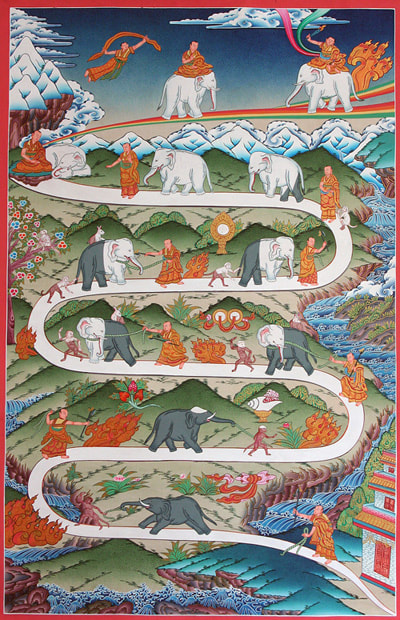
I think that Rumi even said that the donkey is our mind. It is a symbol and our mind tends to do its own thing in the beginning. But, it can be cultivated and trained like you see in the stages of meditation, the nine stages of meditative concentration where the elephant goes from a wild animal to a docile one. That is our my intellect, our mind.
So, that cultivation of serenity is dependent on how we use our energy. So, the more we can make the energy flow inwardly, the more energy we have to calm our mind and control it. So, this can explain too why many people who attempt meditation fail because they do not have the energy there to flow and to calm the mind. It is constantly being expelled and the passions are agitated. The body is not still, and the intellect is just running around because that is desire. But, yeah, there is a course on Glorian called Meditation Essentials which talks about all that. They also talk about how to work with energy. So, if anyone has a final comments, questions, we can conclude. We have coffee and tea if you like. Feel free to hang out. We can do a practice afterward, but I thank you all for coming!
Welcome everybody to our continuation of this course: To Thine Own Self Be True!
Various mystical and religious traditions teach about spiritual experience, and while all religions have taught from their founders, the direct communion of the consciousness or the soul with divinity, many people in our modern era refute or criticize the potential or possibility for individuals like us to have that same experience. Unfortunately, this is a form of ignorance, and one that misses the point of the inception of these great traditions, primarily because these religious figures like Moses, Buddha, Jesus and many prophets or luminaries of humanity, all taught that we have the potential to experience these things, for what religions have called divinity, no matter the name, culture, time, or place. But, unfortunately, despite the beauty of these great religions and the practical and ethical import that they convey, many take these forms of traditions and knowledge at face value, as if they are something external. In fact, what they teach is the internal life of the true human being, who completely awakens and develops their full potential. A true human being is one who is in full communion with their true self, and that true self, as we have explained in this tradition, is divinity. Divinity is not outside, but is inside. It is important to reflect on the religious symbolism of great teachings, scriptures, and knowledge, because they reflect something about ourselves, if we have the wherewithal, the means, or the interest to explore this fact. 
So, all these religions, like as you see in this image of a church, convey great depth and beauty. What they really offer for the soul is a mirror to see ourselves, to see who we really are, our true identity. This is our innate truth, the real fundamental part of who we are, which is not tainted or contaminated by afflictions, states of suffering, egotism, desire, or, as we use in this tradition, the term “ego,” which is Latin for “I,” for self. That is not the true self we are talking about. We are talking about a state of being in which there is no impurity or affliction, a state of consciousness, our real authentic identity. But, we often do not recall or understand what this state is in ourselves, how to access it, how to cultivate it.
Our Focus
This is primarily what we will do in this lecture. We will define, describe, and demonstrate what it means to remember the true self as explained in the Gnostic tradition of Samael Aun Weor.
We will also clarify misconceptions about the nature of divine remembrance, what it is, how it pertains to the present moment, who we are now, not in some distant future or a memory of a remote past, but a state of being that is fully immersive, expansive, and integral, here and now. We will also identify the difficulties and dangers, oftentimes, the discouragement experienced by practitioners of diverse traditions who want to know the truth within themselves, what divinity is. Likewise, we will present some antidotes for how to address the challenges of this spiritual work, the path of remembering our real identity amidst the challenges and confusion, the conflicts, even within our own mind. We also explain practically how to integrate techniques we explained previously: self-observation, mindfulness, awareness, perception, with the state of remembering the self, so as to advance on this spiritual path. 
Etymology of Remembrance
It would be useful to examine some etymology about this term of remembrance, from the Middle English remembren; the old French remembrer, “to remember.” Likewise, the Latin re, which means, “again,” in the late Latin memorari, “to be mindful of”; from the Latin memor mindful ― memory. There is also the late Latin rememorari, “to remember again,” from the re + memor (mindful).
These etymologies emphasize a state of being, but unfortunately, in our conventional parlance, the term memory has many associations that are often subjective and do not really convey the spiritual depth of these deeper truths. What we want is not to nostalgically immerse ourselves in the memory of some forgone past, perhaps in our childhood or youth when perhaps we did not suffer so much. The state of remembrance that we are talking about has to do with recalling a state of being, because psychologically, who we are in the moment constitutes our reality. How we respond internally to the stimuli of life is how we qualify our particular level of being, or better said, our authentic spirituality or lack thereof. This remembrance involves a state of perception. We have talked about self-observation in which we are, as a consciousness, as an Essence, examining the contents of our psychology, whether it be through our thoughts, feelings, and body―mind, heart, and physicality. This is one step of spiritual development, a technique. Self-observation is necessary to discover ourselves, to watch the contents of our mind when we face diverse circumstances. To remember the self, the real self, is precisely to maintain that vigilance moment by moment. It is to be, to remember the state of consciousness that is not identified with egotistical desires like pride and anger, fear, laziness, and lust―egos, as we explained previously―defects, imperfections, or contaminants of mind. Self-remembrance is to remember, to evoke, to recall, a state of consciousness in which the most virtuous aspects of who we are manifest spontaneously, feely, unimpededly, and profoundly. It is not a matter of thinking. It is not an intellectual process. While we think of the word remember or remembrance, from the Proto-Indo-European mer, “to think about, to be mindful, to remember,” what we are talking about is a state of consciousness that is not determined by thought. It is the perception that examines thought, and it is the focal point, the crux, the crucible in our psychology, in which we learn to refine our purest sentiments. It is more of an emotional, superior quality, to remember virtuous states of being so that our actions, our thoughts, our mood, our body, is in service of the spirit. We use the term spirit in this context to reference divinity, the real truth within a human being, the divine. That spirit does not mix with our impurity or with our personality, our face, our language, our culture, our name, our habits, our biases, our political beliefs. Divinity is transcendent of that. To remember that state of being is precisely to manifest the best qualities that we have within: compassion, selflessness, altruism, faith or knowledge from experience, patience and endurance within hardship, love and sacrifice―the most noblest ideals we find within the founders of humanity's great traditions, all synthesized and manifest within a human being―the compassion of millions of mothers towards their children. That is the strength and power of divinity, which is a state of being that we can recall and remember, although we have conditioned ourselves greatly due to our mistaken habits. The term remember also is interesting, etymologically, relating to the Latin root membrum, which is a part or limb of the body. This is very interesting. Self-remembrance, as a state of consciousness, is almost a reconstitution of our authentic self, who we were in the past before division and conflict and discord―to put back the limbs of the body of divinity, to reunite the parts of our consciousness, our Essence, as we said previously, the term for “soul” in our tradition, that is trapped in ego. All of our defects like pride and anger are mistaken senses of self. They are what condition and cage our soul, and the Essence must be freed from all of that. We must break the shells of desire, of anger and pride, vanity and lust, so that the pure soul can be liberated from it and reintegrated back with divinity. This is also what it means to remember (to re-member or reconstitute our true self), but it is a long work. It is a patient process. We also state that remembrance of the spirit is precisely our inner intuition, our intuitive knowledge, our knowing without having to think. It is a quality of the heart in which we feel more connected with virtuous qualities of being. Really, a proper psychological state in life is perhaps the greatest weapon we can ever wield when we are faced with hardship and ordeals, situations and circumstances that would break normal people. There are ways to cultivate happiness, giving, serenity, even during torture, as is emphasized by the lives of the great martyrs. It is a state of being that is possible for us, but one that requires prudence as well as a lot of work. Samael Aun Weor, the founder of the gnostic tradition, emphasized a very beautiful teaching in his book Treatise of Revolutionary Psychology, where he emphasizes how our inner psychology determines our way of life, and by remembering a proper state of being, we can navigate the great chaos and complexities of life. This is the state of self-remembrance: The best weapon that a human being can use in life is a correct psychological state. ―Samael Aun Weor, Treatise of Revolutionary Psychology
Even the mystics of Islam, the Sufis, taught in some ancient scriptures such as Al-Risalah, Principles of Sufism, that remembrance of God is the sword of the seekers. With it, one deters bad circumstances. It is the same teaching.
Mnemosyne: Goddess of Spiritual Work Memory
In the path of self-remembrance, we also cultivate what is known as a work memory, but this type of memory is not mechanical. It is not associative in the sense that we think of it now.
Usually we think of memory as relating to recalling what we ate for breakfast, or having an association in the mind, that a relates to b. It doesn't really take much effort. Oftentimes, memories come to us without thinking or without willing it. They simply appear. We call this reverie, daydreaming, reminiscing. Oftentimes, it constitutes this psychological state of sleep. We are not really actively willing these states of perception to arrive. They come to us, and while memory in the practical, conventional sense of life is necessary―it has a utility; we need memory to be able to subsist in life, to be able to pay our bills, to know where to drive our car, to know what to put on a resume―these are all useful and necessary, but there is a spiritual type of memory which is very different and is characterized by the Greek goddess Mnemosyne. This Greek goddess Mnemosyne is the goddess of memory, but not memory of the intellect―memory of the heart. Her mythology or her story, her genesis, conveys some very deep truths for us in relation to this topic that I would like to relate. She is the goddess of memory, a Titaness, meaning, a great giant or figure of power and ability. She is the daughter of Uranus and Gaia. Uranus is the god of Heaven. Gaia is the goddess of the Earth. What is interesting is that she is a daughter of both heaven and earth, and emphasizes the practical utility of work memory. Work memory, specifically, spiritual memory, is the knowledge and data stored within the Essence, the soul, when that soul is awakening and working. The type of memory I am talking about has to do with perhaps spiritual experiences, one in which you actively navigate the superior dimensions of nature, such as in dreams, knowledge that you retain from the internal worlds. It also relates to knowledge of yourself. When you have comprehended certain defects, a different ego, perhaps like anger, you understand its mechanisms, its thought processes, its movements in the body, its food, the way it feeds, the way it acts. What series of defects do these egos or specific ego manifest? There is a whole complex range of data ascertained by the consciousness that is observing the facts. As we are studying ourselves, meaning our centers like our mind, heart, and body, we are developing spiritual work memory. We are remembering what we really need to know to walk effectively in the spiritual work. So, why is it Mnemosyne connecting heaven and earth, being the daughter of Uranus and Gaia? It is because this type of work memory, this remembrance of divinity, is the knowledge that we gain from spiritual experience, but also how we navigate our earth, our physical world. The two are not separate. They are integral, and this is known in many studies as the path of spiritual initiation: how we work practically in life and transform our daily life by remembering divinity. Mnemosyne is the mother of artistic inspiration and she is also the mother of the nine daughters, the nine muses, with Zeus. This is very beautiful. For those of you who study numerology, perhaps the teachings of Kabbalah, Jewish mysticism, especially, understand that the number nine is highly significant. Likewise, Mnemosyne is the mother of artistic inspiration. What art does she teach within us metaphorically, archetypically? This is the art of creating the soul. Artus, meaning “to join, to unite,” like heaven and earth, like within a great renaissance painting, the beauty of abstract symbols within great forms, pleasing shapes, human beings, great artistic creations that inspire the soul to want to study oneself. Then, a muse, specifically, is an inspiration. Many poets of the Greek mythology or Greek traditions have invoked the muses to compose their great works and epics, like Odysseus or Homer within The Odyssey, and even The Iliad. To muse is to contemplate that which is transcendent and pure, and really work memory does that for us. As we are awakening our consciousness and remembering a superior state of being, we have greater inspiration and joy to move forward because we see the practical results of our work. 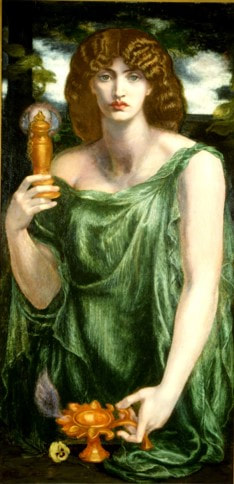
There are some other symbols that are encoded, such as in this painting of Mnemosyne. She carries the lamp of memory. For those who are familiar with teachings of Samael Aun Weor, we thought about the transcendent nature of a marital union, of a divine sexual compatibility between husband and wife, the union of male and female. You can easily pick up on this image, which has a phallic significance, also that of the woman.

The lingam-yoni within Hindu tradition and the source of real spiritual power is really encoded and found within the creative energy, which we will talk about in a future lecture called Empower Your True Self. Here we just mention it in passing because the lamp of memory, of spiritual work memory, is deeply related to the use of our creative forces, because that light, the energy synthesized within our creative organs, can be transformed and used spiritually to illuminate our psyche.
So, the name Mnemosyne is also derived from the same source as the word mnemonic. It is the Greek word mneme, which means “remembrance” or “memory.” We even know in our modern culture of memes, right? You see images with some brevitous quote to inspire some type of insight or meaning into politics or whatnot, such as you find on X or Twitter. So, a meme, or a source of memory, of remembrance, is etymologically tied there. But again, the type of memory we are talking about is spiritual, memory of divine realities that we have experienced. There is also some deeper truths with Mnemosyne. When supplicants would speak to the Oracle of Trophonios, a Greek temple of esoteric mysteries, they would first drink from the fountain of Lethe, which is forgetfulness. This is a beautiful symbol. In a sense, we need to forget our former ways of being in life, not from a sense of naivety or willed ignorance, like we are no longer going to pay our bills or go to work. In fact, what this means is to let go of our former sense of self that we were so attached to, that were really the focal point of our life, more egotistical states of suffering. One has to forget that form of life and to adopt a new way of being, to let go of worldly thoughts, and then Mnemosyne, the fountain of Mnemosyne, is related to real spiritual work memory, that they would drink from that fountain afterwards―so, forgetting the world and then remembering the divine. Again, this is metaphorical. This does not mean we become irresponsible people who don't take care of their responsibilities, to just live like a hermit, right? Forego responsibility or a job or a career or family or taking care of one's loved ones. One can be in the world and yet be not of it. It is a psychological attitude, and Mnemosyne is precisely that: remembrance of higher transcendent realities and truths within ourselves. After drinking from the fountain of Mnemosyne, these initiates of the Greek mysteries would then recall their spiritual descent. They would remember the process by which they first had to confront themselves and how to overcome it. It is a form of spiritual descent, to face oneself like Dante descending into Inferno, so as to rise up through Purgatorio and Paradiso, a beautiful metaphor and symbol. Work memory helps us to advance, spiritually speaking. The Divine Feminine
When we talk about self-remembrance, we also talk about the divine feminine.
So, in a basic level, we may know from these studies that to remember the self is not to forget one's state of watchfulness. At a basic level, we learn not to forget that we are paying attention. We are observing our three brains that we discussed previously: our intellect, our emotions and motor-instinctive-sexual centers. We watch our thoughts. We watch our moods. We watch our impulses to act. Now, primarily, that is the beginning. We want to cultivate that state of remembrance daily, moment by moment. But we also want to remember that which is called the divine feminine. Our inner Being, our inner divinity, has a derivative. 
This divine feminine, this inner goddess, was known in every tradition by multiple names. We have the Tibetan Tara, mother of compassion. We also have the Egyptian Isis, who is the priestess of Osiris, the Divine Father; Athena or Minerva who armored the Greek and Roman warriors of the great epics: The Odyssey and even The Aeneid, and also, we have mother Mary, מִרְיָם Miriam in Hebrew, which means “to raise.”
She is part of our true identity. She is the power of all the compassion within every mother of the world. She is the limitless, pervasive, and all-encompassing strength and compassion of the gods, of all those masters and prophets, buddhas, angels, whatever name we wish to give to masters, and, she is within us. She is the power of our inner divinity who can liberate the soul. She has been characterized in these great myths by a type of relentless compassion and also terrible severity. 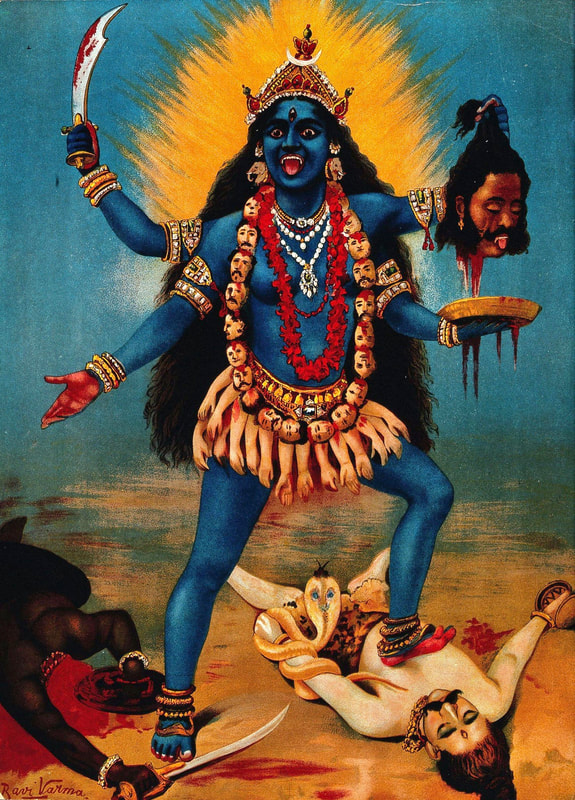
You can even think of the Indian Kali or Durga, who slays demons. These are all very beautiful metaphors for an internal reality, our own Divine Mother.
Our Divine Mother is the part of our being responsible for liberating the soul. Unfortunately, in many religions, especially Abrahamic, she has been extirpated from scripture. She has been removed, and unfortunately, religions that reject the divine feminine in their exoteric or public sense are halfway to atheism, because no child can be born from just one sex, whether it be male or female. What is necessary is the union of both. Likewise, internally, our soul is never born from a man. Our soul is born from a mother who was impregnated by the spiritual seed or potential, the divine masculine. As above, so below. We want to evoke the presence of our Divine Mother, because as we are paying attention and watching ourselves, remembering a state of watchfulness, we also want to remember those qualities that pertain to Her. A lot of people struggle with this. Many of us did not have, perhaps, a good upbringing. Perhaps it could be hard for some to identify with the divine feminine. Maybe because one's main, central maternal figure in life was contrary to the ideal. It could be very hard to try to evoke what it means to remember the divine feminine, especially if we have had bad examples in our life. I think a particular way to combat, or better said, circumvent that frustration or maybe doubt and despair, is to reflect on certain women who have truly embodied these virtues. Again, we have these mythological figures. But there also have been many female masters who embody these principles. But, regardless of one's physical sex, we all have a Divine Mother, the mother of our soul, and She is characterized by the most virtuous qualities of a human being, and more. She is absolute perfection. We learn to cultivate a relationship with Her by seeking Her in our mind and heart―to evoke and recall a state of being without thought intervening, in which we know how to act in circumstances that are perhaps quite challenging. She is that Athena who guards and guides Odysseus in his battles. She is Mary or Miriam who raises Christ. She is the Isis figure of the great temples of Egyptian Mysteries, who knows how to really lead and instruct, and She is the unrelenting compassion of Tara who, when seeing the suffering of any human eye, outstretches herself to fight for their salvation. This is all within us, and we can learn to evoke that state through practices like meditation, but also self-observation. We observe our psychology and we watch our heart. How do we feel? Are certain states of being going to be detrimental for our life? And, to observe and watch the fact. When virtuous qualities or states of being emerge within our psyche in relation to events, we have to discern with our heart and act on what is most virtuous, because that is the thread that connects us to our Divine Mother, our conscience. 
Filial Love: Remembering Osiris through Isis
This is what is known as filial love: the love of a child for its mother. We have here Jesus and Mary as well as Krishna and his mother. Likewise, Osiris, Isis, and Horus, emblematic of the eternal triad: father, mother, son. Our Essence or soul is precisely Horus, the light of being that can emerge from the depths.
Filial love is to is to have that state of consciousness in which we are inspired to act for humanity, for the of benefit of humanity, for the well-being of others. That filial love is precisely a state of being. Self-observation is not enough. Merely to watch and get data about our defects is the beginning, but self-remembrance is when we feel the joy and inspiration of behaving and acting compassionately, even if it means being severe. So, I do not want people to get the mistaken assumption that compassion is like the Hallmark card sentimentality of being a nice person in a conventional sense. This state of being is not contrived. It is not fake. It is penetrative and profound, and it is a state of love that can be cultivated, even if it means being severe and disciplinary and establishing boundaries. Love is not complacency with crime. Filial love, again, is that connection with divinity in our heart, and what we strive towards in this path is precisely to reconstitute the divine body of being. What we want is to bring back the diverse parts of Osiris. So, in the Egyptian mythology, Osiris, the divine masculine, was dismembered by his evil brother Seth, Horus' uncle, who is a demon. This figure constitutes, or better said, Seth constitutes our diverse defects, egos, and desires, our psychological errors, which have dismembered our potential. The path of filial love is precisely fulfilled by Isis. Isis, the Divine Mother, has the precise duty to collect all the parts of divinity, the soul, that is trapped within imperfection, within mistakes, and to free the consciousness. By freeing the consciousness and extracting the soul trapped in each defect, we remember Osiris. We recombine all the diverse parts of our being so that we are an integral soul, a perfected consciousness, a master. What is unique about how Samael Aun Weor specifically describes the state of remembrance is precisely by evoking the state of recollection of divine being, which are precisely those qualities of strength or compassion, love, serenity, insight, spontaneous and novel, alert, vigilant, comprehensive and profound. Those states of consciousness are within, and to develop a relationship with our inner divinity is precisely achieved through Isis, Mary, Miriam. To have love for divinity is to act on the best qualities in ourselves at the expense of our own ego. We want to renounce our own particular states of mind which are problematic and cause pain. So, we do not show filial love when we repress our anger, merely supplicating and bottle it up so that it stews and ferments. We show filial love neither by feeding into that element and giving our anger and desires what they want, but comprehending and diffusing that fire with the serenity of love. This requires real strength. That filial love is how we show, in moments of great crisis, a virtuous action, when we remember or reconstitute our divine Being by learning to renounce, psychologically, our attachments to behaviors that create pain, and thereby, act upon real virtue. It is not enough just to look at our defects and see how bad we are, and to cultivate a sour and morbid attitude. That is wrong. Self-observation is necessary, but we have to learn to develop love in our heart, proper ways of being and virtue. That only comes about by meditating, not only on our defects, but also our virtues―that which is generally good in us and creates the harmony of our communities and relationships. 
The Paradox of Divine Remembrance
This is an interesting paradox. What is divine remembrance? We can say, in a sense, that memories relate to the past, as we explained. But, what does it mean to remember the moment? We talked about this in brief.
Our memories constitute our records of the past, and oftentimes, they can be unreliable or fluctuating. They change with different circumstances or bias. Oftentimes, memories change when we look at them if we are not careful. It is very difficult to examine our memories without some type of identification, which we explained previously, to feel that we are invested in that thought or emotion of the past and to invest our energy psychologically into it. While we want to reflect on our past and understand our, perhaps, traumas of the bygone age but also our current moment, it is important not to identify with memory. Our memories also often project themselves into the present and cloud our future. We do not see what is new. Divine remembrance is not that. Divine remembrance, remembrance of divinity, is precisely found when we do not have any artificial contrivance obscuring our vision. That has to do with projections of mind or egotistical states of being―thoughts, feelings, and desires. But to look at the moment and to forget the past, in a sense, to not to anticipate the future, but look at now, is divine self-remembrance. We remember the moment, not the past or the future. This is the fundamental paradigm shift that we need if we want to cultivate a relationship with divinity. It is also the basis of self-observation. It is important not to just observe our mind, heart, and body, but also in the moment cultivate a relationship with virtue. 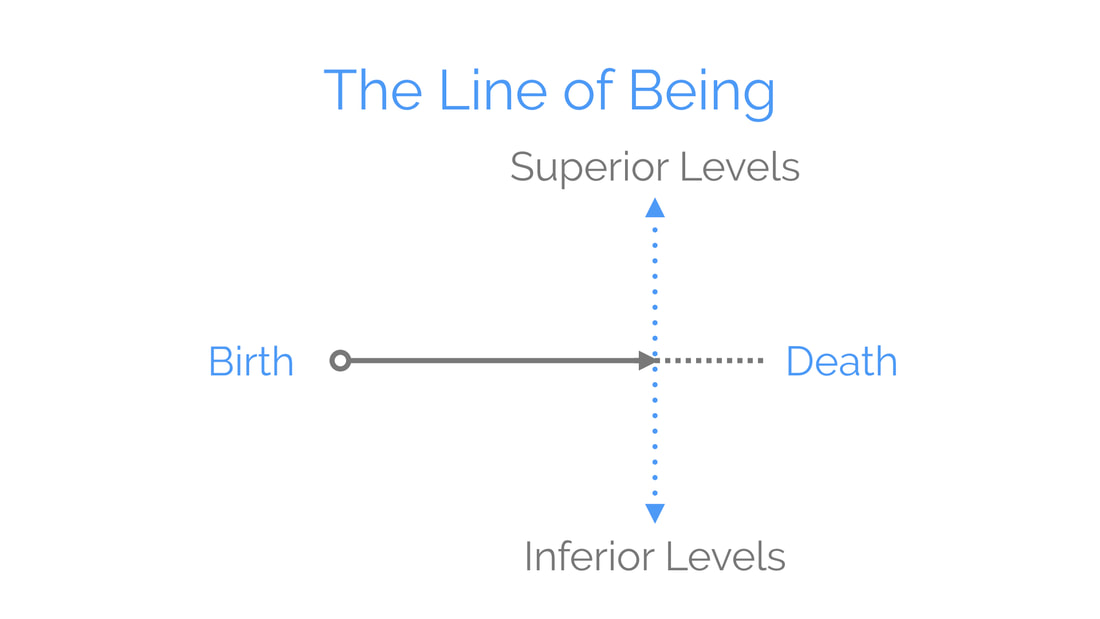
The Lines of Life and Being
This state of divine remembrance is mapped out in what we call the lines of life and being.
The horizontal line of life we all know. It is our birth, our childhood, education, teenage years, adulthood, even perhaps our marriage and family, old age, and then death. We all travel on the horizontal line of life. We all travel from birth to death, and yet, many of us fail to acknowledge that there is a vertical path. The vertical path has to do with our attitude, our psychological state of being. It is intersecting with the moment in this horizontal line. We cannot avoid life, but we can transcend our suffering in the way we approach it. This has to do with the verticality of being. This is not in literal space in terms of superior or inferior relations like heights and depths. This is metaphorical, psychological. There are virtuous states of being and there are inferior states of being. There are the qualities of the superior Essence and there are inferior qualities of being related to the ego, defects, desires. Divine remembrance is now. It is involved in the way we interact with life and how we respond to difficult circumstances. Divinity is precisely in the moment and while for a lot of us it might be difficult to conceive or conceptualize that divinity is very close to our Essence, it is important to emphasize a beautiful quote from a scripture known as the Qur'an. This is from Surah 50, verse 16, in which we find a teaching about how divinity is with us and is near to us, but oftentimes, we choose to ignore that presence because we are identified or clouded. We are attached to our own desires. We did indeed create man, and We know what his soul whispers to him, and We are nearer to him than his jugular vein. ―Qur’an 50:16
Divine remembrance is accessible to anyone if we are willing to look, but if we identify with our own mind, we are disconnected. This is why the best act of worship in any tradition is mindfulness.
The Best Act of Worship
We have included some images from diverse traditions that highlight the beauty of remembrance. In the Tibetan tradition, there are mantra wheels that practitioners would move with their hands to have them roll so that, in a sense, metaphorically, one is spinning the consciousness, activating the soul, giving it power and energy through mantra or sacred sound.
Mantra means “mind protection,” to protect the mind from one's defects. In many senses, mantra has to do with sacred sounds or vocalizations, which some practitioners of different religions use different vocalizations or sacred prayers, mantras, to invoke good energy in the consciousness and to pacify the intellect, desire, and the body. This is so that the soul is more receptive and alert, awake, and vigilant and can receive intuitive insights into reality, but also ways to act ethically in life. There is also the Jewish synagogue here where practitioners will recite Torah. Hebrew is, again, another language of mantra, sacred sounds which evoke harmonious and beautiful principles. Church bells on cathedrals are also a symbol of remembrance, which is why when church bells go off at certain hours of the day, they are calling their practitioners to remember God. Likewise, with minarets, the top of mosques or masjids, you find adhan, call to prayer, used by singing melodiously in Arabic, verses from the Qur'an. These are all reminders to pay attention, to watch the moment. This is why Al-Qushayri, or al-Wasiti, in a scripture called Al-Risalah, Principles of Sufism, taught: The best act of worship is watchfulness of the moments, that is that the servant not look beyond his limit nor contemplate anything other than his Lord and not associate with anything other than his present moment. ―Al-Qushayri, Al-Risalah: Principles of Sufism
This is basically summarizing everything we have said: be present, watch, pay attention, but then follow your heart, your intuitive impulse of conscience. Do not look beyond what is not present to the future nor contemplate any other state of being other or contrary to divinity, and that is something that you taste, and we taste again and again. We discern what sentiments in our emotional center or thoughts in our mind are constructive or not, and then we do not associate with anything other than the moment― not to daydream or wander in the intellect, to look beyond the present.
Balancing Self-Observation and Self-Remembering
So, this is precisely the balance between self-observation and self-remembering. Self-observation is a balancing act. In a sense, it is like this violinist who is playing music, beautiful music while walking a fine line in life, that line of verticality up in space, higher levels of being.
Self-observation is like balancing yourself on a wire. It is how you use your skills to find equilibrium. You are watching yourself and being attentive, because if you do not, you fall. The same thing psychologically, in the sense that one identifies more or less with certain circumstances and may invest too much energy in problems. So, self-observation is watching all of the processes of our mind and heart and body, so that we can find equilibrium. Then, the actual joy of doing that act is self-remembering. It is the state of love and compassion in which we are guided in our deepest core for how to respond to the challenges of existence. 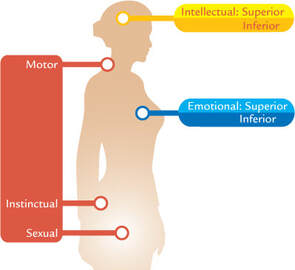
Spiritual Connection and Disconnection
But oftentimes, like I said, we may feel disconnected.
This often has to do with the fact that we may not be looking appropriately. We may be too invested in one or other of the five inferior centers of our human machine. This human machine maps out physiologically in our body, but also psychologically, because these centers is where the ego manifests. Perhaps we may be more intellectual or movement-based, maybe more instinctual or even sexual. Some of us may even be more invested in our emotions, negative emotions, negative desires, and so, we waste energy through these centers. We may be disconnected because we are too identified with the lower centers, and not in tune with the superior too. Self-remembrance involves the superior emotional center and even the superior intellectual center. These centers do not allow the ego to act. No ego can act through those centers. They belong to the Being. They are like your personal telephone or cellphone connection to divinity. It is how divinity communicates to us through hunches in the heart and through insights in the mind. These come like a shock of lightning, like an electric bolt. It comes out of nowhere even, and it sparks us into inspiration and wakefulness and vigilance. So, Samael Aun Weor mentions that we need to connect with these two superior centers, and that when we do not, we feel a lack of inspiration or strength. He relates this in Treatise of Revolutionary Psychology: It can come to pass that we are incorrectly related with ourselves. Accordingly, we suffer deeply due to the lack of inner enlightenment. Obviously, if the lamp of our room is not connected to the electrical installation, our room will be in darkness. Therefore, those who suffer from a lack of inner illumination must connect their mind with the superior centers of their being. Unquestionably, we need to establish correct relationships not only with our planetary body (physical body) and with the exterior world, but also with each of the parts of our own Being. ―Samael Aun Weor, Treatise of Revolutionary Psychology
Oftentimes, we may feel pessimistic or doubtful. Many people write to us about feeling depressed or anxious, that they cannot remember God, or they feel that they cannot remember divinity. They feel disillusioned, in pain. What happens in this case is that we are often identifying with very strong egos, and so that is why it becomes necessary to introspect even further and to cultivate acts of giving, not merely of material things, but also perhaps sacrificing our time― serving humanity in some way so that we are not so identified with ourselves.
But, oftentimes people feel lost. If we do not feel connected with virtue in the moment, then we become pessimistic, tired, exhausted, sad. We need adversities to change, but unfortunately, when hardships do occur to us, we do react and we do feel disconnected or we identify too much with our own ego. The solution is to accept the inevitable and to take responsibility for what we have caused in our lives―to look at ourselves, even when it is especially painful. 
Disillusionment and Striving in the Spiritual Path
Samael Aun Weor iterates these point about how some people may be inspired by hardship and others may crumble:
Pessimistic patients, tired of so many doctors and medicines, no longer desire to be cured. Yet, optimistic patients struggle to live. 
The First Conscious Shock
So, these are metaphors for psychological and spiritual life. In fact, when things are hard for us, it is even more important to attempt to remember the self and to remember divinity, primarily because this type of insight or connection, like a shock, inspires us to continue forward, to ascend the ladder of being up to the divine.
Samael Aun Weor concludes with this quote: During times of rigorous temptations, discouragement and desolation, one must appeal to the intimate remembering of the Self.
So this is food for our soul. It is a shock when we genuinely remember the self. When we stop forgetting divinity and when we forget our pains and problems for a while. Divinity is always here for us waiting in order to heal our heart. But it requires that we climb. Self-remembering, remembrance of divine and virtuous states of being, helps to really change our psychology. It even gives our body energy and enthusiasm. So, we are always nourished in mind, body, and heart by connecting with the source of life, when we are looking at our mind for what it is and being willing to see the roots of it.
Resource
To conclude, we would like to reference a book by Samael Aun Weor. It is called The Spiritual Power of Sound: The Awakening of Consciousness and the Laws of Nature [republished as Profound Meditation]. There are some references to how sound or mantra helps to activate latent parts of our psyche, so that by giving us good energy in meditation through mantras and prayers, sacred vocalizations, we have a greater impetus and enthusiasm, greater energy to work.
So, some of you may be familiar with other aspects of this teaching like the runes, Nordic yoga, sacred rights rejuvenation, mantras. These are all very useful for accumulating energy in the the Essence, so that it has the energy and strength it needs to be able to work effectively on the mind. So, at this point I would like to open up the floor to questions. Feel free to write them in the chat. We will read them off in the order that they are given. Questions and Answers
Question: I started reading the books of Samael Aun Weor in April this year. Shortly afterwards, I was diagnosed with autism, which maybe explains why I have sensory processing difficulties. I experience sensory overload due to heightened sensitivity. I can hear, see, taste, feel, and smell things others can't. As a result, I experience physical exhaustion and burnout, which led to 25 years of addiction. I have now been sober for five years. I am thinking that if I learned to transform my unconscious and conscious impressions, start practicing sacred rites for rejuvenation, dream yoga, learning to consciously astral project, and practicing authentic meditation, it will be far more beneficial than studying books on sensory overload and synesthesia. I think one of my character defects is trying to veer me off this path and get sidetracked on this autistic awakening. What are your thoughts?
Instructor: There is benefit to conventional psychological wisdom. Obviously, there are things that we can study and read relating to disabilities like autism that can be beneficial, but obviously in your own experience, you need to discern what is practically working for you. So, what we want to emphasize is that while the Gnostic tradition gives many practical tools and techniques that can help to transform our state of mind, it is also good to acknowledge too that in Gnosis, we do not fanatically accept or reject things. We like to study and look for the core of what is useful and practical. So, if you find that there are some insights from sensory overload or autism literature that could be beneficial, I'd say be open to it. But, obviously, we tend to go a bit deeper in the Gnostic tradition, by giving us exercises that help us to really go deep into the roots of our particular psychological conditions, whether that may be related to having a physical diagnosis or not. So, I think that it is important to have one's foundation, which is our spiritual work, but that doesn't mean that one has to reject the insights of other practitioners, such as from professional psychology or medicine. There may be things there that are deep that could actually help you. I am not familiar with that literature so I can't really comment, but I'd say keep yourself open to investigating. Obviously having your core practice is going to be the most beneficial and useful for orienting your life. You know, follow your intuition. Question: When we detect an ego of lust, what is the best thing to do at that very moment, especially if the impulse is strong? Any prayer or mantra that is particularly helpful? Instructor: You know, one thing is to observe the lust in the moment, and oftentimes what can happen in many students is one feels an immense aversion, because we know from our Gnostic studies that we want to understand and eliminate lust. But unfortunately, the tendency for many individuals who are practicing the creative teachings, the sexual teachings, is that they become immensely afraid of lust and therefore develop a complex, in which one reacts towards seeing lustful desires in themselves. Now, oftentimes this can relate to repression. You see a defect emerge in yourself and then you feel aversion and try to push it away. That is also wrong. We do not want to feed the lust, but also not to hide it or run away from it. You want to comprehend it.
There are prayers and mantras that you can use like Belilin, is one mantra given by Glorian Publishing. It is a way to reject negative influences, but also lust. It is very effective, but oftentimes, you might be finding yourself reciting mantras out of fear, and this is ineffective. Fear does not make any exercise or mantra effective. If you are not calm of mind and actively looking and remembering God, oftentimes what can happen is that fear intervenes and tries to repress or suffocate the desire that is there. Meanwhile, there is no comprehension.
Belilin is a good mantra, especially, if you want to feel more connected with divinity, in order to invoke more positive influences. But, be mindful that the prayers are only as effective as our concentration and remembrance, and that we are not acting out of paranoia. So, I believe this is a teaching given in Hamlet by Shakespeare where, "My words fly up to heaven, my thoughts remain below. Words without thoughts never to heaven go." So, be mindful and remember what you are doing so that the mantras are effective. If we are doing it out of fear, then it will not be. Question: Do superior emotions such as happiness, inspiration, and hope waste energy or empower the consciousness? Instructor: Superior motions empower the soul. They rejuvenate us. So, going back to the quote we ended with, with the first conscious shock, self-remembrance produces a charging of our psychological and physical batteries. So, we will find that we have much more energy to work spiritually as we are remembering divinity. Those superior emotions give us a lot of strength. They do not waste energy like anger or pride. They give us force. That is why we call this science “hermetic sealing.” If you studied alchemy or the medieval traditions of alchemy where they talk about being hermetically sealed, it means to not let impurities into our mind, meaning, we do not act inappropriately in thought, word, or deed, and by acting appropriately, consciously with superior motions, we give us more purity of influence. We feel stronger. Question: Does eating red meat awaken the hell realms? Instructor: No. Red meat will give you fire. So, we talk about in diet that different foods will give us certain types of energy. Having a lot of sexual creative fire from red meat can be a good thing. But, if it is not controlled by our soul, then obviously, if we are very lustful, then it could be good to diminish our intake of red meat. So, I believe your question might also relate to indigestion. Some people have recommended not eating a heavy meal like red meat before bed because that can cause indigestion and indigestion can cause nightmares. So, nightmares are obviously experiences in our own hell realms, and obviously we want to avoid that, so it's good to eat light in the evening. Question: Can you explain why every time we take a decision to firmly move forward in our journey, things become more difficult and challenges multiply? Instructor: Yes, because our Divine Mother is compassionate. A real compassionate trainer of a psychological type, or better said, a trainer in martial arts, will give us the hardships and ordeals we need so that we can grow. If we don't face hardships and challenges, we will never face ourselves. So, divinity intentionally gives us obstacles so that we can overcome them, and it is important to remember in this path that when problems multiply, we are given a beautiful circumstance to see ourselves for who we are. Likewise, we do not receive hardships that we cannot resolve, or better said, if we do receive hardships that we cannot resolve, we will be given the means by which to face them. So, it is a matter of our will power and also our attitude. Question: Do you have any recommendations or ways that help on how to properly meditate on the ego or flaws without intellectually analyzing it? When I try to, I feel like I am just using one ego to analyze the other. Instructor: So, it is important to remember, I think people have a misconception about meditation that we have to abandon the intellect. Obviously, in the deeper levels, you have to transcend the mind. We should not be thinking in the deeper levels of meditation, but Samael Aun Weor makes a very interesting statement in his book The Revolution of the Dialectic that we first need to understand intellectually the defect that we want to study. We have some base level of intellectual analysis of our defects. What do we notice? What do we see? How does it act? What situations provoke it? In what series does this ego manifest within a conglomerate of different errors? What types of situations does it feed on? Those kinds of things. That is something that you can intellectually analyze in the beginning, but the way that you properly meditate even deeper is developing serenity first. So, we have to first develop concentration, the ability to focus on one thing, and have serenity of mind, but also to learn how to imagine the particular scenes of a situation in which an ego manifested. So, you need both serenity and insight to do so. There is a beautiful course from Glorian Publishing called Meditation Essentials. I recommend that you study that course because it is a very baseline, practical method of instruction going from the very bottom to the top in terms of meditation, how to really meditate on the ego. Without serenity, calmness of mind, and concentration, we will not have the stability by which we can have insight or perceive superior imagery within our visualization. So, do not think that you are going to get it perfect in one day, in the sense like it is just going to snap into place and then everything is going to work out, like the practice is just going to flow. Oftentimes, we do need to try and try again because oftentimes we do get identified and that we are flawed. We can properly meditate on the ego and flaws once we develop more concentration and the ability to perceive deeper imagery. So, study that course, Meditation Essentials. It is a beautiful course, very practical. It can give you a lot of guidance in a sequential and organized way. Question: Any recommendations of mantras or koans, etc., to connect with our inner Divine Mother, and is the Mantra Krim a call to Her? Instructor: Yes, there are mantras. I mean there are many given in the book The Perfect Matrimony by Samael Aun Weor, which can be used. One of my favorites is O AO Kakof Na Khonsa.
It is a mantra that relates to the Egyptian mysteries, the Divine Mother Isis That is a beautiful mantra you can use. There is also, one of my favorites, is just a Ram-IO, which is symbolic of Mary. The mantra Krim also works with the Divine Mother. She is the one who pulverize any defect that we have comprehended. So, the mantra Krim is used to disintegrate an ego we have understood, whether through pranayama or through alchemy.
Question: When self-remembering and being in the present moment in general and self-observation etc., is there a certain area of your body that you mainly focus or hold your attention on? Instructor: I have heard instructors mention it is good to watch from the pineal gland. We observe from that focal point. We want to feel like we are driving our car, right? When you drive your car, you get in your seat. You have your seatbelt. You adopt a certain position, and in a sense, the car becomes an extension of you. Obviously, you want to remember your body and one way you can do so is, if you find it hard to concentrate, you can also focus on the pineal gland―watching from that state, but also being aware of your heart. Those are where, in our physiology, where the two superior centers manifest: superior intellect and superior emotions. We want to remember and recall. You can focus on those points when you need to, but I would not get so focused on the sensation of the body, because that is just one source of information from our senses. We also have our psychology, our thoughts, our emotions, and moods, and also the impressions and activities of the daily existence. So, we want to be aware of all of that. One good concentration practice can be focusing on the pineal gland, especially if you are trying to develop serenity of will, concentration. You can hold your attention on that or focus on your heart. That is another form of concentration exercise where you focus on the beating of your heart. You might find that you need to do different types of concentration and attention throughout the day, because obviously our needs are diverse. Some tools are more effective for different people, and we might need to round out certain abilities of our attention and consciousness that may be deficient in us, where other people may have more development in that area. So, that is why we have exercises like concentration to help with that. So, pineal gland and the heart―that can help. 
We all long in our depths to understand reality. This is why we have so many different schools of thought, that teach us how to understand the nature of being in relationship to our communities, our relationship to ourselves, and our relationship to, more importantly divinity.
Unfortunately, that latter relationship is something lacking. We do not tend to know what religions have called God, what spiritual gurus talk about enlightenment, and yet, we feel this inspiration and drive to approach teachings and schools and scriptures, to understand what that is, because honestly, we feel a very deep chasm in our heart, typically that we seek to fill with so many other things. We try to substitute with money or a career or good social status, which while useful and good, cannot replace the connection with the truth. What we want to explore is precisely that relationship to the divine, and to understand it practically. How do we evoke that in ourselves, and how do we connect with that on a daily basis? How do we recognize it and understand it when we have it? 
Our Focus
Our focus particularly will be to identify, define, and describe three distinct forms of perception, primarily because the type of perception we have talked about in this school is called in Greek, γνῶσις gnosis. It is knowledge from experience. It is a way of perceiving reality in the world, ourselves, and the divine.
We are going to talk about what that is, and how do we differentiate between common ordinary ways of seeing, because what we want is to cultivate that perception of the truth, not merely from a material sense, from matter or substance, but from consciousness. We also want to understand that perception beyond thought, and of course, a lot of schools talk about going beyond the mind. That is important, but a lot of times there is a lot of confusion about what that really is, because the mind is subtle. In this vein, we are going to differentiate between what is subjective and false from what is objective and real, because that is primarily, personally, what alarms or challenges people in any religion or faith. How do we really know? How do we verify what God is, what divinity is? How do we experience that? In most religions, they do not even teach that you can experience divinity, because that, in a sense, is almost taboo, but unfortunately, it is a great misconception, because all religions were founded by people who experienced the truth, and they codified it for us. We will explain what this perception is in relation to our multi-dimensional nature, because contrary to atheism, we are not merely just a body. We are many things. We will prove that in a very simple example. Then we will clarify how experience of divine reality can transform us, how that radically changes who we are, how we relate to the world and ourselves, and how to improve our communities, primarily, to dignify the soul, to elevate our way of being. 
The Multidimensional Nature of Perception
Our consciousness is multi-dimensional, and I do not mean this in a very new age kind of banality, but I mean it practically.
Thoughts, feelings, and impulses are not physical. They do not belong to matter. We perceive them, but we cannot see them with our physical senses. That proves to us that we are more than just a brain, a machine. Part of understanding the experience of divinity is precisely understanding ourselves. What is thought, feeling, and desire, and what are they made of, primarily? It is not merely just an epiphenomenon of the brain or nervous systems, but there are distinct realities that we can verify, especially when we dream. When we dream, we are not with physical materiality. We are interacting with a different world, a different dimension, relating to our thoughts, feelings, and desires, which are not made of hard matter, but they are made of a different type of material. It is more spiritual. If we want to understand how to cultivate something higher, we have to understand that. The purpose of our studies is precisely to increase the capacity to perceive, and not merely leave things at the level of our physical senses, or even our ideas. So, going back to the meditation we practiced, we reflected on a moment in our childhood in which we felt and knew something real, something of real value, something that hit our core, that, in a sense, transcended our mundane life. Also, with adulthood and development of our psyche, our personality, we in truth lost something valuable, something deep, something profound. It is perhaps that knowledge or experience of something beyond matter, maybe even in our dreams. We want to cultivate that perception merely beyond the senses, as I said, and we want to emphasize that there are three distinct forms of knowledge that we are going to talk about, that from the senses, that from concepts, and that from the consciousness, from experience. 
Three Types of Mind
We sometimes denominate them as the three minds, although this term mind is sometimes often confusing, especially for Westerners, especially if you look at teachings like Buddhism where they translate “consciousness” into “mind.” In our Western habit, we think it means the intellect, which is not the full gamut. Intellect is one aspect, but mind in Buddhism, such as from words like buddhadhatu, means buddha nature. It is the soul. It is something beyond your intellect or your emotions, even the body. It is a type and way of being that is profoundly deep and more real than us sitting here. But it is something that has to be activated, cultivated, but there are layers to this.
There is the sensual mind, the intermediate mind, and the inner mind. We will talk about all three. 
The Sensual Mind
Obviously, the sensual mind relates to the five senses: sight, hearing, taste, smell, touch. It relates to physical matter, relates to our ways of being in the physical world.
We develop many ideas and understanding of the world based on the senses, which is valuable. We owe a lot to science having taught us how to master this world itself and acquire many new understandings and benefits, but it is not the full totality of who we are. The senses themselves, our ideas about the world through our five senses, do not give us complete data. We do not get a full picture of everything that is going on in ourselves and in the world by merely the five senses. They are a necessary medium for being here, but in truth, they are not what can define our full potential, our full depth. I am pretty sure we know many people in our social circles who are very materialistic. They believe that only what you see, feel, taste, and touch is real. That this is all there is, and yet, there are many of us, as going back to the previous example, we may have had a dream where you saw things that are beyond the physical senses, and you saw a type of perception that was very profound and more real than this. There is always a battle between the senses, in the sense of material thought with spiritual thought, but we can reconcile the two. 
The Intermediate Mind
Part of the purpose of the intermediate mind is to do that, but unfortunately, in our modern world we take our ideas at face value. The intermediate mind is precisely that: it is the buffer between the senses and our consciousness. The intermediate mind is a way of thinking, understanding the world through beliefs, concepts, ideas, philosophies, interpretations, and metaphysics. It is a way of thinking. It is like you have a system of ideas that help explain phenomena and is useful. We need that.
Even when we give lectures about more spiritual topics, we have to use the intermediate mind to communicate that. So, we need it to some degree, but the problem becomes when the senses are all we think there is, or our ideas somehow transcend reality, because we do not think it is true. It must not be real. Of course, the whole purpose of the scientific enterprise is to verify the truth and experiment, to find out the facts, and then develop and validate or verify theories. One has to be an experimenter, to test things with the intermediate mind. Sometimes we call it the mystical mind, the metaphysical mind, the believing mind. This, in itself, by itself, is insufficient. We sometimes call it the metaphysical mind. We are going to continue with the intermediate mind here because it relates to the idea of that which is beyond or among, behind, matter. So, we use our thoughts to validate or correlate, what is going on here. The word metaphysics comes from the Greek, meta―formerly Facebook―an explicit awareness of itself or oneself as a member of its category. We need the intermediate mind to categorize things. We could not have a conversation if we didn't have this type of way of thinking to be able to interpolate, correlate, talk about, validate, verify, but if we live only in the world of concepts, we are going to be missing something very profound. This cannot be filled by that skepticism or doubt or any type of thinking, that believes its ideas are greater than reality. We have to be willing to put that aside and awaken the inner mind. 
The Inner Mind
The inner mind is the reality. It relates to mystical, meditative experiences, astral projections, visions, or awakening in dreams, states of consciousness in which our awareness is expanded, like we discussed in the former lecture called Observe Your True Self.
Awareness is a spatial perception, when you see with greater clarity. Concentration is the ability to focus, to apprehend phenomena with more lucidity. It could be spiritual perceptions and insights, like what people talk about, visions of God like Moses on Mount Sinai, talking with Elohim, divinity, talking with his inner Being. The inner mind is precisely that capacity to know the truth and has nothing to do with thoughts, in the physical senses, but it is a type of mind that needs to be developed intentionally. It cannot be left of its own accord. It is dormant, asleep. We need to awaken it. 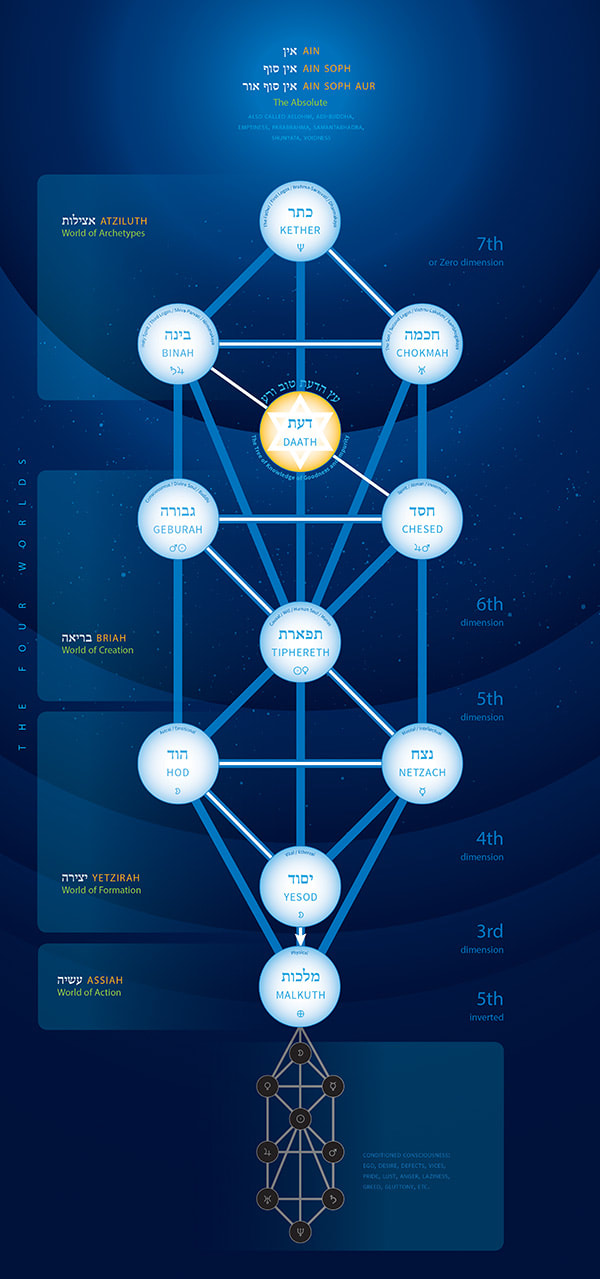
It is awakening to divine reality, and it is like walking towards a cliff and seeing the beauty of a sunset, and apprehending its full depth and power and beauty without having to mar it with our thoughts. We understand and see things, not merely in this physical world, like we go back to with the Tree of Life, but the higher worlds. We verify it personally for ourselves what these dimensions are, what these states are, and then we do not have to believe in anything. You just experience it.
You can use your intellect to convey that knowledge to other people. So, the intermediate mind goes in between the inner and the senses, the inner and the outer. But the only way for the inner mind to develop is if we understand and comprehend the ego, and if we annihilate it. If we do not annihilate the ego, you cannot pull the light of the genie, the source of genius, from the bottle of anger, the bottle of pride, the bottle of lust. By breaking those shells, you integrate light, and so you have greater capacity to see and do all these things that Samael Aun Weor in his books talks about, and are able to do it with greater confidence, because we are not trapped down here, because our ego belongs to the inferior worlds we call Klipoth, hell, world of shells. Biblical Representations of the Three Minds
Now in relation to these three minds, the Bible speaks abundantly about these three types. In the interactions with Jesus and the Pharisees and Sadducees, he was talking about the battle between the inner mind with the sensual and intermediate mind, the senses and concepts, because all the trained and learned scholars of Israel were coming to Jesus and challenging him, pulling up the scriptures. “Which is the greatest commandment?“ because, there is almost 600 and it is a bit of a loaded question, trying to catch him off his guard, because they did not believe that... obviously in the story they did not believe Jesus was the Messiah.
But he represents the inner mind that knows the truth, and the intellect and the senses are constantly trying to invalidate and to contradict and to fight with that part of us. "Which is the greatest commandment?” “You shall love your God with all your heart, all your mind, all your soul, all your will, all your strength, and your neighbor as yourself. This is the greatest commandment of all." Obviously, that kind of synthesizes the whole Jewish tradition in a Christian way. So, the inner mind is not caught in the the mind that does not understand reality, because the intellect cannot know the truth. It can only label and compare things, but it is not the actual experience of it. So, Jesus in the story is basically teaching, “Rely on the inner mind. Your inner mind will guide your intellect and your heart.” Obviously in the story too, there were rabbis who joined Jesus' flock and even like Nicodemus, someone who is learned, who understood, “My intellect cannot verify all these things, but I know he is a man of divinity.” It is something inside. We convert our senses and our intellect to understand these higher truths. 
The Symbolic Adulteration of Yeast and Unleavened Bread
In the process of this, Jesus warned in the Bible that, “You must not eat of the leaven of the Sadducees and the Pharisees.” Do not eat unleavened bread. This is a deep symbol.
Bread is a symbol of knowledge, not knowledge from books or scriptures or lectures. It is knowledge from your consciousness, your soul, what you experience. If we let our mind, our senses, and our intellect pollute it, we insert leaven. If you do not know what leaven is, it is like a yeast or bacteria that is used to insert into bread, so that when you bake it under intense heat, it rises. It changes form. It does not do anything nutritionally to the bread―unless we have any nutritionists here who can contradict that―but it does not really do anything but make it look better. It changes the appearance. This happens with every religion. These masters of the inner mind teach from their consciousness about these realities, and there are followers or individuals who―addicted to the senses and to intermediate thoughts, the intermediate mind, beliefs―adulterate the traditions. They insert their interpretations, their biases, their prejudices, their fears, their fanaticism. Then, the bread of original knowledge that was so rich and nourishing is lost. We have to eat unleavened bread, meaning, the knowledge that was not given to humanity, or that was given to humanity but is pure. Obviously this is very hard to find, because humanity is so corrupt at this point where, if you approach any religion or tradition, you look at, like, say, tantra being taught in the West―horrible corruption. It is harming a lot of people because people are eating leavened bread: knowledge that does not anymore resemble the original teachings given by these initiates. This is the symbol of a matzah, the Jewish tradition. One symbol escaped from Egypt in which they would eat unleavened bread as a remembrance of their slavery. It is a symbol of how we are enslaved to our passions, our senses, our intellect, and until we free ourselves from that, we have to remind ourselves by eating unleavened bread, bread that does not try to appease our intellectual palette or our appetites. 
The Sensual Sadducees
The Sadducees are the people of the senses. These are people who believe only what you see with your five senses, that this is all there is. These types of people or this way of thinking, even in ourselves, constantly battles against our consciousness. We may have a vision in our youth. We experience like an astral projection, or see reality in a very deeper way, and yet the mind will come in the senses and say in doubt, “This cannot be real. This cannot be the truth.” Senses, doubt, skepticism, the sensual mind is like that, the mind that critiques and only identifies with the five senses.

The Metaphysical Pharisees
Personally, I think the metaphysical Pharisees are the worst, because they believe in spirituality, they believe in religion, they believe in mysticism, and yet they do not experience it. Or, if they have some experience, this type of mind is very fanatical. It believes that it is the authority. It has the traditions. It knows all the scriptures and all the lingo.
While metaphysics can apply especially to religion, there are many people of many diverse philosophies and ways of thinking that are Pharisees―people who may be in science or any political party who firmly believe their way of thinking and their idea, their system, is right, and they refuse everything else. They do not look at the nuance between problems. All of us have this inside. We all have our own convictions and beliefs that we are right and other people are wrong. This is hard to really see in ourselves and work on. But a Pharisee or Farsi means “worshiper of fire.” It can mean really any person who really is worshipping divinity in any level. It could be even a gnostic, a gnostic Pharisee, gnostic ego. It believes that it knows the truth because it is in the tradition, but is not humble. 
The Awakened Prophets
We want to emulate the awakened prophets, the prophets of the inner mind like Jesus, Moses, Buddha―people who fully developed themselves.
These are people who are able to fully convey in their being an intense level of knowledge, a very deep level of knowledge, without corrupting it with their own mind. Obviously these sources are the most rich and profound reservoir of wisdom that we can extract, but also, it is very dense and very difficult to digest, which is why many people cannot read the works of Samael Aun Weor. His inner mind, very lucid, conveyed things which are very direct and go against a lot of traditions and beliefs of the senses, of the Sadducees and the Pharisees. It makes people furious. There are a lot of people write to us who criticize us or criticize Glorian Publishing for the work they are doing, because this type of knowledge is very deep and does not placate certain sensitivities and sensibilities for things. While we have diplomacy when we teach or try to teach, at the same time, we must be honest, even if it hurts, even if it is difficult to digest. So prophets are like that. That explains why in any tradition, you find these prophets are always fighting verbally with the Sadducees and Pharisees of any religion, but more importantly, this is something that goes on inside of ourselves. As we awaken our mind and see these realities for ourselves, the sensual mind, the intermediate mind, will constantly try to interfere. The senses will say, “This cannot be real.” The intermediate mind will say, “This does not fit my ideas. I do not understand this. I cannot interpret this.” It is a necessary process, but with patience, as we awaken more and more, we gain more clarity. They learned to be like, maybe even in this image, Deborah, a prophetess of Israel, who judged many situations in the Bible, the Old Testament, with wisdom. That is what a prophet can do, what the inner mind can do. 
Why Experience is Better Than Belief
In synthesis, to use Glorian Publishing's statements, why is experience better than belief?
Beliefs give comfort. Beliefs can give us a sense of stability in a chaotic world, but unfortunately when our beliefs are challenged, our whole world goes upside down, and then our foundations get flipped and we are not really on sure ground in the first place. It is better to be honest with ourselves, and when we are confronted about our own inadequacies, look to the experience. Is this real? Is this the truth? Beliefs may be right or wrong. It could be more or less correct, beliefs, but they cannot substitute for the experience or the reality. 
The Doctrine of the Inner Mind
So, it is difficult, but we try to put it aside with meditation. One way we can start to learn that is through a book by Samael Aun Weor called The Great Rebellion, where he talks about the three minds that we just explained in synthesis.
Question and Answers
Question: So, you say that the inner mind is the real mind, or sorry, you said the inner mind is reality. But could it also be argued that the sensual mind is part of reality, or are we talking about degrees of realness? Or are we talking about the sensual mind is bad because it rejects any inner experiences, but the sensual mind still has some kind of reality to it? Or could you clarify what is the difference between those two that appear to be real?
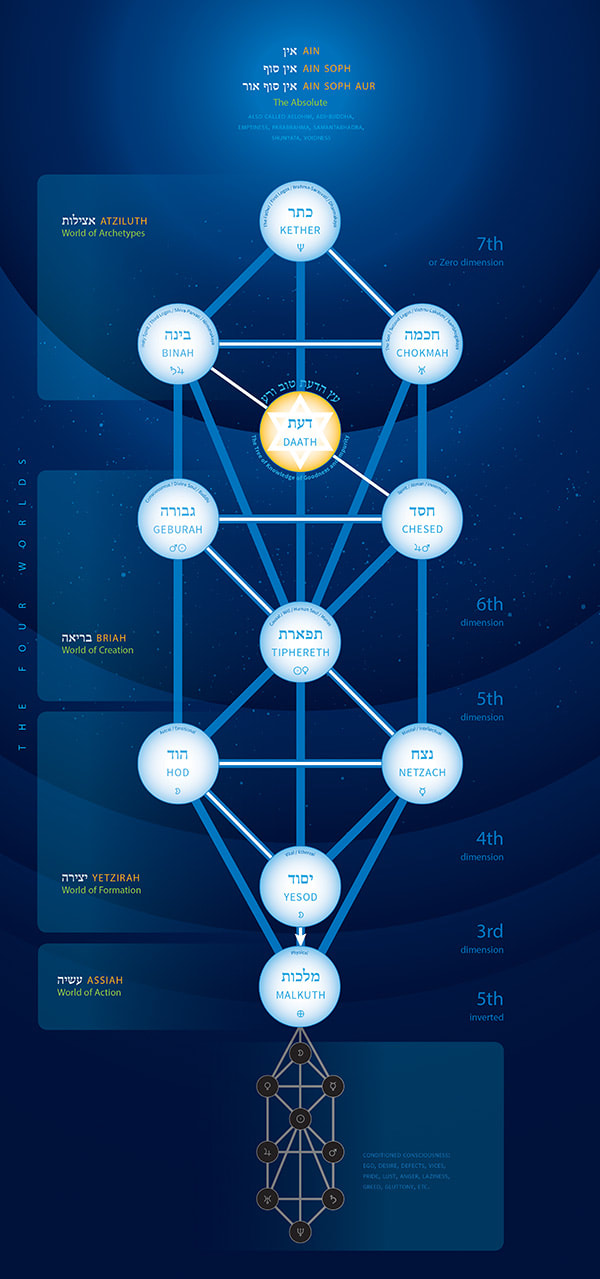
Instructor: Exactly that, levels of reality. Physical reality is Malkuth, to use the Tree of Life. Malkuth here in the bottom sphere is the physical world. So, our senses can give us a sliver of knowledge here, but the problem is when our senses have us believe that there is no such thing as Yesod, the vital world of energy, or Hod, the world of dreams, and rejects anything that is not within its purview. So, levels of reality, and the struggle is how much do we really understand of the whole spectrum? Because, if we take one sliver and believe it substitutes the rest, then we are missing out.
Question: How much does karma play into that, into our intellectual functioning? Instructor: Karma is cause and effect. What we think, feel, and do, has repercussions. We like to think in our modern world that we are isolated from people, like, we can just think and feel whatever we want and the people around us are not going to be affected. But the truth is that even if a person is not physically expressing certain emotions, we can sense their anger, or their pride, their fear. So, our mind affects people, and if we cultivate negativity, then it is going to affect other people. This is why even though certain movements like, related to atheism, where they believe because there is no metaphysical reality, they can think and feel and do whatever they want (nihilism). Meanwhile, they have terrible consequences for themselves, mental, emotional deterioration, a lack of meaning in life, no direction, and that permeates all their relationships, which is why a lot of people who are atheists, not all, but a lot of people, are miserable. So, it is better to replace, even if one is atheist, with some type of ethic, some purpose or goal. But our mind affects people, and, whatever we act, think, feel, and do, permeates our life and those of others. Question: So, I have this question that connected with the Kundalini. So I saw a girl and she explained that when she got the Kundalini awakening, she felt this sensation all the way from the bottom to the top. She was in euphoria some how. Could you explain exactly what this is? Another Instructor: What I should clarify is that what many people describe on the internet as Kundalini is actually what we would call Kundabuffer. So that serpent can go two directions. It can go up that Tree of Life to the highest levels and it can go down, that Tree of Life into the infernal worlds. You will still experience extrasensory perceptions and changes in your body, and those kinds of sensations potentially of euphoria, but also then, conversely, you will experience other times where you feel extreme pain and burning, and those are the fiery serpents in the desert that bit the Israelites. That is the Kundabuffer that goes down and experiences the internal dimensions but of the lower plane. Since we are not well established in this objective thinking, we can perceive that and believe that that is the Kundalini, and so, unfortunately, much of what is described on the internet are these very intense changes that people go through. They lose all their friendships and relationships and their body is changing. Unfortunately they are misusing the energy. They are trying to force it to awaken so fast and what they are actually doing is awakening consciousness, but in the in the inverted sense, the Kundabuffer. Through a practice of gnosis and sexual alchemy, you are going to awaken Kundalini in degrees, hopefully, gradually going up, and you are going to be able to start perceiving some of these higher dimensions. You are going to awaken chakras with sensitivity like telepathy, clairvoyance, clairaudience, and those are all gradual changes. So, it is not like describing, “Oh, in this one instant, suddenly, I had this Kundalini awakening and everything was very dramatic and extreme.” Those are often Kundabuffer experiences because the consciousness is being forced to awaken, but in a lower state. It is against nature. Nature is gradual and slow, and so, the changes that you will experience from awakening Kundalini will experience more unification with divinity and more perceptions of higher dimensions and more truth. So, this should not drive you away from relationships with people. If you are having awakening of Kundalini, you should have true knowledge, true compassion, and wisdom, and that should harmonize in your relationships and not isolate you. That is one of the key signs when you are hearing someone's account online is, if they are saying, “Oh, I had such a huge knowledge of awakening and now no one in my family or my friends understand me,” it is very out of balance. It is not the natural way where Kundalini slowly, naturally, and gradually awakens, and family and friends may not understand everything, but you have the wisdom to know how to interact with them without creating harm in your relationships. So, part of that is just people wanting to rush it, wanting to get there so fast, and unfortunately, it produces some negative side effects in these cases. Instructor: The reality of the inner mind and the Kundalini is that the Kundalini, the Divine Mother, the intelligence of God, only rewards the inner mind. The sensual mind, the intermediate mind, cannot work with or evoke those forces, because the senses and our passions and our intellect do not belong in our current state to divinity. Another Instructor: Merits of the heart. The Kundalini awakens according to the merits of the heart. So, you can do all of this. You can meditate and practice pranayama or transmutation or sexual alchemy and you can do all those steps, but if you are not eliminating ego, meaning, if you are not getting rid of vices and sacrificing your desires, your selfish desires like anger, on the altar of God, and transforming that anger into love, if you are not doing that work to develop the merits in the virtues of the hearts, then you will not be rewarded with Kundalini. That is another way to look at the ethics of a person, and to discern, is this really Kundalini, or are they having all these kinds of unethical behaviors where they are hurting a lot of people and hurting themselves? Then it is probably not Kundalini in those cases. Instructor: They are following the doctrine of the senses: passion and lust, or intellect, theories, Sadducees, Pharisees. They believe they are right because they have experiences, but they do not understand, like she was explaining, that those perceptions are usually down here [pointing to Klipoth in the Tree of Life poster from Glorian Publishing]. The inner mind is a child of the Divine Mother? It has to be cultivated patiently. Question: Do you think humility plays a huge factor? Like if you are someone that has―me, myself, has had some intense spiritual experiences―in trying not to let it kind of out my ego? Does it come down to humility, like if that person is boasting, “I have been in touch with God,” if you had humility, you would just keep it to yourself? Another Instructor: Yeah, because those experiences are not for the public. Those are very private personal experiences and gifts from God that we receive, and when we want to go out there and show everybody what we are doing, we are adding the yeast into our bread right? You get that bread and you start puffing it up and creating a lot of pride, bringing it into the world as a very powerful identity. Then you are not transmitting the essence of that knowledge to people in a helpful way, but you are transmitting that knowledge to people in a way that benefits you and gets you maybe some followers, or makes you feel proud of yourself. That is why often in this tradition, we do not discuss our spiritual experiences, because we do not want to create envy or pride or all these other things, but we will discuss them only in context in which it is of benefits to students. Instructor: I know other teachers from different schools, part of the marker of my admiration for certain missionaries has been, they teach very profoundly, but when people ask them what your level of development is, they are silent. They do not say anything. Personally, I know certain people who are masters of Major Mysteries, but they are very humble. They are simple. People come to follow them, but they say, “No.” That is the nature of the inner mind, humility, because "Be humble to obtain enlightenment," Blavatsky wrote in The Voice the Silence, "but when obtaining enlightenment, be humbler still." Or as the Sufi say, Alhamdulillah, “All praise is to God.” Question: Do you have any advice for the people that are kind of on the religious side that lack that? Not to get too personal, but my older sister, she had gotten converted to Christianity and she is like, “This is the best! I know all the deeper truths,” all this stuff... and I am like, “It is great. I am glad that you found something that nourishes your soul,” but also, kind of keep your ego in check. Not everyone needs to know every nourishment of your soul. Instructor: Love her. Be glad for her. She feels good. She has found something that is benefiting her. So be it. We get respect when we show respect. It is hard because I know when we study certain things and we feel inspired, that we want to bring other people in, but at the same time, our doctrine, our doctrine of the Gnostic Church is tolerance. The pillar of it is compassion. If other people do not want to follow, so be it. If they want to share and try to indoctrinate us, then be patient and be kind, because people are more inspired to try things by example. When we try to force on other people what we think, just as the Pharisee there―and we must be careful in gnosis too―even though we have a rich body of knowledge that we want to bring to other people, we must be careful, because we can adulterate our yeast, the knowledge that we are trying to give. Another Instructor: The white magician always respects the free will of others. Others want to walk a path, and we disagree with it, we have a right to share and communicate our thoughts. But if they say, “No, I do not like that. I disagree with you,” we have to respect their free will. If we get too caught up in trying to change others, then we are not doing enough work on ourselves. Question: I had a question during the talk. How do the gnostics define reality, and then, the second question is, what is the gnostics view on non-dual teachings? I followed Tony Parsons for a while. There is no person there that is enlightened or unenlightened, so you just don’t do anything. Reality reveals itself. It did not make sense to me. Instructor: Sure. We talk about the Tree of Life. It is a map of the cosmos from the most material dense and physical, starting with Malkuth at the bottom here, and going up in layers of matter, energy, and perception of a more subtle type. So, the higher up you go, the more spiritual that reality becomes. So, obviously we have our body, but also, we live in this physical world. But the higher spheres here are different dimensions in internal space, not physical, but psychological, spiritual. You can access this when you dream. When you dream, you are in the world of Hod, astral plane, but there are higher levels that exist in more rarefied levels of experience. The higher up you go, the less caught in duality you are, the idea that “I am this person; I am not that person.” We have a sense of self that is very much dense here, but when you go up to, say, the world of the astral world, like it is obviously in the dream state, it is more subtle. It is a different reality. You can become, sometimes in our dreams, we can become different people, or we change form. There is less restrictions and different laws that exist there, and those laws get less and less and more refined until you reach the heights, which is which when one is with divinity. That state of experience is the universality of divinity, the real self in which there is no duality of this person and that person and myself. You experience the consciousness that is within all beings, and it is a unified perfection. But we are here so we are caught in between the pendulum of extremes, “to be or not to be. Good and bad. Yes and no.” We talked about the Tree of Life in other lectures too, but it is a basic map that maps out where we exist here physically, who and what is our self, and how do we go beyond. Another Instructor: I think the clear duality that we would see in gnosis is the duality of that which is false versus that which is true. We talk about ego all the time, meaning, ego is a false self, of self-centered desires that seeks to always perpetuate itself―to keep feeding its pride so it continues to have that sense of self, and we say that that is kind of false. It is an illusion. It is created in your own mind, and it is something that you feed your energy, especially your vital energy to keep it alive. But eventually it will disintegrate on a long enough timeline [through devolution in the hell realms], but we want to disintegrate it faster through this kind of spiritual work [willingly on the path of revolution]. When we are free from the false, then that which remains is that which is true, which is non-dual. The reality itself, I would say, is non-dual, but you are not going to achieve that just by sitting around, because so much of you is already caught up in a false sense of self that you are feeding your life force into. Question: What always did not make sense to me is non-duality for a person, or it is non-dual in the sense... there is not a non-dual experience by a person? Another Instructor: Maybe at the highest levels. So, if you awaken your whole consciousness all at once, a part of you is connected to those highest levels, and you would see that it is non-dual. You would see that everything in reality is one. Question: So that very top circle, is that one person’s reality? Another Instructor: It exists within the physical body of a person. But let us say you die, what is left of you? Well, consciousness, the soul, may be part of those other dimensions even when it is not physically incarnated. That is why we say at our highest point, we see that we are one with all, everything in existence. That is the non-duality. There is not “you and me.” Everything is one. A part of us can sense that because we are connected in that highest state, but because most of our awareness and perception is trapped here and here [in Klipoth], especially down here, we feel very separate. We do not feel connected to people. You can punch somebody in the face and not feel any remorse, right? When we start to remove ourselves and extract ourselves out of these dimensions of delusion, the hell realms, and we enter and awaken ourselves more and center our perception here [the superior sephiroth of kabbalah], perceiving these higher aspects of who we are, that is when we see the reality of non-duality more clearly, because our perception is up in these higher states of who we are. This whole thing [Tree of Life] could be me. It could be my state of consciousness, but I I'd say that 97% of the time, I am focused down here [in Klipoth] and maybe 3% of the time I get a little bit here and .0001 percent of the time I will ever perceive this. We can shift that perception up by removing it out of here [Klipoth] and awakening our perception in these higher states. That is when we will see what is true and what is false. We will see that the true aspect of reality and of people and of ourselves is that non-dual aspect, but we will not get there just by sitting around like some people might suggest. Instructor: Also, Klipoth is obviously our center of gravity. We think, we feel, and do things that are in the level of hell. So, as she was saying, Klipoth, we are stuck here. We want to go to Kether, the heights, but the way to do that is even while being in hell, so to speak, in a state of suffering, and humanity (the conflicts), we can experience non-duality even here when we are awakening our inner mind. Our inner mind knows how to deal with problems, like a prophet was basically in the face of the Pharisees and the Sadducees, dealing with them with intelligence―non-duality. They did not get caught up in, “Is this the right answer? Is this the wrong answer? What do I say?“ and deliberate and stumble. They just knew how to act in the moment, and we can do that if we awaken the inner mind. That is our intuition: the ability to perceive circumstances for what they are and to find the truth and the falsity. So, to go beyond the duality is to see what is real and what is not, and to work appropriately with people. That is the quality of the inner mind. Question: I was just going to ask: turning off the mind, is that the absolute? Is that the non-duality? Non-thinking and complete acceptance of everything? 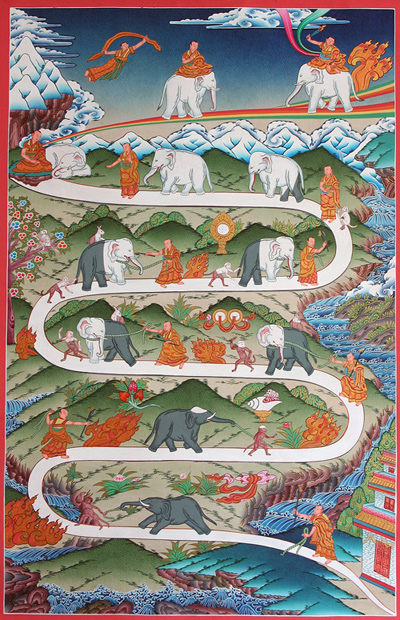
Instructor: It is a beginning. As you see right above you, there is the nine stages of meditative concentration poster from Tibetan Buddhism. That maps out the beginning of concentration where, when we are calm in mind, silent, not caught up in duality of good and bad, associative thinking, worries, anxieties...
Question: Because that is what traps you in hell, bottling the mind? Instructor: The mind is constantly fearing. Yes, the mind is going back and forth, “Good / bad. Yes-no. What do I do? Act / do not act,” but serenity knows how to respond, how to act in the right way, in the right moment, at the right time. You learn that through serenity. So, serenity is the beginning. We need serenity to have a foundation by which to awaken the inner mind, see things for what they are, and as we deepen that serenity up that glyph, you eventually can cultivate other aspects of the consciousness called imagination, which allows you to perceive those heights. But first serenity is the beginning, the foundation. You can study a course called Meditation Essentials on Glorian. They go into great detail about how to establish that foundation. Another Instructor: We distinguish between inferior mind and superior mind. We call it inferior manas, superior manas, as well, because the kind of mind that we are talking about being trapped in all the time, that wants to get stuck in these opposite decisions or is caught up and focusing on our desires all the time, is inferior mind. But there is a form of superior mind. There is a way to use the intellect in a superior way. So, let us say hypothetically, there is a master who needs to build a city. They are going to use the mind, but they are going to use the mind that is superior―this kind of pure mind without egotistical confusion, and a mind that can just receive directly from its higher divinity, and then use the mind as an organizational tool in which to plan out building that city. We do not want to completely get rid of the mind, but we want to clean that mind out and use it in a way that is not caught in opposites and decision-making, but a way that is just a recipient of divine light. Instructor: So, to conclude, we need the senses. We need the ability to think and have concepts to communicate, but we need intuition and the inner mind to guide it. 
A lot of people in diverse traditions talk about awakening, and in the context of this course, I thought it would be useful to discuss that, what that practically means, what it objectively means, and how do we cultivate it, because all religions teach the need to awaken.
Often in our modern lexicon we have inadequate definitions, and we lack an understanding of the genuine scriptures that teach how to develop our full potential. The purpose of this whole course is to discover and cultivate a deeper relationship with divinity. We have talked previously that divinity is within us. We call it the Being―many names―different religions. The reality is a state of consciousness that is very pure and very sacred. We can develop a relationship with that, but we need to know how. Unfortunately, throughout time with religious traditions, they codify and become corrupt. The essential message, like an elementary school telephone game, gets lost. Fortunately, we have had people throughout time and history who came to teach the way to know our authentic self. We are trying to synthesize many of the aspects that they taught, especially in more secular language, because the religious terms and traditions all point to the same reality. Our Focus
Our focus today is precisely to explain the nature of spiritual awakening, what it means.
We are also going to define and outline some of the parameters and principles that we can use to understand what awakening is and how to practically achieve it for awakening our full potential. We will provide some practices for being able to discriminate, and understand, differentiate between reality and illusion, because unfortunately if you have gone on the internet, we have seen lots of teachings and knowledge that contradict and are in antagonistic battle with each other. Unfortunately that demonstrates to us that if there is no consensus, then there must be falsity, so it is good to question that. We base our understanding on our own experience. What do we verify for ourselves? We will also talk about the good and the bad about what people call awakening, what that even means. 
Defining Spiritual Awakening
Some people refer to this term as a kind of inspiration. Suddenly we feel a yearning, a longing to know something spiritual. Maybe we had an experience when we were younger, like a dream, and we feel a yearning to understand what these types of states are. Or we have a sudden insight into the nature of reality that shocks us, and we want to know what that is, and so we look for religions and teachers to teach us what these insights are.
This can be based on an experience of heightened awareness. Maybe, perhaps, you are dreaming, and your consciousness expands and then you see clearly what is there, not merely a projection of our own desires, our own mind. We see a reality that is beyond physical materiality and so we want to know, “What is this?” Maybe our attention becomes clarified, and we have a sudden crispness of directed focus, and we see life in a new way. We realize that our material life in itself can be very superficial. There is more to reality than what is taught in schools or mainstream traditions. The problem is this. We may have such experiences, but we do not know how to initiate them. We may have an experience that comes to us seemingly without our will and we do not know where it came from, how it emerged, what it is, and how to repeat it. That is the challenge. How do we willingly initiate this type of experience, whether it is mystical, religious, spiritual, heightened awareness? We need tools, effective tools, tools that we can apply in our life and see the results. Some people may have a car accident where they are driving, and suddenly, they get t-boned. I remember even one instructor mentioned how in that moment, even though that instant lasted only a split second, he stated that suddenly his awareness blew up―expanded. As his car was spinning, he saw the shattered glass tinkling like rain around the circumference of his vehicle. He saw a woman walking a carriage of her baby down the street. He saw his own body, saw the vehicle, saw the other person with intensified awareness and lucidity, and suddenly, when the car parked or stopped spinning, he realized, all that vanished, and he was suddenly in shock by what happened. It did not take more than a fraction of a moment, and yet it felt like an eternity. That is something that can happen to us by accident, but that type of intensified experience of conscious awareness can be initiated but without the shock, without the trauma involved of not getting into situations like that. We can know how to enter heightened states in a balanced way, to develop that capacity to see, to perceive, and to understand. A lot of people in spiritual movements may have an experience, but it is temporary. It does not last, but then they become confused in believing that this is a permanent marker of some type of enlightenment, ignoring that it was like a vacation. We came there, maybe getting a visa, traveling to another country for three months, but we are not a citizen there. To be a citizen or an inhabitant of that kind of state is a work of a master, a fully developed human being. It is something we can aspire to. We may visit once and a while, but do we really have permanent establishment of a spiritual state of being that is divine? That is the question. This process does not happen in one moment. There is a mistaken belief that usually by having that kind of experience, suddenly one is enlightened. Some people have near death experiences, right? They see life beyond the body, and they become inspired, but they do not realize that the perfect cultivation of that state is something gradual. It takes time. The soul, the consciousness, takes time to develop. It is like a seed that can grow into a tree. A tree does not emerge out of nowhere. It takes a long progression, gentle, delicate, profound, progressive, even though those experiences can be very shocking, but really to fully perfect that reality is slow. As Milarepa from the Buddhist tradition stated, “Hasten slowly. Do not rush in.” It is also a process that is grounded in, cultivated by, and expressed from conscious ethics. It is a state of being that is very kind and selfless and compassionate. It is based upon a type of discipline that is not a stagnant, stale moral code, something to believe in. It is a way of being. Those ethics are the conscience of a master, beings like Jesus or Buddha, Moses, Krishna, the prophets who exemplified in their life how to navigate the messiness of morality and confusion. They knew how to discriminate, to see, and to understand, and to act with wisdom. That is the true self we seek to cultivate, the wisdom of navigating life with intelligence and patience, with wisdom. That process is not divorced from ethics, because some people may have an experience and suddenly, they feel inspired to do something wrong, and this has happened to many people. They commit crimes because they had a vision that they confuse with reality, when it was just the illusion of their own mind, and therefore, they make terrible mistakes. There are many crimes in spiritual movements where people have a vision of something and then they go around blaming other people, causing division. Unfortunately if we are asleep and not paying attention to our own conscience, we can get sucked in, and that is what happens with any movement. There is politics. People are fighting not because they understand what is going on in themselves, but because they think they see reality, but they do not. That is the danger. The patient method, the way that you sift through that, states of awakening, is to meditate, and to be patient and do not judge anybody. Judge ourselves, because we could be wrong, and that is a type of ethical lifestyle. It is a way of life which really is inspired by divinity and also by our own works. Those types of experiences like in dreams or meditation that you may have can come from divinity. They are gifts, but we also have to establish the proper causes and conditions by which we can receive that. Sometimes when we need real help. Suddenly we get an insight, even if we are in a moment of committing a crime. There are cases of people who are about to commit murder and suddenly, they knew in the moment how horrifying that truth or moment was, and then they stop. It happened to Paul of Tarsus, being struck by lightning, the lightning of insight on the road to Damascus. When the proper conditions and causes are right, we can receive more knowledge, experiences like that, and it takes a type of work. If the soil is not fertile, the seed can not grow. We need to establish the right environment in our spiritual practice, in our lifestyle, so we cultivate that which is best in us. This state of Being, what people call spiritual awakening, is inspired and perfected through independent work. It does not require allegiance to a group, adherence or membership to a society. It is independent. Groups are good to learn about this type of knowledge and to learn about practices that we can use to cultivate a relationship with divinity, but that work is all on us. Nobody can do it for you. It is all independent. There is value in groups, but some people believe that conforming to a spiritual community, that somehow, that is going to save them. It is good to belong and have community, but it is not everything. In fact, communities are much stronger spiritually when the individual practitioners are very effective. That way when people bring in their understandings and insights and energy to a community, people feel it. It resonates. It happens. 
What Spiritual Awakening is Not
Now we will also talk about what spiritual awakening is not. I touched on a few of these things. Some people have an experience and then they feel that they can not connect or associate with people in life. They might feel like because they have this new insight of the world in a sense, they feel disassociated from reality, from people, from communities.
They might have a problem or greater struggle in their material life, in their jobs, with their families, with their friends, or even in their marriage. People feel that because they have had some type of experience, they now have conflict. It is a weird paradox. How do spiritual experiences create conflict? While these types of insights are very inspiring and suddenly, we feel shocked by having a spiritual experience, but then, what do we do with it? How do we translate that into life? Are we going to use that as an excuse to feed our ego? Egotism? Desires? Or do we learn to use those insights with compassion? This relates to the, as I was saying, the paradox of these types of experiences, because in many cases they may feel instantaneous, although they take time to process and develop. They often are of a cataclysmic nature. I am sure we have all heard people where they had an experience, and they want to announce it to the whole world, right? Because it is so shocking and alarming. It becomes a problem when, what we talked about previously, our personality and our mind get in the way. We talked about personality: our name, our language, our culture, the mask we wear in life, our identity, so to speak, in the material sense, how we interface with people. Our mind, ego, our anger, our pride, our self in the egotistical sense, our passions, our lusts, our fears―these often get in the way. Your soul can have a very genuine experience, the consciousness or the Essence that is free of conditions, the part of us that is pure and has the potential to show us reality, the soul. But unless it is awakened, it can not manage any of this. Sometimes an experience will come to you, to your soul, that is very sacred. You are shocked. Then the mind, the personality can mistranslate, and that is where problems in spiritual groups emerge, because while the vision may be real, the experience itself may be filtered like a light through a prism. Then we misinterpret things. That is a danger too. That is in a sense not what spiritual awakening is, because it does not produce a mental, emotional, or physical disequilibrium. It does not cause mental illness, although people often associate mental illness with a spiritual experience because they do not see the difference between the two, or conflate one with the other. If one’s state of mind is more disoriented, anxious, confused, delusional, these are not spiritual. In fact, by definition spirit means divinity. It means God, the Being, the divine, that which never mixes with any impurity in our psyche. It is true that these psychological states can be a form of awakening, but they are not spiritual. It is the opposite. We will talk about that. 
Spiritual awakening is also not about attachment. The desire for, “I want to have these experiences.” It is a natural longing to want to study dream yoga, or as we talk a lot about in lectures like this image of the Jewish tradition, the Tree of Life, this map of the spiritual universe, all of its different levels of nature like we go to when we dream. It is beautiful and noble to want to study and experience that, but not with attachment, not with desire, not with craving like, “I want this,” to feed the mind. It is a different thing.
It is better to be humble and to let those experiences come to us without us grasping at them. We can still practice and strive and do our part, but it is like brushing your teeth. You just do it because you need to. In the same way, the benefits come of their accord. As I was saying, we can mistranslate these genuine visions, but as our personality and our ego get in the way, this can result in a lot of complexes for people, psychologically speaking. The idea that after having a spiritual awakening, somehow one is a god, and there are people who really believe that they are masters because they had one or two certain experiences. Their personality and their ego get very fat, heavy, and that is not what we want in the long term, especially. It may feel gratifying, but it creates conflict, manipulation, and control in the end. Spiritual awakening is also not dependency on other people. This is something very subtle to realize. We can think that we are spiritual people, and yet our sense of a self depends on what others think of us. Also there are people who, because they are not cultivating their own conscious self, their own spiritual energy on their own, and because they lack energy, they steal it from others. In a sense we were talking about that in the first lecture. We talked about the ego. The ego is like a vampire. That is where the myth comes from. Maybe not literally drinking blood, but stealing energy from people, because maybe it is a sense of pride or attachment or desire that wants something from another person. The mind can do that, steal energy. That is also something that we do not recommend, because spiritually, if we are cultivating our relationship with divinity, we naturally have our own enthusiasm, our own zeal, our own reservoir or force that we are saving, that we are cultivating and protecting. We also state very clearly from many traditions that ingesting substances or intoxicants or any elements from the outside to produce a spiritual experience or to produce what is a “spiritual experience,” or using machines or any external means is also not useful because it does not provoke the natural state of the consciousness. As we were talking about in the meditation [before this lecture], when you have a cup of water filled with sediment and you shake it or you add more things into it, what happens? It gets clouded. It is obscured. If you let it sit, if you meditate, if you let the mind rest, those layers of rock and stone will settle of their own accord, and then the water becomes clear, and you can see clearly what is there. In the same way, we do not want to add any elements into us, because we do not need them. In fact, many of the experiences we seek are an intrinsic and innate part of our soul. Therefore we do not need to rely on anything external. Lastly, we do not want to hold on to experiences that contradict the ethics, the conduct, and the scriptures conveyed by genuine, established masters. You look at the behavior of a Buddha, a Moses, a Jesus. What lifestyle do they live, and how can we emulate them? If our ways of being are inspired by any experience and go against that, we can be sure that we should question what we are doing. 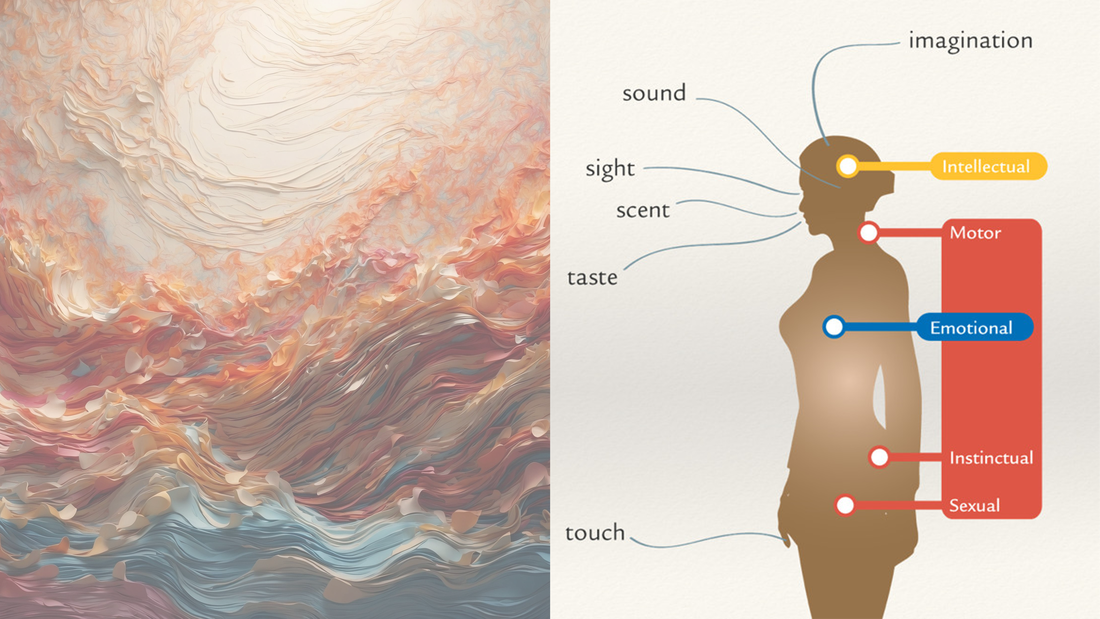
Consciousness is Conditioned
All this gets tied into the realization that our consciousness is conditioned.
We have first off, the senses: sound, sight, scent, taste, and touch. Everything we perceive through the physical senses gets filtered. Sometimes depending on our vision, maybe some of us have better hearing or better eyesight. Our perceptions of life are filtered through these conditions. More so when the impressions of life, when we experience reality itself through our senses, we also have this human machine that we talked about previously. We also have our mind where we think, our movements, our emotions, our instincts, and our sexual desires. Oftentimes our impressions of life enter into us, and then our ways of thinking, feeling, acting, doing, behaving, filter that. Many times, we approach a situation not fully perceiving what is going on and this happens all the time in social circumstances. Our perceptions of life are not only conditioned by the senses, but by our ego, and that is the problem. We said clearly earlier that ego is self and there are many. Pride is an ego, is a self. Vanity, lust, hatred, fear, gluttony, these are all defects, selves, right? Any time any one of those elements are active, they are thinking, feeling, behaving, and compelling us to do things, often without our awareness, because if we are not looking at this process, we will not see it, because we are asleep. Every time we feel or experience different things, it is because the ego is active. That ego is a shell. It is a glass, in which the light of the consciousness is trapped. We want to break the shell so we can free the light as we talked about before. We want to decondition the soul, because the soul is trapped in all these bottles, and we want to be able to perceive life as it is without misinterpreting with our anger or lust or whatever it may be in the moment. 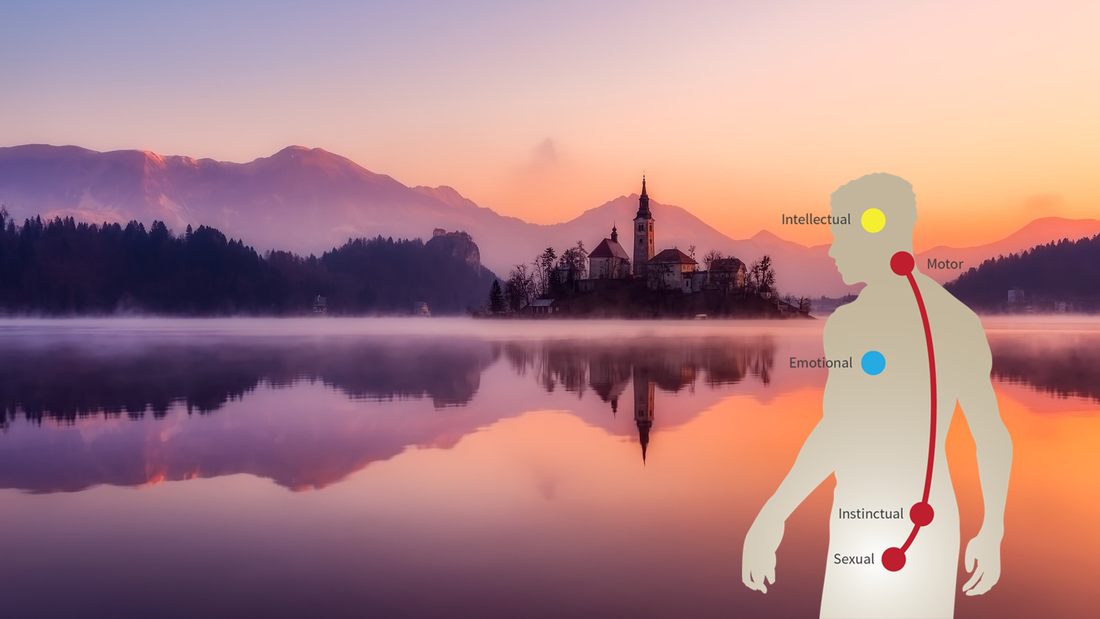
What Quality of Consciousness is Active or Passive?
The question becomes―as we are studying this image of our human machine we talked about, we call it the five centers where we experience things―what aspects of our psyche are active, and which are passive?
When we practice meditation, we notice that our mind is thinking and is moving along in a chain of associative thinking. It is chattering, talking, and our emotions too may be very active. Maybe we had a conflict with a loved one and we feel anger. We feel residual pain, resentment, and it is intense. Oftentimes emotions are more intense than thought, more difficult to control. We also may have instincts or desires that pull us to behave mechanically. We just do things without thinking, or we are driven by passion, desire. What is active in us? What part of us is in a state of activity, and what should be passive? The reality is that our consciousness, in its current state that is able to meditate and experience divine reality, is inactive. It is asleep. The free part of us, that little three percent of the psyche that could be fully perfected, the rest of it is trapped in ego. Our egos tend to be very active, but the soul is asleep, and this has to change. It has to be reversed. The soul must be active and the intellect, the emotions, the body, have to be still. It is a challenge. If you have practiced or tried meditation, you notice the mind is all over the place. The emotions are stewing with emotion. The body is itching. You want to scratch, move to adjust yourself. That is why we say in the beginning when you meditate, find a good posture to relax, sit still, and do not move, so that nothing in your psyche will shift and you can just see the process of all of this. If you let it sit and relax, these five centers, aspects of our psychology, become still like water, and when the water is perfectly calm, suddenly the images can reflect within it. Those images come from visions and dreams that are exactly the spiritual awakening that we seek, that come to you when you stop thinking and stop getting dragged along by the mind. We have to ask this question. What in us is active? What is passive? 
Four States of Consciousness
The way that we will explore this is through four states of consciousness.
In a sense, we can not think of them as gradients or steps in a sense like a plateau, where you start at the first one and after a couple years you enter the second. Likewise, the third and the fourth. These are levels of consciousness ranging from the most dense, intense and afflicted state of suffering and lack of awareness to the most enlightened and divine. If you think of light on a spectrum, you have infrared at the bottom, which means lower vibrations. Then you have higher ultraviolet at the end which is freer and more visible to our senses. In a sense, the soul is like that. It is a gradient. There are egotistical inferior states and there are conscious, free, spiritual states. If you are meditating, you can go from one to the other in one sitting, but over time it takes years to establish ourselves in the more elevated states. It takes practice, but you can fluctuate throughout your day. If you are observing yourself and being mindful, you see that during some parts of your day you are not aware of things, or more egotistical. Others were more patient and aware. It fluctuates. Let us talk about them. 
1. Sleep
Sleep, the lowest state of consciousness. In a most basic sense, sleep occurs to the body, and there are schools of yoga which teach that the first state of consciousness is the sleep of the physical body. That is the first understanding, the most basic. The most nuanced way or a more refined way of looking at it is that this is the sleep of our soul.
Our soul is not awake. Our full potential is dormant, like a seed. The qualities of a god or a buddha, a Moses, a prophet with all that compassion and patience, is dormant. While our soul is asleep, instead what you tend to have is the mind active. This is what confuses a lot of people when they approach yoga. They think that this first stage just means when you go to bed at night, eight hours pass, and you wake up, but it is more than that. The sleep of the psyche is what causes all our problems in life, when we are not fully aware and attentive. In fact, this state of sleep is associated in many schools as a state of barbarity. It is a state of mind in which one is driven by instinct, passion, hatred, violence. This is the type of state or being that propels mobs, where people go out and kill each other, war. The soul is totally absent in those states. Also, if we are going throughout our day and we can not remember large portions of it, it means that we are not conscious. We are not fully awake. You go through your day. You do certain chores. You travel places, and then at the end you wonder, “Where was I? What was I doing? What was I even thinking?” Some people get pulled in situations, like the example of the mob, and they do things that they would not otherwise do in any circumstance, but they are propelled by that instinctual drive and the hatred of the environment. They do things that they later regret, and they say, “I do not understand how I could have done that.” People who were soldiers in war, who fought and had to kill or do things they later regret, they deal with post traumatic stress syndrome, because they did things they did not know they were capable of. This is a profound state of sleep, and all of us tend to be in this state. Our mind, our personality, our ego, is at the wheel of our car, but the soul is in the back, absent, asleep. We want to understand where we are at, and with the state of sleep, most people are in this all the time, even if we are physically active. This is the challenge to think about. This is the sleep of the consciousness, not the sleep of the body, although there is that application within yoga. This is us. 
2. Dreams
We also experience what are called dreams. We all know this. Conventionally, you go to bed at night, maybe seven, eight hours pass, and then for a little bit you dream. That is the basic level. Dreaming of the soul is when we are lost in thought. We are in reverie. We may be driving our car, and our mind is in a hazy, ephemeral cloud. We are thinking about our fiancé or friend or loved ones, and we are not really paying attention at the wheel, and this explains why you have so many accidents, especially on Lakeshore Drive [in Chicago].
People are dreaming. They are dreaming of their jobs? They are dreaming of their careers. They are talking with people, but they are not present. Their mind is elsewhere. Their feelings are elsewhere. Their body is here, but are they consciously present? Every time our mind wanders, we are dreaming. We are lost in reverie, daydreaming. The soul is not fully there. We are not paying attention consciously, spiritually. 
3. Awakening
The third state is where things get interesting―awakening. This is what concerns us most.
We are talking about awakening in terms of Patanjali’s Yoga Sutras. He says that awakening is a state of, physically, we get up. Basic. Here we are talking about the awakening of the soul. At this point, the mind, heart, and body are becoming more still, and the consciousness, the soul, the Essence, is now at the wheel. You know this when if you practice some of the techniques of this tradition: self-observation, meditation, self-remembrance, where you are driving your car and you notice your mind wandering and you say, “Oh no, wait! I am going to bring it back to the wheel. I am in my body. I am aware of my breath. I am in this car. I am in this certain place. I am watching. I am paying attention. I am aware of myself and aware of other people, aware of my own mind,” trying to do that continually. It is also a state in which we begin to reevaluate our foundations. As you are observing yourself, you suddenly realize that every thought, feeling, desire, impulse, you suddenly can even see how those emerge, where they come from, like when you meditate. The memory comes to your mind. Desire emerges. You feel when you are observing the different selves, the multiplicity of selves that constitute ego, and you are watching that. You are seeing like a director watching a movie. “I am not those elements.” Serenely, not out of fear or terror, but calmly you are watching this process and seeing it all and realizing, “I am not the person I thought I was.” Perhaps we think we are patient and kind, and yet we suddenly observe ourselves and realize we have anger in abundance. Or the pride we accuse other people of having abundantly, we have even more. That is a shock. Through revision of our beliefs, our self-concept, we see that we are not the person we thought we were. This goes back to self-observation where we are not trying to know we are, for example, seated in a chair. We know we are here physically, but are we observing the fact? Knowing is passive. Consciousness or attention, self-observation, is active. Awakening gives us a shock. We realize we are not our pride, our fear, all these elements. We are something more real and substantial―patience, kindness, altruism, faith, endurance, compassion. This awakening can also occur not only in our physical life, but also in the dream state. Instead of going through those eight hours of sleep unconsciously, physically, you start to have visions and dreams. You see what is in the astral dimension. You recall it and see what is actually there, not just projecting it like a camera or like a film on a screen. That screen is your mind, but if you turn off the projector, the mind stops interfering, and you just see your environment. You see the theater that you are in, and you start to wake up and realize, “I am not in my physical body. I am in the astral world. I am no longer dreaming.” That is a type of awakening too, but that can only happen if physically we are making the effort to pay attention, self-observe, and self-remember. 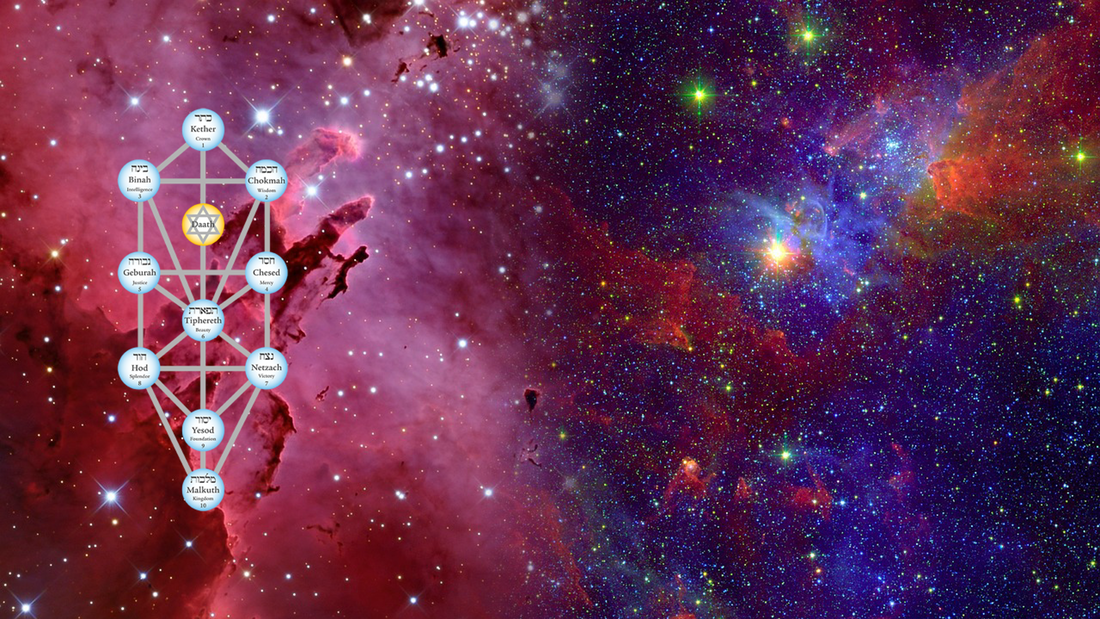
4. Being
We want to experience the heights, the Being, the divine. The Being is God. It is the reality. It is the true self that we all carry within. We map this self through this diagram called the Tree of Life, which we have available here too [as a poster at our center].
This Tree of Life from the Jewish mystical tradition is a marvelous map that we use to navigate the nature of self, the nature of who we are, from the most dense and material below, our physical body, to the heights, and as you go up this Tree vertically―not in terms of physical space, but in terms of spiritual elevation―we go to more rare states of consciousness that are very sacred and very pure, in which there is really no egotistical self there. But there is a state of Being, an identity that is real. The Being is our true self. Now obviously we are here in our physical body. Some of this I already mentioned to you. Malkuth in Hebrew means, “Kingdom.” It is the body. Yesod means, “Foundation.” It is our vital energy. When you wake up in the morning and you have more or less energy to go throughout your day, that is your vital body, your vital energy, your Yesod, the foundation of your life. Not only physically, but also spiritually, because how we use our energy determines how awake we are spiritually. We also have Hod which means, “Splendor” or “Glory,” and that is the emotions, the heart. It is also where we go when we dream, the astral world, and Netzach, meaning, “Victory,” in Hebrew, the mind, thought. Above that we have Tiphereth, which is willpower, and these top five spheres which are related to aspects of the spirit do not mix with anything egotistical. The further up you go, the rarer and more refined it becomes. The true self is up here the further you go. We want to cultivate that. As I was saying, Being is a state of consciousness that is without filter. It is reality. It is the perception of divinity and that is something we can not conceive here, but if you are patient and meditate and practice, you can cultivate that and escape the mind, like Plato’s Allegory of the Cave, in order to experience the stars for the first time, the truth. 
Spiritual Metrics of Consciousness
One thing we have to ask ourselves practically is that we have spiritual metrics of consciousness. If we want to measure how awake we are in terms of being attentive throughout the day, we want to explore these three things:
How profound is our awareness? How deep is our attention? How precise are we able to see life? With what detail? How clearly can we see our dreams? How crisp and lucid are they? If we are walking out in nature, how much can we perceive? The colors, the trees, the leaves, the bark? What are we able to perceive? What depth of field do we have? How long can we maintain that? If we are just watching and not thinking, but being present in the body, we are looking at our surroundings, being aware of our own mind, observing ourselves, how long can we maintain that state? Is it ten seconds until the mind takes over and starts thinking? Is it a minute? Is it two hours? Is it at certain points in the day? How long? We can ask these questions before we sleep. How often are we able to do it? This is the state of mindfulness. Can we maintain frequently that state of awakening? We are driving our car. Suddenly the mind wanders. We bring our attention back. How long can we remember to be attentive? To be aware? These three things. These will tell you how awake we are. 
Remembering, Clarifying, and Prolonging Consciousness with the Key of SOL
Part of that practice relies on an exercise in this tradition we call the Key of SOL. It is an acronym meaning Subject, Object, Location.
To remember ourselves, to remember our state of watchfulness and to clarify that attention, we practice this key. It also stands for the “sun.” This is the source of light. Subject: What are we thinking? What are we feeling? What are we doing? What impulses compel us? What are our desires? We are watching this. We are dividing our attention in a sense like we are both the actor and the director. You are watching yourself like a movie. You are filming a movie. Rather than tell the actors what to do, you just let them be and watch in the beginning. You want to watch to see what comes up in life. What do you see in yourself? At your job? And your career? With your spouse? Then you want to divide your attention to Object: What are the objects surrounding you? Like a mirror, you take that light into yourself, and you reflect it out. What are the things around you? The posters, the fan, the computer, the bookshelves, the different things in our space [Gnostic center]. Lastly, Location. Where are we? Do we know where we are at? We are in the office building. We are in Chicago. We are in a certain province, or if you are aware of these things, suddenly you expand your light like a mirror. As you are looking at yourself, but understanding the objects in your environment, observing it all, and knowing the location, you start to become more integral in your perception, more awake. This skill will filter out into dreams. Someday you may find that you are observing yourself. You are in a foreign place. Maybe you are in a bar in Spain, and then maybe you question, “What am I doing here? I am from Chicago.” You ask people, “Where are we?” They look at you crazy like, “España,” and then you realize, “I am dreaming. I am out of my physical body. Ok. Thank you.” Jump and go fly and do some exploration in the astral plane. That Key of SOL will help you not only physically in knowing our true self, our identity, but especially when we dream too. It is a very simple practice, but very effective. 
Retrospection Meditation
Lastly, retrospection meditation. This is an important skill. Basically, at the end of our day or when we wake up in the morning, we sit. Relax our body, mind, heart, physical body. Let the mind settle. It is good in the morning, especially because we are most relaxed. You visualize, if it is in the morning, “What did I dream?” Reflect. Go backwards in time. “What did I experience in my day before I sat to go down to go to bed?” (If it is at night). You visualize and you imagine, what did you perceive throughout the day? What did you experience? What did you understand?
As a basic practice, this is going to set up later for more deeper work on our own psychology, but this is how you know how awake you are. You sit. You try to remember your job. “Wait, there were two hours where I could not remember what I was doing here and there and there. What did I say and do?” You know that is where you were asleep unconsciously the most. Maybe the mind or ego or personality was active. You go backwards. You visualize and you try to reconstruct the day, so you have a better sense of who you were at that moment. Where did you go? That is a useful tool, a barometer, for measuring our psyche. I know these are two tools you can try. Key of SOL is very simple. Retrospective meditation is very useful too, but that is a basic outline for the skills that can help to cultivate that conscious relationship with divinity, the real Being, the real self. If we are not able to pay attention to ourselves or remember a state of watchfulness, we will not be able to experience the divine. Exercising the consciousness―first, it is asleep―now it learns to exercise its muscles. You start to see things more and more, whether in meditation or dreams, getting insights in daily life. Those are some basic techniques to receive knowledge from our true self, the divine. Are there any questions? Questions and Answers
Question: How would you handle nightmares?
Instructor: I knew one missionary whose son was afflicted with nightmares. What he would do with his son, they would stand up in the morning, go outside by the sun, in the countryside, and they would do runes for two to three hours. Got rid of it. For those who are not familiar, the runic yoga is a way of adjusting your body in certain postures in accordance with the Nordic alphabet, as we see in this poster. With certain prayers and mantra, which is sacred sounds, you vibrate the different glands of the body so certain vowels resonate with what we call the chakras, which is the centers of energy in your spinal medulla. Your vital forces and having those active and awakened, cleaned, help to stabilize the mind and the heart, especially the heart. Having that energy is really good. Do mantras like that for two hours, three hours. I know in the case of this one missionary’s son, his son no longer has that problem. Very effective. Question: Since I read the books [from Glorian Publishing], the author [Samael Aun Weor] mentioned about the Kundalini. How does it take to awaken and develop the Mother Kundalini and to make it rise? Instructor: A long time. Question: Do you have experience in how long it took you? Instructor: It happens when you are married, and you are working in a matrimony and very patiently by practicing what we call transmutation and working on your ego. It is different for different people because… Question: If you are single? Instructor: Single people can not because a single person has enough fire like a candle. You can still have light. Pranayama exercises like nostril breathing and prayer can stimulate the sparks of the Kundalini, like an ember, but to make that into a bonfire, you need the fire of a marriage. You need to know how to cultivate it, and it can take a long time. Samael Aun Weor mentioned, the founder of our tradition, that the requisites of opening, awakening that fire within this first chakra Muladhara, requires patience and tenacity. It is related to the element earth, because you have to be very firm in your practice to do it. Question: When we do the Ham-Sah pranayama, and you are doing that exercise, are you not transmuting like in marriage right? How does that Ham-Sah work? Instructor: It is magnitude. Obviously single people need to learn how to work with that fire, the creative energy, Yesod, “Foundation,” foundation of your spiritual temple. Single people need to learn how to initiate that circulation, right? Because in most people our energies tend to go out, whereas with the creative force you want to make it go in. Single people can learn how to change that flow with time. It is very patient. It takes a lot of work, but you have examples of practitioners like Yogananda who was not married, but a great Yogi, more awake than most people. He annihilated fifty percent of his ego on his own, so he had the discipline. A married couple obviously with more fire―it is more intense. There is more power, but also there is more danger, right? If the couple does not control it. Magnitude. You got the candle of the single person compared to a sun. Obviously with more power requires more responsibility. As we are talking in relation to this theme of the nature of the true self, basically working with that―we will talk later on by working with the fire of this energy, of the Kundalini, especially in a marriage―one opens the door to the real self. Obviously, there are requirements. It is very strict. It does not come about by paying ten thousand dollars to a workshop. Money has nothing to do with it. God does not, the Divine Mother, does not reward infidelity. She is very strict. We can win her favor if we follow the law. Question: So, some groups are talking about do this for two to three hours to make these things go away, so it is along those lines of, I will just give a personal example. I started doing vipashyana retreats ten, fifteen years ago, and we meditate for a very long time. So that became a habit meditating four or five hours a day. People are like, “Oh, that is amazing.” But it became a very avoidant of life, habitual meditation with dedication and what not, anything with the general gist of time commitment. I know it is not really a time thing? It is how I feel at the moment. I have retracted quite a bit on different practices. It felt like that was all I was doing. Instructor: To clarify that, there is a tendency in spiritual movements to avoid. To be “spiritual,” “awakening my true self, I am now going to be alienated from my family or distant from my relatives or have conflict within my job.” Some people think that being spiritual means avoiding the world. Question: Or it was like, you need to have so many hours in the morning of me doing this to be able to carry a little bit. Does that make sense? Not very efficient. Instructor: Yes. Obviously, we go back to the avoidant part. I mean, our spirituality has to be practical. If it is effective, it is going to improve our communities, and we will have better stability to be able to help those around us, because our impetus in this teaching is to not avoid problems, but to face them and transform them. Obviously, our schedules are going to be different by how much we practice, because sometimes our careers, we may work jobs that are very consuming. Maybe they are very difficult. Comment: Samael said that in life is a real gymnasium. You have to take practical life as, like he said, a test. Instructor: There’s a balance. I do not recommend quitting everything to go all in and try everything. You read Samael Aun Weor’s books and there are ten million practices. It is impossible to do all of them. Basic ones we can do is meditation. That is essential. Meditation, prayer, transmutation, pranayama. If you are single―pranayama. If you are married―alchemy. Obviously, that is going to be different for different people, when and how you practice, but we want to have a balanced life. It is not about avoiding the world, but we do mention going on retreats to cultivate a better relationship with our divine self, where we have time set away where all day you can just focus on that. There is a certain value to monastic life. People who abandon the world to cultivate a spiritual experience, but what often happens is that by avoiding life, when they come back into the world, they lose everything. They do not have the willpower to maintain that type of integrity, so their connection to the real self was very weak. We do not have to abandon the world to be spiritual. In fact, if we are most effective, we are going to be in the world but not of it. Question: When you say words about quality over quantity? When you could meditate for an hour and really only get five minutes, but if you become good at meditation over time, you can really do it in twenty minutes and really be mindful for twenty minutes and you do not really need to be sitting for twenty minutes. That is great if you can do two hours and do perfect mindfulness for two hours, but once you get good at it, you can have the quality of doing it for thirty minutes a day and really get that functionality through the whole day? Instructor: With practice eventually, you will naturally sit longer with it, because you are able to access that state at will, where in the beginning you are kickstarting your engine. There is a lot of downtime where you maybe scratch an itch, or you struggle with the practice, but with time it gets much more efficient. I do not recommend trying to take on a two-hour, three-hour meditation regiment in the beginning, but build into it with time. When you notice the authenticity of your meditations and the benefits you reap from them, you will naturally be more inclined to practice. Question: You will want it? Instructor: Want it rather than, “I am going to force myself to sit here.” “Here is my checklist of, I have got to do this. I have got to do that.” That kind of mechanicity does not do anything, as you know. What matters is how conscious are we when we practice? Question: But it was not even that. It was like, how am I engaging with life. It was like I used that almost as like a crutch, like “just go back to that state. Let us go back to that state,” rather than engaging. Does that make sense? I feel like alchemy is way more about engaging in letting oneself be in those states rather than like, “go to a center. Do this practice.” Instructor: The challenge becomes how do you meditate and remember your true self when you are in the world. That is what the Key of SOL is about. You are with your friends, your family. You are observing yourself. You are at a dinner party. Your aunt says a comment that annoys you, your dad (I am speaking from experience). You see these egos come up, and that is going to be the food for meditation. If you are living in a monastery avoiding all that, then you will not see yourself, and that is why many monks and ascetics have a very small sliver of a spectrum of their full understanding. Whereas if you are with your family and you are dealing with that gymnasium of, “Oh my God, this is, I have this huge ego of anger coming up!” ― good. “I am going to watch this, separate, not disassociate, but watch.” Be engaged with the consciousness. Watch the mind. What does that anger think, feel, and want to do? Later, with practice you will know how to not repress that state or avoid it, or not feed it, but understand it and be able to transform it. That is a longer process of meditation that we call transformation of impressions, which we will talk about. Question: Is it a dissociation of life? Instructor: We do not want to disassociate from life, where it is like, “This is no longer real to me.” That is not helpful, not healthy. Self-observation and self-remembering and being conscious means we are more engaged with life, not from an egotistical stance, but from a spiritual one. Question: How important is it to balance one’s meditation practice? I understand it is kind of the same thing, but I have seen people who have awakened to situations, but somehow their ego is still there. They are having all these lucid dreams and all these amazing experiences, but in their daily lives they are lying to their spouses or lying to people, stealing money and stuff. I know practicing alchemy can be very powerful, but how important is it to still be working on your ego to not live like these too? Question: Black magic? Instructor: That is part of the danger. People who can have, who still have the ability to astral project, meditate, have visions, and yet they are unethical. The long-term consequences will be those types of experiences will be taken away, or that person could be cultivating experiences that are not objective. Physical life will tell you. Their conduct will speak for themselves. “By their fruits you will know them” (Matthew 7:16). It is good not to take people’s experiences at face value. Someone says, “I had a vision or astral experience or samadhi, and let me tell you how the world works.” We have to rely on our conscience and observe their behaviors. If they are causing harm in the community or in their communities, then they are obviously mistaken. You can still respect them, have diplomacy and even distance if we need it. The way that you reconcile the two, how to understand people who are bad ethically but still have experiences, well, either those experiences are not objective or there will be a time when divinity, based on their deeds, will take those away, because God does not reward crime. Question: So, there is a congruence between someone who is working on their ego and every aspect of their mind so you can see their behavior who is really working here? Instructor: Yes. The test is, is it enough just to have experiences that are beautiful, but how does it translate to life? If it is not guiding that person in an upright way, then it is not useful, because “Initiation is your own life,” Samael says, “lived intensely, with rectitude and with love.” If one’s physical life is not improving, then experiences are useless, in the sense of, how do you ethically respond to ordeals? Because ordeals will come no matter what. How do we relate to them? How do we respond? This is also a problem in spiritual groups too. Sometimes misfortune can happen to someone. We know the story of Job. Even his wife was saying, “You are guilty.” And Job says, “Yes. I am guilty, but I receive this gladly from my divinity because I earned this.” That is how you know. Sometimes circumstances can be deceiving, but you observe their psychology, the ways of being. That is how you navigate. Do not take anyone’s experiences at face value. Learn to investigate for oneself. That is important. Question: I am realizing that I am more asleep than i thought I was, because I have been dragging over for six years now and I have a friend I encountered. He went to Tennessee driving for almost nine or ten years, and when I talked to him when he moved back home to his wife, he says, he recalls all these people he has had in his Uber. He knows all their names. He knows what happened and everything and I am like, “How do you do that?” And I am realizing he has soul, and he probably had reflected stuff that he does, you know? Because I can not think of it. I have great conversations with everyone in my car that talks to me, and those that do not, the music talks. We’ll talk. I had over sixteen thousand rides in my six years and I do not even remember a handful of them, conversations I have had with these people. If I start practicing the Key of SOL and retrospection, is it called? Instructor: Yes. Question: If I practice that, will that improve my dreams and why I cannot remember my riders? Instructor: It will improve memory, but one thing to distinguish too is that there are people with more well developed mechanical memory, which is easy, so that can explain why even though your friend may not be working spiritually with any techniques, but they have a good memory, that is one explanation. But the kind of memory I am also talking about is something a little distinct, which we will elaborate more later on [see Remember Your True Self]. It is conscious memory. How do you recall states of being and perceptions without egotistical associations? That is a delicate skill. That is what Samael Aun Weor talks about. It is work memory. The ability of the consciousness to remember. 
Our modern culture is very much fixated on the nature of identity. There are many teachings, studies, and explanations for what the self is. This knowledge is as diverse as there are nations and cultures and traditions.
The purpose of our tradition is to explore the universality of consensus where these diverse perspectives align, to look for commonalities and to understand that which is practical. We use many techniques within the Gnostic tradition to better access our own understandings of reality, particularly the reality of our own psychology. What people tend to get wrong in our modern era is the belief that knowledge of the intellect is precisely knowledge of our true identity. This is evident by the fact that, really, despite the amount of knowledge available and information on the internet, people are profoundly confused. We can use the state of suffering of humanity as a barometer for understanding how connected we really are with truth, with the divine, with the spiritual. Rather than leave our understanding merely in the mind to accumulate some type of information that may sound interesting or novel, something in the intellect, we choose to follow a very different path in this tradition. We like to verify the truths and realities that have been discussed within religion, within psychology, within mysticism, no matter the tradition. We take what is useful and discard what is useless. Primarily, we use our own experience to verify what is real and what is not, and this applies to the nature of our own identity. The purpose of this course is precisely to understand tools and techniques by which we deepen our relationship with the divine self. One such technique that we are going to explore is self-observation. If you are familiar with the writings of Gurdjieff, he is an esoteric writer who taught [this method] primarily in Russia a long time ago. This technique is very practical and profound for achieving insight into what in us creates friction within our families, within our relationships, within our communities. We learn how to identify and overcome obstacles between ourselves and acquire direct access to these higher spiritual mysteries that many traditions teach. All religions we teach that we need to awaken to the truth. But sadly, the techniques are often missing from those teachings. So, we are going to explain in a, hopefully, more secular way, what this is: self-observation, and how to apply it to our life. Our Focus
Primarily what we will do is identify experience and actualize the constituents of perception. What makes perception what it is in a practical sense, in our daily life?
We will also differentiate between passive and active perception, what it means to receive the impressions of life in a passive way, but also, how do we actively perceive life and what that entails? This is primarily because it is important to understand qualities of consciousness, what they are so that we can not only identify them, but distinguish between different types of perception, because the human being is a very complex entity. Our psyche is very complex. We have to understand different types of perceptions in us. We also are going to learn how to utilize, expand, and strengthen the powers of consciousness. So, what are techniques that train that part of ourselves which can experience reality, divinity, the truth? What are the abilities of consciousness? Also more importantly, how can we initiate, sustain, and master continuity of conscious being? So, not merely just to initiate a type of practice like this, but also how to sustain it in life, how do we make it a continual process, whereby we are acquiring new knowledge about ourselves for the betterment of ourselves and our community. 
The Nature, Purpose, and Means of Self-Discovery
This brings us to the first point: the very nature of self-discovery.
If we approach a teaching like this, it is because we have understood, at least initially, that we do not have the full picture about who we are, and so we look for religions and teachings to show us ourselves, to explain who we are and how we can change the quality of our life. We do not have full knowledge of ourselves in the most profound sense. Now, this is evident when we explore a particular problem. Perhaps in our career, we have a challenge that we do not know how to resolve, and yet, as we enter a state of engagement with life, perhaps we are trying to avoid the problem or trying to solve it, thinking and rationalizing what to do. In a moment of silence of mind, when we are not thinking, suddenly the insight enters into us. It comes from somewhere. We do not know, but it is a shocking experience that provides a shock to our consciousness. We suddenly realize the solution to a problem. We did not have to deliberate or think about it. It merely arrived when the proper causes and conditions were present, when we stopped struggling in the mud of fear and anxiety and anticipation. We let it happen. In a sense, this insight emerges from the void, but it gives us a new inspiration and a joy. That type of insight and inspiration, which really is a part of us, but seemingly comes from nowhere, demonstrates to us that there is wisdom within the psyche that is not accessible to our contemporary senses, to our current ways of behaving in our modern life. Now, primarily what we want with this technique of self-observation as we are going to explain, is to cultivate that, that type of “Aha!” moment where we realize something profoundly about ourselves that we never saw before. Perhaps it is a type of emotion or elements in our own psyche, which is secretly causing many problems for ourselves. What we want is to cultivate that. The purpose of self-discovery is primarily to enlighten our full potential, to access deeper parts of us that are not accessible to our material senses. Instead, we are going to activate a sense that is much more profound but is in us in a dormant state. It does not have full development or activity yet. 
If you look in the image on the bottom right here, we have an island above the surface of water and we very well know from Freudian studies, Freudian psychology, that there is a subconscious. This is now a fact which is taken at face value. The purpose of self-observation, of insight, is precisely to explore the depths. We do so because we want to understand our own complexes, our own defects, our own tendencies that tend to work in the depths of our psyche without us even knowing it, and what we want is to explore our full potential so that by going into the depths, we learn to master ourselves. So, that is the purpose of self-observation: to explore the depths of who we are primarily to extract wisdom.

Proper and Improper Tools for Self-Knowledge
However, in life as in any type of institution, there are proper and improper tools of self-knowledge. As we mentioned earlier, there are many forms of knowledge and studies that teach us about who we are, and there is value and credence to different perspectives and different types of instructions about psychology. But unfortunately in our modern era, we lack practical tools for really knowing who we are.
There are parts of us that can only be explored by the right tools. If we use our intellect to explore ourselves, it will be very shallow. It is a very useful tool in life, the mind with its rationalizations and ability to categorize information, to store knowledge and use it for one's career or job. It in truth is the most superficial aspect of who we are. It is merely a machine that can store knowledge or data that can be recalled or used in certain instances in life. People in our modern world tend to use the intellect at the expense of everything else, especially in North America, the West, and this is a huge problem, because we think that by getting an education, a career, studying at a university, that somehow with our intellectual knowledge, we know who we are. Perhaps, going back to our earlier lecture [Know Your True Self], we talked about personality, especially, our name, our culture, our language, our race, our religion, our tastes, our habits, the masks we wear, the interface we use to navigate social circumstances in life. Personality is needed to subsist in this world, but it is not the full definition of who we are. As we explained about the Essence, the soul, the consciousness, that real part of us that can explore who we are in its full totality, is not active, is asleep. The consciousness, the spiritual part of us is not active. The intellect in us tends to be most predominant in our current lifestyles, and so we want to emphasize that when we are exploring ourselves, we have to understand which tools we are using. In the same way that an astronomer would study the stars with a telescope, and a scientist or a biologist with the microscope, we have to use this the right tools. The intellect, while it has utility in life, is not the full means of exploring our full identity. It would be absurd for an astronomer to use a microscope to study the stars or a biologist to use a telescope to study microbes. It is the wrong apparatus, but unfortunately in the West, we think the intellect is the way to know ourselves. It is a very superficial layer. But we are going to explore what self-observation is because, as a technique, it trains that part of us which can really know divinity, the Essence, the soul, the consciousness. This is a tool for the consciousness, not the personality, not the self, the ego, the mind. We will explain this. 
The Sleep of Our Consciousness
In life we tend to operate in very mechanical ways. Our consciousness, our Essence, our soul, which is like a seed, is in a dormant state. It is not predominant or active in life. This is evident by studying our lifestyle.
In our current times with cell phones or smartphones, better said, technology, people drive at the wheel of their car unaware of their surroundings, absorbed by this device, as you see in the center image here. Our attention tends to be dispersed and absorbed within superficial things. Our attention, our consciousness, is not active in its most full and profound sense. If you do not believe me, examine people who get into car accidents. They are driving and they do not pay attention because they are on their phone, or they are thinking of someone else, or daydreaming about what they need to do, and like the cogs of a wheel, of machinery, we tend to operate in an autopilot. That type of attitude, going through the motions of life, but not fully present, not being here, not being now―our consciousness is not alert. It is not perceptive of what is really going on around us. But more importantly what is going on inside of us. This is evidenced by the fact that we tend to react to situations in very specific ways. We have our habits, our behaviors, our tendencies. In life, we have situations that tend to provoke us in negative ways, seemingly without our control. In a sense, while we have awareness at some level that this is harmful for us or that our ways of reacting are negative, we still do it. This is evidence for us that we do not really have full mastery of ourselves. Why do we react in certain ways? More importantly, why are we unaware of ourselves? Why do we lack a full grasp of what propels us in the moment? What in us is inattentive, and more importantly, why are we inattentive? This is something that only you can answer for yourself, by observing the fact, by looking within, studying the mechanisms of your mind, of your emotional states, of your habits, your instincts, your desires. We are machines, not merely as a human body, but psychologically we are very mechanical. So, we have the idiom or statement that someone could push our buttons, right? The reason why we study self-observation is so that we learn not to be machines, not to be mechanical in life, but to know how to respond with intelligence and wisdom. 
The Passivity of Knowledge and Activity of Consciousness
The way that we do it is by awakening the consciousness that could operate this human machine, in the same way that a person can drive a car. The soul needs to be driving the psyche.
We know basically that we are seated in a chair listening to this talk. We could be at work on our computer and know that we are there. However, this is a very passive form of understanding. It is not very deep, and in fact, knowledge is a passive state. It does not require much effort. In fact, in most in most cases, it requires none. We know we are in a certain place. We have some knowledge of it and we go about our day. What is different about self-observation is the activity of consciousness. So, while we may be passively seated here in a chair, are we observing the fact? Are we watching? Are we looking or are we thinking of something else and just letting memories and associative thinking come to us in a hazy cloud, where we do not have much lucidity or perception of our environment? This is the distinction we seek to emphasize with self-observation as a technique. It is not knowledge of the intellect. It is not passive. It is active. It is a form of perception that involves looking, not with our physical sight, merely, but with our psychological senses. This is something that we need to explore and to verify for ourselves. 
Powers of Consciousness
The way that we do so is through the powers of consciousness. There are three aspects of consciousness that need to be studied in order to understand self-observation, to practice it, to initiate it, to sustain it, and to master it. They are awareness, attention, and mindfulness.
Let's explain them. 
Awareness
Awareness is a broad spatial perception. In the same way that you bring a candle into a room and the light diffuses in your environment and dispels the shadows, it expands outward in its circumference to your home or your environment, the same way awareness is a spatial phenomenon.
It is light in which you perceive your surroundings. You see the detail. You see the walls, or in this case, an image of a woman carrying a candle looking within a vaulted ceiling or ancient chamber, is studying the details of the stone with a look of surprise and novelty. This is the type of perception we need to understand self-observation in its initial sense. In the beginning we need to expand our awareness, to look outward, actually observe what is surrounding us, and to look with without labeling or marring that experience with thought. This is not an intellectual exercise. It is a perceptive one. It is spatial in that you you try to see the depth, the color, the hues, the details, the images or perhaps the paintings of your home. Or if you are walking out in nature, you look at the forests, the trees and the leaves rustling with the wind. You want to see all of it, take it in with great detail, and to feel that yearning and humble aspiration, that joy of seeing something new for the first time. It is a crisp, detailed, and alert state. 
Psychological Clarity and the Spatial Sense
Unfortunately, in us, we do not tend to see our environment. We lack psychological clarity of ourselves, but also the space we inhabit.
We have to examine, really, like in these two images, a beautiful forest with intense detail and an image of a silhouette woman standing in a forest, but clouded. You know the saying, “You can't see the forest for the trees”? Well, that tends to characterize our psychological state. We have to ask ourselves: what are the qualities of awareness? What are they? It involves detail. It involves really that shock of an “Aha!” moment, like watching a rain fall on a cobblestone street in a European city or seeing a sunset rise with glory in Indescribable detail and beauty that cannot be imitated. That is the key. It is authentic. It is novel. It is original. You have never seen this before. The same thing can apply to your room. We have to be able to look and see as if we have never seen our environment before, because oftentimes, we just have a memory and we interact with our intellectual projections of our home without seeing what is actually there. This explains why in many cases, people get into accidents even in their own home. These are the qualities of awareness. We also need to clarify and expand awareness. We want to deepen that sense of that beauty of wherever we are so that we do not live in a haze. This is a known as the spatial sense. The consciousness has the ability to look outward and to absorb information of everything around it. But it has to be intentional, and that is the key. We have to will it and not merely just passively go about our business. 
An Exercise of Awareness
As an exercise of awareness, one thing you can do is to walk in the forest. If you are lucky, you know, have access to some forest trails, go out into nature, and when you are walking in your environment on the forest trails or whatever place of beauty, you can find, examine the sounds. Listen to the rivulets of water cascading in the open forest.
Or what sights do you see? What do you smell? Like the bark of the trees or the dampness of a recent rainfall. What can you taste in your mouth? You know, obviously if you are eating food you want to be conscious of what you eat, but also you can taste the air of a beautiful place. Touch: what does your environment feel like as you walk? Whether it is a cobblestone path, street pavement. You want to take in all of this, expand your consciousness outward. Look at everything with intensity. Obviously, this is a conscious exercise. It does not mean we are doing this with our thoughts, because thought is not the point. Your mind will start to wander and try to think of other things, but rather than force your mind to be silent or to gag it violently, you merely direct your attention gently outward, again, to your environment. See outward. What is there? 
As you see here with this image of the human machine, we have different centers of our psychology that we are going to explain in more detail today. But the first I talked about is the intellectual center. It is where we experience thought. This is our human machine, and this human machine is not only physical, but also psychological. When you are working with this awareness exercise, you are engaging your mind, in a sense, not by thinking, but by silence, stillness.
You are walking in the woods. You are engaging your motor center. You are not trying to engage with so much the senses of your body, but inwardly. But you are looking outward. What emotions do you feel when you walk in this beautiful place? What impulses do you sense and feel? This is something to think about. Obviously, the first step of awareness is observing outward, but we also talk about attention, which is more specific. 
Attention
Attention is a focused, specific perception.
In the same way that you direct a direct a flashlight to look at one thing in the dark, that is attention. Awareness was a broad spatial perception. Attention is focused and directed at one thing at the exclusion of everything else. Attention is profoundly significant. If you study any school of meditation or religion, they often teach concentration exercises where you direct your attention on one thing at the exclusion of everything else. This is a very fundamental skill to have, and which unfortunately is very much lacking in our modern era, especially in schools―kids who do not pay attention. Attention is important. We know that it is the source of extracting new information or learning new things, in the same way that you could learn by paying attention in a superficial sense. Psychological attention directed inwardly at oneself is what opens light within the darkness. 
The Direction and Quality of Attention
We have to emphasize that there are different types, qualities, and directions that attention can take.
One fundamental question we can ask ourselves in life is when we are walking down the street in some busy city: What draws our attention and why? Perhaps we hear a car honking violently as a car speeds past a red light, and we sense that object coming at us. We draw our attention to the danger. I mean, that is one very basic example. But, on a deeper level, not only is attention important for staying alive as you are walking down the street, but it is also essential in a spiritual sense to understanding where the dangers lie within our psychology. There are different ways that our attention gets drawn to things primarily. Our attention could be drawn by anger or by lust or by fear or by pride. We talked about the ego previously. Our different defects, desires, habits, egos, selves, tend to direct their attention towards the screen of our life in order to extract, or better said, to feed on the sensations or impressions of life. Anger is fed by wanting to harm out of frustrated desire for something, or fear looks outwardly to that car screeching in the distance coming at us blowing a red light. So, our attention is drawn in that egotistical sense. But what we have to understand is that our attention can be something very intentional, controlled, and pure rather than driven by our own habits and instincts. This is evident by the distinction between passive and active attention. We all know, or perhaps kids or people who can sit in front of a television screen for three hours, or actually, better said, now with the advent of Netflix and all sorts of online digital platforms and shows, people can binge-watch six seasons of a television show straight and perfectly absorb all the plot, storyline, characters, events, conflicts, themes, music, etc., with great detail. People can pay attention to that very easily, but what people do not distinguish is that this is a form of passive attention. It does not require any effort. 
Like a child, as you see in this image in the center, is looking at some UFO movie, science fiction. People can become perfectly absorbed in front of a television screen and receiving that knowledge and information with their mind active, but their consciousness, their soul, their Essence is asleep. Those images on the television screen enter the mind, and unfortunately because the consciousness is not there, our attention is not transforming it, what happens is that that information or data, those impressions enter the psyche and are not digested. We will talk about that in more detail later on, but we do not tend to observe the fact that our mind is very active, and we just passively take things in, absorbed within a film.
Active attention is much more distinct and is precisely the skill we seek to master with self-observation. Passive attention does not lead to change, active attention does. Why is it that someone could sit in front of a movie for hours and yet, cannot focus on reading a book? It is a different skill, a different form of attention. 
A basic exercise to know the difference is to look at a candle. Observe it. Watch it, and as you are watching the flame and all its nuance and transformations and movement, look at the details of the fire, the scents, or examine smell of the candle itself. See how the light diffuses in the space of your home or altar, whatever it may be, and look at how your mind tries to wander.
As you are exercising active attention, there are parts of the mind that do not want to pay attention. This is something that we need to distinctly see in ourselves. This is the beginning of self-observation. It also shows us that the quality of our attention is very diversified and that we see that passive attention is just merely taking things in without discrimination or understanding, while active attention is directed and willful. This is the fundamental skill of self-observation. This shows us what the quality of our own mind is. 
Why We Need Energy to Sustain Attention
Now, in order to do this, we need energy. So, the consciousness, the Essence that can observe our own psychological contents to see the depths of who we are with active perception, needs energy. We need fuel. Light cannot exist, in a sense, without fire, and fire cannot burn without oil, without force.
Our consciousness is a form of energy and a form of attention. Every time we direct our attention at one thing, we are expending energy. So, this is why in our studies, in the Gnostic tradition, especially, we place great emphasis on the nature of conserving our energy, not merely intellectual or emotional, but also physically, psychologically, creatively―everything. We conserve our energy so that we have a reservoir of force by which to empower our perception. The reason why people struggle to pay attention in our modern world or to actively look with active attention is because people are depleted. We are empty in our tank. Our mind, our heart, and our bodies tend to be very depleted, because we have a lifestyle that is contrary to spiritual injunctions from diverse religious traditions. We tend to waste our energies in many things and negative things. So, the beginning of self-observation is we learn to save energy, and we will talk about all the aspects of this in more detail later on, but we need energy to direct our attention because as Samael Aun Weor, the founder of the modern Gnostic tradition stated: Wherever we direct attention, we spend creative energy. ―Samael Aun Weor
If we have no energy, we cannot explore ourselves. We cannot see who we are. We need energy to sustain our attention life. In the same way that you cannot work at a job without sufficient energy or with a good diet, the same way with the consciousness. We need to feed it with good food, good fuel. We have to provide the proper nourishment and environment for our soul to develop. This is why we practice self-observation, to train it, to give it the necessary practice that it needs to awaken.

An Exercise of Attention
One exercise of attention is to, building on the previous exercise, instead of becoming aware of everything at once (sight, sound, scent, taste, and touch), instead, examine one aspect of your senses at a time.
If you are walking in the forest, just pay attention to the sounds for 10 minutes and then move to sight. Pay attention for 10 minutes to your visuals. To be more creative, take 10 minutes to smell your environment. If you are eating, take 10 minutes to observe what you are tasting. Be very conscious and deliberate about what you are chewing and how you are eating, because how conscious you are when you eat determines how much energy you really ingest and transform. Also touch―if you are touching the trees in your environment, you are touching the pool of water in the forest, pay attention to your touch. What does the ground feel like on your feet? How does your circulation feel as your heart is pumping blood through your body? Are you really aware of your breathing? Pay attention to that. Focus on that exclusively and singularly at the expense of everything else. Just take time to focus on one of your senses at a time. That is one practice. Now, self-observation is going to build off of this because in the same way that you can direct attention to any of your senses, you also can direct your attention to your thoughts, even to your sensations of your body, your movement, your emotions, your instincts, even your sexual drives. We will build on that soon. 
Mindfulness
But mindfulness―which is a term that people sadly toss around today with a lot of casualness, but without much understanding―really signifies continuity of perception. So, people often mistake awareness with mindfulness, like if you are mindful, you are really just aware of your body or your breath. This is one aspect, but really mindfulness, in its most technical sense, refers to continuity of perception. It refers to the continual vigilant state of watchfulness. So, if you are observing your environment or observing yourself in the moment, you maintain that throughout your whole day. This is mindfulness.
It is like a wheel. It continuously spins, or we try to spin it continuously because, obviously in the beginning, it is very hard to do. It is a new skill, but that is continuity of perception. 
Continuity of Perception
Some questions we can ask ourselves as we are observing our environment or observing our own selves:
How long can we remain aware? If you are walking in the woods, how long can you observe your environment without drifting off? Or, if you are paying attention to one thing, how long can you sustain your attention? How long can you direct it for and hold it, like concentrating on a candle without your mind wandering at something else? Also, if you are watching your own mind, your emotions, your feelings, your thoughts, your body, do you ever forget to do that? Obviously in the beginning, we forget all the time, because this is something that was never taught to us in schools. Self-observation in the moment, directed, inward attention, can be prolonged, where, as you are walking in the woods or you are looking at a candle, you are observing not only your thoughts and feelings, but also the desires, impulses, and our own ego that emerge within the screen of our attention. In a sense, self-observation really is when you are directing your attention into your mind, your heart, and your body, your psychology. What do you see emerge? You are watching yourself like you are a director watching an actor in a movie. As you are observing yourself, how long can you maintain that state? How long can you remember to do it? ― where we have a sense of separation of “I am my Essence, my soul, looking within these centers and exploring my own intellect (my thoughts, my egos, my selves that emerge in the moment).” Can we remember to do that? That is mindfulness. If you are doing it continually, that is continuity of perception. That is what we want. It is like sustaining a musical note on a scale or going up in a musical scale like a bunch of notes, like 7 notes, and reaching a new octave. Just as it takes effort to initiate a musical scale, likewise, learning to pay attention, sustain attention, and refine it, requires conscious efforts. Each note is a psychological state, which is categorized by groups of conscious shocks. Each shock is a state of alert perception, attention, and mindfulness is when we are able to sustain those notes, or psychological states, where alert novelty and self-exploration occur. Playing on the musical scale is a metaphor for psychological awakening. As you are playing, in a sense, music of your own consciousness, you are observing and engaged with the beauty of life outside. But also, we are exploring what is inside, where we can learn to create more harmony within. 
The Simultaneity of Awareness and Attention
With self-observation, we talked about these two things: awareness and attention, and mindfulness is how we maintain that watchful state throughout our entire day.
I talked about the human machine or five centers. Sometimes we call them three brains, because not only do we have an intellectual brain where we think in our cranium, but also we have an emotional brain, which in a sense is a form of intelligence. We also have a motor-instinctive-sexual brain, a motor center related to our spinal medulla. So these have physical correspondence, but more importantly than that, these are psychological. These are forms of intelligence. We referred to them as brains because in a more spiritual sense, a brain esoterically refers to a modus operandi of diverse physiological and psychological functions. Some of them are merely related to the body. It is also related to how our mind, our soul, our consciousness, our personality, our ego, works. When we are observing ourselves, we need to know what is around us. We also need to know what is inside of us. Simultaneously, we have to observe what is going on in the world, but also pay attention to our reactions and this is where self-observation begins. We need a division of attention. The reason why we divide our attention in the same way that you fire an arrow from a bow, you retract the bow backwards towards yourself as you aim the arrow outward. We do this because psychologically, there is a form of tension involved. When you are aware of your situation, you also must carefully observe your psychology. The reason why we do this is to discover our own egos, and this is the key. Previously we talked about, in Know Your True Self, personality, ego, and Essence. We explained the personality. We have explained the ego, and the Essence is the one who is observing, looking outward, but also looking within to secretly discover what defects or egos are active in these five centers. Now, without fully comprehending the powers of consciousness, how awareness and attention and mindfulness work, we cannot see ourselves for who we are, and we cannot extract the data we need to study each of these defects, so that when we study them and understand them, we can eliminate them. This is known as the Key of SOL. You are dividing your attention: subject, object, location. This Key of SOL is an acronym. It is also a word that means “sun” because it is a way that, metaphorically, we give light to our psyche. Subject is our own selves, our five centers, our three brains, our own defects which emerge. We have to observe all that. Object, our external environment, the things around us, what surrounds us. Who are we with? What do we see? Awareness and attention―you are dividing your attention between the two. You need to know to understand both. Then L, Location. Where are you? Are you at home? Are you in the city? Are you walking down the street? In the same way that light magnifies with the mirror, in the same way with subject-object-location, the Key of SOL, we train our consciousness to perceive and to directly understand everything, our relationship to our environment. You cannot explore your reactions to life if you are not aware of what is around you or what is going on inside of you. So, we need both faculties active and developed. This is a form of training. We need to train ourselves with this new sense because if you have tried this or if you do try this, you will see that it is very difficult in the beginning. It is a new type of seeing, a way of seeing the world, seeing ourselves. 
In the same way that you see, in the bottom right image here of a woman looking at a mirror, she is seeing the invisible. That man standing behind her shoulder is the ego. It could be her pride, her anger, her lust, her fear, her defects. You cannot see them with your physical senses, but you can sense your mental states, your emotional states, your sexual-instinctual and motive states with your psychological senses. It is a new way of seeing.
You reflect the mirror within and expand it outward. There are great benefits to this because by expanding and contracting your attention, your perception, you understand what makes you tick and what makes your human machine malfunction, so that you can change it. This is how you discover yourself. These are the tools. 
An Exercise of Mindfulness
One exercise of mindfulness, and this is obviously more intensive, is you are observing your environment through all your senses, and then you are also dividing your attention to your intellectual, motor, emotional, instinctual, and sexual states. What defects are emerging in you in relation to circumstances in life? Obviously, this takes a lot more skill, but it is something that is very fundamental that we have to learn.
That is why we start initially with observing a candle or doing an awareness walk, paying attention to only one sense at a time, directing your attention only to your thoughts or to your movements or to your emotions, so that you can learn all the minutiae, skills, that really make up this entire sense. These are different exercises to train your psychological muscles. In the same way that you do not go to the gym and only train your right bicep, you work with all these exercises to train the whole body, so that you become a holistic being, an integral being. The same thing with these techniques. Mindfulness is maintaining self-observation of yourself, being aware of your environment at all times. It is a powerful skill that we can learn so that we can gain more knowledge about who we are and why we suffer. 
Obstacles to Self-Observation
But there are also obstacles to self-observation. Sometimes people can engage in this practice, but do it in a very mechanical way. This is unfortunately a great mistake among many gnostic students who have been in this teaching for some time. Anyone who has studied this path for a number of years experience has this problem. Or, by observing oneself and observing their environment, one gets habitual, and this is the key problem that has to be addressed.
One can observe one's environment mechanically or one can observe oneself mechanically. It means to not really see what is new. I mean you are looking at your environment, you are paying attention outwardly, or you think you are observing yourself, but you are not really gaining any inspiration or novelty. You are not really feeling inspiration or joy and discovery of yourself. 
Going back to the initial image earlier of a lightbulb above a man's head, a silhouetted figure, we have to feel joy when we explore ourselves. When you discover a defect in your three brains or your five centers and you really understand it, you feel great joy, because a discovered defect will be a dead defect. You have caught something. You have caught the thief in action, and now you can resort to meditation and other practices to further explore that aggregate, that fault, that different part of ourselves which is creating problems, that ego, so that it can die and you can free the soul that is trapped in it.
But unfortunately, many people tend to get very lazy. We think we are observing but we are not. If we are not changing with time, if we are not discovering ourselves, that means we are not doing it well. It has to be something novel and new. We are seeing life in a new way all the time, but obviously it takes a lot of force to begin it, but also momentum to keep it going. So, some questions: Can there ever be too much self-observation? As we are talking about mechanical self-observation, the answer is yes, meaning, if we are mechanical with it, meaning, we are just going through the motions of it, we are not going to see the benefits. In fact, some people believe that self-observation is straining the mind, and this is wrong. Now, what we want to think about with our human machine is that we have a substantial or predetermined sum of spiritual capital or money, in a sense, spiritual values, energetic forces deposited within our three brains. So, in the same way that a car engine can only work if it has fuel, the same way, our intellect, our emotions, and our motor-instinctive-sexual brains have a certain capital of energy or forces. It is like a bank and has a certain amount of money in it. Every time you act using those centers, those brains, you expend money (spiritual capital). If you use too much energy in one center over the others, you exhaust it and go bankrupt, and this is what results in illnesses, such as in the mind or emotions, or the body, because people who abuse their energies too much and in one particular center more than the others get sick. In a sense, mechanical self-observation can lead to that, where it is like thinking that one is observing, but one is really just intellectual or emotional, preponderantly emotional or too instinctive. This can break down our human machine. We want to take care of ourselves. We obviously need proper nourishment and energy to sustain ourselves, but the way that we do it is by balancing our lifestyle. The way that we help self-observation be more effective is that we balance our three brains, right? In the same way that you exercise all parts of yourself at the gym, you also want to take care of everything about you. If you are too intellectual, take some time to listen to some good music, like classical composers like Beethoven, Mozart, Wagner, Chopin, Liszt. Or, if you are too physical, too instinctive, take time to read good literature, spiritual literature, good books, scriptures especially. Likewise, if you are too emotional, maybe take the time to go swimming. Take a walk. Go out into nature. In that way, you get out of your habits. You make good habits. You balance yourself and then in that way, your self-observation can be more natural and relaxed. It is not like you are trying to force your three brains to work without balancing your centers. So, there is that component to it too. 
Can You Observe Your True Self?
In synthesis, can we observe our true self? We talked about ego, Essence and personality previously. Today we talked about the fundamental skills of activating the Essence so that we can perceive our true, divine nature, in that we can also direct that attention and will towards understanding our egos and helping to make our personality passive.
Most of us have a personality: our name, our culture, our interface in life, our customs or behaviors outwardly, and our own egos too active. We want to make them passive so that the soul which can perceive like the galaxy, the divine within, must be awakened, directed and purposeful. The way that you can learn this is by studying and meditating deeply on the book Treatise of Revolutionary Psychology by Samael Aun Weor, the founder of our tradition. At this point in time, I invite you to ask questions. Feel free to write them in the chat and I'll read them off. Questions and Answers
Question: Where would you recommend someone start that has just started looking into the concept of self-sabotage?
Instructor: Observe yourself. We sabotage our best intent all the time. Observe your own ego. Which defects in your mind, heart, and body propel you to do things that you later regret or even regret in the moment? You have to catch it. When you observe an ego emerge in you that you know is wrong, you have a choice, and you can respond to the situation with intuition and compassion or love or whatever virtue is needed. You will know that in your heart in the moment. You cannot get there and transform the impression of that circumstance if you are not observing yourself. So that is the first step. Observe yourself. Get data about what ego in you is causing your problem, and later, if you need in the moment to step aside from the situation, or if you have to respond, follow your intuition, not your mind―your intuition, your heart, and that is how you can comprehend the situation better, transform it, transform that impression, that situation. See it for what it is. But you cannot do it if you are not watching. Later on you go home. You meditate, comprehend, and retrospect the defect, the ego that caused that problem so that you can go deep into it, so that your inner divinity can annihilate it. There is a lecture we gave in a previous course called Gnostic Meditation. The lecture is called Retrospection Meditation where we go into great detail about that. Also, what we are talking about today here builds up to that course. So, we will provide that for you. Question: Can you please re-explain the Key of SOL? I have had trouble with it in the past. Could you give an example? Instructor: Yes. You are walking down the street in a city. You are observing yourself (subject). Observe your three brains: your thoughts, your feelings, and your impulses. Object, what is going on around you? What do you see in your vicinity? The people, people walking their pets, the streets, the streetlamps, the lights, whatever it may be; and location: Where in the city are you? Perhaps... I mean if you are in Chicago, for example, you look at all three aspects: yourself, your environment, your locale, and the objects around you and your situation. You expand your perception and direct it inwardly so that you know the relationship between them. That is the purpose of exercising these skills. By working with awareness and attention and mindfulness, you understand how your own mind reacts to problems. In that way, you have a full, very well-rounded psychological muscle by which to train in the gymnasium of life. Question: What is the best way to silence chatter when trying to self-observe? Instructor: That is the thing. Watch it. Listen to it. Observe it, but do not get caught up. This is the difficult, delicate thing about self-observation. We have to be able to pay attention to something without being absorbed by it. What often happens with us in the beginning is that if our mind is thinking, we tend to pay attention to it, but then we get sucked in. We get lost in a chain of associative thinking. The way that you help your mind to shut up is not by forcing it, or not by hiding from it, or not repressing it, or just giving it what it wants. Just continue to watch it. Let it talk and talk and talk, and do not feed it your energy. Look at it. Try to understand it, and the better you get at this, the mind will become quieter because it has no outlet. Meanwhile, it is in your mind, but it is not controlling you and is not clouding your perception or distracting you. It is a nuanced skill. It is the middle path of Buddha―neither running away from, averting, or justifying. Watch. Sustain your attention, and it will dissipate of its own accord, in the same way that a glass of water with sediment and stone will become still when you just let it be. If you just watch it, it will stratify into layers, and you can clearly see what is going on in the water itself. The same thing with the mind. But that stillness only occurs without force, but by gently bringing your attention back and just watching the fact. Question: What happens when the obsession with self-observation turns into a disassociation with others in reality? It has happened to me and to other practitioners I know, that after some time a practicing self-observation, they could not get emotionally involved with almost anything. Instructor: What happens is that they're doing it in the wrong way. In fact, like the example we gave of, when can self-observation be too much, or be wrong, or mechanical. This is precisely it. Real self-observation is a skill of consciousness. We know that we are doing it right when we feel alert novelty and inspiration and joy, insight, understanding. Now, what happens with a lot of people is that because they obsess, fearing, they fear that “If I am not self-observing myself, I am not going to discover my defects or understand my situation or overcome my ego,” and they do it with a lot of paranoia. This is harmful, and this is not correct, but it is very common. It happens to a lot of people where they feel like self-observation means disassociating from life―not feeling like things are real. It is like a dysphoric feeling. So, what happens is that people, like in your case or in anyone's case with this, is that the consciousness is not doing the work. It is the intellect. It is an ego. It is an error. If we are doing it right, it means that we have intuition and inspiration of how to act in diverse circumstances, and that gives us a kind of revitalization, a sense of invigoration, like jumping into cold water. It may be shocking at first, but also it can be very pleasant. It is like you are alert. You are in an attentive state. You are seeing novelty and new things, but what happens with people who become disassociated often is that they tend to be using the intellectual center, thinking that they are observing themselves. Now, obviously we know from our studies that the intellectual center is the slowest aspect of the human machine. It is a very cumbersome and almost inefficient machine. It is useful when we know how to use it consciously, but it cannot do the work for us. What happens is that you are disassociating from reality. It is like a breakdown. It could be a breakdown of the intellectual brain but also the emotional brain, and we do not want to do that. My suggestion is if you find that you are in that state, step back from that and take a minute to re-engage your other brains. So, if you find that it's intellectual, listen to some good music. Feel the superior motions of that good music like listening to a symphony of Beethoven, something to distract, in a sense, self-distraction. I know we talked about paying attention, but sometimes we need to use a different brain in the moment or to re-engage ourselves in a different way, sometimes a drastic way to get us to reconfigure ourselves. That is what I suggest, because sometimes what will happen is that the intellectual brain will break down and the emotional brain will start to break down. It will start to corrode, because it is being performed with tension and fear rather than serenity and relaxation. It is a hard thing to master. I know it is challenging especially. You can learn. It just takes time. If you find that you are really struggling with that, if you are disassociated, take a minute to perform activities that you enjoy―healthy activities like taking a walk or writing poetry, listening to good music. Engage in some aspect of yourself that brings you inspiration, so that you can engage yourself, because self-observation is a is a profound activity―real deep engagement and love of experiencing the novelty of life, the freshness and “Aha!” moment of existence. So, I hope that clarifies. Question: What is the relationship between tests and ordeals and earthly world conditions? Is everything we see a reflection of the interior/internal? Instructor: Some philosophies state that really the external world is merely a reflection of our internal world, and more importantly, what we are psychologically tends to shape what happens outside of us. If we are angry or upset, that tends to cloud our vision and make us fixate and obsess over things in accordance with the state of our condition, the anger that we are experiencing. In that sense, yes, the internal does reflect the external. More importantly, you will discover how your own mind will influence your situation, your reality, or how you perceive it by observing yourself. By observing yourself is how you really reflect and understand not only the interior or the internal, but the external and the relationship between the two. Only you can discover that reality for yourself through this technique. Question: How is self-remembering different from self-observation? Instructor: Great question. Self-observation is like the skill of riding a bike. It is a technique. Self-remembering is the joy you feel when you ride. You have to know the skills of how to ride a bike, but self-remembering is when you are enraptured in the enjoyment of the state of your inner divinity, your Being. This can come about through virtuous states like compassion, unsolicited kindness, a moment of joy in which you give to your neighbor or to some stranger, serving the people around you. You remember the virtues, the qualities of your inner God, and that spontaneously manifests in you when you learn to ride. First, you need the skills of how to observe, but to know how to enjoy and to be in the moment and to be a vehicle of your divinity, we need really the skills of observing but we also need to recall what virtue is and that can come about in many ways. The way that we discover that is by entering the psychological gymnasium of life. We will have a whole lecture on this too: what self-remembering is [Remember Your True Self]. What are the qualities of God in us? How do you become a vehicle of that? How do we continue to be inspired by the insights of our own intuition so that they guide our heart and our way of being in the world? Question: We have a question, kind of continuation of an earlier one. What remedy or recommendations could you give me for stages of skepticism and spiritual disconnection? Instructor: Skepticism is healed by faith, not belief. My suggestion is that if your mind is very skeptical, meditate on what you really know. What have you verified in yourself? What do you know was real? Even if that may be minor or small, reflect on your foundation, and also reflect on the qualities of those initiates, those spiritual masters or teachers who embodied what we want to become. You look at the lifestyle of someone like Jesus or Buddha or Moses or Krishna, you see that their character was brilliant, and they resolved and entered situations with great delicacy and skill. They manifested only the most ideal and profound, even in the worst situations. I think that sometimes we get skeptical. People get skeptical thinking about supernatural phenomena and wonderful experiences in the stars but forget how to walk on their two feet. That is why we study self-observation, to understand how to walk. Skepticism is healed by experiential reality, experiential truth, what we have verified. In the past when I was skeptical about certain things or have had doubts, I studied Samael Aun Weor's writings. I go back to the basics. I go look at what the scriptures have taught and corroborated, the consensus between the two, and I meditate on what I have experienced in my own past works. I look at the psychological photography of who I was compared to who I am now, because who I was in the past was not good. I do not want to go back to that. So, that is what has inspired me to continue forward. Spiritual disconnection, I think, it is good to find, again, activities that are going to heal you. Some people think that by being gnostic that they have no joy in life. They become very morbid. They feel disconnected. They do not feel like they belong in a community or around other people, and this is wrong. It is ego. It is a defect. It is not the reality, and if we feel disconnected from divinity, we have to pray and aspire to deepen that connection for ourselves and to try. It may seem foreign or distant from us, but the reality is that it is distant from us because we tend not to look in the right places. Self-observation is what helps, and self-remembrance is, again, reflecting on those virtues of your inner Being, which come to us when we do not expect them or even crave them. They come when they are needed.
So, if you feel disconnected, especially spiritually, I recommend work with a mantra O or Om Masi Padme Hum, which means in the esoteric language, "Oh my inner God, the blessings of my inner divinity." So, prayer is good, too.
Question: Will sensing, feeling our physical body, be part of self-remembering? Instructor: It is part of it. You have to be aware that you are in your body at all. If you are not aware of yourself physically, you are not going to also be aware of your inner divinity too, because we start here in this physical body. Obviously, for more advanced practitioners as mentioned in some Sufi writings and even the life of Samael Aun Weor, there are masters like him who were able to be talking to you physically, but at the same time be in the internal worlds and talking with the gods. To have that simultaneity of perception in multiple dimensions at once is a skill of a great master, even a resurrected master. So, we are not at that point. We start where we are at. We are at the bottom, so we begin here. Become aware of your body. Remember yourself in the body and later you will elevate more and more. Question: One of the biggest obstacles I faced is losing mindfulness of myself. It is most difficult when going throughout daily life as I have tasks and duties I have to attend to. My question is, how does one remain mindful while in the gymnasium of life? Instructor: Some people in the beginning like to practice using a watch, maybe even a timer, like a timer that goes off every hour. If you are more ambitious, you can do it every 15 minutes, you know, remind you, “Hey, pay attention. Be awake!” Something to remind you. I have known one person, one missionary who would use the computer a lot, who would have a particular image on her wallpaper, her screen, reminding her, “Did you remember yourself?” It could be cute and fun like that, but you can time yourself or find things or find ways to remind yourself frequently throughout the day. That is one basic technique, a timer. But, later on with skill, personally, I found that the best way in my case to remember is to be in a very difficult job, because while strenuous and difficult, it does force you to be awake, to be mindful, especially if you are dealing with difficult clients. Situations can be very novel and require a lot of nuance and intuition to resolve. That is obviously very intense. It takes a lot of intensity to be engaged in that state in an effective way, in a compassionate way for the betterment of your community. A job can be like that. Some people do not have that luxury. Some people have a very lackadaisical job, you know, in front of a computer all day and it is easy to zone out. Or, if you have a lot of tasks that you kind of get dispersed and stuck doing because they have to be done. That could be a challenge too. We can be very active in life physically, but also psychologically spiritually be very asleep. We can be very diligent in our daily life, but also our consciousness can be very inert at the same time. The way to do it is planning some time in your day. It may not be perfect. Having some plan is better than none. Having some schedule, a basic foundation of having times in your day where you check yourself, even if it means just 5 minutes, if you can manage the time. It could be 5 minutes where you have an alarm set where you tell yourself, “I am going to sit here for five minutes, relax and just focus on my breath, and reground myself.” That could be useful, but if we do not build in that time in our schedules then, unfortunately, life will devour us. Samael Aun Weor mentions that we need to be able to consistently relax and to observe. Find time in your day. Make the time to remember. How that is going to play out in your life is going to be particular to you in accordance with your karma. So, be patient and if you have that structure in place, it will help. Question: What is the best way to deal with the pain at the base of the spine and would this be Kundalini buildup? Also, can you explain the path of Kundalini specifically mind to heart? Is the energy going to the crown and back down to the heart? Instructor: So, I know it is a bit off topic, you know, with talking about the Kundalini. We will mention briefly that people often associate awakenings of a spiritual type with their body and the body is not a reliable indicator of spiritual progress, because it is a different phenomenon in general. So, I wouldn't rely on the physical body as predicator of a spiritual awakening of that type. If you want to study more about what is this particular energy of Kundalini, how it rises to the mind from the base of the spine and then to the heart, you can study a book called The Perfect Matrimony by Samael Aun Weor. In many of his books he talks about this process, even in books like Igneous Rose, especially. But, yes, that energy has to rise from the base of the spine to the mind and then go to the heart. Now, in the context of this lecture, if we are talking about self observation, we can emphasize that having that energy present in the spine working within the alchemist can give a lot of energy for being awake, paying attention. That is why we emphasize save your energies, your creative forces, so that you can have a reservoir, a well of profound force by which to work. But it has to be managed intelligently. Question: Master Samael states that gnostic students self-observe themselves but do not feel themselves. Can you help clarify about this? Instructor: It is going back to the mechanicity of the practice. You might think we are seeing ourselves, maybe watching our thoughts, watching our environment, but we do not feel connected with our Divine Mother. For those who are not familiar, the Divine Mother is an aspect of our inner divinity who is very close to us. To not feel oneself is not to feel that connection with that virtue. It is easy to learn these skills of, again, like riding a bike, but do you feel the joy of it? Self-observation is a tool that leads and helps with self-remembering, but self-remembering is precisely a distinct quality in which, as we are using these skills of observing ourselves, we also feel that love in our heart for divinity in ourselves. To feel oneself in the heart is to be enriched and inspired by the qualities of our own inner Being. That can happen spontaneously, but it has to be cultivated here and now. It is not a mechanical process. When we talk about certain skills of the consciousness, remembrance is a very distinct, even superior emotional flavor, in which we feel that quality of being a child of divinity. That cannot be defined with words, although it has been given many names. People do not feel the presence of their Divine Mother because we are not looking. We tend not to look. That is a quality of the heart, a quality of the emotions, a quality of the soul which feels that connection with conscience and intuition: knowing how to act in life in the right way, in the right circumstances, before the right people, with wisdom. To feel that is to have that inspiration and joy and that longing to know more. We will build on this too, a very deep topic. We will talk about more in the upcoming lecture on Remember Your True Self. It is not an intellectual faculty. It is a quality that a child feels when running to its mother when in pain and to receive that warmth and embrace from our own God to heal us and to give us strength. Question: In chapter 11 of In Search of the Miraculous by Ouspensky, he says that it is impossible for one person to wake up by themselves. Alone, we cannot awaken the consciousness. He says that one man can do nothing. Do you believe that we cannot awaken without a group? Must we have a Sangha or be participating in a gnostic group physically all of the time? Some of us are working alone, except for book studies and these lectures. Instructor: Groups can help, but there is no guarantee that they will be the most effective. Groups are only as effective as the individual practitioners are working on themselves. We can get a lot of joy and strength from our community, but it does not mean that by belonging to a group that you are going to be saved. In fact, there are many people who enter and leave the Gnostic Movement, who join groups or stick with a group for 20, 30, or 40 years, but who do not change. Samael Aun Weor made a distinct commentary about this in some public lectures, where he says that people who have been studying this for a long time, but are not changing, are wasting their time. These are people who are part of distinct organizations but are getting lazy, and that is the danger. But there is also great beauty and benefit we can get, great strength we get from our community. If you are studying with us online through book studies and listening to lectures, there are opportunities to visit and attend retreats where we can build deeper on these topics and also join together as a community, especially if you are studying online at a distance. A sangha is a great and rare opportunity and is very useful. We can acquire great strength and encouragement and growth from it, but it is important not to get stuck on the idea that we must have a group to succeed. There are many practitioners in gnosis who are individually working alone and in silence, who are making great progress, even more than some people who are attending groups. What matters is our willpower. However, if you join a school that establishes the three-chamber system established by Samael Aun Weor, that can be a great benefit and give you a lot of force in your heart to continue. Those opportunities do exist. The way that you will get there if you need that help and if you will get it is depending on your inner God, your inner Being who organizes the whole process. Question: I’m having a body condition in a very sensitive place that wants to dominate attention. It is confusing to place attention on something despite the condition, while acknowledging and accepting the condition. This confusion prods many egos. Do you have any suggestions for division of attention within a sensitive condition? Instructor: Sometimes we might suffer a very severe injury. Our body may be very sick. We may have a lot of pain. Pain can be a great obstacle, but also, it can be a great incentive and a great impetus to change. If you have a physical injury, obviously, trauma to the body is hard to heal and there are parts of the body that might be difficult to recuperate with modern medicine and the state of one's karma. Oftentimes, that pain can be a distraction if it is intense. Oftentimes, pain is exacerbated by identifying with it. If you find that you have a part of your body or condition that is making you very obsessed, what could be even more dangerous than physical pain itself is the state of your mind. Now, obviously having a trauma or injury is very painful. It is a very terrible thing to go through and we always have a lot of compassion for that, but what will make that 10 million times worse is a state of mind that goes along with it. This is not to disassociate from oneself or one's body, but to develop the necessary willpower in one's situation to transform it. So, if your body is constantly trying to pull your attention to the pain, you have to learn to look at that pain, but without identifying with it. It may be that in some situations, if your pain is acting up, you also have to learn to distract yourself, not in a superficial way, but engage in activities that can help to redirect your attention if it is too much. But there have been cases of initiates who have suffered great traumas who were able to meditate even with dysentery. If you are not familiar, for those of you who are listening, that is a very crippling illness and very painful, but this person learned to meditate even despite the fact. Despite the terrible nature of a particular illness, one can transform it if the will is there, if the intent is there, if the consciousness is developed sufficiently. You can divide your attention. If your body is pulling you in, observe your environment. If your attention is trying to pull yourself to the pain, observe what is going on around you. Redirect it. Try redirecting your attention. See what that does and play with it. See what happens. That is one skill or one technique you can dry and perhaps we can talk later about how effective that is for you. Question: I can observe an object by directing my attention to it, meaning that I am placing my attention in an object, but I also have to direct the attention to the subject, mind, the five centers, the ego, etc. Simultaneously that will imply self-observation. My question is, will self-remembering be that I am aware that I am aware? Instructor: Yes, it also means that you are aware that divinity is with you. It is a very different state. You are aware that you are watching, but also you are aware of the source of awareness itself. That is something that cannot be quantified or labeled. Although, certain schools have made great efforts to teach that. I mean, one valuable source of knowledge comes from the Sufis. Samael Aun Weor mentioned that the beauty of Sufism is that it teaches about our interior state of life and God, the remembrance of God. If you want to know about different states of being, different qualities and virtues of the soul that are accessed when we remember divinity, study Al-Risalah: Principles of Sufism by Al-Qushayri. We give a whole series of courses on that scripture itself. It is from Persia, and Samael Aun Weor says the best of Sufism comes from Persia. So, two courses: Sufi Path of Self-Knowledge and Sufi Principles of Meditation teach all about that. Question: To be clear, there is no talking in the head in true self-observation, right? For example, if I am cooking and I self-observe, the internal voice says, “I am chopping the onion now. The sauce smells good. I feel tired from work.” This is an ego, right? Any talking in the head is an ego, right? Is the goal to get rid of that internal talking in the head? Instructor: There are levels of stillness, levels of serenity in which there is greater or less absence of thought. Self-observation in the beginning obviously shows us that our mind tends to be hyperactive. It talks a lot. It tends to predominate everything we do, labeling in the beginning all our experiences like cooking, washing dishes, etc. With self-observation and self-remembering, we naturally learn to quiet the mind―not by force, not by will, like we are forcing the intellect to shut up, like we are strangling it. Istead, we are watching and letting it be. As you naturally watch the mind and observe that fact, in the beginning it is going to be talking, but the more that it exhausts itself like a child going on and on in a conversation about nothing, what happens is that the child becomes tired and goes to sleep. The same thing with the ego if you are really diligent and watching. Self-observation does not mean that you are not going to think in the beginning, especially. There are degrees of self-observation. There are degrees of serenity, of insight, of clarity. As you are letting the water still within a cup filled with rock and dust, the dirt will go to the bottom eventually if you just let it be and just watch and do not shake it. Let it be still. The same thing with the intellect, and eventually the mind will shut up. It will stop talking, but you have to let it be and you have to watch. You cannot force it. If you force it, your mind is going to be gagged and violent in the deeper levels of the subconsciousness, or it is going to be very agitated even if in the surface it may seem fine. So, yeah, it will become quiet eventually. Question: Is self-observation relative to other people? For example, I will be having a conversation with someone and see correlations between what goes on inside of me and the person I am talking to almost as if I am sensing their psychology. Instructor: There is that relationship. Samael Aun Weor mentions in Igneous Rose that the state of inspiration is when we are talking with a person and we sense their internal psychological being, their content, what they are feeling and thinking, and we may feel a certain insight or inspiration, an intuition about what to say and do. We are deeply interconnected with people. We do not exist in a bubble. So, self-observation, while it involves exploring our own psyche, it also has to involve understanding our external environment and the people we relate to. You may find that there are correlations between your own mind and what the person is doing or what they are saying, because there is a connection. We do influence people with our emotional states. We do not live in a bubble. We have this illusion that we can think and feel and do whatever we want in our mind and that there are no consequences. This is a fundamental state of ignorance. There is a connection, but I would not get so fixated or obsessed that “I can't think this thought or feel this because it's going to influence someone negatively.” That can lead to paranoia. It is not the key of self-observation, really. You want to notice what is there and do not force it, but watch, and you may find that you know intuitively the right thing to do, that the right virtuous state of action in your mind and your heart can guide you into how to appropriately help this person. We do sense the psychological feelings and states of other people, even if physically we do not have any data. Even if their face or their expressions may not indicate it, we can sense when someone is sad or angry or lustful. It is not a physical sense. It is psychological. So, that does relate to self-observation. You are sensing not only yourself but also your environment. Question: There are many forms of global folk music that I feel very good to me. Although I love many kinds of classical music, I love all kinds of global folk indigenous music, Celtic, Ukrainian, African, Nordic, North American, Appalachian, etc. Does this kind of music feed the body, personality, and ego, or can it also feed the soul? Instructor: There are many traditions in humanity that have conserved conscious values, but that tends to be very insufficient in most cases. It is getting much more difficult now in our modern area to find traditions that still maintain the conscious principles of music. So, if you are not familiar for those who are listening, to the nature of spiritual music, there have been composers and works of art from the past, especially, that conveyed through their art principles of divinity. The music reflects really the most heavenly states of being that we can imagine. You can listen to Beethoven's 9th Symphony, and you see clearly a reference to the highest heavens, the ninth. If you look at the mystical Jewish tradition of Kabbalah, especially. We talk about this in our course called The Secret Teachings of Opera. My suggestion is, rather than tell you what is good or bad to listen to, or tell you what to think, I would suggest that you do listen to some of this music and examine your heart. There is a Sufi saying we mentioned in that course, we mentioned that art and conscious music is really for the life of the initiates, and that it doesn't compel one to egotistical acts. The spiritual concert is forbidden to ordinary people because of the continued maintenance of their egos. It is permissible for renunciates because of their pursuit of inner struggle. It is recommended for our companions (initiates), for the sake of the life of their hearts. ―Abu Ali al-Daqqaq in Al-Risalah: Principles of Sufism by Al-Qushayri
So, if you are listening to music and you are really self-observing yourself, you can see which music is inspiring your ego and maybe your lust or desire or anger. It depends. You have to watch your mind. This is not something that you can verify by accepting what someone else has said. You have to really taste it. Investigate the difference between water and wine. You have to watch your personality and watch your ego when you hear this music. What do you perceive? What is inspired in you? Is it good or bad? It is hard.
I know in the beginning it is difficult to self-observe and distinguish the difference, but we have to learn how to be independent in this. Verify and listen. Experiment. Watch your emotional center. What comes up? What emotions? What feelings? What impulses? What desires? Or is it something different? Is there something superior there? As a general rule of thumb, we reference that the classical music of the great initiates like the European tradition: Mozart, Beethoven, Chopin, Liszt. Those were a very highly concentrated group of initiates who worked over the course of a couple centuries to provide humanity with divine teachings, but they are not the only ones. There are many throughout the world. I personally like listening to some indigenous music like from some Sufis and even Tibetan monks chanting. Some of those traditions are very deep and have preserved a lot of their knowledge from the past. The only way you can verify it is by meditating on the music and even investigating in the internal worlds. Okay, so I know we ran over. I thank you all for coming! I really appreciate the questions. I appreciate the turnout and will be trying to schedule some more lecture soon online for people to attend. So, I greatly appreciate it. Thank you. Have a wonderful evening! |
The Gnostic Academy of Chicago
Free online courses, lectures, podcasts, and transcriptions. Categories
All
|










 RSS Feed
