

So, welcome to the conclusion of this scripture and this course.
We have discussed a lot about the path of initiation, some very elevated concepts, and the orientation that meditators need to be able to comprehend the causes of suffering. It is good to preface with understanding the goal, the goal of this work. Jesus of Nazareth said, be perfect as your Father who is in heaven is perfect (Matthew 5:48). Obviously, as we explore ourselves, we find that we have many imperfections, and it is a source of pain. It can be a source of great conflict. It is not easy to emulate the great prophets, their character, their nobility, their aspirations, their ethics, their virtue. But it is possible if we are willing to look in ourselves to what we don't want to see and to face ourselves head on, to have the courage to aspire and to make practical efforts. Our Focus
The purpose of today and in the conclusion of Blavatsky's writings is a discussion of what is known as the पारमिता paramitas. These are very well known within Mahayana Buddhism, especially. They outline principles or steps that we can apply to ourselves psychologically, so that we can change.
We will focus on the psychological and the spiritual parameters for awakening our complete and divide potential, because the पारमिता paramitas, from the Sanskrit, “perfections,” are qualities of being, states of perception that we can access when we observe ourselves, watch, and meditate. Part of the paramitas in their practical value is that they teach us how to meditate, step by step, in a very dynamic and didactic way. Part of the paramitas is that in Buddhism, they teach us about obstacles that we face daily, moment by moment, psychologically, but they also present to us in our interrelationships with humanity, our family life, our marriage, in the work of the inner psyche, different remedies for how to overcome certain obstacles, certain challenges. Part of the purpose of this scripture, at least, and especially this section, is that we are going to synthesize many aspects of different traditions in terms of contemplation, whether it is from Christianity, Buddhism, especially, even Hinduism, Islam, Sufism, because they all teach the same thing. Extemporaneously, different traditions have diverged in their codes, but the heart is in the doctrine itself, in the original scripture. So, the पारमिता paramitas in Sanskrit literally means “perfections,” “that which has reached the other shore,” to reach the goal of the heights. Lastly, we will convey how these paramitas, these perfections of being, synthesize the whole path, step by step, towards self-realization, initiation, and the practical work on ourselves. 
The Paramitas or Great Perfections
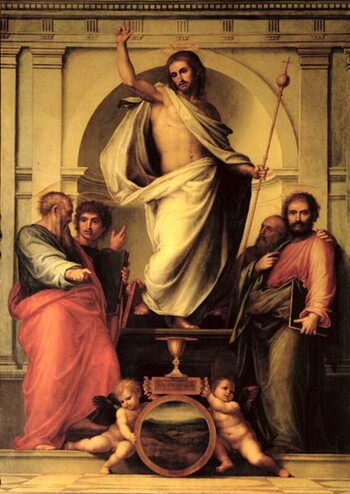
You may notice that from this course, we have talked a lot about the Tree of Life, the synthesis of being, the map of consciousness. We also juxtapose this mysterious glyph with another powerful painting of Christ with four apostles and two cherubim with a mirror. This painting represents the Tree of Life in synthesis, and we have talked about מלכות Malkuth, the physical body, יסוד Yesod, the vital energies, הוד Hod, the astral vehicle or emotional state, נצח Netzach, the mind.
The four apostles: Matthew, Mark, Luke, and John, in the Bible represent these four lower qualities and the four Gospels. They also relate to the four elements. The four animals are the holy creatures of Ezekiel: the bull, the lion, the cherubim or angel, and the eagle―earth, air, fire, water. What is interesting is that these four apostles stand above two children, two innocent, kind, divine souls. In a sense, these two children hold up a mirror, and these children are תפארת Tiphereth, the human consciousness, the Essence, likewise, גבורה Geburah, the divine soul. These two souls, human and divine, are what really concerns us with meditation, because the human soul, concentration, the ability to focus on one thing, is תפארת Tiphereth and that will is augmented by perception, consciousness, גבורה Geburah: the quality to receive information, to focus on one thing and to extract knowledge, real wisdom. That wisdom is our true being, the mirror. It is our true self. That mirror is חסד Chesed, the inner spirit, the real Being, the real self. Obviously, these figures, these lower vehicles, are the bodies of Christ, the highest truth: כתר Kether, חכמה Chokmah, בינה Binah, the Father, the Son, and the Holy Spirit. In synthesis, this Tree of Life can show us, in the lower seven spheres, especially, what are known as the essence or heart or the qualities that we need to develop in relation to each of these spheres, the lower seven sephiroth. These lower 7 sephiroth, from חסד Chesed to מלכות Malkuth, related to the paramitas. So, paramitas are attitudes, qualities of being that we need to understand about overcoming certain challenges. The physical body, obviously, relates to מלכות Malkuth, the earth, but as we begin our studies, we learn to cultivate generosity, to generate the life force of the spirit through transmutation, through the work of the sexual force. 1. DANA, the key of charity and love immortal. ―The Voice of the Silence
Dana, generosity, charity, relates with יסוד Yesod, the power to generate, to give life, spiritually, especially. To be generous is to create new circumstances, not only of money or physical goods, but spiritually. It is an attitude, compassion, and the power of compassion is found in the sexual force, how we use that energy, because literally it regenerates the psyche when harnessed.
Any beginner meditator as they are calming the body and transforming the creative forces of יסוד Yesod enters a great problem. We face great conflicts in terms of our life circumstances. We are challenged. As we are observing ourselves, we find that we have anger and pride and fear and laziness and lust, because now we are actively looking at ourselves and seeing with the creative force what we really are, because that energy empowers the consciousness to be able to watch, to observe, to understand. Therefore, we need ethics, because in relation to הוד Hod, the emotional center itself, we have to develop real harmony, Shila, according to The Voice of the Silence: 2. SHILA, the key of harmony and word and act, the key that counterbalances the cause and the effect, and leaves no further room for Karmic action. ―The Voice of the Silence
Because in the heart is really where we are tested, in our very core. Ethics, Shila, creates harmony, controlling those negative reactions to life.
Next is Kshanti. 3. KSHANTI, patience sweet, that nought can ruffle. ―The Voice of the Silence
It relates the נצח Netzach. We need patience when we deal with our mind. Our mind is a great animal, a great beast, and its distractions and thoughts keep us jumping from association to association, and not understanding who we are in our fundamental depth.
4. VIRAG, indifference to pleasure and to pain, illusion conquered, truth alone perceived. ―The Voice of the Silence
This relates to מלכות Malkuth, the physical world, because in life, we have to be indifferent. Good or bad, happiness and sorrow, pleasure and pain, are temporary. These things don't last, and why be attached? The virtue of מלכות Malkuth is indifference, not apathy, but equanimity, neutrality, not being tossed around by good or bad, but being in the middle.
5. VIRYA, the dauntless energy that fights its way to the supernal TRUTH, out of the mire of lies terrestrial. ―The Voice of the Silence
This is תפארת Tiphereth, willpower. The real beauty of the soul is diligence, not merely keeping a job or having a career, although that is useful and we need it, but the virya, the dauntless energy of תפארת Tiphereth that we need, the diligence that we need, is one that is willing to fight spiritually and to make changes, and to try again and again, and to strive in the way of God.
6. DHYANA, whose golden gate once opened leads the Narjol (the initiate) toward the realm of Sat (the Absolute) eternal and its ceaseless contemplation. ―The Voice of the Silence
Dhyana, as we are hinting at, is גבורה Geburah, the divine soul. So, in meditation we learn to concentrate and then we extract knowledge. We can use our visualization, our imagination, our perception, to understand the the essence of a given thing, and that is real meditation. It is a state of being, and גבורה Geburah relates to Dhyana, meditation itself.
And lastly: 7. PRAJNA, the key to which makes of a man a god, creating him a Bodhisattva, son of the Dhyanis. ―The Voice of the Silence
This relates to חסד Chesed, the inner Being, the spirit, Prajna.
With meditation what we want to do is to embody these virtues, to develop them so that by understanding these principles, we control our body, our energies. our emotions, our mind, our, will. This control does not mean repression, restriction. It means understanding, how they all function together, how they interrelate, so that when our will is serene, it knows how to apply itself to anything and to understand the heart of reality. We can extract new wisdom through the mirror of our consciousness, to understand the depths of anything. These are principles that help us in terms of our psychological work. We will explain them in synthesis. 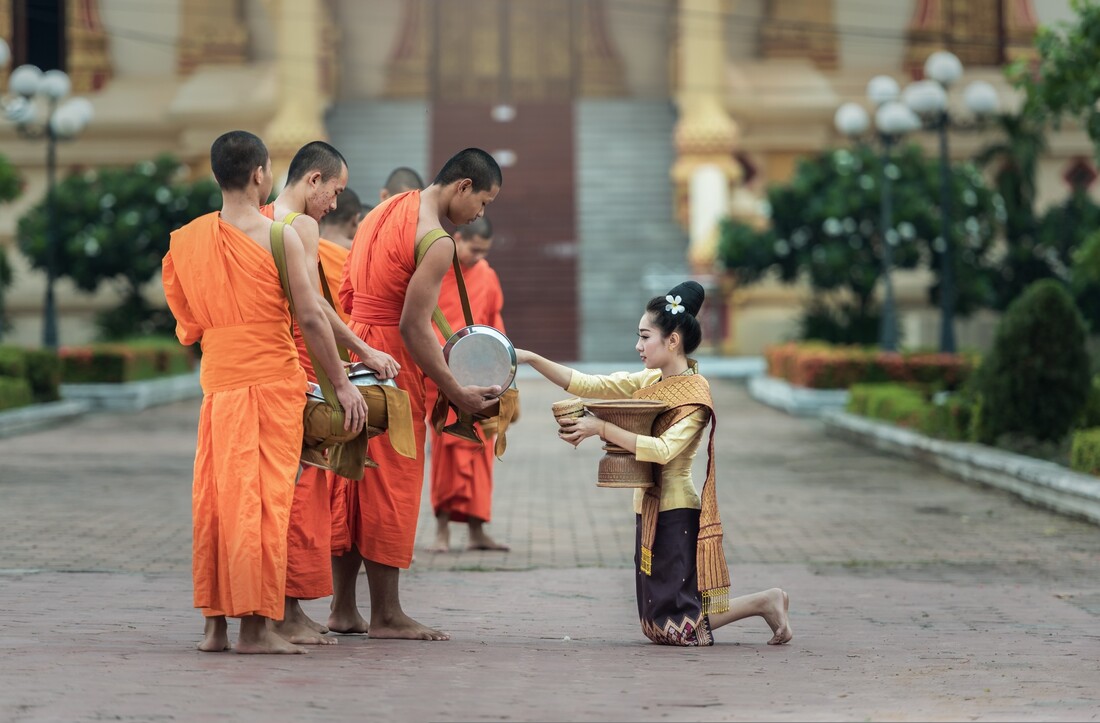
Generosity (Dana, יסוד Yesod)
The first is Dana (generosity). So, The Voice of the Silence emphasize that in the beginning of any spiritual path, when we are learning about generosity and kindness, that obviously it is very easy. We become inspired to want to practice and become a spiritual person. We are joyed by the beauty and depth of the great initiates, what they wrote, especially from the scriptures.
They have a lot of deep emotional power because they are generated from a state of being that is transcended, individuals who fully perfected that quality of themselves and were able to express the generosity of God, the compassion of divinity. This is Dana. This is the spirit of religion―to give, regardless of one's self, and to be in service of others despite our needs. Obviously, there is a balancing act. In our modern culture, we like to talk about self-care. It is important, but the attitude of a bodhisattva is that other people take precedent. Charity is a fountain, and that attitude of rich compassion is born when we work at transmutation, especially, the power of life. This is the beginning of religion, real religion, the beginning of the path. We talk about the work with the Holy Spirit because it is the power of genesis, the power of life. The Voice of the Silence explains the following corroborating these points: Armed with the key of Charity, of love and tender mercy, thou art secure before the gate of Dana, the gate that standeth at the entrance of the PATH.
A lot of times in the Qur’an you find images of verdant leaves and crops and beautiful flowers, land of milk and honey, paradises. All those images in the Bible of lush forests and vegetation, flowers seen in dreams, is a symbol of a flowering of the soul. You see that in your visions. You are being shown, like a rose or a lotus born from the mud, you find the purity of the consciousness. It flowers radiant and pure as we extract the mud, which is why we have ethics.
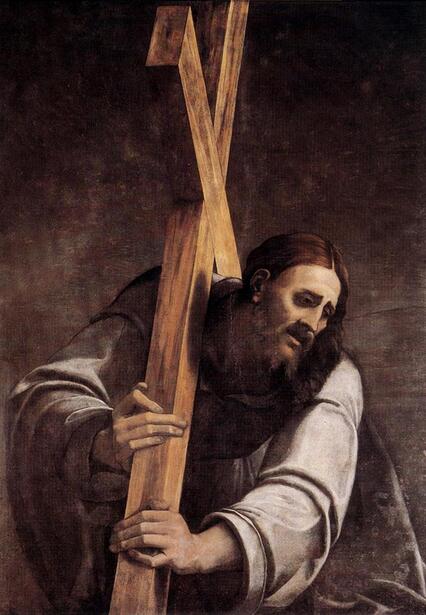
Ethics (Shila, הוד Hod)
Shila, this is where the path gets difficult, because as we are exploring ourselves, we find that we have many vices. What we need in this level of discipline is understanding the code and conduct of the initiates, the examples of the great prophets, because they could help guide us in terms of our work. We need to learn from people who have done this, not merely from any physical group, but from the scriptures, because they demonstrate a caliber of being which is possible for us. The way that they reach those heights of realization was by controlling their animal mind.
And to the second gate the way is verdant too. But it is steep and winds up hill; yea, to its rocky top. Grey mists will over-hang its rough and stony height, and all be dark beyond. As on he goes, the song of hope soundeth more feeble and the pilgrim's heart. The thrill of doubt is now upon him; his step less steady grows."
It is important to emphasize that these steps are not merely plateaus in which we reach one level, like we stay there and then we move on to the next. They are interpenetrating and related. They build on each other. They connect. With ethics, it is like an armor. In a moment of great crisis, we find that our own mind is reacting. Our ego emerges and wants to dominate, wants to control us, wants to harm in any way.
Shila is when we look at that element and we watch. We do not feed it. We do not justify it. We do not repress it. We look. The ethical response is when we understand intuitively what the right way of being is. It just comes to you like when you are not thinking. You are not expecting it, but you are watching and you are understanding. You are getting data about that defect so that we can learn more about it. If we do not understand how the mind and the heart function and why they operate the way they do, we will make mistakes. We will not gain enough insight to really eliminate that fault deeply. When we lack ethics in our life, we suffer, because we make our situations worse. Obviously, there is no way to escape the pain of the path. In fact, what matters is voluntary efforts, voluntary suffering, being willing to enter those challenging circumstances and not run away, but to learn intuitively the right answer. 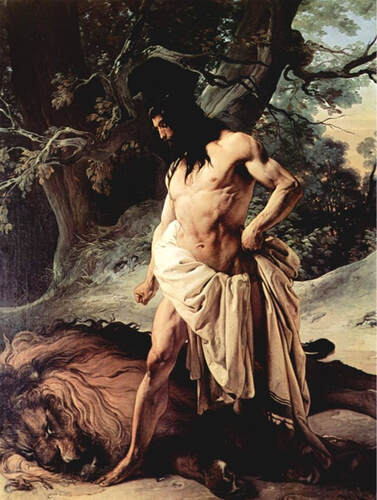
Patience (Kshanti, נצח Netzach)
This leads into Kshanti (patience), because we need to be patient. We are not going to change overnight. I mean, becoming perfect like someone like Jesus or Buddha or Muhammad, great initiates, is a long process, and we have to be willing to endure our own mistakes and to change.
We have an image here of Samson from the Old Testament, where I will explain some verses from John Milton, especially his Samson Agonistes, a great work of literature in which we find, by his example, the need to patiently endure the sufferings of imprisonment and blindness. The Voice of the Silence explains: Be of sure foot, O candidate. In Kshanti's essence bathe thy Soul, for now thou dost approach the portal of that name, the gate of fortitude and patience. ―The Voice of the Silence
Again, patience and ethics are like armor. They shield us when we are tempted. In a sense, patience is almost like a bath, like you are cleansing yourself. Through patience possess ye your soul (Luke 21:19).
John Milton explained the following, corroborating these points. But patience is more oft the exercise
It is impossible to purify the psyche without facing those great ordeals. In initiation, we talk about facing challenges and circumstances that really test our character, our state of mind, and in that state when we we are boiling at 100 degrees Celsius, we feel like we are reaching a threshold. Like in a moment, we are going to maybe snap, like maybe you feel anger arising or negative emotions with thoughts, words that want to express.
If we are watching this process, we see that part of us is trapped in anger. In a sense, it is very overwhelming. It can be overpowering, but the key is to watch, to observe, and to remember God, as difficult as it may be. Patience is our own deliverance, and really, we have to be patient when we study ourselves, because we see that we have elements that are contrary to this work. But it is patience that allows us to face any situation, any challenge, the tyranny of our own mind or misfortune, because from the state of consciousness, we learn that karma, circumstance, is impermanent. Or situations are impermanent, and that we have to face the consequences of our former actions, to bear them willingly―voluntary suffering, conscious works, to take responsibility of our own actions and mistakes. 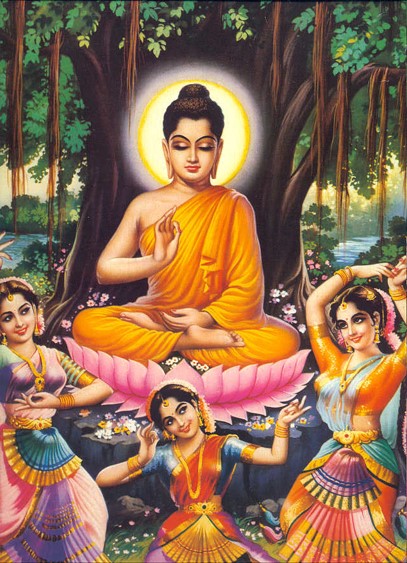
Indifference (Virag, מלכות Malkuth)
Virag is indifference. We see that Buddha here is meditating with Mara's daughters, who in the traditional mythology is the temptations of mind, heart, and sex. These are not figures outside, but something psychological in us, how our own mind, our emotions, and our desires keep us hypnotized or distracted.
The virtue of of מלכות Malkuth, of Virag, indifference, is when we approach life. We awaken the consciousness. We observe. We are mindful, but we do not crave or want to reject the circumstances of existence. We face them and we are not either favoring or running away. We have to be equanimitous. What good may come, we accept. What negativity comes, we accept, and our attitude does not change. It does not mean apathy, like we do not feel anything, like, “It does not matter. I do not care.” It is not the point. That is living like a zombie, in a sense, which is a state of dysphoria. It is not the state of indifference from the consciousness. Indifference means you can be happy or content, regardless of what anyone else says, and be compassionate regardless. There is still a dynamic range of conscious emotion and perception, of feeling, but it is not driven by desire. It is serene. Here is what The Voice in The Silence emphasizes about this: Close not Thine Eyes nor lose thy sight of Dorje (and a Dorje in Tibetan Buddhism is like a symbol of the holy eight, a scepter which is used in Buddhist rituals, a symbol of man, the masculine sexual organ).
These arrows of Mara are precisely our own passions. When our desires want to take control of our human machine, the intellect, the emotions, our movements, our instincts, or our sex, and if we are not watching the different functionalisms of those centers and how they all integrate and relate, we get pulled in multiple directions―maybe our thoughts in one way, our emotions in another, our movements in one direction.
These are like Maras arrows. The impressions of life hit us. We are usually just reacting, and we do not actually watch ourselves or understand why we react the way we do, except we kind of externalize. Instead, indifference is that separation where you are watching. You are in tune with life, but you transform the impressions. They no longer hit us and impact us in a way that makes us negative. We understand what is going on in the world. …on Path [the] fourth, the lightest breeze of passion or desire will stir the steady light upon the pure white walls of Soul. ―The Voice of the Silence
So, this emphasizes some points that Gurdjieff made about the five centers, especially. You know we have the light of consciousness, which is observing through the three brains. We are trying to integrate those centers and make them a unity. We are conscious and concentrated in ourselves. We are watching and observing ourselves. It is a light, the light of perception within our human machine that is trying to operate the five centers or the three brains. If we allow passion to interfere in any one of those centers, we lose that light. It gets tainted or corrupted, and we get distracted.
Indifference, Virag, is the ability to watch, to see, observe, and understand without being disturbed. It is strong the more we develop it, which is why The Voice of the Silence emphasizes: The smallest wave of longing or regret for Maya's gifts are illusive, along Antaskarana (the silver astral cord) ― the path that lies between thy Spirit and thy self, the highway of sensations, the rude arousers of Ahankara (selfhood) ― a thought as fleeting as the lightning flash will make thee thy three prizes forfeit ― the prizes thou hast won. ―The Voice of the Silence
Blavatsky speaks a lot about the Antahkarana thread, which is what connects the astral body to the physical body, especially when we are awake. When we dream, the astral body has this cord that connects it to the physical body, so then we travel in those dimensions, we can always return to our vehicle through that cord. In a sense, the Antahkarana thread that is being described here is the path that lies between spirit and self, the internal and the external, in that the impressions of life that you receive are, in a sense, registered through our astral senses.
Physically, we cannot point at our feelings, but we sense them. These are psychological senses, the senses of the astral body that are permeating our physical body. If we in our physical life do not transform the impressions of existence, whether it is for pleasure or pain, whatever it maybe, we get hypnotized and we do not see reality. In a sense, our perceptions of self known as Ahankara are precisely the defects we experience, the self, pride, anger, laziness, whatever it may be. The self are all these desires and impressions, states that are provoked by the circumstances of life. So, if someone praises us, we feel pride emerge, and that pride is feeding on the sensations of pride, or if it is for lust, sensations of lust, passion. Or, fear that wants security, that wants to run away from the impressions that there is uncertainty in our financial, social, or marital relationships, whatever it may be. We perceive the sensations or impressions of life, and our reactions bubble up. They sprout. They emerge in the five centers, and they are always trying to feed on certain sensations or impressions, but unless we watch this state willingly, we will not see the exchange or the process. Instead, we just kind of go with the flow and if we do, if we are just thinking and thinking and feeling to whatever happens in life and not watching this, you know, a thought is fleeting as a lightning flash. It will take away our energy, the prize, right? I mean the prize is, as we are watching ourselves, we are saving energy and we are building up a reservoir, psychologically speaking, not merely physically or sexually, but emotionally too. We have energy, mentally as well. If we are constantly feeding our desires, then we deplete our mind, our heart, our body. Indifference teaches us to be sealed, hermetically sealed. Do not lose the precious energies of our psyche so that we can awaken more perception. So, obviously this path is very demanding. As it states here: Stern and exacting is the virtue of Viraga. If thou its path would'st master, thou must keep thy mind and thy perceptions far freerer than before from killing action. ―The Voice of the Silence
Meeting, real action is spontaneous, intuitive, novel in the moment. It does not mean to be impulsive. It means to know how to respond to any situation with wisdom and understanding.
Thou has to saturate thyself with pure Alaya, (the universal soul) become as one with Nature's Soul-Thought. At one with it thou are invincible; in separation, thou becomest the playground of Samvriti (empirical or conventional truth through the senses), origin of all the world's delusions. ―The Voice of the Silence
What does it mean to be saturated with pure alaya? Practically in our work, it means means to be mindful, be alert, be conscious. That pure soul, that universal soul, is compassion. It is Christ, a state of being, and if we wish to be, in a sense, invincible, psychologically speaking, spiritually speaking, it is important that we remember God, the presence of divinity in our heart, moment by moment, observing ourselves, remembering a state of clarity, compassion, patience, wisdom, and endurance.
Otherwise, if we, in a sense, lose our connection in a moment of great trial, we say something we regret or we become angry or fearful, and we feel the pain of that, obviously, the remorse. To be invincible means to not be separated from divinity, because divinity is the source of real power, of real being. Otherwise, we become a playground. Our intellect, our emotions, our movements, our centers, just pull us in whatever direction, so we are kind of adrift, but self-remembrance keeps us in a unitary state. Diligence (Virya, תפארת Tiphereth)
Virya (diligence). Virya literally means “warrior.” This is the diligence or willpower needed, especially in meditation, to concentrate, focus on one thing unwaveringly without distraction. That is the essence of real willpower or תפארת Tiphereth in the kabbalah. Concentration, serene observation, is the power of a spiritual warrior. It is the faculty that allows us to apply ourselves spiritually to any endeavor, and in a sense, this is all depicted in the Mahabharata.
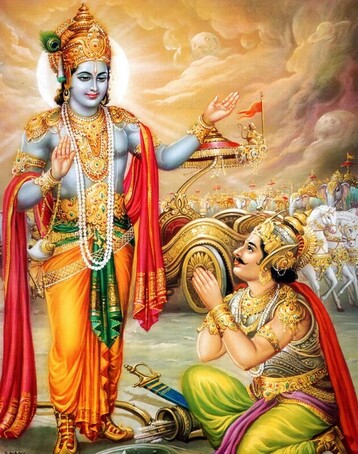
We see Arjuna speaking to Krishna, the Hindu Christ! where he is told on the battlefield that he has to confront all his family members, his loved ones, who are symbols of his own desires, his passions. Obviously, in the beginning he is fearful and says, “I don't want to fight the ones I love,” and psychologically we face the same problem. We do not want to give up fear or pride or anger or resentment. We love that part of our self so much and we are not willing to fight it. This is evident when we have an argument with our loved ones or a spouse, and we see something in us that is very overwhelming and powerful, maybe anger or pride, and we need willpower to even be willing to look―to look at the situation and even the pain that we cause.
Willpower, Virya, diligence―it does not mean get up at 5:00 a.m to meditate every day and go to work, work a hard job, be busy all day and be distracted and doing multiple things (I know we live in the era of multitasking), but in a sense, this is not the diligence we are talking about. It is conscious diligence. Those moments in which we are very awake, and we are seeing new things about ourselves, and we are gathering data, and we are willing to do that again and again, that is real Virya, diligence. The fearless warrior, his precious life-blood oozing from his wide and gaping wounds, will still attack the foe, drive him from out his stronghold, vanquish him, ere he himself expires. Act then, all ye who fail and suffer, act like him, and from the stronghold of your Soul, chase all your foes away ― ambition, anger, hatred, e'en to the shadow of desire ― when even you have failed... ―The Voice of the Silence
Most people who begin to study themselves will run away from the reality. But obviously, the emphasis in The Voice of the Silence, in the many religious scriptures, is that a meditator is one who is willing to face again and again, despite the feeling of wounds and weakness and vulnerability, to try again and again, to strive, because this path is not only for our own benefit, but for others, improving our communities.
Diligence is the quality of the consciousness that is able to penetrate into the mind and to focus on that, specifically, so that we can extract wisdom and knowledge about the roots of our defects, so that by understanding them, we can remove them. Remember, thou that fightest is for man's liberation, each failure is success, and each sincere attempt wins its reward in time. The holy germs that sprout and grow unseen in the disciple's soul, their stalks wax strong at each new trial, they bend like reeds but never break, nor can they e'er be lost. But when the hour has struck they blossom forth. ―The Voice of the Silence
It is easy in the beginning to maybe get discouraged. We try these practices, and we feel like we are not making changes. But the real results come with those tests and ordeals in which we find that before, when we would have broken in a moment of anger, we bend like a reed. We are more flexible. We do not react like we used to. Progress, little by little. Flexibility and strength are born with time, with patience.
These verses are emphasized in the Bhagavad Gita, especially, in which Arjuna receives advice from Krishna, encouragement. That emphasizes a holy war as emphasized in the Middle Eastern traditions, especially, but also in the Bhagavad Gita. Here are some things, words of encouragement given by Christ, the Hindu Krishna, in a verse from “Sankhya Yoga” in that this path is an obligation upon us, a duty. 31. Having regard to thy own duty, thou shouldst not waver, for there is nothing higher for a Kshatriya (of the military caste) than a righteous war. 32. Happy are the Kshatriyas, O Arjuna, who are called upon to fight in such a battle that comes of itself as an open door to heaven. 33. But, if thou will not fight in this righteous war, then, having abandoned thine duty and fame, thou shalt incur sin. 34. People, too, will recount thy everlasting dishonour and; and to one who has been honoured, dishonor is worse than death. 35. The great car-warriors will think that thou has withdrawn from the battle through fear; and thou wilt be lightly held by them who have thought much of thee. 36. Thy enemies also, cavilling at thy power will speak many abusive words. What is more painful than this! 37. Slain, thou wilt obtain heaven; victorious, thou will enjoy the earth; therefore stand up, O son of Kunti (the sacred feminine), resolved to fight! ―Bhagavad Gita, Sankha Yoga
In many ways, this is explaining that any person who approaches religion, who has some practical work and is making some changes and realizes the value of the honor of this work, it is a grave downfall to go backwards, because not only is our benefit and our own level of being inhibited, but we prevent other people from benefiting from us too. So, it is a responsibility and that is why it is a challenge. This is something not to be taken lightly. He says, if you strive in this way or seek to enter it, be sure, because there are consequences.
Meditation (Dhyana, גבורה Geburah)
When we develop the ability to concentrate, to focus on one thing unwaveringly, sustainably, we enter what is known real Dhyana, meditation. Dhyana is a state of being. When we are able to focus and concentrate serenely on one thing and wait, we can visualize whatever it is we want to understand. Suddenly, images come, insights, perceptions, maybe through a vision or a dream, but also maybe just through an understanding. We understand something deeply about what we are trying to comprehend. This is Dhyana.
Meditation means to extract information from any phenomenon, and in that way, it is like a mirror or like a vase that contains a beautiful light. That light is our own Being, the quality of perception itself, the ability to even see it and understand. Dhyana is ascribed in relationship to the divine soul. If you have read what Samael Aun Weor explained about גבורה Geburah, Buddhi, he explains that this divine part of ourselves is like an alabaster vase wherein the light of חסד Chesed, the spirit, shines. The spirit is God and can express through our consciousness, when we have set the parameters up by entering a state of serenity with our physical body, calming the energies, calming the heart, calming the mind, and focusing our will and entering in a state of meditation. Then our inner Being can enter through our imagination and show us visual things, teach us through dreams or visions. So, he is the light that shines like in the alabaster vase as explained here. The Dhyana gate is like an alabaster vase, white and transparent; within there burns a steady golden fire, the flame of Prajna that radiates from Atman. Thou art that vase. ―The Voice of the Silence
Prajna means “profound wisdom,” to immediately see something and understand it in the full depths. Jna means “knowledge,” but pra means “beyond,” to see beyond the limitations of our senses, our mind, our thoughts. Atman is the spirit, חסד Chesed.
When we enter and resonate with that level of being, we will have entered the prerequisites steps of serenity. In this way, we gain real experience, real knowledge about anything that we want, which is why it is very different from just mere intellectual study, as explained here. Thou hast estranged thyself from objects of the senses; travelled on the “Path of seeing,” on the “Path of hearing,” and standest in the light of Knowledge. Thou hast now reached Titiksha state (which is patience, forgiveness, and tolerance). ―The Voice of the Silence 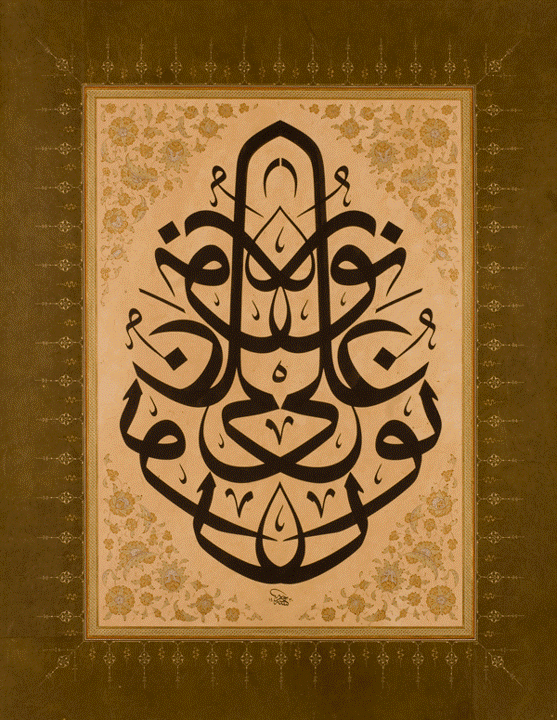
(Arabic calligraphy: Al-Nur, "The Light")
To go from the path of hearing the knowledge in order to see it for oneself, this is all emphasized in the Qur'an, in Surah al-Nur, in which we find the same teaching:
Allah is the Light of the heavens and the earth. The parable of His Light is a niche wherein is a lamp ― the lamp is in a glass, the glass is it were a glittering star ― lit from a blessed olive tree, neither eastern nor western, whose oil almost lights up, though fire should not touch it. Light upon light. Allah guides to His light whomever he wishes. Allah draws parables for mankind, and Allah has knowledge of all things. ―Al-Qur’an, Surah al-Nur [24:35]
The light of the heavens and the earth is our Being, the ability to perceive and have insight and wisdom. That light is in the lamp of גבורה Geburah, the spirit or the divine soul, better said, “Lit from a blessed olive tree.” That olive tree is our Tree of Knowledge. By working with the oil of the Tree of Knowledge, the creative energy, the sexual force, is how you have light. “Untouched by fire,” meaning passion or lust, and is “light upon light” because there are levels upon levels of being that we can experience in meditation, related to this Tree of Life―degrees. Divinity draws to himself whomever he wishes through visions, through meditation, through experiences.
Wisdom (Prajna, חסד Chesed)
The last of this is Prana (Wisdom). Real wisdom, as you know, is when we are able to focus, concentrate, observe, and receive images in meditation. We get an understanding, and the insight or understanding of a given phenomenon is Prajna, related to the spirit. It is when we understand. It is the “aha!” moment, in which we get something really deeply, but imagine on a more profound level.
Some steps related to Prajna in The Voice of the Silence, emphasized, again, some ethical prerequisites: the need to be compassionate. We receive in accordance with what we give. It is the law of divinity, reciprocity. In a sense, if we long for insight and understanding or blessings from divinity, we too have to do our part by whatever our capacities. We have to be a part of our community, or maybe it is our job or career. We learn to give of whatever we are able to, and in accordance with what we give, we receive. In a way, we get insights from divinity as we are helping people at our capacities, which is why The Voice of the Silence teaches: Know that the stream of superhuman knowledge and the Deva-Wisdom (the wisdom of divinity, the angels), thou hast won, must, from thyself, the channel of Alaya, be poured forth into another bed. ―The Voice of the Silence
It is not enough, as we said, about gaining enlightenment for yourself or ourselves, because it is not about us. We have to learn to help our communities. We should strive to become a vehicle for divinity so that divinity can provide for others.
Know, O Narjol (saint or glorified adept), thou of the Secret Path, its pure fresh waters must be used to sweeter make the Ocean's bitter waves ― that mighty sea of sorrow formed of the tears of men. ―The Voice of the Silence
Again, emphasizing these points. We want to make our knowledge practical, things that we understand and learn from meditation, so that we can improve our own state to improve our communities.
In a sense, we are striving towards that אין סוף Ain Soph, the star of Bethlehem, our inner monad, the truth, which means “unity” in Latin, the essence of the spirit, that star of our inner truth within the void. Alas! when one has become like the fix'd star in highest heaven, that bright celestial orb must shine from out the spatial depths for all save for itself; give light to all, but take from none. ―The Voice of the Silence
A very high ethical demand. It is not easy to strive in this way, because we have this ideal of divinity and their capacity as initiates, and they are very rare. But obviously we are going to make mistakes, but we should strive regardless.
Continuing on these points: 
Alas! when once thou hast become like the pure snow in mountain vales, cold and unfeeling to the touch, warm and protective to the seed that sleepeth deep beneath its bosom ― 'tis now that snow which must receive the biting frost, the northern blasts, thus shielding from their sharp and cruel tooth the earth that holds the promised harvest, the harvest that will feed the hungry. ―The Voice of the Silence
Again, this goes back to indifference. So, notice that the the paramitas interrelate. In terms of indifference, one must be not unfeeling, but in a sense, shielded from the suffering of life and maybe the negativity of humanity, and by protecting the seed, the soul can grow underneath the snow. This metaphor of the snow itself―the snow obviously relates to chastity, the work of the sexual force, the purity of the psyche. This seed is really, the people in our life, our communities. People have a seed of the soul within them which can grow, and as we are striving on this path, we want to help nourish the soul of others and to shield them from pain. We do so through understanding of the highest wisdom Prajna, from experience.
So what is interesting about The Voice of the Silence, especially towards the end of this scripture, is that Blavatsky touches on these paramitas to emphasize the psychology of the great masters of compassion and how they really embody these higher virtues. They do so not for themselves, but for others. They are known as the Guardian Wall: those initiates who have really mastered the higher paths itself, who have reached their inner star, their אין סוף Ain Soph. They come and they remain to help countless humanities through many ages. We call them, like beings like Sanat Kumara, who is the organizer of the College of Initiates, Bhagavan Aklaiva. You have Moses, Buddha, many masters. Even Muhammad was described like a brick that finalized the house of the successive lineage of the prophets. He is a brick in the Guardian Wall, one master of many who are helping humanity in the internal planes, in that they stay and remain in order to teach us and help us internally, especially, dooming themselves throughout many ages to help and guide. Obviously, this is the goal that in this path, we are striving towards, but obviously, that is the heights, you know, just talking about the end goal, because we do not begin there. We begin where we are at. Self-doomed to live through future Kalpas (cosmic periods), unthanked and unperceived by man; wedged as a stone with countless other stones, which form the “Guardian Wall,” such is thy future if the seventh gate thou passest. Built by the hands of many Masters of Compassion, raised by their tortures, by their blood cemented, it shields mankind, since man is man, protecting it from further and far greater misery and sorrow. ―The Voice of the Silence
That is the height of real wisdom.
Conclusion
In conclusion. We recommend you study a course given by Glorian Publishing. It is called The Path of the Bodhisattva. Some of what we explained in this scripture is that Christianity and Buddhism have the same roots, or the essence of their teachings emphasize the same knowledge, and that by studying both traditions, we can better understand what Blavatsky taught and also how to understand the whole scope of the spiritual path, so that we know the map. These are some basic principles that can guide us in that way.
If you have questions, feel free to ask. Questions and Answers
Question: When it said the seventh gate, in that last slide, is that referring to the tree, getting past that seventh level and then getting above that?
Instructor: Yes. So, kind of from the bottom up from מלכות Malkuth to חסד Chesed. חסד Chesed will be the seventh gate and beyond that is higher levels related to Christ. But yeah, Prajna in a sense can relate to חסד Chesed the spirit, but also even these higher sephiroth of the Trinity because even beyond our own inner spirit, the light of our Innermost, our inner God, is levels of levels of light, as mentioned by the Qur’an. Light upon light―degrees. Question: Could you give an example of repression as opposed to just saying no to something? Maybe like just for anybody's against smoking, drinking, eating ice cream? Instructor: I think more than eating ice cream, a good example I think would be something like pride. You talk with a loved one, maybe as an example, your partner and your partner says some criticisms, which are perfectly valid and objective. They are true. If you are observing yourself, the impression emerges, and if you are watching, you see elements of pride or anger emerge. You feel maybe, “She's wrong. She shouldn't have said that. I don't deserve this! I am angry! How dare she say that to me?” and you feel that boiling in yourself. Repressing would be, “Oh, I am not feeling anything,” wanting not to look at it. Like you may feel the emotions boiling inside, and yet that part of us, which is on the threshold of being perceptive and awake, we do not really register the full depth of the emotion. It is like we are only conscious of the surface, in a sense, like you look at an iceberg. In many ways, we do not even pay attention to how we are feeling unless we are really watching. We may think that we are not necessarily that mad. Question: So, let us say, for example, let us say something like mainstream media, to say, “I am not going to follow that because it does something to me,” where your ego comes out. Would that be something to say, “I don't want to look at that or watch that or do that.” Is that the same thing as repression? Instructor: It can be. You may have the the ego watching television and watching movies or the appetite to consume media, or internet, or whatever it may be, and merely just saying, “Oh, I am not going to look at that.” In a sense, this could be a common reaction, or in the case of some people, lust. People may, in the beginning of our studies, become inspired as single persons, “Oh, I am going to practice transmutation, pranayama, I am going to dedicate myself to not being lustful anymore,” avoiding situations or maybe even just avoiding, circumstances that before we may feel uncomfortable with. It could be a form of repression, meaning we are not willing to look at those kinds of circumstances or the reactions that are associated with them. This does not mean that we want to go looking for trouble on the other end of the spectrum or the other end of the pendulum, where, “Oh, I have to go look at pornography or lustful things or whatever so that I can conquer my lust.” That is, in a sense, kind of fooling oneself. But repression is like avoiding, right? Avoiding the situation and not really being willing to look at the truth when those circumstances do provoke those elements. Another Instructor: Can I add on to this? I think with the cigarette example, but like you said, it can be applicable to many things. It starts off with you knowing that a part of you is curious. It does want to try. It does want to indulge mainstream media, right? So, maybe a part of you does want to know what is going on there and repression is just pushing that down. But willfully pushing that down and avoiding, that is going to come out somewhere else, right? So, you say no to the cigarette, you push it down, “Nope, bad, bad, bad. I don't want that,” and then later on you find yourself, you know, eating a tub of ice cream or doing some other thing, because of that tension, that psychic pressure of having repressed it, whereas if you say no to the cigarette, but you still allow yourself to feel that desire and to see that desire in you and you are conscious of it, you are using the conscious observation of that desire in order to transform it. Thus, you can retain and almost extract the energy out of that desire and purify it, and kind of awaken your consciousness further through it, versus the conscious avoidance of something just creates a psychic tension that then is going to come out somewhere else. In either case, you have lost the energy there through that desire. It just might not have happened here. It happens over there instead. But this skill to be able to consciously observe something and not act on it, I think it relates to the patience that was just talked about in this lecture, right? Samael Aun Weor talks about the need for a magician to forbear, to keep silent, to know how to suffer, to know how to die, and that is exactly what we feel in a situation where a temptation is there and we desire it, but we are holding firm with our consciousness. We are keeping a kind of spiritual integrity, and we are observing what is happening inside of us without acting on it, because as soon as we act on it, one way or another, pushing it down or indulging in it, we have lost that energy. We have lost that consciousness. We have gone further into unconscious behavior. But if we are there and we are observing it consciously, this kind of transformation of the impression occurs, which is what we are always talking about, right? That is the magic, right? That is what the magician is doing, is extracting the energy out of his own unconscious mind and transforming it into a conscious substance that can be used for spiritual work and development. Instructor: All the paramitas work together to ensure that obviously we generate the spirit of altruism, of giving. We work with the creative energies to generate light in ourselves. Ethics is how we refine that light, remove our perception from anger, fear, lust, whatever it may be. Patience is the stability of the consciousness that knows how to look at life with equanimity, and to endure suffering when it does arrive, not acting mistakenly. But obviously, then, willpower and meditation and wisdom relate. As we are cultivating a state of serenity, when we sit down to meditate, we can start to go deeper into our reactions of the day, so that we can understand in a more fundamental level, how are we repressing and how are we indulging. In the surface level we can get a sense, but obviously to go to the most deep levels, it is important to put aside the senses and go look within, because there is a lot of depth to us that are operating without our conscious control or awareness. Question: I have seen a tree has a card like downwards, like the duality of the tree, so if I for example, cannot find patience, is there like a sephirah there, I think those are like Klipoth, right? Instructor: Yes Question: The sephiroth that represents patience. If I focus on the opposite, does that also helps me to understand it? Because sometimes we talk about these concepts that are very high, but I am more familiar with the opposite. Instructor: Yeah, that is all of us, because if you really want to understand the virtue of patience and yeah, understand anger, look at the vices, and every vice has its opposite. With anger, its opposite is precisely this patience, and I believe the term that Blavatsky used was, “Kshanti is patience sweet.” It is sweetness. Sweetness is patience, when someone comes at us aggressively and we respond with love. Yeah, serenity. It is like, you do not react, but you do respond with level-headedness. You endure the reactions in yourself or the intensity of the emotions, but also the reactions of oneself that want to get angry or retaliate, and sweetness is that state of patience. You understand that by looking at hell. We have to look at the negative first so that you develop the virtues. It doesn't work the other way around. I mean, in a sense, it is important not just to meditate on our mistakes because that can make us very one-sided and very morbid, because we look at ourselves and say, “Oh my God! I am angry, I am proud, I am lustful!” you know, all these errors, like you just go on forever, but in that sense, by looking at those negative vices and comprehending and eliminating them, with meditation we learn to eliminate those faults. You extract patience from anger. Anger is like the cage it is. It is broken. In that way, you can also meditate on the virtues too like, do not just meditate on anger, but meditate on the paramitas, because they teach both sides of the spectrum of consciousness. We want to invert these hell realms, this inverted sphere into its positive, and the roots of the Tree of Life are born by removing the roots of the tree of death. Question: Back to the example of, let us say, an argument with a loved one or your spouse, and it is not good to just be like, “Oh, I don't feel anything,” and you just like crush it, but in that moment, you just want to absorb it and practice mindfulness, to just say, “Okay, this is what I am feeling this moment. I am going to try and let it pass so that I can be more level-headed and respond, and you know love without hate or anger,” is that kind of the the route to go about it versus the repression where it's like, I don't feel it and need to step away? Instructor: I would say it would be good to communicate. “I am not saying this is right or wrong, but this is what I am feeling,” and talk about it and express it. It is a threshold. There is a fine line between not addressing it and then going all in. It is a delicate balance. We can consciously experience those emotions when we are looking at them, observing them, and approaching them with the Essence, the soul. That means communicating what you are thinking. It is like, that is really the best thing, is being transparent, because it is not good to bottle it up, because it is going to explode. Better to let off the steam by saying, “Hey, I am feeling a lot of anger right now. I am not saying this is right,” but expressing it, talking about it delicately, you know. Another Instructor: Yeah, and I think that that is the beginning: is seeing it and sometimes if you are able to express in a respectful way, that can help, but ultimately the work we are trying to do is to take these heavy elements of the psyche and to transform them into the positive elements of the psyche. So, taking the vices of anger and transform it into love. In the beginning, you are going to observe it and recognize it and say, “Okay, this is how I am feeling,” and it will pass, like you said, but if you do not go back later in meditation or in contemplation and really reflect on, “What was I feeling there? What is the root of that anger? Where did that come from in this life, in past lives?” maybe, if we if we go back even further? What triggers that anger? What does that anger really want in contemplating, “If I feed that, where will it get me?” Little by little, the consciousness of that anger and its quality and its shape will start to break you out of it, right? Because as you become more aware of what it is, your own remorse and your own conscience will start to be like, “Yeah, that is not really as justified as I felt in the moment. That's actually something that I don't really feel a desire for; I don't really feel an attraction to,” and so you can kind of reclaim that psychic energy as I mentioned earlier and take it back. But if we are not doing that work later on, to go back and revisit the kind of little nuggets that we found throughout the day that came up within us, then they will just continue to emerge and emerge and emerge and we will be constantly having to hold it, observe it, let it pass every single day, and that is not really our goal, although that is better, maybe, than just indulging in anger and feeding it more and more. Our goal is really to go deeply into it to kind of dissect it, to comprehend it with consciousness, and let divinity teach us about it and then to be free of it, so that we enter those situations as was mentioned earlier, where we respond completely differently, because that is no longer an element in our psyche. Now we have developed a virtue by extracting the energy out of that vice. So now we have love and patience where before we felt anger. Question: It is like doing alchemy, right? Instructor: Exactly, it is alchemy Question: And the substance that is not transformed, when we meditate, it is like the transforming process until we have this gold? Another Instructor: When you realize that you need the lead in order to create the gold, in a sense, then you are looking for the lead everywhere. You are saying, “Where is the next little nugget of lead that I am going to find come out of me in reaction to somebody or something? That is my chance. That is my chance to apply my conscious will and to transform that into my gold.” We cannot actually develop our psyche spiritually. We cannot develop our soul without the lead, without the defects, because we need them to understand and to strengthen ourselves. We need something that we are resisting, something that we are overcoming to develop the muscle of the soul, and we also extract certain materials out of them, which we purify through that transformation of impressions. That is exactly alchemy, as you mentioned, and suddenly, we want to find all of those things and work on them and comprehend them because we know that the great gift we get at the end is the spiritual gold, you know, the soul. Comment: So, years ago before I encountered these teachings, I always thought, the ego just meant someone saying, “I am the best,” like I never knew what the ego really meant like the attachments, and especially after like reading the books and coming to these classes, you realize, I realize my ego, like it really is 97% ego. When I get into conversations like with people, whether it be family members or work, now I am starting to see, in retrospect, I am starting to see everything that I am saying is ego and it gets almost overwhelming. Then you are noticing it from other people. It goes back to what Shakespeare says where he says, we are all actors. Instructor: "All the world's a stage..." Comment: So, that being said, it becomes very overwhelming, point number one, but now I am just starting to realize it is just best to be silent unless... like speak only when spoken to. Instructor: Speak only when necessary. Yeah, it is hard to do. Comment: Everything is based on ego. Instructor: And silence is golden, but it is also necessary to know when to speak. Knowing how to do that requires intuition, listening more to our Essence, because your heart will tell you when to act and how to act appropriately and in what way. But because we are very disconnected in our three brains, our five centers, we get an intuition, or a hunch, our mind pulls us. We get pulled in a different direction. Part of the work is that we are trying to integrate all the parts of ourselves, so that everything is working into unity. That only happens when we are conserving energy. In the beginning, it could be good, especially, if we are very prone to arguments, cut it off for a while, like you said. Maybe even not engage in so many arguments or discussions. Save your energy, and you'll find that like a vow of silence on a retreat, you start to see new things, because you are no longer investing so much energy into the personality. But yeah, it is overwhelming, especially, but patiently we can gain more stability. That happens as we are implementing the paramitas. You know, working with all seven. In Buddhism, they say six, but the the ones I gave today were seven in total, including Indifference (Virag). Study those virtues. Study what that looks like in yourself, in your daily life. That is the important thing, because those are dynamic living things, and maybe the diligent thing to do is understand other people better or understand and work harder at our own reactions. Question: Could you expand a little bit more on the word indifference? Because it was a confusing part of it. When you think of indifference, you think of apathy, you think of, “I am indifferent. I don't care about it,” but in reality, it is like caring about it on a different level. Question: It is like serenity, right? Because apathy is not a virtue. Comment: It is nihilistic. Comment: And serenity is... calm. I remember this Aztec story that says the warrior is sitting down and they are throwing arrows against him, and he is just sitting down. Instructor: It does not mean not caring, but it means that we are integrated. So usually with indifference, it can be like a dullness, like you do not feel, but serenity is a superior state of feeling or compassion which is not pulled by impressions. People can be saying awful things, but we still are calm, and we have love for them. But it is a delicate thing, because so much of our attention tends to be dispersed. We will have our senses hyperactive and our personality active, in the sense that like, usually our go-to mechanically is to just react or to get sucked in and to give our energy into a circumstance. But serenity is different. It is not that you have distance in terms of caring, but you have distance in terms of your energy. You are integrated or you are observing and you maintain your patience and your love for them, regardless of what they see or do. Identification is in a moment of anger. You just say what you are thinking and feeling and you feel depleted, whereas indifference is when you see the anger emerging and you have enough serenity and control to see it for what it is and to not act on it. It does not mean we are pushing and fighting and struggling, but we are comprehending it to an initial degree. But obviously with meditation, we have to go deeper so that we can extract the roots. Another Instructor: Well, I think too there is a good example of this because the indifference of a spiritual virtue is transcendent rather than like the apathy which is kind of dull and dead. If you think about being trapped within our ego, our false self, it is like having a small glass of water and putting one tablespoon of salt in there. So that salt, you react to it right? Because you are trapped in a small mind. But when you have this transcendent quality of mind which sees all things in their cosmic proper places, that is like a Great Lake. You dump one teaspoon of salt into that lake, you are going to feel that, but you also see it in perspective. You know that you do not have to react to it, right? Question: Would you relate that to the laws of polarity with hermeticism where you have hot and cold, where it is like we rise above taking sides? Is that the same concept? Part of indifference? Because if you notice, there is like a lot of things thrown at us where we are divided on so many different issues that is really just rising above the laws of polarity. Instructor: it is the pendulum. The mind works in extremes. Left-right, good-bad, yes-no. Politically, same thing. Socially, more importantly in terms of our reactions. We have a pendulum effect. We are attached. We are craving or averting, you know, repressing. We do not really see that there is a middle ground. The middle is serenity, equanimity. It is like being anchored, in which you can see all the diverse impressions of your mind swinging to and fro in a chaotic way. But serenity, in the beginning especially, is an insight, or a clarity that we understand that we are not either extreme, and that they are parts of us, but they do not predominate. They are not really the full expression of who we are. They are like surging parts of a wave in an ocean, from the bottom, and you can sense enough of the current that is running underneath our perception. With the law of hermeticism and the seven principles, when we we talked about the law of duality, especially we synthesized with the Tree of Life, obviously the virtues are these top sphere. Those are cultivated as we are removing the roots of the tree of death, Klipoth. So, there is that duality there, heaven-hell in a sense, in terms of a spectrum of consciousness. The way to learn to develop those higher virtues is precisely by exploring hell, our own mind, and the only way we can do that clearly is we are not identified by extremes―not willing to just justify or to repress or to label, “This is bad. This is a defect,” because that is just another element of the mind. That is fear and that is chaos. While I know we organized these lower glyphs of the Klipoth in terms of the nine spheres in a clear structure, we know from experience that hell isn't like that. We just use this image to have some side kind of concept, certain chaotic qualities in us. It is really a confusion. It is the definition of hell. The only way to look at the roots of our defects is with equanimity. We have enough serenity that we do not get disturbed by what we see, because as soon as we get fearful or afraid, we want to invest ourselves into it, we are directing our energy into it. It is like the cage gets stronger in a sense. But serenity is like, you are looking, you are watching, and you are not wavering in your attention. You are able to observe it without being disturbed. Those are the higher qualities we are talking about in relation to meditation and concentration. Focus on one thing. Do not get distracted at what you are looking at and not get bothered. That in a sense is indifference in a spiritual sense. It does not mean that we do not experience a type of remorse or happiness. It is strange because in our studies we say that the greatest joy of the gnostic is the discovery of one of his or her defects. I know in many cases we can see our defects and become really ashamed. We have a lot of remorse. We may tell ourselves “that is a horrible part of myself. I wish I didn't feel that!l Again, that is also just shame. That can be another defect, but remorse is a very different quality. It is the soul that knows in a state of equanimity that we are responsible for creating this aberration. But with serenity, with the nine stages of concentration and stabilizing our perception and sustaining it more and more, we have more strength by which to again and again, continually approach, in a state of balance, every defect that we discover. There is a certain joy to that in the soul because we realize the way out. But, with patience, right? Yeah, the seven principles, again, I think the number seven numerically relates to, again, those seven paramitas we talked about―the seven spheres of the Tree of Life, seven virtues, seven vices. But there are connections there too.
1 Comment

You might have noticed from that meditation that it can be difficult to be still, very challenging. The body is tense, agitated. It wants to move. That indicates to us that if our body is not in control, likewise, our mind is also not under our grip.
The fundamental definition of a master, in a spiritual sense, is someone who has full dominion of body, heart, and mind, someone who is aligned with the real divinity within, whom we denominate in our studies the Being, the spirit. I know it is a basic practice, but in truth, this can give us a snapshot of where we are, where we need to go, what we need to do. People often speak about liberation and the spiritual goal. Some religions have called it redemption. Some have called it the overcoming of suffering, freedom. If we cannot even tame the body, if we are not free of the body dictating what we want, it shows that we lack, again, that alignment with some higher principle. 
As we have studied in this course, there is strata of being, levels of being from the most divine to the most terrestrial, which we have explained in this glyph, the Tree of Life: a map of our Being―divinity from the heights down to this bottom sphere, our physical body. There are layers of being. Liberation in its fundamental sense means to be free of suffering, to overcome the causes, to understand the root of why we have pain, not only physically, but emotionally, mentally, spiritually.
Essential Points
We will talk about some very deep points about the nature of what this goal is: freedom from suffering, conquering the causes of real trauma, but it is also essential to clarify some common misconceptions, especially when we approach any religion.
In truth, every person wants to be free of pain. This is a fundamental axiom of human nature. However, not many people are willing to renounce that which causes real pain, not outside, but inside―our behaviors, which dictate whether we approach a state of communion with a real divine truth, or whether we, in dissonance of that, affect our well-being, but also our community. This state of liberation, ironically enough, occurs not by avoiding problems. It comes about by approaching them willingly, and this is a very distinct difference with our common psychology, because we all want to avoid pain. We do not want to suffer. In a real deep sense, we do not like to make other people suffer. But despite that, we tend to be driven to do things that are wrong, that we know in our heart. Voluntary suffering: it does not mean we go look for problems. It means that we face them willingly. As we are consciously trying to rectify our own mind, the things that we do, we also have to learn to face the consequences of our former actions. This is the teachings of karma that we explained previously in Buddhism. Every effect originates from a cause, and the situations in life that we experience were produced by us to some degree. We initiated this scenario. We set the stage in which we are both the director and the actor and the screenwriter. But unfortunately, we repeat the same drama again and again, suffering again and again, and not understanding this wheel (Samsara), which keeps repeating. संसार Samsara in Sanskrit meaning “cycling, repetition.” We have to face all that willingly and to work on our own defects consciously, to understand what in us, again, is perpetuating this motion. We will talk about renunciation too as a deep fundamental spiritual principle. Renunciation does not mean running away, avoiding, to avoid the problem. It means to give up that identity or self that is attached to the past. Renunciation is when we give up anger for love, fear for trust, and faith in the divine, lust for purity of mind, purity of heart. Renunciation is comprehension. When we understand in ourselves how certain things that we do really are wrong, not from some scripture or book, but our heart, we have peace, and we can willingly give up a lower level being for a higher one. In this way, we can say a fundamental truth is that we cannot renounce or give up what we do not have, and this is a very big problem within spiritual circles. Some people feel that they are spiritual because they renounce money or fame of a material sense. Meanwhile, we may covet power in spiritual groups, spiritual powers, abilities. We hear stories of astral projection and dream yoga, out-of-body experiences, the ability to talk to masters in the higher world like the kabbalah, Jinn science, many marvelous things that when we read, we become enamored. We are inspired and we say, “I want that,” and because we do not have material attachments, we think that we are spiritual and that is wrong. In truth, we can be coveting the spiritual itself. That is a form of desire, attachment. It is desire that we have to give up, wanting to be something else, and merely letting be. In a sense, in the context of this lecture today, we are going to talk about some very elevated spiritual things in terms of what a spiritual master must renounce to go to the highest regions, the truth. But I introduce this as a basic level instruction because this is going to be the doorway to understanding how it is a spiritual master renounces heaven, and goes even beyond anything we can conceive of. In our level, we have to renounce egotism in order to be spiritual, give up anger, pride, fear, lust, vanity, resentment, attachment, aversion, ignorance. What we are now has to be given up to go to a higher level of being, and that really prepares us to enter the path of spiritual mastery, to be a master of ourselves, such as when we meditate. Master the body. Master the heart. Master the mind. Master our will, concentration. Focus on one thing without being distracted, to not waver. But even then, to learn to give up our will for the divine. As Jesus proclaimed, “Not my will, but Thine be done” (Luke 22:42). Levels of mastery. You see that there is a hierarchy, degrees, which is what we call the path of initiation. That process that leads us through that development is compassion. That is really the heart of religion. That is how we really renounce what we are for something better. We have been talking a lot about initiation and that to enter this spiritual path, one has to learn to renounce. There are levels of instruction in religion, no matter what faith: introductory, intermediate, advanced, as we explained previously. Or to use Buddhist terms: Sravakayana, Mahayana, Tantrayana. Sravaka means “listener.” It is what we do in the beginning. We listen to instruction to be able to ascertain what we must do. Yana means “vehicle,” the means of instruction, ethics, basic character, good deeds. Reduce suffering by avoiding, or better said, comprehending and not acting on these lower emotions. That leads to the path of Mahayana: greater vehicle, love for humanity, love for others. The whole focus of this lecture is on the amount of compassion needed to go from the very beginning to the very end. 
The Requisites for Spiritual Initiation
This path is demanding because, obviously, the path of initiation is based on laws, but not material laws―spiritual ones.
Compassion is a law. It is a way of being. It is a superior state, which has its requisites, its demands, its longings. When we fail to live up to the law in our heart, we obviously feel pain, conflict. We feel the bitterness of wrong action, remorse. But compassion is, to use Gnostic terms, Christos, Christ, Avalokiteshvara, Chenrezig, Allah, Brahma―many names for one reality. In order to reach those heights, we have to follow and resonate with those levels of being, because if we do not, we do not go upward. We go down. We talked about in kabbalah, קליפות Klipoth, hell realms. Anger is hell. Fear is hell. Laziness is a state of inferno, pain. There are laws because what we are psychologically determines our trajectory in life and when we die. If our mind is not burdened with garbage, lack of density, lack of self, we obviously rise, because the mud goes down and the water goes up, like in a container, or like butter, or ghee floating on the surface of a river. It is in tune with that reality. This is why The Voice of the Silence emphasizes: Thou hast to be prepared to answer Dharma, the stern law, whose voice will ask thee at thy first at thy initial step:
Love is the requisite, selfless love, compassion. There are degrees of development that, if we wish to enter that stream―which is the river that leads to Nirvana (cessation, the end of pain in a psychological and ethical sense)―we learn to study the Tree of Life.

Initiatic Degrees
Again, this map, this glyph, depicts who we are, where we are, what we are, and what we need to do.
We have מלכות Malkuth, which means “Kingdom” in Hebrew. It is our physical body of which we are most acquainted, but there are other levels of nature that exists that are not merely physical. When we dream, we access regions like הוד Hod, “Splendor” in Hebrew. Some people call it the astral plane, the world of dreams, the world of visions. Below that we have יסוד Yesod, which means “Foundation.” It is our vitality. In a sense, if you studied Chinese medicine, acupuncture, Qi Gong, the vital currency of our health circulates through our nadis, these energetic centers, which give us animation in life. You wake up in the morning, you have your vital body charged and you are physically healthy. You feel rested. That vital body permeates and saturates the physical body and is a form of matter / energy that is not physical. It is semi-etheric. It is from the fourth dimension, different dimensions. These are layers of being, layers of dimensionality, places but also vehicles that we inhabit when either we are physically awake or when we dream. Beyond this astral vehicle, הוד Hod, the world of splendor, we have נצח Netzach, which in Hebrew means “Victory,” the mind, the intellect. This intellect is the mental body. It is the origin of thought, the origin of thought in our physical experience, because all these levels of nature really permeate here and now. You cannot physically point out your thoughts, but you sense them. You know them, even more real than your body, your emotions, your mind, your thinking, because these are forms of experience that are here and now, but different senses. Beyond that we have will, which in Hebrew is תפארת Tiphereth (causality). When you intend something, and you do it. It is action. It is interesting when you study this glyph that you see again the layers of density. Obviously, the physical body is most noticeable, but you can also sense vitality, energy. You can sense your emotions, your mind, and your will, and these get more subtle as you ascend. This is not verticality in space. It is verticality in terms of density, of expression, of being. Why study this? Because the path of initiation is precisely mastery of all of this. Mastery of self and initiation occurs when we learn to conquer, again, these lower levels of matter and experience, and make it resonate with God, with divinity. There are levels of this according to the Buddhist doctrine, when they talk about Srotapatti, Sakridagamin, Anagamin, Rahat or Arhat. These are these four level lower spheres that we must master. The one who has conquered the physical body through the spiritual path of initiation is Srotapatti: "He who was entered the stream" that leads to the Nirvanic ocean, because that is the beginning. Initiation means “to begin, to start,” and it is one level. Obviously with יסוד Yesod, when you conquer your vital energies, Sakridagamin: "He who will receive birth (only) once more," because really, if you think about it, if you conquer your life force, the creative energy, the power of sex, which can give life to a child, you really have the power of spiritual birth as we have been explaining. That energy, when it is mastered, gives you spiritual life. Therefore, at that point you have more control over where you go because you can create new circumstances instead of creating a physical body. It is very deep. Anagamin: "He who will be reincarnated no more." If you conquer the astral dimension, the heart, you create what is known as a superior astral body, as we have explained previously. This vehicle, which is a body belonging to divinity, will take you out of that wheel of recurrence. We talk about in Buddhist doctrine, 108 lives are given to initiates, or better said, people and humanity. We return again and again to new lives, but by mastering and creating what is known as a solar astral body, a vehicle belonging to divinity, we in turn can choose whether we incarnate or not. We overcome that wheel, mechanicity. As we master these lower parts of ourselves and resonate with higher laws, you have more decisions, or you can make more decisions in terms of your spiritual trajectory. Lastly, Rahat or Arhat, someone who conquers their mind, is “one who sees Nirvana during his or her life,” because above that is תפארת Tiphereth, Nirvana. Nirvana means “cessation.” It is a world of real peace, willpower. We talk about this in writings by Samael Aun Weor, such as his book called igneous Rose, where we call them Major Mysteries. These Major Mysteries or initiations are degrees given to the soul, the consciousness, the spirit. He emphasized the same points we made: The four great initiations of Major Mysteries are: Srotapanna, Sakridagamin, Anagamin, Arhan. These are the four paths that lead to Nirvana. ―Samael Aun Weor, Igneous Rose
This is the beginning of a spiritual master as we have been implying, but what people do not understand about higher truths and high realities is that mastery is a beginning level. There must be perfection in mastery, but that is a very different path, obviously. What I am talking about today may seem elevated and very beyond us, and it is. It is good to know, however, the map and the context, so that if we get there, we know what we want to do if we want it.
Nirvana―the beginning of mastery is someone known as a buddha at a certain level, levels of awakening, enlightenment, “awakened one” in Sanskrit. But, beyond that is what is known as an adept, and that term, to be adept at something, means to have perfect skill, control, some kind of harnessing and mastery of oneself. We also explained in our writings about Kundalini, the sacred fire known in Christianity as the Holy Spirit, the fire of Pentecost, the brazen serpent that Moses raised on a staff in the wilderness to heal the Israelites. Beautiful symbols for one reality: the creative power of God, which a married couple can harness in themselves and raise by not letting out that fire, but elevating it up the spine to the mind and then to the heart. Seven degrees. Every time that fire rises vertebra to vertebra, then to the mind and then to the heart, you accomplish an initiation, and that is a very slow process, very difficult. But it is the energy that allows the adept, the meditator, to master him or herself. When we are talking about initiation and these lower bodies, these vehicles, really in themselves they are like a cup. They need to be filled. That wine of divinity, of alchemy, divine ambrosia, is precisely that creative energy, which is raised up the spine up these lower bodies successively, degree by degree, until we reach תפארת Tiphereth. It is that energy that creates bodies that belong to divinity in different levels of nature. I talk about תפארת Tiphereth, but there are higher levels relating to גבורה Geburah, consciousness, justice. גבורה Geburah means “Justice” in Hebrew, and חסד Chesed means “Mercy.” It is the spirit, our inner Being, the truth―divine consciousness and spirit constitute divinity. Above תפארת Tiphereth are levels of divinity in which we transcend the human and enter the divine. It is very rare to reach and to experience and to master, even more so. Above this we have the famous trinity of of any religion: Father, Son, Holy Spirit: כתר Kether, חכמה Chokmah, בינה Binah in Hebrew―Crown, Wisdom, Intelligence in kabbalah―Brahma, Vishnu, Shiva―Osiris, Horus, Isis, in Egypt. But these are levels of being that are very difficult to comprehend and very rare. We call it Christos, Christ, the light of energy of compassion, which is empty of self. It is a universal cognizance that is eternal, in which in our studies we aspire to. Above this are higher levels. As Samael Aun Weor stated: Even when the Arhan is an Adept (reaching this level of תפארת Tiphereth), he must still raise the Fifth, Sixth, and Seventh Serpent of his eternal Divine Triad in order to convert himself into an Arhat of the "Mist of Fire." ―Samael Aun Weor, Igneous Rose
Notice we have three trinities here. The middle trinity is precisely our divine triad: spirit, soul, and will, which must be united in harmony. That creates what is known as an Arhat of the mist of the fire, because this region is animated by the fire of love, real compassion, divine being. It is an allegory. It is a metaphor. It is not literal.
These are the seven Great initiations of Major Mysteries. These are the seven serpents that any human being must raise by intensely practicing sexual magic with his spouse... ―Samael Aun Weor, Igneous Rose
Husband and wife can raise the fire of the Holy Ghost within themselves so as to enter initiation. Mozart, who was a Freemason who knew this teaching, allegorized this in The Magic Flute, in which the couple Pamino and Tamina go through the path of initiation together.

The Paths of a Buddha
What are the paths of a buddha? Obviously, now we are going into some more advanced elements of the spiritual path.
When someone reaches the Fourth Initiation of Major Mysteries, working with מלכות Malkuth, יסוד Yesod, הוד Hod, and then נצח Netzach, then that person becomes a buddha, a beginner at that level of mastery. Buddha means “awakened one,” to be conscious, awake in those regions. He or she has a mind under perfect control, has cleaned out their mind, is very pure. But even at that level, masters have choices. What do they want to do? Samael Aun Weor mentioned seven of them, which personally I find very moving and also very difficult to understand, because those are very elevated things, but you know, I mention them here because they provide context for what will await if you reach this level of development. When the master reaches the fourth initiation of major mysteries, seven paths are open before him:
This term, λόγος logos, is the term given to Christ, the Word. Logos means “word.” It is also the abstract principle before we think, thought that manifests.
So, at that level you can work with the divinities in relation to the solar system, because, obviously, with more mastery of oneself, more responsibility for others. This is the law of divinity. If you reach a certain level and you wish to go higher, you have to give. There are jurisdictions given to different hierarchies or divine beings. This is one of them. FOURTH: To remain as a Nirmanakaya, working in the Astral plane for humanity. ―Samael Aun Weor, Igneous Rose
Really, there are many beings like this who you can meet in the astral world, in your dreams, who are precisely doing this. Maybe you are practicing dream yoga. You physically fall asleep. You go to rest. You wake up in your dreams. You know that you are dreaming. Suddenly, an Egyptian woman comes to your home, and you immediately know, “This is a master,” because they are awake, and you are awake, and they can teach you things to guide you in that dimension. Very powerful and beautiful experience.
There are many of them who work in the astral plane to teach us very deep things about how to live. Maybe we are not at that point, but if we reach the Fourth Initiation of Major Mysteries, one can be like a Nirmanakaya. Instead of receiving that kind of help, you give it. Very beautiful gift. FIFTH: To work in the future Jupiterian period of our Earth. ―Samael Aun Weor, Igneous Rose
We talk about periods of manifestation within the universe. We call them cosmic days. Brahma breathes out and the universe a emerges. Brahma breathes in and then all this Tree of Life returns back to the divine cosmic space, the Absolute, in order to rest, to be in suspension. There are periods of development relating to, sometimes, the planets like Jupiter, which is a regal and royal planet with different astrological influences, relating to a future period in which there will be great work needed in different humanities.
SIXTH: To reincarnate in order to work for humanity. ―Samael Aun Weor, Igneous Rose
For our purposes today, this is the most important. This is the path of a bodhisattva. We will explain that.
SEVENTH: To enter the Devic or Angelic evolution in order to work in this great laboratory of nature under the direct orders of the Lord Jehovah… ―Samael Aun Weor, Igneous Rose
…who is a great angel, archangel, better said, to work amongst the gods, the divine beings who have perfected themselves.
We want to follow a path known as the straight path according to the Gnostics. If you have reached תפארת Tiphereth, you have created these lower vehicles relating to physicality, vitality, emotionality, mind and will, we have a choice. Do we want to go to Nirvana? Enjoy a vacation, stay there? It is a very welcome thing. Or, renounce it. Return to the world and serve humanity. It is a very lofty goal, and obviously it is a very difficult choice, especially, if you have ever experienced this dimension, a plane of being that is like nature. You see the cause and ripples of effects, action and consequences in perfect harmony.
The best analogy I can give of it is Beethoven's Sixth Symphony, his Pastoral. Really, the number six, if you count from the top to the bottom [of the Tree of Life], is תפארת Tiphereth, the beauty of nature. Beethoven was depicting that in his music because he was a Freemason. He was a master. He was rising in his perfection and mastery itself. He depicted that region very beautiful.

The Solar Bodies: An Obstacle or Steppingstone?
Honestly, having these lower vehicles: physical body, vital body, solar astral body, solar mental body, solar causal body, is very wonderful to have, very beautiful, because now as a divine human being, we have a certain level of communion with the truth. But it is not everything.
There are levels, levels of mastery. At that place, one can very easily lose sight of the suffering of humanity because that state is so blissful. In a sense, solar bodies, while necessary in the spiritual path, are really a steppingstone. They should not be the end in terms of perspective. Obviously, according to Blavatsky in The Voice of the Silence, these divine vehicles can be the source of the end of our compassion for humanity, because we forget the world: The Shangna (literally, “initiation”) robe, 'tis true, can purchase light eternal. The Shangna robe alone gives the Nirvana of destruction, it stops rebirth, but O Lanoo (disciple), it also kills ― compassion. No longer can the perfect Buddhas, who don the Dharmakaya glory, help man's salvation. Alas! shall selves be sacrificed to Self, mankind, unto the wheel of Units? ―The Voice of the Silence
Listen to Beethoven, the Sixth Symphony, because it depicts that level of beauty and nature that makes us forget the world. We have to understand that Nirvana is not the end, if that is what we want. There are higher degrees of initiation. There is mastery here, but there is perfection in mastery.
But to reach the heights, the absolute truth, requires renunciation of oneself, renunciation of bliss, happiness in a vacation, in which, metaphorically, you are given all that you want to eat, whatever you want to drink, happiness and peace, no strife, real beatitude, and love. Masters greet you at that level, who belong to that level of nature, who are very divine, and yet they are attached, and that is the problem. We call this path of nirvanis, people who remain at this level of nature, really the spiral path. It is a level of development that, like a spiral, takes aeons, cosmic days, centuries, millions of years, to finally reach the end goal. It just goes progressively, little by little, in terms of development, very patiently, but very little to overcome; very little suffering, barely any. It is the path of bliss, and it is a very beautiful thing. The Definition of a Bodhisattva
But there is another way. We call it the straight path.
This open path or the spiral path is what is open to every master who reaches that point. It is open because it is easy. Know, O beginner, this is the Open PATH, the way to selfish bliss, shunned by the Bodhisattvas of the “Secret Heart,” the Buddhas of Compassion. ―The Voice of the Silence
बोधि Bodhi means “light, wisdom, enlightenment.” Wisdom is synonymous with the kabbalah, חכמה Chokmah, which means wisdom. This is the level of Christ, the light of selfless compassion that is extended towards all beings without distinction. It is the energy of divinity, supreme, powerful, the intelligence of God.
सत्त्व Sattva means “essence, incarnation of,” the vehicle, the person―a person who has incarnated Christ, or to use Buddhist terms, Chenrezig, Avalokiteshvara―many names for that one reality. 
A bodhisattva is a master who incarnates the divine, symbolized by the Nativity of Jesus who enters the manger as a child from a pure virgin mother, meaning the initiate who has purified him or herself. But that child has to grow up. That is the beginning of perfection in mastery.
A bodhisattva, to receive that blessing, has to renounce heaven, everything, give it up, be willing to sacrifice personal satisfaction for the salvation of millions, humanity, many humanities. It is a responsibility that is very difficult to bear, but that path of renunciation and service is the doorway to entering higher levels of nature. The law of divinity, the law of Christ, is sacrifice, as we saw in the life of Jesus, the life of Buddha, of Krishna, Moses, prophets. They had what is known as bodhichitta, the altruistic, divine, compassionate, and enlightened state of mind that knows how to give to humanities without expectation or reward. It is true compassion empowered by an understanding of the selflessness of nature, how everything is impermanent. Nothing is static. Situations change. The mind constantly changes if we are watching, observing, examining. In those momentary states of anger, pride, fear, lust, these contaminants which trap our potential, in truth, are illusions. They have no real reality in ourselves. But we have to learn to clean that out and enter the path of Christ. 
The Superiority of Enlightened Compassion
Bodhichitta transcends solar bodies. It is good to have these vehicles so that you learn to navigate the astral plane, the mental plane, experience states of Nirvana and causality, the higher dimensions. But merely enjoying those states does not guarantee that we are going to enter higher regions. It is a work. It is a path. It is a discipline, very demanding.
The one who does not possess the Bodhichitta, even when he has created the superior existential bodies of the being, is still unconscious and absurd. ―Samael Aun Weor, The Pistis Sophia Unveiled
There are many people who have reached mastery. They enjoy powers and abilities. Sometimes they may even have their physical body here. They run spiritual groups and movements and have a lot of followers and are helping a lot of people, but it is an attachment. It is pride. Or there could be impurities that are mixed with the good intentions, which is why Jesus said, “Do not let your left hand know what your right hand doeth” (Matthew 6:3). We can not be attached. Learn to give but do not take credit. Really the one who takes credit is Christ.
They are unconscious. It is absurd. It explains why in many mythologies, there are gods who fight among themselves. This is the state of many spiritual movements because there are people who are at this level who are fighting for positions of spiritual authority, and this is wrong. Obviously, in a deeper sense, beings like Jesus, Buddha, Moses, were so far beyond that level of mastery that people cannot comprehend, because they are very revolutionary. You cannot fit them in a box. You cannot trap them in some ideology or belief. They know how to navigate with intuition in the moment. That is why the sayings of the Bible or Moses or the New Testament, when Christ speaks parables on the mount, the Mountain of Initiation to the multitudes, it is so profound and enlightening that it really escapes our ability to anticipate. You cannot predict what these initiates have to say or do. Having those bodies, again, is important, but they are just the beginning. Bodhichitta, selfless love for humanity, along with comprehension of these heights, is what allows the environment to be developed for the creation of a bodhisattva. 
The Source of Honor
This is the source of honor among any real master.
At the top of this glyph, we find כתר Kether, the “Crown,” the Father; חכמה Chokmah, “Wisdom,” the Son; בינה Binah, “Intelligence,” the Holy Spirit―three forces, not people―not anthropomorphized figures, but intelligences, principles. This light emerges from what is known as the cosmic Abstract Absolute Space. In kabbalah in Hebrew, it means אין Ain. It means “Nothingness,” אין סוף Ain Soph, “the Limitless,” אין סוף אור Ain Soph Aur, “the Limitless Light.” These are aspects of the origin and goal of any bodhisattva. But the law of this higher region is sacrifice. If what we want is to return to the bosom of the absolute truth, we have to be willing to give our last drop of blood for humanity. The one who incarnates Christ, Bodhi, the light, wisdom, חכמה Chokmah, renounces personal liberation, the enjoyment of a vacation in Nirvana, in order to return to the physical world and to teach and to help and to sacrifice for others. Know that the Bodhisattva who liberation changes for Renunciation to don the miseries of “Secret Life,” is called, “thrice Honoured,” O thou candidate for woe throughout the cycles. ― The Voice of the Silence
Why is this initiate thrice honored? Because the trinity: Father, Son, Holy Spirit. Those forces become more active in the individual and they seek to manifest that fully in themselves.

The Spiral and Straight Paths
To clarify, if you reach the Fifth Initiation of Major Mysteries, which is the sphere of תפארת Tiphereth, we have a choice to make:
But that means, at that point, all of the deeds that we have committed in the past are conglomerated. They are compressed into one life, in which the bodhisattva has to pay it all. This is why you see lives like Jesus, Moses, Muhammad, Krishna, are so revolutionary, because they were bodhisattvas. They decided, “I want to take the straight path. I want to renounce Nirvana.” Pay it all. All the Karma. All the suffering in one life. Padmasambhava is another example. Joan of Arc. Many initiates, you look at their histories whose lives were so fraught with pain, but in the end, they paid it all and they reunited and achieved what is known, in Christian terms, as resurrection, in which the soul is fully united within the divine. But that path is renunciation. Obviously, you have to give up what you have, which is that level of development, to go someplace higher. The PATH is one, Disciple, yet in the end, twofold. Marked are its stages by four and seven Portals. At one end ― bliss immediate, and at the other ― bliss deferred. Both are of merit the reward: the choice is thine. ―The Voice of the Silence
Four and seven portals, going back to numbers. The path of liberation begins after these four portals are achieved and we begin to enter Nirvana: four lower bodies. But, if you wish to enter the higher state of bliss, which comes through renunciation at the end, you have to enter seven portals. When you take the straight path, you learn to raise fire and elements relating to higher regions in this Tree of Life. So that is where the numerology comes into play.
“One way, bliss deferred,” meaning, the straight path. You wait. You pay all your karma in one life, and then at the end, you have peace, because you have achieved the goal. Or bliss immediate: stay in Nirvana. The One becomes the two, the Open and the Secret. The first one leadeth to the goal, the second, to Self-Immolation. ―The Voice of the Silence
What does a bodhisattva have to give up? Every defect, every error, every mistake. All that is imperfect must die, which is why Jesus, when he went through his Passion, dramatized with his body of flesh and bones, a metaphor, a symbol of what psychologically we need to do: die on the cross. Go up the mountain of Golgotha, “place the skull.” Raise the fire in your marriage, up to your mind. Crucify your mind. Endure the slings and arrows of persecution and hatred and pain and suffering, ordeals.
Be crowned with thorns, because the mind must be disciplined with will. But obviously it is a painful process. That which is immutable and divine must really manifest, but divinity cannot mix with impurity, like oil and water. Obviously, to incarnate Christ, there has to be some level of development, some level of mastery, where the mind, heart, body, will, and soul is clean. The mind must become virgin, which is why Christ is born, in any religion, through a virgin mother, to the purity of the sexual act, immaculate conception, the perfect matrimony.
The goal of the bodhisattva is to be like a drop. When it is fully pure, it goes back to the ocean to get lost in the Absolute, which we heard Wagner in his Das Rheingold, his opera, depicted in the first forty bars of the music descending to the Rhine River, like an ocean. Beautiful crescendos of music, describing the current of sound, of joy, that a soul experiences when lost within the origins of life.
The Nature of the Spiral PathWhen to the Permanent is sacrificed the Mutable, the prize is thine: the drop returneth whence it came. The Open PATH, leads to the changeless change ― Nirvana, the glorious state of Absoluteness, the Bliss past human thought. Thus, the first Path is LIBERATION. ―The Voice of the Silence
The spiral path. Nirvana is a level of bliss and happiness that is very profound. It is eternal. It is changeless. But also, it is the life and flux of causality and motion, of being. That is a level of liberation, freedom.

The Nature of the Straight PathBut Path the Second is ― RENUNCIATION, and therefore called the “Path of the Woe.” That Secret Path leads the Arhan to mental woe unspeakable, woe for the living Dead, and helpless pity for the men of Karmic sorrow, the fruit of Karma Sages dare not still. ―The Voice of the Silence
The straight path is the path of renunciation. It is the path of woe. Very difficult. Very hard. But it is the way, the life, and the truth.
After paying everything we owe, you are absorbed back, after serving many humanities, to the ultimate bliss, real liberation, which is so difficult to attain. Very few people have done it. Jesus is one of them. But their names are recited in the legacy of humanity. They have “woe for the living dead,” which is all of us. We are alive, but spiritually we are dead. Our hearts are hardened. We have problems. We suffer in life. We struggle. But we seek answers. “They have helpless pity for the men of karmic sorrow” because all of us are afflicted. Like in the last lecture, we talked about Carmina Burana, that classical piece, the wheel of fortune that strikes in its power the human being's heart. In a sense, these bodhisattvas seek to alleviate the suffering of humanity, but even then, karma, these sages, they are not still, because it is a very difficult thing to do, very hard, but they still work and try. The superior law of divinity is sacrifice. 
The Superior Law of Sacrifice
This path of the straight way symbolized by the crucifixion of Jesus is also embodied within the Mahayana doctrine of the Paramitas, the virtues―six in total. We will explain them.
पर Para means “beyond” in Sanskrit. पारमिता Paramitas are like the laws of reality beyond our physical senses. They are types of virtues that empower the soul on the path. To live to benefit mankind is the first step (bodhichitta). To practice the six glorious virtues (paramitas) is the second. 
The Paramitas or Perfections
These Paramitas also relate to the lower spheres of the Tree of Life.
If you studied Mahayana Buddhism, especially, such as Tsong Khapa, Shantideva’s The Way of the Bodhisattva, he talks about these: generosity, ethics, patience, diligence, meditation, and wisdom. We correlate them with the lower spheres of the Tree of Life. Generosity relates the יסוד Yesod, because the power of generation is the power of sex. The power of real virtue is the power of chastity― not the avoidance of sex, but its transformation into something pure, a sacrament. That energy can give life. It generates the virtues of the soul. Virtutis (Latin), virtue, relates to वीर्य virya, “strength,” virility. When that power is mastered, you have real virtue. Ethics relates to הוד Hod, the heart, because we need to learn how to restrain negative emotions, not give in to anger and pride and resentment and fear, not repress the heart or hide from it or avoid it, but understand it. Patience is related to נצח Netzach, the mind, because the mind gives the meditator many problems. The body is one thing. When we are trying to meditate, if we are moving around, we are agitated. But even when the body is still, the mind can be racing, distracted, going from thing to thing, and the mind is really the source of real pain. We have a problem. We think about trying to find a solution, and we are constantly agitated. We need patience. That is why Christ was wearing a crown of thorns and he needed patience to endure the pain of that. Diligence relates to תפארת Tiphereth, willpower, because we need great courage and zeal, enthusiasm, the will to work, to strive in order to advance in these higher degrees. Meditation relates to גבורה Geburah, the consciousness, because that is the practice, or better said, the state of being in which we balance everything. גבורה Geburah is “Justice,” not some arbitrary external law of divine punishment, but the equilibrium of the soul when we are in harmony with ourselves and humanity. Meditation teaches us that so that we can access real Wisdom (the final Paramita), प्रज्ञ Prajna, related with the spirit (חסד Chesed). This is real profound insight into any problem that we need to face or defect, so that by understanding it, we eliminate it. 
The אין סוף Ain Soph: The Supreme Goal
The goal for the bodhisattva on the path of renunciation is precisely the אין סוף Ain Soph, which Samael Aun Weor describes in his books as the Star of Bethlehem.
Above כתר Kether, Dharmakaya, the Father within the void, is like a light, a beautiful synthetic state of being, the root of all happiness and liberation―real liberation―not temporary. That light shines in the void, in the space, and is the synthesis of us. It is the real home, and that star shines upon the birth of Christ. As a symbol, it is limitless happiness, limitless joy. When you reduce everything about a human being to the root, it is that light: אין סוף Ain Soph. That light wants knowledge of itself, which we denominate परिनिष्पन्न Paranishpanna, self-realization, to know oneself. We came from that source, entered the universe down to this physical world. Now we are trying to return back upward with knowledge and experience, so that with developed consciousness, we have real appreciation or understanding of that root happiness, which is why The Voice of the Silence teaches: Have patience, Candidate, as one who fears no failure, courts, no success. Fix thy Soul's gaze upon the star whose ray thou art, the flaming star that shines within the lightless depths of ever-being, the boundless fields of the Unknown.
Everything in the universe will end, but the אין סוף Ain Soph is eternal. That is the goal of a bodhisattva. The Star of Bethlehem, “the house of bread,” and bread is a symbol of knowledge and wisdom that enlightens any initiate. That knowledge is precisely comprehension of oneself, elimination of defects, the birth of virtue, and sacrifice for humanity.
Conclusion
While we talked about a lot of elevated points, I wanted to just conclude that it is good to know the map, what's there. If we reach that point, we are more informed. We know what to do. But it can seem very discouraging, especially when we examine our life and talk about these very elevated things that are so abstract and profound. Personally, my experience, my very limited experience has been, when they have shown me things, they talked about these very elevated things, but also, they say, “Keep your feet on the ground. Do not get lost in the clouds.”
I mentioned the theory because it is beautiful and we need to know it, but we also have to be practical, which is why for the final lecture in this course, we are going to talk about the Paramitas [The Great Perfections], which can apply to any initiation, beginning, or whatever degree. A bodhisattva is perfected through those virtues, but also, we learn to enter the stream of Nirvana through virtue and those six degrees too. Any questions? Questions and Answers
Question: You mentioned four portals and then seven portals. If the first four are up to נצח Netzach. There are only six spheres above that, so is the seventh, אין סוף Ain Soph?

Instructor: Yeah, four and seven portals. This relates when you finish the Fourth Initiation of Major Mysteries and enter Nirvana―in a sense, you can count seven up. More specifically, when you become a master of the Fifth Initiation of Major Mysteries, you have worked with the serpents of fire, Kundalini, but for a master who seeks perfection, he has to work with the seven serpents of light.
So, First Mountain, right? The forge of Hephaestus, the perfect matrimony, finish the Minor Mysteries, then enter the Major Mysteries. If you reach this world of תפארת Tiphereth (after creating the four lower bodies, entering the four lower portals) and you take the straight path, now you have to descend back to מלכות Malkuth and raise the seven serpents of light, Christ. I know a lot of people are familiar with Kundalini and the serpents of fire (fiery serpents), but someone who takes the straight path and incarnates Christ has to raise now the serpents of Christ up the spine, up the seven lower bodies. It is another degree or level of initiation, which Jesus even allegorized to Nicodemus in the Book of John, I believe: And as Moses lifted up the (bronze) serpent in the wilderness (to heal the Israelites), even so must the Son of Man be lifted up:
Degrees to degrees. The serpent of bronze is fire. Bronze is an alchemical symbol. Copper and tin, male-female. But beyond the serpents of fire, the serpents of bronze that heals the Israelites in the wilderness of initiation, you know have to raise the serpents of light, which is much more elevated.
Question: I have two questions. The first one is, you mentioned we have solar bodies, right? Does that mean we also have lunar / moon bodies? Instructor: Yeah, so we begin with lunar bodies, but through initiation and the perfect matrimony, you create solar bodies. In The Perfect Matrimony, Samael Aun Weor explains that in the beginning, we are lunar. It is a symbol. The Moon is a symbol of mechanicity. We repeat things, not only psychologically, but all our behaviors, all of our actions in life. We also have what are known as lunar bodies. These are vehicles that we are given by nature so that when we dream, we have a vehicle by which to travel in the astral world (הוד Hod), to the mental world (נצח Netzach). It does not take any effort. We just have them. Solar bodies are created through a perfect matrimony. When a couple conserves the power of life, elevates it up the spine through tantra, that energy is accumulated like a surplus, and instead of creating a child, physically, you create inner vehicles. We call them “solar” because they resonate with Christ. They belong to a creative generative nature that is, in a sense, divine. Where else do find the power of creation, through love, but through sex? It is the power of divinity. Solar vehicles are what allow us to voluntarily travel in the astral world, travel the mental world, travel in the causal world. It is like, they have energy there that connects us like a circuit, so that the light can express, and only when you have those bodies created, can we possibly receive Christ, because that energy is so divine and powerful that it needs a conduit. If you try to put an electrical voltage through an imperfect wire, it would be obliterated. We need to resonate with that higher law, so lunar bodies are what we begin with. Solar bodies are a luxury. We have to create them. 
Question: The next one is, why is the yellow sephirah [דעת Da’ath] an unknown sephirah? Is it like an abstract place during the path?
Instructor: Yes, דעת Da’ath, the sphere in the middle of the Tree of life is “Knowledge.” This is alchemy. The kabbalists kept this secret because the rites of the perfect matrimony were secret for centuries. דעת Da’ath is precisely a marriage. When the Bible says, “Adam knew his wife, and they begot Cain,” or “Adam knew his wife and begot Seth, Abel.” Knowledge is intimately related to sex, to know your partner or know your spouse. But also, that energy, the Tree of Knowledge of Good and Evil, is precisely the creative force. It is when we ate from that Tree of Knowledge in the wrong way, we misused the energy and were kicked out of Eden. עֵדֶן Eden is “bliss” in Hebrew. We keep it as a secret sephirah because it is the knowledge that is related to the יסוד Yesod, the vital forces. You transpose or shift over some of the Hebrew letters, and you spell סודי sodi, which means “secret.” יסוד Yesod, the “Foundation,” and דעת Da’ath is the power of a matrimony that allows all this to be. 
In a sense, the Tree of Life is us, the human being: ten spheres that represent levels of being. In a sense you can call it the Christmas tree. What gives it light is the Tree of Knowledge. We have this Christmas tree, which is not lit up yet. We do not have the fire present. But with initiation, in Christmas, you decorate your tree. You put a star at the top. It is the אין סוף Ain Soph. It is the origin or symbol of that tradition. So, the Tree of Knowledge is the power of creativity that awakens all that. But the kabbalists were not allowed to talk about it until recently in 1950 when Samael Aun Weor unveiled it in The Perfect Matrimony.
Comment: Thank you! Instructor: You’re welcome! I know it is a lot. Yeah, Blavatsky can be very intense. There is a lot to condense in that scripture. But I also hope that with this course you are more inclined to study what she translated. The Voice of the Silence, despite its brevity, obviously, as you can see, is very compact, dense. There are a lot of levels to it. So, it is also very profound, and I invite you to meditate on it and seek to understand it from experience, because it enlightens the whole path from beginning to end. 
We are going to begin with some classical music. This is a very powerful piece. I am pretty sure you have all heard it before, but you might not have watched it to listen to the libretto, the lyrics. It is sung in Latin, and it is originated from a medieval, I believe, collection of writings which were attributed to a certain group of monks, mendicants.
So, Carl Orff took this music, or better said, took the writings of these medieval insights to talk about a very profound reality, the reality of the heart, and music is the language of the heart. In a way, music transcends intellect, mind, theory, rationality, and hits home to a core aspect of ourselves that is more profound than thought. Music can teach us many things, especially music from great initiates: people who had a certain level of spiritual mastery. We are going to watch this piece, Carmina Burana, the first two sections, to talk about the nature of spiritual action, or to use Sanskrit words, कर्म karma (cause and effect)―to be or not to be.
We chose this piece because it is powerful, and it speaks to the heart. The value of music, especially those from initiates, is that they communicate to our soul about the drama of the spiritual path, and what is ahead of us in terms of ordeals, of struggle and strife, but more importantly, to recognize in ourselves that we have agency.
We have a choice. What behaviors do we enact? What are the decisions we make, especially in moments of great crisis, like you listen to in the piece? Great turmoil, the suffering of fate, the arbitrariness of challenges, in a way, seeming injustices. When facing great pain, do we allow that weight to pull us down, or do we in effect, rise up? Part of the reason of talking about Carmina Burana is that it is about karma. Carl Orff was communicating that in life, we inevitably must face hardship. It is our basic destiny, because in our past we enacted causes that produced the pain we experience now. Obviously, the intensity of the music shows the gravity of the situation, spiritually speaking. Where we are at? To be or not to be. I am pretty sure anyone who approaches real spirituality, any religion, has suffered a lot because we want answers. We want to know: what is the truth? What is reality? What is the spirit? What is divinity? Not from belief, but from experience, from facts. Rather than change religions or change beliefs, adopt the garb: the vesture of a religion, learning the names of the language, the lingo, the belief system, we operate on a very different level. We operate from the heart, because the mind, our intellect, can think what it wants. We have beliefs or theories, assumptions, prejudices. But what do we actually know from our heart, from experience? I am pretty sure most people have had some type of spiritual experience, especially in our youth when our mind was less developed or acculturated to a society that is very materialistic. In our youth, we had a moment in which we knew joy, real freedom, real innocence. But with time, what we always see is that we lose that. We become adults. We mature. Maybe we become jaded because of some kind of trauma, some kind of pain. It is important to understand that real knowledge is of the heart. Real wisdom is what we live. Real knowledge comes from experience, and more importantly, that experience of higher realities comes when we investigate our own heart, our own mind, our ways of living, and to look, not to assume that we know, “I am of this race, this culture, this religion, this belief system, these politics, this upbringing.” It means to really look at what is inside in terms of our emotions, our impulses, our will. This active looking is precisely what every tradition teaches about meditation: to look, to observe, to acquire new information―not to assume that we already know who we are, but to be open and to watch in a state of stillness, of observation, of clarity. It is that inner discrimination of ourselves that really helps us to distinguish right from wrong. It is our heart, our conscience, that tells us what is right and what is wrong. We may have traditions that tell us these things, but what do we know in our being about what to do? ― especially when we are faced with situations that are so complex that we are baffled. We are confused. We are overwhelmed, like you heard in Carmina Burana. When fate hits, the hammer of karma, of hardship, strikes, and we find all of those things that we typically ignore come to the surface of our mind, things we may neglect or fail to look at. 
Inner Discrimination
Inner discrimination is precisely the beginning of knowing how to experience a state of being that is truly free, in which, really, is the qualifications of divinity, divine being. It is not any figure outside, but in our heart, because our own divinity, the spark of the spirit, is inside. It is a state of consciousness, a heightened state of consciousness, one that is not limited to pain, anger, fear, pride, resentment, laziness, desire. It is free of all that, and it is a spark of being that knows how to resolve problems in the moment. It does not have to presume what to do or think or plan or conjecture, but to know spontaneously without effort.
We have to distinguish the real from the false, but not in terms of beliefs: “What sounds more correct? What argument is better? What ideology fits my appetite, spiritually, culturally?”― whatever it may be. Instead, it is distinguishing in the moment what states in us create problems in our relationships, in our career, with our families, with our children, with our grandparents. What do we do, and what states in us are the progenitors of real pain? It means to be willing to look. Looking is a very painful thing, because we see that we have a lot of garbage. We have to learn to look at that and to be willing to break, like you heard with Carl Orff's music. It is a cry of real pain, of a real sorrow, with how overwhelming situations are. When that fate strikes and we feel like we are on the cross saying, “My Father, why have you forsaken me?” and to be willing to be vulnerable and to be humble, and to be willing to look at where we do not want to. That is the power of the heart. It comes through vulnerability. It comes when we face a real trial, and that, divinity wants us to know how we will prove ourselves, because that is the way that we grow. This is why in The Voice of the Silence, Blavatsky wrote: Search for the Paths, But, O Lanoo, be of clean heart before thou startest on thy journey. Before thou takest thy first step learn to discern the real from the false, the ever fleeting from the everlasting. Learn above all to separate Head-learning from Soul-Wisdom, the “Eye” from the “Heart” doctrine. ―The Voice of the Silence
What is real? Serenity, compassion, love, sacrifice―even for those who create our greatest pain. To give to them even when they are the ones who hammer in the nails. To love despite trauma and weakness and fear. That is divinity, or in Gnostic terms, Christos, Christ―the energy of divinity who can express when we learn to distinguish that presence in our heart, and not to look to appearances, "the eye doctrine,” to what seems to be what it is, but to look at what it really is: the power of the heart.
A Lack of Real Knowledge
We suffer from this lack of knowledge, not from the intellect, not from reading, not from studying a scripture or that we lack culture, that we have not read enough or done enough comparative religion, or whatever may interest us. Instead, real knowledge is in the heart.
When we experience something for ourselves that is so real that we cannot deny it, such as having a dream, or better said, a vision. We are asleep physically, and we are awake when our body is asleep. We see life and reality with more color and vividness and intensity than our daily life. It is a state like that you can experience reality, states beyond the senses. But that has to be cultivated. That has to be developed. It has to be worked with. It has to be intentional. It cannot be sporadic. That is the purpose of these classes, so that we learn practices to develop that and know for ourselves, because when we lack real understanding, real vision about how to orient our life, we suffer. That suffering is of the soul, and the soul suffers when it does not grow. I believe that anybody who is approaching religion of any kind feels a pain in their heart, a conscience, a bite, a yearning that is really gripping our very being and tells us, “Do something!” even though that voice is very far away, and we cannot hear it. In a way, ignorance is not a lack of book knowledge. It is a lack of experience about how to wisely navigate life. Yea, ignorance is likened to a closed and airless vessel, the soul of bird shut up within. It warbles not, nor can it stir a feather, but the songster mute and torpid sits, and of exhaustion dies. ―The Voice of the Silence
What is more important than this too is balance, because in life we need knowledge. We need the intellect. We need to live in society. We need to develop our personality, how we work with people, knowledge that can effectively help us to earn our daily bread, be in the world, and to be of service to some degree. However, that alone is the problem, because many people develop that part of their equation in life, focusing on the material, meanwhile not knowing how to live, how to be happy, how to be content, how to be serene.
But even ignorance is better than Head learning with no Soul wisdom to illuminate and guide it. ―The Voice of the Silence
There is a saying by Samael Aun Weor, the founder of the tradition who says that “we need to think with the heart and feel with the head.” Personally, I have a job that is very intellectual, but over the years I have learned to use more of my heart, especially in how I work with people, my clients. Finding that balance really teaches us how to be, how to be present. In that way, we discover what is truly valuable.

Discovering the Valuable
We see this image of the wheel of fortune that was cited in Carmina Burana: the wheel of fate, destiny, cyclical existence, where there is the rise and fall of moments of success and failure, victory and defeat, good and bad.
Life is precisely this wheel. It is cyclical. It is recurrence. It is mechanical. We get up for a job. We eat our breakfast. We go to work. We spend time with our families. We go home. We rest. We sleep... repeat. We repeat all the time, but how conscious are we in the moment? Are we just going through the motions of life, or are we seeing something new in each moment? So, obviously this wheel turns not because of some arbitrary force in nature or divinity, but our own decisions, our own will. We enact behaviors that are cyclical. We repeat certain thoughts, memories, behaviors, beliefs, emotions. But are we cognizant of that? Are we aware of what we are thinking and feeling and doing in the morning, in the daytime, at work, with our spouse, in the bedroom, with our children, at home, whatever it may be? Are we conscious of all of that? Are we watching? Are we observing? Are we trying to learn about our own mind and what in us is precisely turning this wheel again and again? Because to transcend this mechanicity requires originality of the soul, the ability to originate action that is free of dualism: “yes or no, good or bad. Should I do this? Should I not do this? How do I solve this?” It happens when we look, and we watch, and we wait. Suddenly the intuition, the knowing, inspires us about how to behave with whomever we are with, and if we let that guide our actions, the mind calms. We feel more at peace with ourselves, that we did not do something that we regret, that we have remorse for. But this wheel precisely turns, it elevates the proud but humbles the arrogant and, in a way, there are two doctrines as we are insinuating here: The Doctrine of the Eye, the Doctrine of the Heart. What do we believe through appearances, but what do we really know from experience? All the great masters of spirituality from whatever religion, whatever prophets, were humble. They did not assume that they knew more than others. They only wanted to help and never attached themselves to an identity like being a great priest, a great lama, a great imam, a great rabbi, but were really exemplary figures who, truly, because of their humility, received wisdom. Because, only when we are looking actively do we receive. If we think we know, we are full. The cup cannot receive new wisdom, new wine. False learning is rejected by the Wise and scattered to the winds by the good law. Its wheel revolves for all, the humble and the proud. The “Doctrine of the Eye” is for the crowd, the “Doctrine of the Heart,” for the elect. The first repeat in pride: “Behold, I know,” the last, they who in humbleness have garnered, low confess, “thus have I heard.” ―The Voice of the Silence
Knowledge of the world is necessary to a degree, but in its essence, it is very superficial. It can resolve some of our problems, in a sense, economically, having a job or career. But what about acting from a state of consciousness that is very pure and innocent?
"Great Sifter” is the name of the “Heart Doctrine,” O disciple. ―The Voice of the Silence
It is very difficult. It is very challenging to do. This is why in history and cultures, there have been very few masters and many believers. Life is that testing ground, that wheel that sifts through the corn, through the husk, to extract and to break the shell, and that as a symbol represents something psychological: how in our own spiritual path, we have to break the husk of desire, of egotism, of pride, of hatred, because the most valuable part of us is trapped in that.
In our anger is part of our consciousness. In our fear there is part of our consciousness. In our laziness there is something that is valuable there that is trapped, and when you break those defects, you will liberate the soul like the genie from Aladdin's lamp. That is the source of real genius, real ingenuity, real power, real wisdom, because in hate is trapped sweetness. In lust there is trapped purity. In fear there is security in God. In resentment, there is forgiveness. In that duality or in that cage is the identity of who we seek to liberate and to free. The Psychological Gymnasium of Life
Life is that testing ground so that we face hardship, because we need to extract soul, wisdom, from those terrible states of suffering, so that we can become radically free. That wheel, in a sense, is governed by justice. In a sense, she is blind, not in an arbitrary sense that she just “willy-nilly” punishes people who do not deserve it, but that justice is impartial. It does not show favoritism. It does not show favor unless we have earned it by the divine law.
The wheel of the good Law moves swiftly on. It grinds by night and day. The worthless husks it drives from out the golden grain, the refuse from the flour. The hand of Karma guides the wheel, the revolutions mark the beatings of the Karmic heart. ―The Voice of the Silence
Depending on how we act really transforms our situations, because if we want wisdom and real serenity, more alignment in our conscience, we have to be very humble and willing to change.
Psychological Purity Reduces Wisdom
From that process as we are looking at ourselves, observing our own errors and understanding what real virtue is and allowing that virtue to blossom, we gain real wisdom. We leave out the superfluous, the arbitrary, the fake, especially in terms of our personality, things that we just acquire in life, but are not really the essence of who we are.
True knowledge is the flour, false learning is the husk. If thou would'st eat the bread of Wisdom, thy flour thou hast to knead with Amrita's clear waters. But if thou kneadest husks with Maya's dew, canst create but food for the black doves of death, the birds of birth, decay and sorrow. ―The Voice of the Silence
So, what are these clear waters? It is a beautiful symbol. I was mentioning to some of you that Blavatsky's scripture is really a precursor to Buddhism, but also Hinduism as well. It is very ancient, but we will use some Buddhist terms to explain the heart of compassion, the heart of real wisdom, the waters of life as symbolized in Genesis, the Babylonian myths.
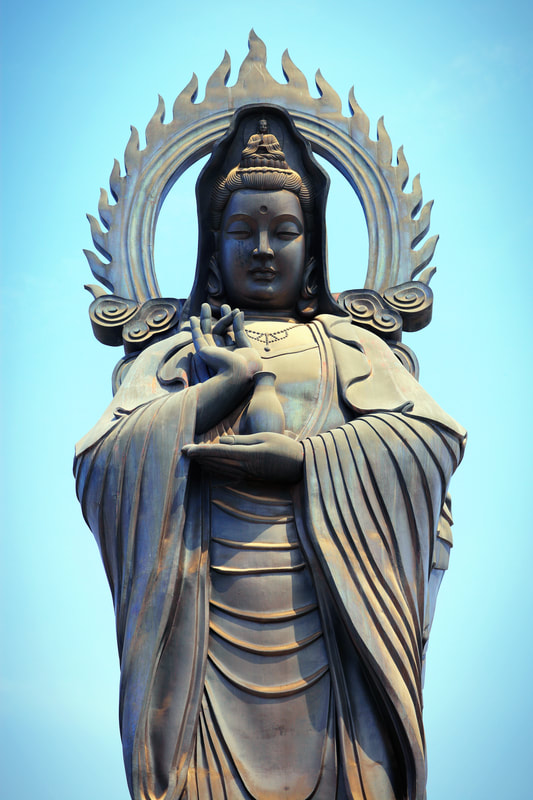
बोधिधित्त Bodhichitta
All scriptures talk about the purity of water, cleanliness, the purity of the mind, purity of the heart and the body. This term in Buddhism is बोधिधित्त Bodhichitta, and in many levels of instruction, in many levels of Buddhism, they teach that to awaken the powers of the heart real wisdom, requires understanding three levels of instruction, which you find in any tradition.
You find that there is an introductory, intermediate, and advanced path. Or in Buddhism: Shravakayana, Mahayana, Tantrayana. Or in Sufism: Sharia, Tariqa, Marifa. Amongst the Freemasons, you have the the apprentices, the journeymen, and the masters. It is all the same. They are the same steps, the same path, but just talked about in different words, different languages. Bodhi is wisdom. It is light. It is perception. It is when you see, and you understand the root of some problem and how to change it. It is enlightenment. It is knowing. Chitta is often translated as “mind.” It is better if we say consciousness, because in our common parlance, mind is intellect, thought, but chitta is really the essence, the seed, the heart. In some translations, Bodhichitta can mean “heart-mind,” “heart-wisdom,” “wisdom-love.” It is that state of being in which we are able to, again, transcend pain, to know how to solve problems. In the introductory level, this Bodhichitta is the altruistic intention to attain enlightenment for the benefit of all beings. It is the joy of saying, "I will serve in my life other people so that they are not suffering anymore," and “to make the effort to change my life to do so.” But intentions are not enough. Action is what is essential. Action is the Heart Doctrine. In Mahayana teachings―maha meaning “great,” yana meaning “vehicle”―it is an elevated state of awareness known as प्रज्ञ Prajna in Sanskrit, which directly perceives emptiness. This is a very beautiful philosophy if you have studied it. Emptiness, no self―no anger, pride, hate. It is clarity. It is not a mere absence. It is presence, but free of condition, free of our defects. It is heaven, and there is even a Sufi initiate who said that “Wherever you are, that is hell, but wherever you aren't, that is heaven.” It does not mean we do not experience it. It means that we transcend this lower self and put an end to the causes of pain. That is the quality of the heart. The heart knows reality from falsehood when it is clarified, especially with the last level of religion: Tantra. In Tantra, obviously in the West, it is the connotation about a relationship. A man and a woman in a marriage can take the most powerful energy that they have in life, the power to create, and by conserving it, transforming it, and elevating it with purity, it awakens the soul. Tantra means “continuum.” It is not just sexual connection. It is continuity of perception empowered by the power of life. It is the ability to see, to be awake, to not lose your presence, to be in that constant movement of consciousness: always watching, always learning, always seeing, always perceiving and knowing. Also, Bodhichitta refers to the seminal fluids of the body, because that fluid is the waters of life, which when transformed and never lost, can be the source of real power, real vitality, real strength. These are the waters of life mentioned in the Bible and is the source of Jesus' injunction: “You must be born again,” because it is a sexual problem. Obviously, there are levels to this. We will just touch on this briefly. In Tibetan, byan-sems, can be translated either “enlightened mind” or “semen,” and that energy can really give power if we know how. 
Heaven Cannot Mix with Hell
The Voice of the Silence emphasizes that with Tantra, purity is fundamental, and this is the great mistake of many westerners who approach Tantra with desire, with ignorance. It is very poorly taught, and actually, most schools that teach about Tantra today teach you how to take the energies of God and to feed desire, to feed lust.
Yes, there are people who awaken powers, abilities, perceptions, but not as an angel, but as a demon, because all religions teach and The Voice of the Silence teaches: desires are the root of pain―ego, pride, attachment, laziness, whatever it may be. The soul must be pure. The soul must be clean, and that is the power of the heart. But that energy depends on how we really use it, and that use determines our life. Think of it. You could have a child. You can create a human being who can change the world. One person can radically alter the fate of history because a man and a woman joined together to create that person. That is an extremely, unbelievable power. It is the power of the universe. It is the power of creation. It is the power of divinity. But there are ways to use the energy that are not taught in public, until now. That energy that can create, instead of a child, it can create a god inside. Two of the names in the Islamic faith for divinity, الودود Al-Wadud: The Loving, and الخالق Al-Khaliq: The Creator, is a reference to that sexual power. For where else do we find the power to create through love but in sex? It is the power of life, which is why the Jews toast, “L’Chaim, to Life!” ― the power of living, the power of creation. But that energy can be misused. The dew drops of heaven, of amrita, can mix with our impurities, and that is the problem. That is why in most of us, our heart is dead, because the heart is not nourished with the waters of life. It is not a fountain that flows inward and upward to the mind, to the heart. It needs energy as a circuit, as tantra, to clean out the mind, to purify it. Before that path is entered, thou must destroy thy lunar body, cleanse thy mind-body and make clean thy heart. Eternal life's pure waters, clear and crystal, with the monsoon tempest's muddy torrents cannot mingle. Heaven's dew-drop glittering in the morn's first sun-beam within the bosom of the lotus, when dropped on earth becomes a piece of clay, behold, the pearl is now a speck of mire. ―The Voice of the Silence Innocence: The End of Desire
I am pretty sure we all can think of moments in our life where maybe because we had innocence or purity. In a moment, we make a wrong decision. We give into maybe anger, desire, lust, and that purity of the soul is lost. It is extinguished. The heart is dead, but the heart could be reawakened with greater force if we cooperate with our inner divinity, with conscience, with the voice of the silence, the voice of divinity.
In our Western culture, we believe that by giving into desire we will be happy. We feel satisfaction for whatever it may be. It is precisely this belief which has made the world a mess, because everyone of every religion fundamentally ignores what the prophets taught: that desire is the source of pain. "Deny thyself, take up your cross, and follow me," said Jesus. Or “Desire is never satiated by feeding it,” according to the Laws of Manu, which is one of the oldest scriptures of Hinduism. The Voice of the Silence emphasizes these same points: Do not believe that lust can ever be killed out if gratified or satiated, for this is an abomination inspired by Mara (illusion, attachment, craving, passion). It Is by feeding vice that it expands and waxes strong, like to the worm that fattens on the blossom's heart. ―The Voice of the Silence
However, the rose of real love can be reawakened.
The rose must re-become the bud born of its parent stem, before the parasite has eaten through its heart and drunk its life sap. ―The Voice of the Silence
Again, the rose is a symbol of real purity, but purity through wisdom, because all of us, by the inevitability of life, have made mistakes, entered our karma in life, our situation, our struggle, and have erred, but that innocence can be reborn. The heart can be inflamed.
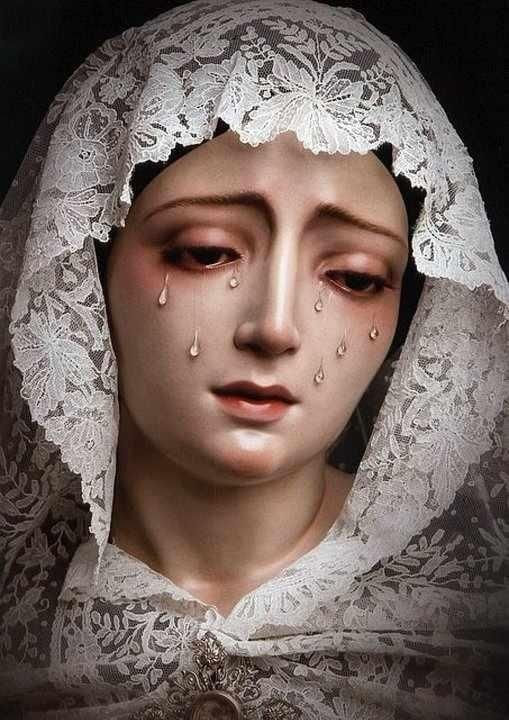
Compassion and Charity: The Seed of Awakening
In Mahayana Buddhism, especially the Heart Doctrine―which is the path of service and charity, but also our spirituality being focused on others, not ourselves―we really discover that as we awaken the heart, we feel the pain of others. We feel their sufferings. We are identified with them, and not attached to our own sense of fear and inadequacy or deficiency or pain. Instead, our spirituality, the Heart Doctrine, becomes working for the benefit of others and that helps us in many practical ways.
It really helps us to get over our own pain. We see that someone in our life is in a lot of suffering, even though we are. Our pain is alleviated when we help others. It is a basic law, the law of Christ: reciprocity; give and receive; sacrifice and be blessed. In this way, as we learn to give, even though it may hurt, there is real peace, because we know we do the right thing. In that way, the mind becomes stable. The heart becomes come strong, and compassion is the guiding force of our will. That is how we enter real serenity in silence. Many people try meditation. They sit down. They close their eyes, and they see that their mind is a mess: thoughts everywhere, associative thinking, images, memories, daydreams, passions, attachments, revenge, vengeful or spiteful images, a big conglomeration of just disturbance, dissonance. The reason why many people fail in meditation is because they do not develop their heart. They do not develop their ethics. In their daily life, they do not understand how they are perpetuating their own pain. But, if we are really observant and acting rightly in our heart, our conscience, in truth, we become like an arhat, which is a term for a meditator―stable and serene, able to deal with intense impressions in life. Maybe someone is yelling at us at our job, or our family members are cursing us out for something. We did not wash the dishes at home. Our spouses are mad at us. Someone gets really upset or angry. But in the end, we are calm. We do not feel bad. We do not feel guilt. We do not feel remorse. Let thy Soul lend its ear to every cry of pain like as the lotus bares its heart to drink the morning sun. 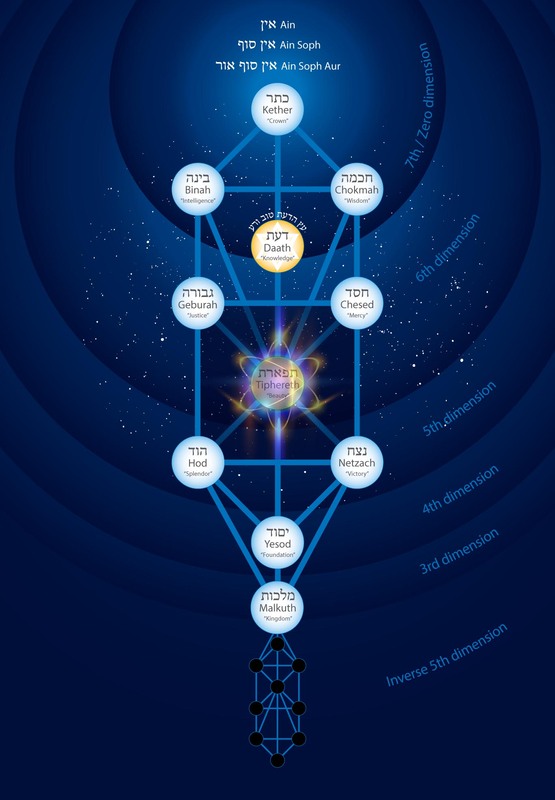
That Vogay tree is this: the Tree of Life, the kabbalah, levels of being, spheres: ten in alignment with three pillars, mapping out the highest divinity to us in terms of our physical experience, our psychology, our divinity. This Vogay tree, this Tree of Life, is born in us when we develop the heart, תפארת Tiphereth in Hebrew, meaning will, “beauty.” If you take this image and transpose it on a person, תפארת Tiphereth is the heart, our willpower, but that will needs to be guided by charity, by love.
It is the seed of freedom from rebirth. It isolates the Arhat (the meditator) both from strife and lust, it leads him through the fields of Being unto the peace and bliss known only in the land of Silence and Non-Being. ―The Voice of the Silence
So, this level of this map depicts levels of nature. In this lower sphere מלכות Malkuth, we have our physical body where we have a very strong sense of self. The higher up you go in levels of matter, energy in nature and perception, the less self you are and the more divinity is, until going even beyond that: the emptiness, the void, the Absolute, the cosmic space, which is real joy and freedom, real compassion.
It is the essence of Buddhism, especially, and even Christianity, because that Christos, that light which maps out this top glyph, emanates from that source (light from darkness, cosmology). So, the point is, charity is the way―service, giving―because the other solution for a lot of people is to develop their spirituality for themselves. 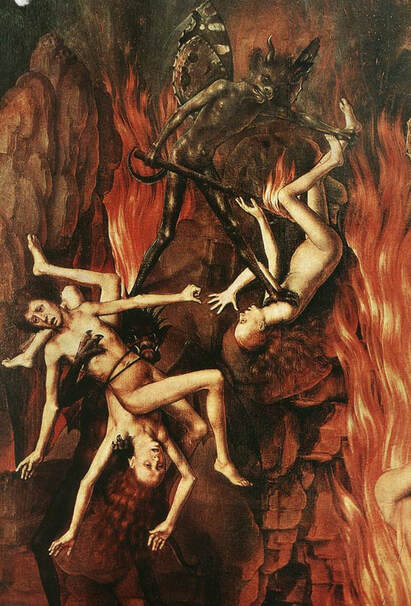
Selfish Liberation
It might seem strange. What does selfish liberation even mean? How can a spiritual person be selfish? There are some people, actually many people, who believe that only they want to liberate themselves and that the weight of real freedom, to go beyond pain, is to just concentrate on oneself―simply to try to understand what one is doing wrong and not bother with the world, and this is wrong.
Obviously, in the beginning, in the incipient levels of the path, we obviously want to change our life in some radical way so that we suffer less. But there becomes a threshold or a point in which we have to decide: are we going to go further? That really depends on whether we are willing to give to others, to sacrifice. Sacrifice is the law of Christ, the law of Buddha, the law of Muhammad, the law of Krishna, the law of Moses. Giving charity does not mean money. It does not really mean material means. It does not really mean food. Those are beautiful things, and they really help, but really from the consciousness of the heart, our Being, the state of love is really what defines us. The Voice of the Silence touches on a lot of things that many authors did talk about, that spirituality is really profound when it is not about us. It is about humanity. Those were at least the explanations of the highest initiates. This scripture emphasizes a few points about some common tendencies amongst spiritual students. If thou art told that to become Arhan thou hast to cease to love all beings ― tell them they lie.
It is a very important thing to understand, because this path is very revolutionary, and it requires foundations. Someone who is not good at home with their partner will have problems, will have conflicts. Those fights and disagreements and hate saturate and spills over into life. In a way, what goes on at home determines many things, even in schools with parents, with children, who are very vulnerable, whose hearts are really awakening and who are not given the education that they need to really be.
There are many people who think that to be spiritual, to follow the Heart Doctrine, means to not be worldly. “Oh, I don't care about money. I don't care about my father or mother. I care about being spiritual!” ― and they abandon their families and life and world, and do not realize that they are causing a lot of pain. Really, their spirituality would be authentic if they learn to take their life and where they are at to be a good person, to be a good husband, to be a good spouse, a good child, a good father, a good mother. This is not really about joining a monastery, although that could be good. We live in very different times. Obviously, it is good to go out on a meditation retreat to be away from the cities to gain some stability of mind, but in this era, we live in a time of cooperation, and because of karma and life and modern living, we have to be in the world. It does not mean that you have to be of it. 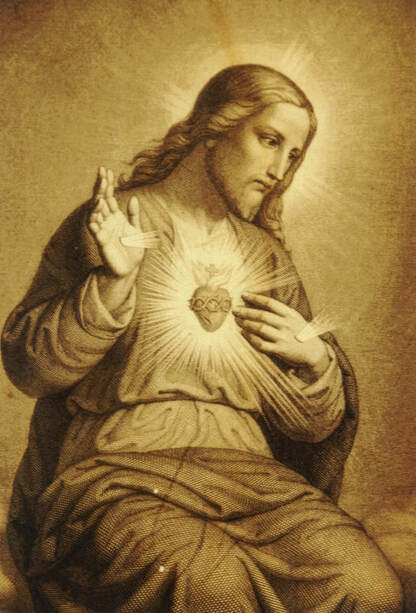
The Illusion of Duality
These Tirthikas mentioned a few things: kind of some common philosophical misconceptions about this Heart Doctrine. They often believe that any action is sinful and that by not acting, they are blissful, meaning, to avoid the world. “Go live out in the mountains. Abandon the world.” Sounds pleasing. Walden was very good in terms of getting out in nature and just being away from the cities. It is good for a time, but it is not enough.
Really, the quality of a prophet is one to maintain that high ethical ideal and live it, but also show it to others, to practice it. In this way, while they are in the world, they do not identify so much with the craziness of the world, in a sense, because life is impermanent. As intense as certain situations in life may be in modern living, these things will pass. They are not permanent. With that wisdom of emptiness that things change and are always fluctuating, one has the ability to let go, but also to know how to act clearly. That is the basic fundamental philosophy of Mahayana Buddhism and Bodhichitta: to understand that nothing is permanent. But at the same time, situations need to be changed and can be produced for the benefit of others. If thou art taught that sin is born of action and bliss of absolute inaction, then tell them that they err. Non-permanence of human action; deliverance of mind from the thraldom by the cessation of sins and faults, are not for “Deva Egos.” Thus saith the “Doctrine of the Heart.” ―The Voice of the Silence
This non-permanence of human action, the fact that things always change and that the mind can be freed from suffering and sins and faults, is not for ego, defects, vices, and errors. It is for the soul, the consciousness, the heart. So, it is a very interesting distinction, right? I mean, when pain ceases, when we get rid of anger, not repressing or hiding it or feeding it, but observing and studying it and disintegrating it and freeing love, that is really the transformation of the heart, the soul. That is the embodiment of the real. In that state, we realize that those former ways of being were illusory or a dream, false.
The Dharma of the “Eye” is the embodiment of the external, and the non-existing. ―The Voice of the Silence
…because these appearances are superficial. They change. They pass, like a wave in the ocean, like sand and foam, like a mirage.
The Dharma of the “Heart” is the embodiment of Bodhi, the Permanent and Everlasting. ―The Voice of the Silence
But to really know this requires experience. Knowing what in us is really in that state, that is very stable and secure and divine, without attachment, is everlasting and real. But obviously, we have to work, to be patient with it.
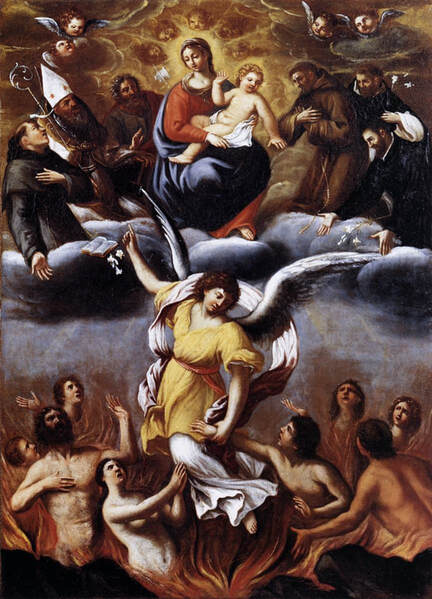
Inner Sacrifice on the Path of Spiritual Birth
The Voice of the Silence builds on a few other ideas in relation to the higher stages of the Heart Doctrine. We mentioned a few quotes about lunar bodies, right? You heard that line. There is an interesting teaching in Theosophy or by Blavatsky and also Samael Aun Weor, where they talk about the way that we inhabit our dreams. Just as we inhabit our physical body in the physical world, likewise in the dream worlds, we have a body: a dream body, an astral body.
But for most of us, it is not authentic, not spiritual. It is more of a lunar body, meaning, we are born with it by nature. We acquire it so that we can live in those dimensions when we sleep physically, and then we return to our body when we wake. They belong to mechanical nature. It is lunar because it belongs to a type of mechanicity. It was not intentionally created by us, not voluntary. There is another type of body that is something that we need to create in this Heart Doctrine so that, if we wish to go to higher states, more altered or divine states of consciousness, we create what are known as solar bodies, the soul, the Sun, the power of Christ. So again, talking about that creative energy, which is the power of life, that energy can create bodies that belong to higher levels of nature, divinity. They call them solar bodies. They are vessels or vehicles in which Christ can enter, our own inner divinity, so that we become fully developed. Those vestures are called, in terms of higher bodies, you can say at the top of the Tree of Life: Nirmanakaya, Sambhogakaya, Dharmakaya. This is Buddhism, or the essence of Tantra. In the process of sacrificing ourselves and being better people for our communities, we also learn to work with this creative energy so that we can give birth to higher states of being. If thou would'st reap sweet peace and rest, Disciple, sow with the seeds of merit the fields of future harvests. Accept the woes of birth.
These are the wedding garments of the soul mentioned in the New Testament. This top trinity is precisely those three higher bodies, which relate to the highest divinity: Dharmakaya, Sambhogakaya, Nirmanakaya: כתר Kether, חכמה Chokmah, בינה Binah. So different traditions teach the same thing.
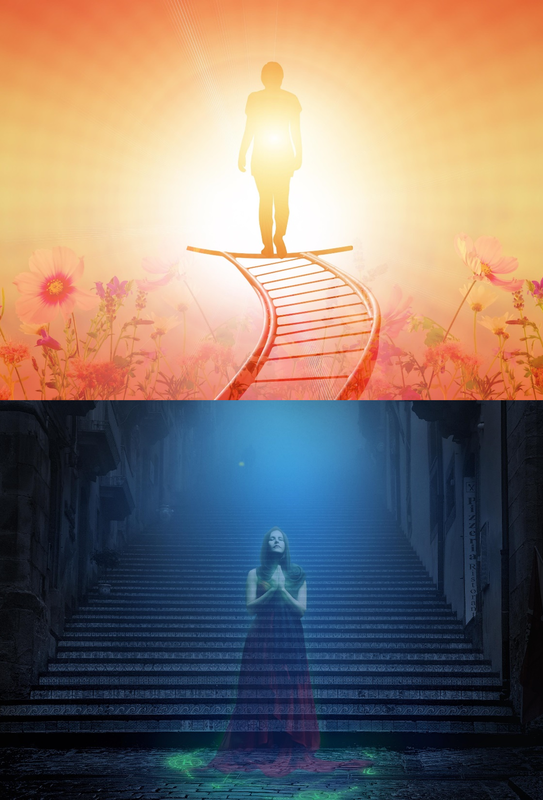
What Should Be Our Spiritual Priority?
But the reality is creating solar bodies is not enough. Obviously, being born again is not enough. There needs to be compassion.
It is a strange thing. Why is it that if we create these higher vehicles of God, that it is not enough, to be born spiritually? Obviously in life, it is not enough just to be born. We have to get educated. We go to school. We learn from our parents. We learn from our families. That knowledge of the Heart Doctrine is really what informs our understanding of how to use those vehicles in the best way, because in that development, we obviously have imperfections and defects as we gradually purify, right? Bodhichitta is fundamental, that love for others. That it is the guiding force that drives our spiritual work, because any amount of attachment or a craving can be an obstacle. This is why Samael Aun Weor stated in The Gnostic Bible: The Pistis Sophia Unveiled: The one who does not possess the Bodhichitta, even when he has created the superior existential bodies of the being, is still unconscious and absurd. ―Samael Aun Weor, The Gnostic Bible: The Pistis Sophia Unveiled
So, lunar body below, solar body above. Obviously, having those vehicles, again, is not enough. I am sure you have all heard of mythologies in which the gods are fighting. Those are beings of these higher realms who have those vehicles, have their foot up in that level of the kingdoms of nature, but they still have pride, anger, resentment, and so, they struggle with each other.
Bodhichitta is beyond that. It is beyond just creating bodies. It is the selflessness of the higher worlds. 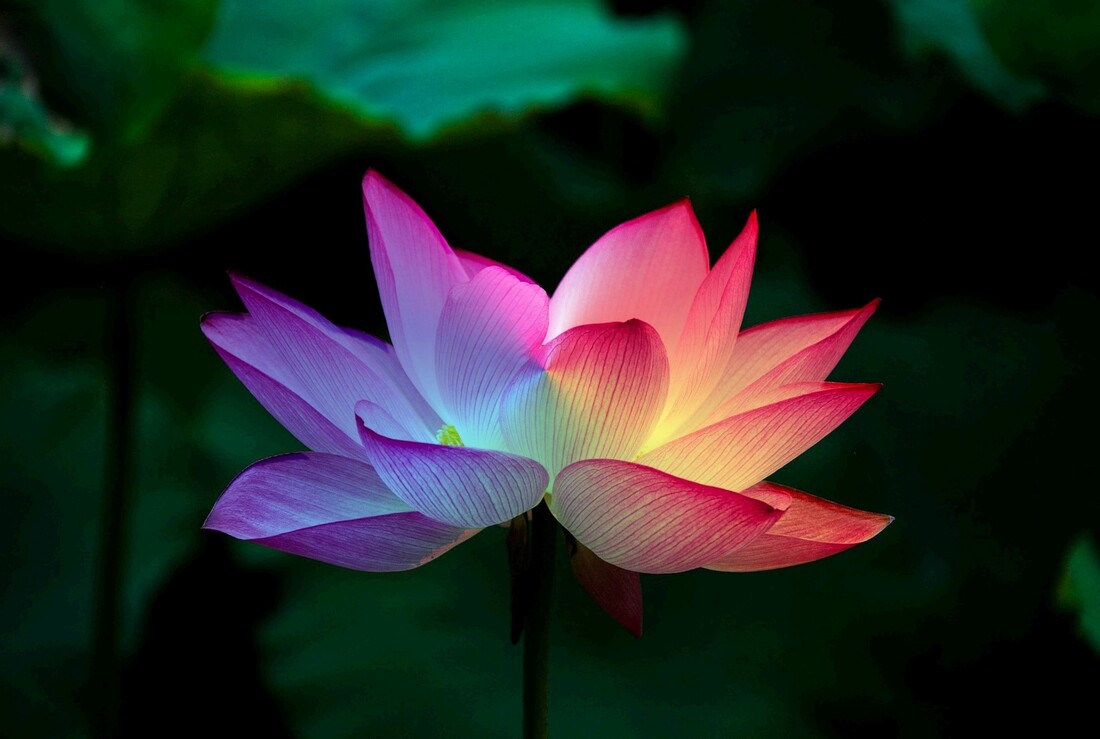
Every Conscious Effort Counts
The Heart Doctrine can seem very intimidating because it involves a lot. It is very overwhelming, but the reality is that whatever we can do now, sets the stage for later.
Whether or not we believe in reincarnation or multiple births is one thing, but the Heart Doctrine teaches what we experience. It is not a theory. Personally, I know from my experiences and dreams and visions that I was in certain places of the world past, certain cultures, which explains my affinity for certain religions. So, it is not a theory for me. It is the Heart Doctrine. But everything we do will set the stage for future existences. It may be that in this life we are not capable of being like Jesus or Padmasambhava or Buddha, then we can do what we can, and that is enough. The pace depends on us, and whether the strength of impulse that we have and will and the inspiration. Yet, if the “Doctrine of the Heart” is too high-winged for thee. It thou need'st help thyself and fearest to offer help to others ― then thou of timid heart, be warned in time: remain content with the “Eye Doctrine” of the Law. Hope still. For if the “Secret Path” is unattainable this “day,” it is within thy reach “to-morrow.” Learn that no efforts, not the smallest ― whether in right or wrong direction ― can vanish from the world of causes (which is basically תפארת Tiphereth the world of causal nature, cause and effect. The world of will.) E'en wasted smoke remains not traceless. “A harsh word uttered in past lives, is not destroyed but ever comes again.” The pepper plant will not give birth to roses, nor the sweet jessamine's silver star to thorn or thistle turn. ―The Voice of the Silence 
Cause and Effect is Certain
This is because karma is certain. Cause and effect are a reality, not only what we do physically, but what think, what we feel, and what we desire. We see this even in dreams, and most times we are unconscious. We are not aware that we are dreaming, which is driven by our desires and impulses to satisfy whatever. Still, it is cause and effect, but in different levels of nature, within הוד Hod, the astral world, the dream world, because why else would we believe it to be true in the moment, even though we wake up later and say, “It was just a dream”? Why did we not believe that in the moment when we were dreaming? ― because there is a certain level of matter, energy, and perception there. This also applies to our thinking, our emotions, and our state of being, because these are real.
So, the thing to think about too is that every good deed counts. Thou canst create this “day” thy chances for thy “morrow.” In the “Great Journey,” causes sown each hour bear each its harvest of effects, for rigid Justice rules the World. With mighty sweep of never erring action, it brings to mortals lives of weal or woe, the Karmic progeny of all our former thoughts and deeds. ―The Voice of the Silence 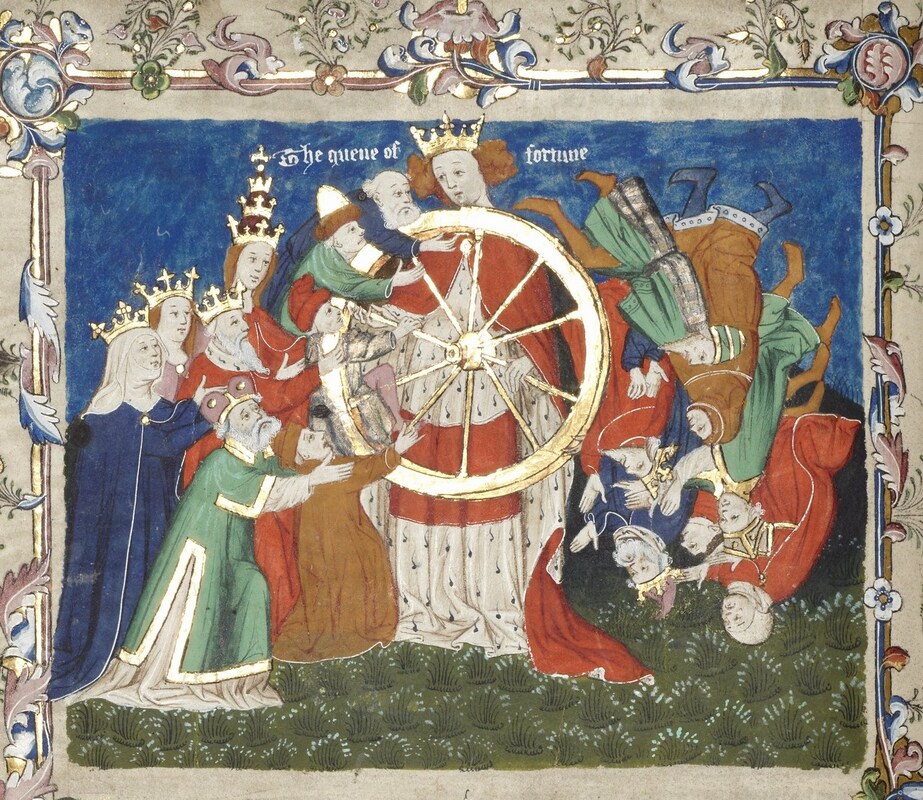
Acceptance and Aspiration
In this way, we should learn to accept our situation in life.
Obviously, we always want to improve, to aspire, to change. But contentment is a quality that really helps us to develop spiritually. Accepting what we have and being grateful for what we do have, so that by willingly bearing this karmic sorrow, that we heard in Carmina Burana, we can pay it. In a sense, we either pay with pain or we pay with negotiations, with the divine law, with the heart. We prove with our actions and our way of being how to resolve these issues. But sometimes we pay with pain, and it is inevitable. When it is over, it is good. It is done―no more. This teaches us patience, patience of the the heart, which is certain about its fate and knows that it is being guided by divinity. This is not a belief system. It is from experience. To have faith is to know. Take then as much as merit hath in store for thee, O thou of patient heart. Be of good cheer and rest content with fate. Such is thy Karma, the Karma of the cycle of thy births, the destiny of those, who, in their pain and sorrow, are born along with thee, rejoice and weep from life to life, chained to thy previous actions. ―The Voice of the Silence
So, this might seem a little bit fatalistic, right? That is the common idea about the wheel of fortune, that it just happens to you and that you just suffer, and you just go along with the flow. That tends to be the case for most people, because they are not willing to look at themselves, at what what is perpetuating that cycle. In Buddhist terms, Nirvana means “cessation,” to cut through cycling, to cut through Samsara, “repetition.” That happens in our life, moment by moment, in the decisions that we make and being awake in the heart, so that we do not repeat certain things, and we can originate new circumstances. That sets a new chain of events.
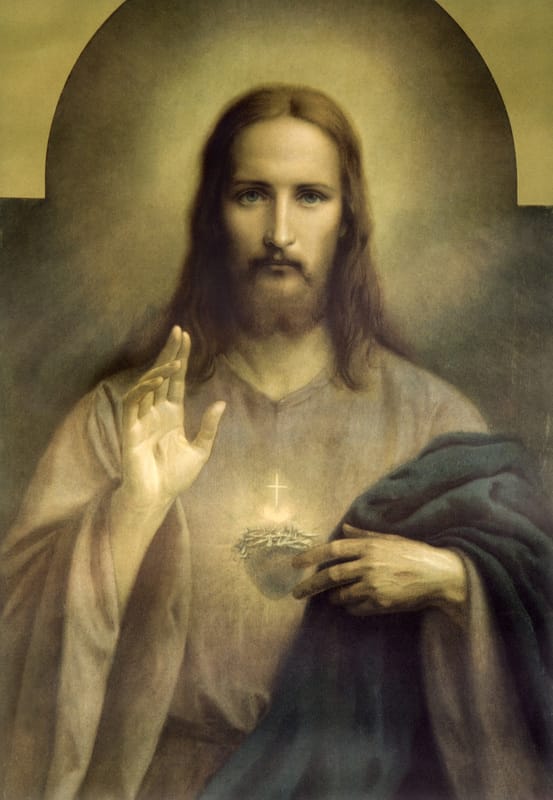
Awaken the Heart and Strive in the Spiritual Path
In this way, we learn to strive.
The fundamental axiom of religion is “Kill desire. Kill anger. Kill pride. Kill lust,” because it is the enemy. It is the unbeliever mentioned in the Qur’an, the infidels, which is not anyone outside our faith, but really, pride that does not believe in helping others, love that does not believe in serving God, because in a moment, as much as we love our traditions, when we have anger, we do not believe in God. We become an infidel, an unbeliever, and cause real havoc and pain. Kill out desire, but if thou killest it take heed lest from the dead should again arise.
Some people have spiritual ambition. We all do. We want to hear about these things, and we want to go to Nirvana and go to the highest heaven, and “I am going to make it to the end! I am so excited!” ― and then the reality hits: it is not easy.
Even the ambition has to die―to accept reality. Desire nothing. Chafe not at Karma, nor at Nature's changeless laws. But struggle only with the personal, the transitory, the evanescent, and the perishable. ―The Voice of the Silence
By desiring nothing, it does not mean don't enjoy life. The soul can enjoy life. It does not mean we become dead, such as dysphoric or zombie-like. It means that we are vivid and lucid in the heart, experiencing a rainfall without our labels or mind trying to mar the reality.
“Chafe not at Karma,” because cause and effect is certain. Certain things happen to us that may be unjust or painful. It is important to get at the root. Meditate why it happened. Find out, and “struggle with the personal, the transitory, the evanescent, and the perishable,” because really, all of our defects are that. They are not eternal. Conclusion
So, the Heart Doctrine is about personal spiritual experience, but what we outlined today was to talk about some principles that relate to many aspects of the path, because all of it is governed by the heart. Samael Aun Weor said in The Perfect Matrimony that “initiation is your own life, intensely lived, with rectitude and love,” with our heart.
Do you have any questions? Questions and Answers
Question: So, you have this slide selfish liberation, which actually was kind of a theme going through what Blavatsky's written here in this section. You said something like, some people believe that they can just work on themselves, not really worry so much about the world, but just focus on fixing what they are doing wrong, and they can reach liberation, and you said that that is wrong. I was always under the impression that, although that is kind of an introductory level of liberation, that that technique or that method actually could help a soul to reach some degree of liberation. Now, maybe that is more Shravakayana and not so much Tantrayana, but is it true that that really is wrong, and you can't reach liberation if you are just worrying about you, doing some good deeds, but not getting caught up in the world as much?
Instructor: I will clarify in terms of relativity. In terms of the higher path, it is wrong to be selfish. But obviously in the beginning, we start where we are at. In most cases, we need to fix ourselves first. Maybe take a year or two years, three years, however long to do what we have to do, and then once we have that stability, we can try to sacrifice in whatever way we can. Relative. Obviously, what is good for one person may be bad for another in the sense of life choices. But in terms of the prophets, obviously, their whole focus is on us. Beginners, we work with ourselves. Mahayana: intermediate, we try to help other people. Tantrayana, not even an inkling of self. That is how rare it is. But yeah, we have to start with where we are at. Question: So, some of these levels of being take lifetimes to develop. Is it possible that someone would spend a whole lifetime just as a monk, just working on themselves, getting separated from the world to kind of just build a foundation there and then maybe in a future lifetime they might keep going? Instructor: Yes. Question: It could still be helpful for us, but we have to kind of gauge where we are at, spiritually. How could we know if that is what we need or if we need to work with these higher teachings? Instructor: We get that answer in meditation, in our conscience. Personally, I would love to go live in a monastery. We do retreats with Glorian Publishing. We go out to Padma Samya Ling. In a sense, it is the best week and also the worst week of my life every year, because you get so much spiritual strength from the community and being out in nature with no cell phones, no technology, that you really get to settle down. It is also the worst week because you see clearly what you need to work on, and it could be tough. But there are many monks, people I have known who have gone to a monastery and they need it, and they choose, and they were guided to. Only divinity can decide. But, yeah, we have to learn to follow His will, not ours. Question: Related to the gymnasium of life, I was trying to understand that when you work on yourself, you have to stay away from the world because the world contaminates you, but at the same time we have to be in the world because that helps us to refine ourselves. So, it is very hard to put those things together and make them work. So, that has to do with that gymnasium of life? Instructor: Yes, and Samael Aun Weor mentions that for most of us, we need a gymnasium because we are at a point that we have so many defects and such heavy karma that this is probably one of our last opportunities. Divinity is exerting a lot of energy, which you see in Carmina Burana. Literally, the intensity of the music is like, literally, that karma hitting the soul, and the soul has the choice: take advantage of the gymnasium, or crumble. 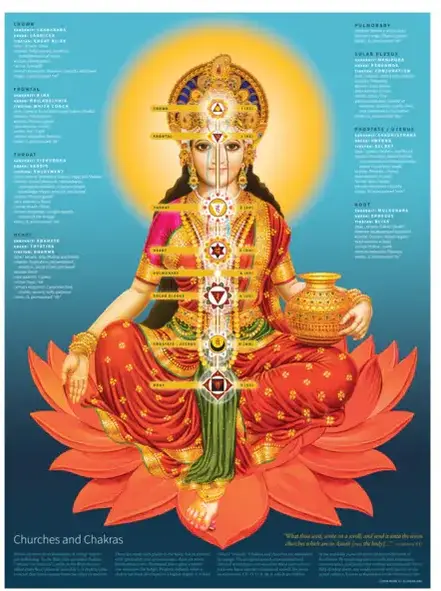
There is a line too that at the end of the first piece that is very optimistic, actually, despite the intensity, the severity the music. It says something like “pluck the vibrating string.” It is a weird line in the middle of a chorus of melancholy and pain. That string or that instrument is precisely in that image of the Divine Mother [from Glorian Publishing, available as a poster via their online store]: the chakras, the seven notes. In a way, in the midst of our pain, we need to endure it and learn to play music, which is what Carl Orff was doing. It is such a powerful, severe piece, but he obviously felt a lot of passion and joy making it because he needed to to talk about the severity of life and the gymnasium we need to face, so that we pay that Karma, but also play the music of the soul, despite it.
Seven strings, seven notes, seven chakras, right? That helps. We learn to vibrate with a higher law. Most of us, we are at the point where this might be the end, so it is all being thrown at us at once. So, we need the gymnasium, and divinity is the one who is organizing our life. So, if we need to be in that gymnasium, it is going to give us what we need, and if we need to be in the monastery, however long, He decides that. The circumstances will line up and the heart will tell, especially when we are meditating, and we get that insight. Personally for me, every time I ask for a break, I do not get one. When I need it, it comes and it is like, “Okay, I accept.” We take what we can and make music despite the the agony. That is the power of that piece, especially. Carmina Burana: कर्म Karma, Carmen [like the Virgin of Carmen, the Divine Mother], cause and effect, कर्मन् Karman in Sanskrit. Urana, Uranus, Ur, meaning “light,” Anas, meaning “water” in Chaldean. You make light, or you overcome karma by developing light and by working with the water of Bodhichitta. "Fate strikes down the strong man. Everyone weep with me!” Then there's that trumpet at the end of the first piece of O Fortuna, the trumpet, which is the trumpet of resurrection according to the Qur’an and the scriptures. That is how we find joy, by paying it. But yeah, divinity decides. Question: Are those levels you mentioned, are they related to what the teacher Samael says about the Three Mountains and how we we can spend lives in one mountain and then develop to the other, but the last one is the one when we sacrifice everything for humanity? 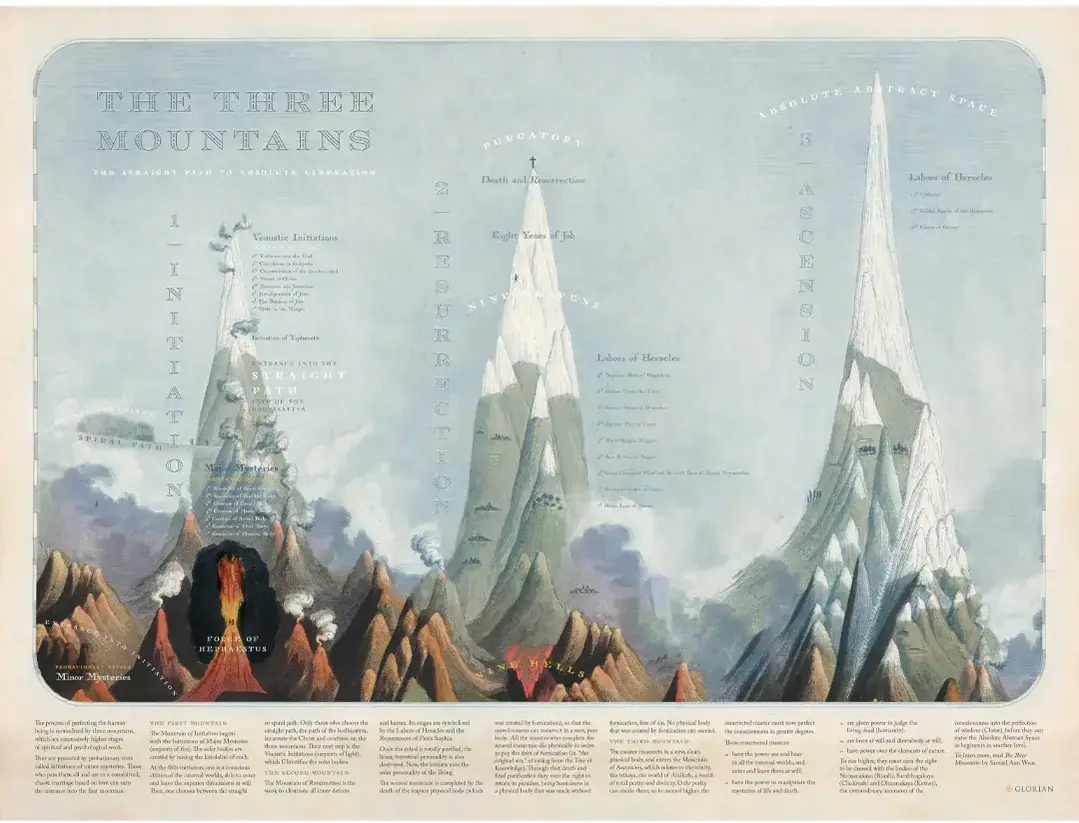
Instructor: Yeah, levels, right? I mean, in a sense, you have the Three Mountains poster, right? Glorian has this available. Three levels of initiation, or better said, three levels of spiritual work. You can even categorize them under introductory, intermediate, and advanced: Shravakayana, Mahayana, Tantrayana.
The First Mountain is the beginning. It is called Initiation. It is the path in which we first descend and face ourselves in our own hell realms. We enter what is called Minor Mysteries, nine. It is a probationary path. It is like divinity says, “Okay, you want to enter the path? Let's test you.” As the Qur’an says, truly Allah tests you to see who among you is righteous (29:2-3). This is precisely this, we get the karma and the ordeals. It happens and then we find the teaching and we suddenly face a lot of problems. Question: The dark night of the soul? Instructor: In a sense, it can be, but usually I would say the dark night of the soul occurs even later on when you have some level of development and suddenly divinity says, “Okay, here is a period in which We have to withdraw from your presence so that you face the loneliness.” Sometimes the dark night of the soul, as depicted by Beethoven's Moonlight Sonata, you know when real heavy ordeals hit. That is usually for masters, especially.
Beethoven was going deaf at that time. So, you hear his sorrow in his music that he wants to hear this prophetic work, but he cannot. It happens in many stages of the path.
But initiation is when you enter what is called the Major Mysteries. The Minor Mysteries can be performed by single persons (introductory level). But married couples can go through them very quickly and enter the Major Mysteries, which there are five major ones, which are talked about in a book called The Three Mountains. In a sense, this is all introductory in terms of scale or resolution, because for us, we have our own relative degree of introductory knowledge and intermediate knowledge, advanced knowledge, but there are higher stages of initiation. 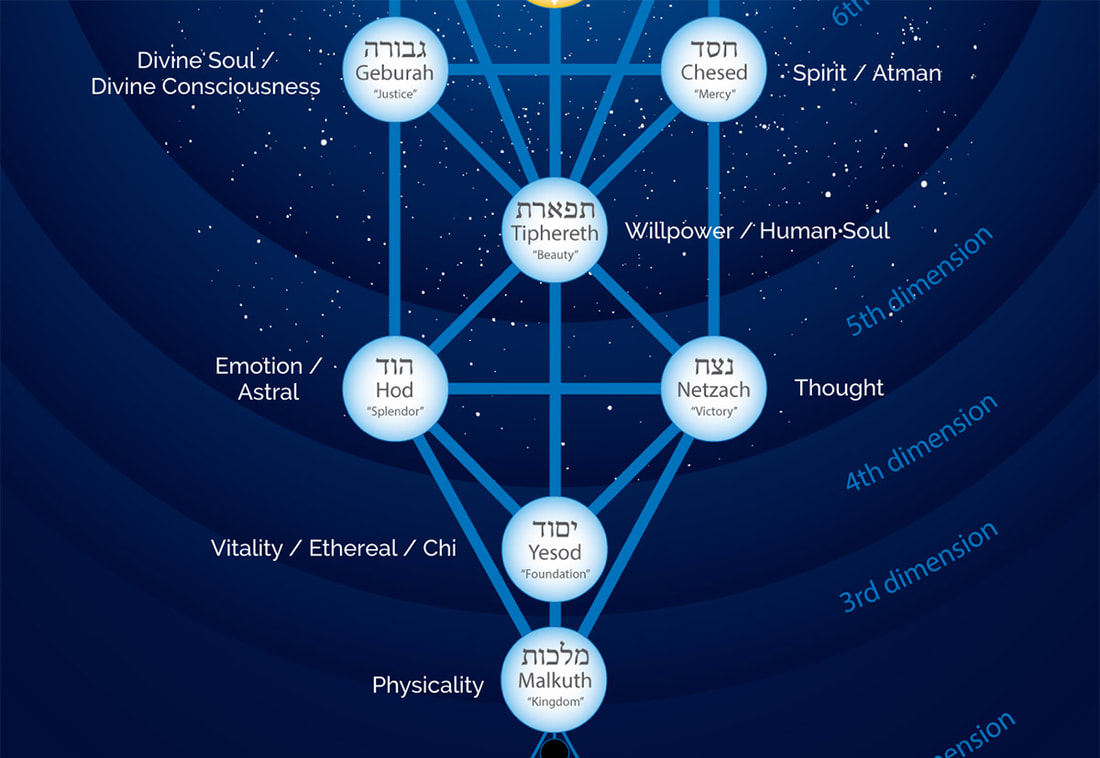
There is a decision that the initiate has to make after really working with these lower five spheres of the Tree of Life, creating the solar bodies of this lower diagram, raising what is called Kundalini of the body of מלכות Malkuth, the physical body; יסוד Yesod, the vital body; הוד Hod the astral body; נצח Netzach, the mental body; תפארת Tiphereth, the causal body. We create what is known as the wedding garment of the soul, and in a sense, at that point, the initiate has to make a decision:
Renounce everything and incarnate Christ, the light, or stay in Nirvana and take a spiral path, which is the selfish path of liberation, the path of the selfish gods, because they enjoy that level of nature. They do not return, and they stay in bliss. But an initiate who, at that point, decides to sacrifice everything and wants to return to the world, to give to humanity, to continue serving, they have the special blessing to receive what is known as the Venustic Initiation, the incarnation of Christ. They become what is known as a Bodhisattva like Jesus, Buddha. They incarnate the light. Then at that point, they enter higher development on the First Mountain, raising not only serpents of fire (Kundalini) up these lower bodies, but serpents of light. Fire and light―Ur-Anas in a sense. The Second Mountain is very elevated. The initiate has to learn to die all the ego. Imperfection and desire must be eliminated. This is the intermediate path, in a sense, because it is still very difficult. It is probably one of the most difficult parts of the work, but that is a level of work in which the soul is dying to every detail of defect. No imperfection can remain. 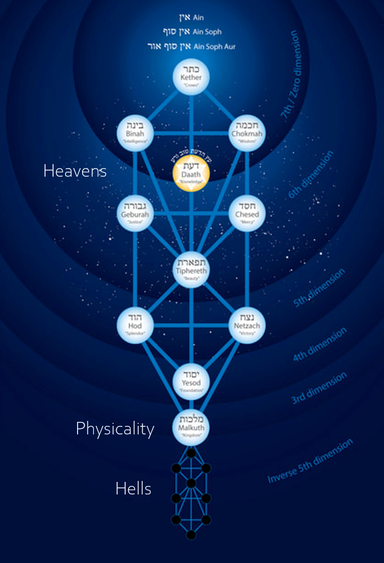
As they descend down hell realms―you can kind of see it in this glyph too, nine lower spheres mentioned by Dante, eliminating defects relating to the first sphere of hell―they then go up to the first heaven. Second sphere of hell, they go up to the second heaven, and likewise, down and up, down and up. Further down, further higher up, because every initiation is preceded by humiliation. It is challenging because the work of initiation is to eliminate all that is imperfect.
Obviously, at that point, when the ego is fully dead, the initiate prepares for what is known as resurrection, because there has to be no fault in the soul at all. That is a level of, say, Jesus, before he died. No ego left. He was crucified, but he had no ego on the cross. Dead. No defect, in a sense of a spiritual psychological state. No anger, no pride, no fear, no lust. Perfect, to a degree. But in the end, his physical body died, and he chose to resurrect. That is when the soul gets absorbed by the Holy Spirit (בינה Binah). Then there is a Third Mountain, which is for resurrected masters, which personally, I do not even understand because, I mean, I have had certain experiences, I have seen parts of this, but it is still very elevated. Even for resurrected masters, they have to go higher, from Nirmanakaya, Sambhogakaya, Dharmakaya, and even beyond. At that point, they are fulfilling the final labors in which they return to the אין סוף Ain Soph in kabbalah, which is the origin, the star of heaven, the star of Bethlehem, the synthesis of being. It is like a star that radiates light in the void, but is the real happiness of Bodhichitta, of Being. That star shone on the birth of Christ with the three magi. 
Three magi, depicting levels of work. You have a black king, a yellow king, and a white king. Those are symbols relating to alchemy, the alchemical tradition. Colors related to purification of the soul, levels. I recommend, if you are interested, obviously, for you to study The Three Mountains, but also, we have this poster available from Glorian Publishing. It maps out all the steps.
But obviously these levels are very elevated. A lot of us struggle even with just Minor Mysteries and getting our foot in the door of the Major Mysteries. Most initiates, if they get to this point, the Fifth Initiation of Major Mysteries, the causal body, create that vehicle, are tired. I had one instructor, he is from Glorian and he said that most of them weep tears of blood to get to that point, and then when they are given the choice, “You want to go to the spiral path, stay in Nirvana, enjoy your time, be peaceful up here, or take the direct path of Jesus? Renounce heaven, renounce hell… go beyond, in which you pay everything. You will pay all your karma.” In a sense like in Carmina Burana, that initiate is precisely that strong man or the strong: “Fate strikes down the strong. Let everyone weep with me!” That is the Mountain of Resurrection, because that pain is very intense. Most of them say, “I will take the spiral path.” It is not bad. It is joyful. It is peaceful. It is a good vacation. But the straight path is something else, very challenging. The next lecture we will give next week, we will talk about this in more detail, especially in The Voice of the Silence [Liberation and Renunciation]. I know it is a lot. Question: Can you expand on the law of the divine? Instructor: Sure, karma. Karma is divine. There are levels of karma too. Karma means “cause and effect.” What we do has consequences. In a sense, there are five aspects of the divine law:
Certainty, that cause, and effect, is certain. It will always happen in whatever we do. Our deeds always have a consequence. Magnification, the effect is always greater than the cause. Think of it like, you see a politician give a speech, and then people get mad because that person is speaking with a lot of hate, or any person. It is like putting a stone in the water, a lake. You throw the stone, the lake ripples, it spreads. The initial action was small, but it had a big consequence (magnification). The effect is always greater than the cause. Permanence, you cannot take back the actions that you have committed. You cannot take back a bullet. It always happens. My mind is escaping me in terms of the fourth, but there are five levels. [Compensation: you cannot receive the consequences of an action you did not perform]. But the more important one is transcendence, meaning, like a superior action overcomes an inferior one, and that is really where divine law comes into play―divine law being forgiveness. In a sense, there is karma for everybody: terrestrial people, everyone, all of us, laypeople, beginners. But there is also karma of the gods called Katancia, which is something very high. Question: Isn't it also dependent on our soul contract? Instructor: Yes, in a sense, initiation is a contract. In the beginning of the Minor Mysteries, you may have the experience in the internal worlds of being confronted by your own Being. In a vision, they say, “Do you want this?” and will show you what is ahead. In a way, divinity, the divine law, is saying, “Do you wish to move ahead? Are you going to sign this?“ Because if you do not pay up, there are worse consequences. You are more responsible. 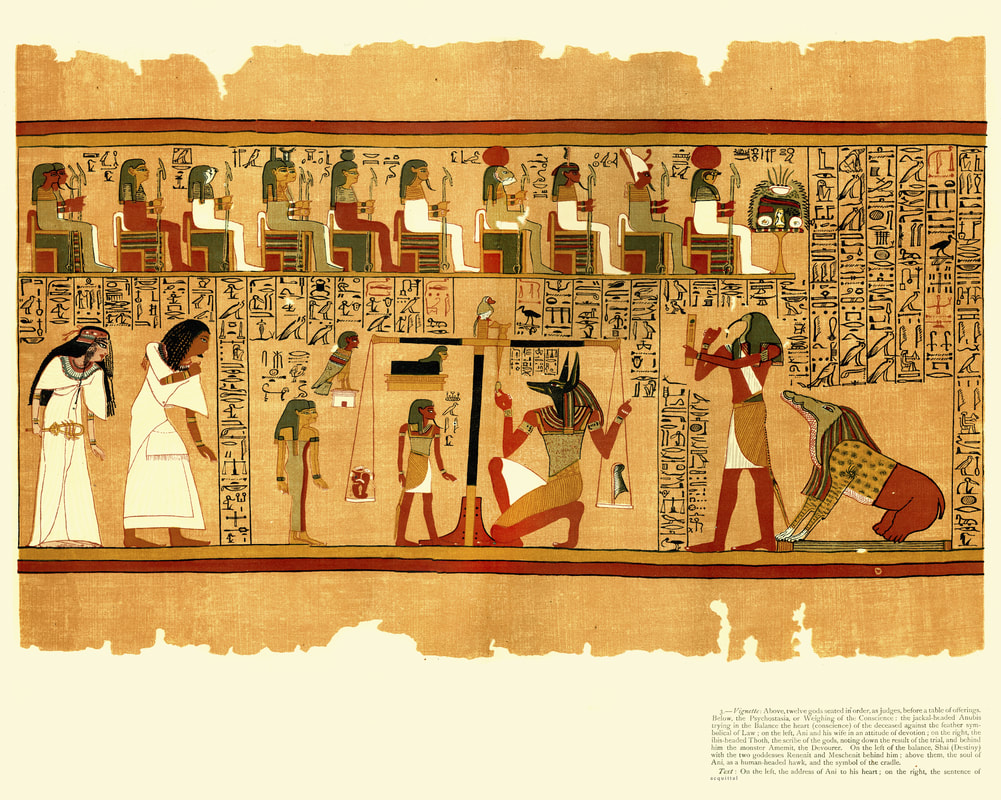
In a sense, that is Katancia, the law of initiates. The law of common people you can see in Egyptian mythology with Anubis. He has the jackal mask. He is judging the dead and the living, their souls of the defunct with a scale. He measures their heart and a feather, the equilibrium of their mind and their Bodhichitta, their Heart Doctrine or their heart. Anubis is a real being. He judges in the internal worlds the fate of humanity. He is an impartial judge. He has a mask to show that he is a divine representative, the blind justice, which is not arbitrariness, but impartiality.
But there is a higher law. In dreams, if you dream of wolves or jackals, it is a symbol of karma, the wolf of the law, the jackal (Anubis). If you dream of a lion, that is Judah, Katancia. The lion is the symbol of divine majesty, the might of God, Judea, יהשוה Yeshua, Savior, the Christ, יהודה Yehudah: י Iod, ה Hei, ו Vav, ד Daleth, ה Hei. Same letters as יהוה Jehovah, י Iod-הוה Havah, but with ד Daleth because ד Daleth in Hebrew, if you look at the Hebrew letters, they all represent principles. If you add in the sacred four-letter name of God, י Iod, ה Hei, ו Vau, ה Hei, יהוה Jehovah, י Iod-הוה Havah, you add ד Daleth, you spell יהודה Yehudah. ד Daleth refers to a “door,” and that is a door, once you cross, you can not go back. You are committed. That door is דעת Da’ath, knowledge, alchemy, the work with the creative energy, because when you start working with that, יהודה Yehudah, יהוה Jehovah, Judea, the higher law of divinity says, “You entered that door. You cannot go back. You are committed.” To dream of a lion means, you may have entered initiation in the past, but you fell, and the law, the lion, if it is calm, the law says, “We are on your side.” But if it roars, walk on eggshells―very severe―and that divine law has levels. Obviously for us in the beginning, we make mistakes. We fumble around. We are in the dark. Our mistakes are easily forgiven. But when there is more knowledge or responsibility, following divine law, that is higher, action and service of spirit, there are greater consequences, because the effects are always greater than the cause, according to Tsong Khapa in Tibetan Buddhism. That divine law is our own Being because He is a law in ourselves, the law of conscience, of what is right and what is wrong, the heart. Question: Does that develop virtue? Instructor: Yes, and those virtues are really developed when we eliminate defects, because the defects trap the virtue. You have the seven deadly sins in Christianity/Catholicism. The opposite is the virtue, but the virtues trapped in anger, like love is trapped in anger, chastity is trapped in lust, and if we eliminate the defects, we free the genie from the lamp. You break the bottle. You free the genie forever, and that is how by integrating consciousness little by little in the spiritual work, we become really virtuous. We become like Moses, a magician. Really, Moses could all these things because his power came from God, but he can only do that by getting rid of his self, so that the virtues could be spontaneous. Then also, by enacting those virtues when they are born, they get stronger. They become more powerful. 
The particular beauty of this scripture is that it is practical. It teaches a very profound mystical science of acquiring information for ourselves, not merely with the senses of our physical experience, but with the consciousness. Some people have called that consciousness soul: the ability to perceive and to understand.
In our last lecture, we talked about the stages of meditation, the principles outlined such as in the Yoga Sutras of Patanjali, which are also correlated within Buddhism, as well as Blavatsky's scriptures, or her translation of it. More importantly, what we want to understand in this talk today is the spiritual path known as initiation. It is a path in which by meditating, the consciousness develops its true potential and is able to understand mysteries beyond the senses, beyond physical experience, and beyond our common daily life. 
The name of this scripture is very compelling: The Voice of the Silence, the voice in the emptiness. In a state of serenity, we can perceive realities that are beyond mere physical sensation, but relate to higher states of being: divine realities, which we have been outlining and explaining throughout this course, especially in relation to this glyph of the Kabbalah: a map of being from more dense states of matter, energy, and perception, to the most refined and subtle and spiritual (above): the divine. This is not verticality in space. It is levels of being, levels experience.
Blavatsky titled this scripture, The Voice of the Silence, which is an oxymoron, a paradox. How is it that one can perceive beyond the senses or hear a voice within the silence of the mind? How can a voice be still? These are senses that are not merely physical, but she elaborates and what we will elaborate today is this extended metaphor about sound. These represent levels of being, seven sounds, seven degrees of spiritual development mapped by these lower seven spheres of this glyph of this Jewish mystical tradition. So, we will talk about what this all means practically for us. Purity vs. Impurity
In the path of initiation, which is the entrance into a higher state of being, an improved way of life, we learn to confront ourselves. What in our mind, in our daily life, is the progenitor of suffering? So that by understanding those causes, by looking and perceiving them, more importantly understanding them, we learn to change.
We study ourselves as self, which truly, in its full potential, is a dynamic thing. It is a range, but we must understand a distinct difference in the self of matter and the self of spirit. The self of matter is everything we are familiar with now: pride, anger, fear, resentment, impatience, greed, ambition, egotism―the self that wants to acquire, the desire for more, that is never happy. When getting our goal, we want more. It is an insatiable thirst, and really, according to Buddhism, desire is the root of all pain, this craving, this grasping at some type of external phenomenon or identity. But also, aversion: wanting to run away, and not only craving and aversion, but ignorance―not merely lacking book knowledge, but lacking real understanding of why we suffer and what we can do to change. 
We include an image here of St. George fighting a dragon because this is the dynamic that any practical meditator experiences for themselves, where you have the divine, spiritual, and pure consciousness which must go against the impurity of the mind―anger, as I said―ego, defects, and vices. The beginning of initiation and the purpose of initiation, the spiritual path itself, is understanding this dynamic and this difference, when the consciousness is free, is serene, is patient, is insightful, is compassionate.
It is that part of us that is still liberated and not conditioned by lower elements, that must do a type of work, a type of transformation, because part of us is trapped in these lower elements that we need to extract, like the genie from the bottle of Aladdin. That genie is the source of genius, real knowledge, real wisdom. The path itself is precisely purifying that which is impure, extracting the essence of what we are, so that our full potential is radiant and expresses our real human purpose in life. The Self of matter and the SELF of spirit can never meet. One of the twain must disappear. There is no place for both. ―The Voice of the Silence
Anger cannot mix with love, real love. Hatred cannot mix with serenity. Purity cannot mix with the impure, with desire. Obviously in the beginning, we are mixed, because we have part of us that wants to develop and change, but we also have a lot of baggage. But if we want divinity to really express in our full state, it is essential that the impure must die, as it is represented by all the mythologies about death and resurrection. For the pure spirit to be born in us, the impure must die.
Ere thy Soul's mind can understand, the bud of personality must be crushed out, the worm of sense destroyed past resurrection. Thou canst not travel on the Path before that hast become the Path itself. ―The Voice of the Silence
To understand what consciousness is requires that we suspend the personality and suspend the senses, and this is what meditation teaches, so that we can withdraw our focus within and clearly see the whole strata of our way of being, whether it is elevated above or layered. That path cannot be traveled upon unless we live it. That is the mystery of initiation.

The Ladder of Being
So, this path is leveled and layered. It is like a ladder. There are rungs and there are steps, and they pertain to different laws of the psyche.
Probably the most beautiful depiction of this is found in the Tree of Life, the kabbalah, which, again as I said, is a map of levels of being, states of consciousness. At the end of that path is what is known as the voice of the silence, which religions have called God, divinity, reality, truth. Obviously, the names are not important. The experience is. Obviously as beginners, we learn to taste temporary states of that perception, not as a permanent quality of mind, and that is the difference between developing practitioners and a master. In our level, as beginners, we can sense or experience a type of vacation. Maybe we are meditating. We fall asleep. We enter those higher dimensions known as the dream states and perceive what is really there. That is like a three-month visa: a quick trip to another country where we experience paradise. But then once the causes and conditions are exhausted, we come back. Permanent residency in those levels, in those states, is precisely the purpose of initiation, so that we become conscious of all of that, here and now, in ourselves, permanently, at will, not accidentally, but perfected. We see figures like Jesus of Nazareth, Buddha, Moses, and Krishna, prophets who manifested that perfectly in themselves, but it was acquired through patient work. They climbed the ladder of being, levels of being, and at every level, working on those imperfections so that at the end, the soul is free. There is but one road to the Path; at its very end alone the “Voice of the Silence” can be heard. The ladder by which the candidate ascends is formed by rungs of suffering and pain; these can be silenced only by the voice of virtue. ―The Voice of the Silence
This is very beautiful. In life we suffer. It is fundamental that, by definition, we go through pain, but not willingly. We often just receive the sufferings of life without our desiring it, and that is really the First Noble Truth of Buddhism: in life there is suffering; there is pain. In the path of initiation, one voluntarily takes it on. This is the difference between a lay person and a practitioner. Instead of running away from pain, one faces it and takes responsibility of our own mistakes, so that by understanding our own limitations and taking responsibility for them, you change. Or as Hamlet said:
Whether ‘tis nobler in the mind to suffer
Voluntary suffering. Those pains, as we see our own inadequacy and weakness, our own faults, is transformed by virtue. That real virtue is the reality of the soul: that which is not yet tarnished, dense, heavy, conflicted.
The Voice of the Silence warns about this type of practice because in this, one will face the reality of one's own mind, and it is not pleasant because we carry, even to use Freudian psychology, a subconsciousness: a part of us that we do not even know or even want to recognize, but in our studies, we want to make the subconscious conscious―to extract the soul from the abyss, and to know by inverting that chasm into a mountain of height, elevation, and wisdom. So, the beginning of the path requires real sincerity, which is why Blavatsky emphasized: 
Woe, then, to thee, Disciple, if there is this one single vice thou have not left behind. For then the ladder will give way and overthrow thee; its foot rests in the deep mire of thy sins and failings, and ere thou canst attempt to cross this wide abyss of matter thou hast to lave thy feet in Waters of Renunciation. ―The Voice of the Silence
Obviously as beginners, we have defects, ego. We have pride, elements of a negative type, but what she is emphasizing here is not that we have to be perfectly pure to enter this type of work. It means that we have to be sincere, because there are people who take religion and spirituality and want to keep their desires, meaning the attachments to whatever type of mistake, and that is primarily the reason why many traditions have become corrupt―high ideal, but the unwillingness to actually live it. That is the great drama that everyone of us has to face whenever we study any tradition or try to apply it, because it is lofty.
The way to do it is by purity of the water, renouncing. Renouncing “what I want, what I crave, what I demand, and what I deserve,” and give it entirely to divinity, so that we serve. We give to others, not for our benefit, but for humanity. Spirituality that is not based on self, but on others. That is how it is more practical. 
Twilight: Spiritual Dangers on the Vertical Path
She elaborates a little bit, Blavatsky, on the scripture, but I included some images here that have some correlations to some of the other traditions that can help give us some context.
So, I mentioned the Tree of Life, the kabbalah, and I mentioned levels of being in terms of superior states and inferior states, conscious ways of being and subconscious ways of being. I also included here an image of the tarot, which is very ancient and very beautiful. Each tarot card represents a drama, a conflict, a struggle, and a solution to particular moments and parts in our spiritual development that we have to understand, so that by looking at the numerology, the symbol, and what it represents, we understand what we need to do practically. I included this Twilight card here because we see two jackals howling at a moon. You have a black jackal or a wolf and a white jackal or a wolf, two pyramids: white and black. This is our dilemma. We have the pure self and the impure self, and they combat for primacy. When anyone enters initiation, they really begin to discover that we have a big black wolf inside, a demon, a monster. But there is also, to talk about the positive parts of this card, a light, but when they mix, it is twilight, and the outcome is not certain. We do not know who will win. Really, that is the great drama of any mythology, whether from the Greeks and Romans, the story of Aeneas in The Aeneid, The Odyssey, the Egyptian story of Horus, his death and resurrection. Many myths teach about this battle between good and evil. It is inside, and therefore, we should analyze what we want before partaking of something that will be very demanding. Beware lest thou should'st set a foot still soiled upon the ladder's lowest rung. Woe unto him who dares pollute one rung with miry feet. The foul and viscous mud will dry, become tenacious, then glue his feet unto the spot, and like a bird caught in the wily fowler's lime, he will be stayed from further progress. His vices will take shape and drag him down. His sins will raise their voices as the jackals laugh and sob after the sun goes down; his thoughts become an army, and bear him off a captive slave. ― The Voice of the Silence
Now I do not cite this to discourage people, but in reality, this is our mind. You know, we have anger and resentment and parts of us that we hold true as our Identity, or that in a situation or conflict, we just react. That is one thing that we want to change and transform, so that our soul is not covered and caked with mud, or keeps us stuck repeating the same problems, the same dramas―which is the meaning of Samsara in Buddhism, the Wheel of Becoming: Bhavachakra, in which our state of being determines our life.
But the potential to change is there. It is emphasized in the scripture as well as every religion. It just depends on what we want to achieve and what we want to work for.
The Seven Chakras
So going now into the actual path itself, we talk about the seven sounds, which is a metaphor for many things: seven spheres or sephiroth in the Tree of Life, as well as seven chakras.
Chakras are simply vortices. They are called “wheels” in Sanskrit (singular Chakra चक्र), and it means energy. So, we know from Chinese medicine, especially Qigong, and other types of practices like Tai Chi, that the physical body has its vital component, which we call in Hebrew, יסוד Yesod: the vital body. It is a part of us that circulates energy and is not physical, but psychic. We know we have vital energy when we wake up in the morning. We get up from sleep. We rest eight hours, maybe nine or ten, depending, but that vital vital energy gives us life. It is a life force. 
There are these channels that run throughout the body called meridians, and there are literally thousands or hundreds of hundreds them. When they intersect, they form a wheel. It is like when two rivers join and then you get a whirlpool. So, a chakra is just that. It is a vortex where two energy channels need. There are literally thousands of them in our vital body, even in our astral body, and mental body, whatever level of nature we are talking about.
But more importantly for us, we talk about seven main ones, which is very famous within Yoga and Hinduism. Those seven chakras are the main senses of the soul. So, by working with certain practices, we can activate these energy centers, because in most of us, they are asleep. I mean, they are folded, or they are not blooming. They are not awake, because there is no energy to spark them up or to wake them up, but we work with certain exercises to do that, to awaken them. We talk a lot in our studies about the nature of the divine feminine, the Kundalini, which in different religions has been given different names. In Christianity, it is known as the Fire of Pentecost; amongst the Hebrew kabbalists, שכינה Shekinah; amongst the Egyptians, Isis; Adonia; many names for that intelligence of the divine, which can rise from the base of the spine, which is where it sleeps, up to the head. In its journey upward, the chakras awaken, because they have fire and fuel to activate them when we know the methods. 
In that way, when you are lifting that fiery serpent or that bronze serpent that Moses raised in the wilderness to heal the Israelites from their afflictions (it is the same symbol), we start to awaken those states of consciousness within meditation, but also in dreams.
Seven sounds, seven chakras, and we use certain mantras related to the seven chakras themselves, different vowels.
That also correlates with the Book of Revelation as the seven churches in us. So, in this path we want to awaken that energy, to take it upward, so that when we awaken, it gives strength to the consciousness, so that the consciousness can work, because we often waste a lot of energy in life. But if we learn to save it physically, mentally, emotionally, energetically, and psychically, we will have the reservoir in order to awaken the fire, the energy. Blavatsky emphasizes and synthesizes all of this: that this slow ascent of this fiery serpent must go upward to awaken all our senses in order to merge us with the truth. Let not thy “Heaven-born,” merge in the sea of Maya (illusion), break from the Universal Parent (SOUL) [divinity], but let the fiery power retire into the inmost chamber, the chamber of the Heart, and the abode of the World's Mother. ―The Voice of the Silence
This is the divine feminine such as we see with in Hinduism―sometimes Durga, sometimes Kali, a divine goddess, who is one part of our inner divinity itself (truth), the divine feminine. But then that energy must go further.
Then from the heart that Power shall rise into the sixth, the middle region, the place between thine eyes, when it becomes the breath of the ONE-SOUL, the voice which filleth all, thy Master's voice.
It is a very abstract language. So, when those energy centers are awakened, we learn to connect with our inner master, our inner divinity, our inner spirit. In that way, we become a walker of the sky. I do not know if a lot of you have ever had lucid dreams where you are flying, traveling to places, seeing things. You know, that is one definition, because this energy awakens that potential and you literally walk the waters, which are the energies that we carry within in all the levels of our constitution.

The Seven Sounds or Utterances of Christ
So let us actually dive into some of the deeper significance of these seven sounds.
We included the Tree of Life here and the crucified Christ, as well as his seven utterances related to His crucifixion: the cross. So, these seven sounds relate to seven initiations, seven levels of being, and each of his utterances can be a code for that level of development. So, we talked about these lower seven spheres. We have his seven statements: Relating to מלכות Malkuth, our physical body: "Father forgive them for they know not what they do” (Luke 23:34). We have יסוד Yesod relating to "I thirst” (John 19:28). We have הוד Hod, the emotions, the astral body. "My God, my God, why hast thou forsaken me?" (Matthew 27:46), relating to the heart. "I thirst" relates to יסוד Yesod, which is the vital energies as I said, and we will unpack this in more detail. It is very interesting and intricate. נצח Netzach, relating to the mind: "Amen I say unto you, today you shall be with me in paradise” (Luke 23:43). Relating to תפארת Tiphereth, or our willpower, which also can relate to our heart: "Woman, behold thy Son, Son behold thy Mother!” (John 19:26-27). Relating to גבורה Geburah, which is the strength of the Divine Soul, relating to Diving Justice: "It is finished” (John 19:30). And lastly, חסד Chesed, the Spirit, Atman in some religions, our inner divinity: "Father, into thy hands I commend my Spirit” (Luke 23:46). So, the point of this is that in the life of Christ, he was depicting stages of spiritual development and initiation that we can follow. I know some of this may be very, you know, elevated in the terms of raising what is known as Kundalini within these lower spheres, which are also not only just states of being, but also bodies in different dimensions. When you dream, you travel with what Blavatsky called the कामरूपा kama rupa: body of desires or astral body. We travel with that whenever we dream. But there are other states of consciousness in those states that relate to different levels. In these studies, we want to take that fire of the divine feminine, raise it within all those bodies, within all those spheres. The way to do that is mapped here, but while we may not be at that level, I will emphasize some of the psychological components of these principles because they do relate to how we become practitioners, how we live it. The Voice of the Silence emphasizes these seven steps in different ways in accordance with the seven sounds, which is an extended metaphor: Before thou set'st thy foot upon the ladder's upper rung, the ladder of the mystic sounds, thou has to hear thy voice the voice of thy inner God in seven manners. 
מלכות Malkuth: Physicality
Let us talk about the first level relating to מלכות Malkuth, just our physical body.
The first is like the nightingale's sweet voice chanting a song of parting to its mate. ―The Voice of the Silence
We can say this relates to the first utterance of Christ on the cross:
Father, forgive them; for they know not what they do. ―Luke 23:34
In our physical life, when we enter initiation, we suffer. In the necessary work of confronting ourselves, what we call karma kicks in. I talked about voluntary suffering in the sense that an initiate takes on challenges willingly, so that by facing hard situations, the worst is provoked in us. We are forced to confront the reality of our own negativity: pain, anger, defects that we may assume we do not have, but by looking and watching those moments, those critical instances, we do.
In this way, we realize that because we are so flawed, that other people are in the same boat. “Forgive them Father, for they know not what they do.” By understanding that we in ourselves have elements that we do not typically control in a critical instance, we also learn to have forgiveness for others. We see that people are flawed. People are sick with anger, and defects, and vices, and we cannot judge them. In a sense, they do not know what they do. They have not been taught. They do not know how to control themselves. This verse is very deep too. There are levels to this. I explained some of the psychological components, but also relating to these seven degrees, we can talk about seven spheres in which we raise Kundalini up each body. There are also levels of initiation that are very high, connected to this too, relating to serpents of light, which is a whole other level, if you are familiar with what is called the Venustic initiations. In the Book of Matthew, when Christ was crucified, you had the soldiers who are gambling and betting over his vestures, wanting to acquire his garments because he was a bit of a celebrity: And they crucified him and parted his garments, casting lots: that it might be fulfilled which was spoken by the prophet, They parted my garments among them and upon my vesture they cast lots. ―Matthew 27:35
In a sense this pertains to a level of a master, such as like Jesus or Buddha or Krishna, in which they have reached such heights of development and they approach their death, and then suddenly you have the followers fighting among themselves: “Who will now wear the vesture of Jesus? Who will now be the authority of the movement? Who will now be the next patriarch of the Gnostic Church?” You find this infighting even in the Gnostic movement―people casting lots, trying to claim spiritual authority, and this is all pride. It has nothing to do with spirituality, but it happens in every movement. It happened even with our founder Samael Aun Weor with his students and disciples trying to gain ownership of a lineage or tradition.
This is why in our studies we are very specific. We do not follow lineages. We follow our inner divinity, and we verify things for ourselves. People do not need to claim allegiance to any group. Whatever group people follow, that is good. If it helps, great. Personally, it does not matter to me so much. What matters is that we are working to forgive. “Forgive them, Father, for they do not know what they do.” That is also a danger in the spiritual work itself: initiatic pride, because we see that we are having spiritual experiences like in dreams or meditation, and then we build a sense of self, like, “I know what I am talking about.” Or this pride that says, “I know about these truths.” That is a wrong attitude too. Pride cannot exist with divinity. It has to be eliminated. The spirit and self of matter cannot mix. But that vesture, symbolically speaking, the clothes we wear to impress people, but also spiritually, relate to what is called the bodies of the soul, which I kind of touched upon. Those vehicles of a being like Jesus are very pure. They have a lot of light. They transmit the light of the divine. That is why they have a lot of power, as well as their teaching and their instruction that they gave in their life. It is a strange dynamic. People are attracted to the spiritual light of a master, of an initiation, of a religion, and yet, they are also repulsed by it. It is a weird thing, because the pure recognizes that “this is divine,” and the impure says, "I do not want to change. I do not want to die," and fights, resists. This is somewhat related in the Gnostic Bible, which is The Pistis Sophia Unveiled, in which Jesus of Nazareth relates to how all the beings and the different levels of nature in the Tree of Life, the different dimensions, are agitated by the light because it is so intense and profound: And all the rulers and all those who are in the Fate, were thrown into agitation and fell on one another and were in exceeding great fear on seeing the great light that was about me. And they gazed on my vesture of light and saw the mystery of their name on my vesture and fell into still greater agitation, and they were in great fear, saying, “How hath the lord of the universe passed through us without our knowing?“ And all the bonds of their regions and of their orders and of their houses were unloosed, they all came at once, fell down adored before me and sang praises all together to the interiors of the interiors, being in great fear and great agitation. ―The Gnostic Bible: The Pistis Sophia
Very beautiful. I mean literally... personally, when I have met certain masters, what has been truly humbling and alarming is the intensity of their being, their expression, their insight. That is how, in terms of prophethood, what any person feels before those hierarchies are those levels. So, people want light, but also it is important that we eliminate the darkness, so that we gain, in our own “interior of interiors,” that light for ourselves. This is why it is emphasized in Psalms, chapter 22, verses 16 to 18, reiterating all these points about attachment to power and pride and authority:
For dogs have compassed me: the assembly of the wicked has enclosed me: they pierced my hands and my feet. I may tell all my bones: they look and stare upon me. They part my garments among them and cast lots upon my vesture. ―Psalm 22:16-18
Dogs, right? Again, going back to the image of the jackal: Arcanum 18: Twilight, the card of the Eternal Tarot.

יסוד Yesod: VitalityThe second comes as the sound of a silver cymbal of the Dhyanis, awakening the twinkling stars. ―The Voice of the Silence
This relates to יסוד Yesod, which is our vital body, but also relates to what is known as the sexual energy, the creative energy, the energy of life.
We have here an image of Jesus talking to the woman at the well. In that parable, she asked about acquiring the kingdom of heaven, “What do I need to do?” That well is a symbol. The body is of the earth. The well, and our sexual energy or waters, are the waters of life, the waters of renunciation, because initiates learn to take that power and rather than create a physical child, by conserving and elevating it through a certain ritual and practice, it purifies the psyche. It is also why Jesus' first miracle was at a wedding: turning water into wine, because a married couple can harness that power in a matrimony and make it sacred. This relates to יסוד Yesod, and the Dhyanis, relating to ध्यान dhyana, “meditation” in Sanskrit, “to perceive.” This awakens the twinkling stars. Really, the stars are a symbol in the dream state of spiritual elevation, higher levels of being, wisdom, clarity of mind. In this verse, Christ was saying “I thirst,” when he was on the cross, a very deep symbol. All of us, as we are striving to work, to transform desire and lust, in reality, the mind thirsts and craves. The passions that we are trying to understand and eliminate fight like the jackal. They want to be fed. Also, the soul thirsts for divinity, and this is accomplished through the work of the creative energies. So, all these symbols in the Bible relating to water relate to how by working with that force, we can transform our mind. In the last day, that great day of the feast, Jesus stood and cried, saying: “If any man thirst, let him come unto me and drink. He that believeth on me, as the scripture hath said out of his belly shall flow rivers of living water.” ―John 7:37-38
That water is in us. It is our creative force. There is a way to transform the energy and make it divine. It is living water because from the living waters come all of us, our body. "That which is born of the flesh is flesh; that which is born of the Spirit is Spirit” (John 3:6). We all know about birth through physical means, but in the the act of a divine matrimony between husband and wife, those waters can learn to give birth to something different―not merely through passion and desire, but there is something else.
Christ, in a sense, is synonymous, as an energy, with that life force, which can give life to our soul: For this cause have I said unto you, “I am come to cast fire on the earth” ― that is: I am come to purify the sins of the world with fire. ―The Gnostic Bible: The Pistis Sophia
In a way, in our sexual waters is fire. Obviously, when a couple is together in passion with the fires of love, the fire is in the water and in the energies, and it stimulates all of the body and the psyche. It stimulates the consciousness, but it depends how we use it. What will we do? That fire can purify. That water can cleanse when the energy is pure, transformed.
So he elaborates a little bit on the Samaritan woman at the well and how he tries to explain to her that, really, if you wish to enter the Kingdom of Heaven, you need to be born again, in a sense. That birth, spiritually, is a sexual trope, which relates to how we take the force of life from the well of our body and learn to use it for the spirit. And for this cause have I said unto the Samaritan woman: “If thou knewest of the gift of God and who it is who saith unto thee: Give me to drink, ― thou wouldst ask, and he would give thee living water, and there would be in thee a spring which welleth up for everlasting life."
A lot of symbols here talking about spiritual birth, sexuality, and also the eucharist in the Christian faith: the transubstantiation. That transubstantiation is a symbol of how, really, we transform our body into the spirit. We take that which is carnal and passionate and make it pure and divine. Desire becomes love. It is alchemy: the transformation of the base lead of our personality into the gold of spirit. These are all symbols of the same thing.
Rather than thirsting for the next sensations or pleasures or desires, one can thirst for the spirit. But it depends on what we want, and also our situation. If you are married or not is another thing. Water into wine. The cup of wine, the waters of life that give intoxication of the spirit, because that energy, when it is harnessed for the spirit, it is what creates the intoxication of the soul, those mystical, beautiful states we talked about, and that relates to the second sound related with יסוד Yesod. And for this cause they have also thrust the sphere into my side, and there came forth water and blood. “And these are the mysteries of the Light which forgive sins,” that is to say, these are the naming the names of the Light. ―The Gnostic Bible: The Pistis Sophia
Those waters of renunciation are precisely what purified the psyche. Obviously, this is a very deep topic. We can relate to some sources if you are interested in knowing about The Perfect Matrimony, but we synthesize it here briefly. We touch upon it.

הוד Hod: EmotionalityThe next is as the plaint melodious of the ocean sprite imprisoned in its shell. ―The Voice of the Silence
You see Christ looking up crying, "Eli, Eli, lama sabachthani (my God, my God, why have you forsaken me?)"
Anyone who enters the spiritual path feels abandoned at some point, because we have moments in our life in which we are tested and tried to see what we want. What will we do in a crisis? What will we do in a challenge? So that verse is very interesting. It is like a melodious sound of the ocean sprite trapped in its shell. That is really how all of us will feel when we are trying to change and we see that we are making our efforts to radically improve our life, and yet. we face challenges and feel that we have been abandoned. That is really the cry of any initiate on the cross, who is working diligently in this science, who feels that “I am showing good faith and practice, and I feel stuck.” This is a normal step. It relates to הוד Hod, the emotions, the astral body, the heart, because that pain is in the heart, the feeling of “I have been left alone.” But in reality, we are not left alone. It is just a test, in which divinity extracts or withdraws to see: what will we do? Will we have faith? And it was the third hour, and they crucified him. And the superscription of his accusation was written over “I N R I” Iesus Nazarenus Rex Iudaerum, Jesus of Nazareth, King of the Jews. ―Mark 15:25-26
INRI is a beautiful acrostic, meaning “Jesus of Nazareth, King of the Jews,” but also In Necis Renascor Integer, “In death I am reborn intact and pure.” So, he lived with his body, his spiritual drama that we all face, whether we will overcome our pain by eliminating our own defects and therefore resurrecting as a soul, meaning, the soul is born.
And when the sixth hour was come and there was darkness over the whole land until the ninth hour. And in the ninth hour Jesus cried with a loud voice, saying 'Eli, Eli, lama sabachthani? which is, being interpreted, My God, my God, why hast thou forsaken me?' And some of them that stood by, when they heard it, said, Behold, he calls Elias. ―Mark 15:33-35
אֵלִיָּהוּ Elijah, Ἠλίας Elias or λιος Helios in Greek, meaning the “Sun.” Christ is often related as the Son of God or the Son of the divine, meaning s-o-n but also s-u-n, the light of divinity, the truth.

From the sixth to the ninth hour there was darkness, and if you study numerology and kabbalah, 6 + 9 = 15, and 15 is the devil, the temptation, where we are on our cross, feeling pain and saying, “What will I do? Will I overcome my own inner devil, my own faults?” But “With patience possess ye your souls” (Luke 21:19).

נצח Netzach: Mentality
In this fourth step, we find the crucifixion of Christ by the two thieves.
And this is followed by the chant of Vina. ―The Voice of the Silence
This relates to נצח Netzach, the mind.

Vina is an interesting Hindu or Eastern instrument. It is like a guitar, almost, like a sitar, which pronounces certain vibrations that can help, often with meditation especially. You find it in a lot of Hindu music. What is interesting is that this is related to the chant of Vina, and it is a vibration or sound that helps with concentration of the mind.
In the path of initiation, we want to learn how to control the mind. The mind is a thief in its real essence. The mind, in a lot of us, steals attention. Sometimes we steal attention, not just physical things or money, but energy, desire, focus, other people's reputation, other people's work. The mind, which calculates and wants for itself, is a thief. But we also have a good thief. The thieves represent something side-by-side, by any initiate. There is the soul that knows how to steal the fire from the devil, meaning, the energies of our life force. Rather than giving in to passionate desire, we take it and give it to the spirit. We transform it. That is the good thief. The bad thief states: “If thou be Christ save thyself and us.” The good thief replies: “Dost not thou fear God, seeing thou art in the same condemnation? And we indeed justly, for we receive the due reward of our deeds: but this man has done nothing amiss. Lord, remember me when thou comest into thy kingdom.” And Jesus said unto him, “Verily I say unto you, Today you shall be with me in Paradise.” ―Luke 23:40
The bad thief is that desire that says, “I do not deserve this. I should not suffer. This is my faith. Pain came to me without my will. I do not deserve this!” We all do this. We all have this innate desire that says, “I do not deserve this.” We are like Pilate who wants to wash our hands clean, right?
Or, Caiaphas, the high priest who feels justified in tradition and beliefs, and in turn, crucifies Christ in the heart. Judas, who was an apostle, who loves God, as a symbol, represents anyone who loves religion, but loves desire more (silver coins, desire, passion, money). We all have this inside, and that is the thief that steals the energies of divinity. But we want to steal the fire from our own inner demon, right? That is why Jesus says, "Truly today you will be with me in paradise," because if we conquer our mind, really, we make great advancements, because the mind is an obstacle. Especially if you study meditation, you have tried it, you see the mind wanders. It goes from thing to thing. It is like a thief that steals our energy and time because we are not focused. That is the principle of this level of spiritual work. 
תפארת Tiphereth: VolitionThe fifth like sound of bamboo flute shrills in thine ear. ―The Voice of the Silence
This is related to תפארת Tiphereth, which is our willpower.
Our willpower needs to be liberated. “Thy will be done, not mine” (Luke 22:42). Our will needs to follow divine will, but we obviously have that autonomy and freedom so that we can prove our caliber, because divinity is not a tyrant. Why like a bamboo flute―this sound, this level, this initiation, this specific moment in the path? Bamboo is a reed, and the reed is the spinal column. In our spinal column we have seven notes, seven chakras. That wood is hollowed out like a channel so that the energies can rise up the spine. When that energy rises up our spine, we play divine music. Our ways of being are more elevated. This verse or this moment relates to when Christ speaks to John and the Virgin Mary to become family and to lead them: When Jesus therefore saw his mother, and the disciple standing by, whom he loved, he saith unto his mother, Woman, behold thy son! Then he saith he to the disciple, Behold thy mother! And from that hour that disciple took her unto his own home. ―John 19:26-27
What is very interesting is that the Virgin Mary represents, again, this divine feminine, the Divine Mother Kundalini. John could represent the pure soul, that is really the purest parts of Christ. Parts of our soul, which in us, are undeveloped here in מלכות Malkuth, in our body.
“Behold thy son and behold thy mother.” Become family. The Divine Mother, really, should be united with John, which is the divine verb, compassion in us. John, the terrestrial man, the human soul, must be united with the Divine Mother through the work of willpower. These are principles that relate to our psyche in our development, not merely just historical figures in terms of scripture. But that path, obviously, when we perfect our willpower, we submit to the will of God. Khalil Gibran mentioned in The Prophet―he is a famous poet―how in the work of perfecting our will, we face pain. In a sense, voluntary suffering is necessary in order to be able to play the melodies of the soul, the purity of the consciousness, the divine: Your joy is your sorrow unmasked. And the selfsame well from which your laughter rises was oftentimes filled with your tears. And how else can it be? The deeper that sorrow carves into your being, the more joy you can contain. Is not the cup that holds your wine the very cup that was burned in the potter's oven? And is not the lute that soothes your spirit, the very wood that was hollowed with knives? ―Khalil Gibran, The Prophet
Christ is dying on the cross and he says to the Virgin Mary, “Behold thy son, mother, and son, behold thy mother.” In a sense, it is a form of radical acceptance that he will die, or in this path, our identity will die, and therefore, what is left is the divine feminine and the Verb: John, the truth. That “Voice of him that crieth in the wilderness, Prepare ye the way of the Lord. Make straight in the desert a highway for our God” (Isaiah 40:3).
John is the Verb. His name is even a mantra. His seven letters, Iohannes, I E O U A M S, which we talk about has seven vowels, seven sounds that relate to the spine, because those are the mantras that relate to the chakras that awaken them. So, through willpower, by working with the seven sounds (such as in the seven runic vowels), and John as a symbol, we learn to perfect our will. But there are a few more. 
גבורה Geburah: ConscienceIt changes next into a trumpet blast. ―The Voice of the Silence
This is interesting. The trumpet as the sound relates to גבורה Geburah, and astrologically, גבורה Geburah, which is divine justice, relates to Mars. This could explain a little bit why Wagner in his operas, like the Ring Cycle, such as the Valkyria, Die Walküre, which is the famous motif he plays a lot from that opera, utilizes the trumpet, the call to spiritual war:
…which is a march of the warrior women who are fighting in the way of God, of Votan, Wotan, which is the divine.
Wagner knew these teachings. So, the trumpet is a very martian sound that relates to the justice of the spirit, very militant, but not militant in the physical sense, but spiritually, a spiritual warrior. In this way, in this level of this path, we face the severity of divinity. We face sufferings. It is like a trumpet, because it is calling the soul to a spiritual war. It was also at this point when Jesus received vinegar. They give a reed, again another symbol of the spine, and a sponge full of vinegar. He says, “I thirst,” and they give him the sponge and then, obviously, if you are familiar with the story, he is very bitter and painful. That is a symbol of when we are working with our energies of our spine, that we face bitterness. It is painful. It is painful to change because we have a lot of karma, a lot of debts and defects. Also, the symbol of Golgotha, as you see, Golgotha means “place of the skull.” So, it is all these symbols relating to initiation like the reed of the spine, Golgotha is the skull, and we are trying to raise the fire, the energies of the divine feminine up the spine to the head, to the place of Golgotha, but it is a bitter process. And when they were come to a place called Golgotha, that is to say, a place of a skull, they gave him vinegar to drink mingled with gall, and when he had tasted thereof, he would not drink. And straightway one of them ran, and took a sponge, and filled it with vinegar, and put it on a reed and gave him to drink. The rest said, Let be, let us see whether Elias will come to save him. ―Matthew 24:34, 48-49
So that finality is when we pay, according to Buddhist language, karma. We have paid our spiritual debts and deeds that need to be fulfilled. We receive the actions and consequences of our former actions, and it is like vinegar because as good as we are in this life and what we are doing, we still have to face the bitterness of our own mistakes. Therefore, he says, “It is finished.”

חסד Chesed: SpiritThe last vibrates like the dull rumbling of a thunder cloud.
He died. In this level of חסד Chesed, the spirit, in order to have perfect union, all the impure psyche needs to die. It is like thunder, lightning. In dreams, thunder and lightning is a symbol of the Son of Man. “The Son of Man cometh with clouds” (Revelations 1:7). You know, the lightning is a symbol of Christ, the energy of the divine, which strikes the soul or enters the soul when the soul is prepared, but no ego, no defect must be left. The soul must be pure. That sound swallows all the others because it is finished. The work is done. One has achieved the goal of initiation.

The State of MasteryWhen the six are slain, and at the Masters feet are laid, then is the pupil merged into the ONE, becomes that ONE and lives therein. Before that path is entered, thou must destroy thy lunar body (Kama Rupa, relating to the astral vehicle), cleanse thy mind-body (known as the Inferior Manas in theosophy) and make clean thy heart. ―The Voice of the Silence
In this way, one becomes a master. Obviously, it is a very elevated and gradual process in the path, but the way that we overcome it is by understanding, we can say, five impediments, to kind of synthesize some of the things we already talked about:
Thou art acquainted with the five impediments, O blessed one (the knowledge of misery, truth about human frailty, oppressive restraints like egotism and desire, and the absolute necessity of separation from all the ties of passion and even of desires. The Path of Salvation―is the last one, which is the actual steps of the path mentioned in all religions in different forms)."
Really, we have to say that the real teacher of any master is the Being (divinity), not the personality, not the name or the face or the race or the culture or the language. It is the Being. So, divinity is the real teacher of any student, especially within oneself.
Lastly, at the end of this section of The Voice of the Silence, they emphasize: Behold! thou hast become the light, thou hast become the Sound. Thou art thy Master and thy God. Thou art THYSELF the object of thy search: the VOICE unbroken, that resounds throughout eternities, exempt from change, from sin exempt, the seven sounds in one, THE VOICE OF THE SILENCE.
The mantra: OM TAT SAT!
Conclusion
So again, this is an extended metaphor. Obviously, not merely just a sound that one hears, but symbols of states of being (the verb, the consciousness), because the sound is an expression of our internal psychological content. When we speak our mind, our state is what communicates through sound, and likewise, with the level of divinity, we have perfection. So, in this work, the whole point of initiation is that we return to divinity and that we reach that state of being that is not mixed or changes with time, but is eternal. It does not mean that it is a static state. It is something that has an infinite quality, that has infinite potential and levels.
So, at this point in time, if you have any questions, I invite you to ask. Questions and Answers
Question: So, we have the image of the Tree of Life, of Allah, up there, and different phrases of Jesus that he uttered. How is it that the misinterpreted phrase: "My Father, my Father, why has thou forsaken me?" ― (which clearly does relate with the heart as you mentioned) ― how is that also to be interpreted as being the original Mayan as Master Samael says, “Now, my Father, I now merge myself into the pre-dawn of your presence”?
Instructor: It is interesting. His words that are often translated from Hebrew have a Mayan origin. "Eli, Eli, lama sabachthani," which in Mayan means, "I return into the golden dawn of your presence." Some people have mentioned that during the undocumented years of Christ throughout the Middle East, he traveled to many places and had knowledge of even the Mayan cultures and mysteries.
As he said, “Be as wise as serpents and harmless as doves” (Matthew 10:16), the feathered serpent Quetzalcoatl amongst the Aztecs, or Kukulkan among the Mayans. A lot of the Mayan mythology can be used to describe what Christ taught. So, we say that he spoke Mayan because that phrase is Mayan. Now, obviously amongst the Jews, it was translated as "My God, my God, why have you forsaken me," and there is that level of application, but in the opposite, there is, "My Father, into the dawn of your internal presence, I return."
Those two interpretations reflect the kind of quality of the practitioner, the state of mind one is in. A lot of times, we feel abandoned. Maybe we feel abandoned, you know, “Why have you forsaken me?“ But there are initiates who have a lot of faith. They may be suffering the maximum, but they know that this is a necessary process, and so they are patient. "My Father, I will return to the golden dawn," meaning, one will succeed. But it depends on our mind, right? I know the tendency for most most people or most of us is to maybe get dejected if we do not get the results that we want, but the proper attitude is, this is a necessary probation, “to see whether or not I will qualify.” So that is the dichotomy between the two parallels if I answered that correctly or addressed it. Question: Yeah, would it still be related with הוד Hod, that phrase? Instructor: Yeah, because it relates to הוד Hod because astrologically speaking, הוד Hod relates to the Moon, and that moon is our own mind, meaning our own desires, better said. The Moon relates to emotion, the lunar sphere. We say that the Moon is a symbol of the mechanicity of life. We know that the Moon controls many elements in nature: gestation, pregnancy, or you know, menstruation as well for women, as well the tides. Our Earth is very much bound to the Moon, and it is a symbol of our own mechanicity, the habits and desires we constantly fulfill and enact all the time, and which keep us trapped. We say that in the astral dimension, it has a lunar quality, because for most of us, because we have desire, we go to the inferior astral state, because there are two levels of the astral dimension: lunar astral / solar astral. These dimensions have a polarity: there is good and there is bad. It is positive and negative. The lunar astral is where we tend to dream most of the time. In fact, Dante called it Limbo: the first sphere of hell. We tend to go there when we dream because that is our level of being. But if we are working to change our state of mind, we can perceive the solar astral dimension, which is where only divine beings go. It is still an astral state, but it is not polarized within ego, kama, desire, rupa, the astral body. So that is the duality between the two phrases: "My God, why have you forsaken me?" It is suffering under the Moon, right? Karma. Whereas the solar aspect of that sphere of הוד Hod, we can say, "I return into the golden dawn of your presence." But how we go into those states depend on our level being. Question: In your example with Christ on the cross with the good thief and the bad thief, did the bad thief end up in the same place spiritually, even though they were on different sides? Instructor: So, you know the Bible has some ambiguous parts, right? There are some things that are just not explained. That is kind of the hard part with interpretation too, right? I think in the literal narrative, I mean, it does not say whether he goes to heaven or hell. I mean, it is implied that he is a bad thief. He is a bad thief, and I think, do not quote me, but I am not sure what the Catholic theology would say where the bad thief would go because of his selfish actions. But we know the good thief, obviously from Christ's utterances that, you know, “Today you will be with me in paradise,” meaning, when our mind is no longer lunar, mechanical, a bad thief, we transform our our mind from a lunar vehicle to something solar and pure, meaning spiritual. That is a mind that can go into heaven, because you cannot pour new wine into old wineskins (Matthew 9:17), in a sense, parabolically, right? It is like, you want to have this kind of spiritual insight. We have to transform what we are into something different. You need a new flask, a new mind, that can really receive those spiritual truths from our inner divinity, and not just from a lecture or from a book, but from our experience, because the mind in us is habitual, conflicted. It is a bad thief. But we strictly state that the bad thief does not go to heaven because he does not belong there. The bad thief is our desires that relate to these inferior spheres, which is called קְלִיפּוֹת Klipoth in Hebrew, which is the infernal worlds. It is hell, the way that our mind is now. You look at society and our mind creates the society that we live in. It is a place of suffering. So, if we want to go to heaven, we have to get rid of the garbage and create a new mind. 
This is kind of the symbol of even The Wizard of Oz story. The scarecrow needs a new mind. Carlos Collodi―no it wasn't Carlos Collodi, I do not remember the author who wrote the actual books [Editor: L. Frank Baum], but he encoded in that folktale: you need a new heart (Tin Man) you need a new mind, נצח Netzach (scarecrow), you need courage, new will (the lion). It is a children's story, but it has a deep myth to it, right? But yeah, in synthesis, the bad thief cannot go to heaven, only the good thief. Steal the fire from the devil, the devil has no power. We go up.
Question: You mentioned in there the wine and the blood. I remember in the scriptures, it says, “Drink of this wine, for it is my blood,” and I have a couple of questions too actually. The blood is drank from a chalice, is that the Holy Grail? And the other question is, isn't drinking blood, satanic? Instructor: Symbols. Question: Why do they have it in the Bible and why do the Catholics and Orthodox always drink? Whenever I go... this is a satanic ritual. Why am I being a part of this? (laughter). That is what is in my mind. Instructor: It is a symbol. Question: So are we actually supposed to drink blood. Is that it? Instructor: No. It is a symbol of something higher. People interpret it literally, and it can become absurdities, but symbolically, the blood of Christ is the Christic energy. We have the energy in our blood. It circulates in our body, especially if we are married and aroused, the fire is activated. But will we turn that blood into the wine of Christ? Meaning, the blood activates the sexual energy in the couple, and it does not mean that the symbol means drink the [physical] blood of Christ. It is a symbol of, in taking the the energies from the act itself. Transform a base substance into something pure. Transform the lead of the personality to the gold of the spirit. It is alchemy. Question: And that is the Holy Grail? Instructor: The Holy Grail is the woman. The Holy Grail are the sexual organs of the woman. The spear that pierced the side of Jesus is the phallus. Those two symbols are present at the crucifixion of Christ. Because a man and a woman, if they know how to work together and be pure, transform their act into the sacrament of Rome (amore)? You transform, literally, the energies in your body, which is like blood, into the light. Water into wine. It is energy, not literal. You know it is the energy, right? You circulate it and it is like your soul consumes the forces that you first conserve, but then transform, and that gives you power. That gives the power of a real priest, because the power of a real priest, coming from the Indo-European word: magush, magushan, magician. A mage is a real priest. A real priest has power, and that power is when they are saving their energies and elevating them. [We also accumulate Christic force by performing the Eucharist in our homes, officiating as priests and priestesses of the Gnostic Church.]
[We also accumulate Christic force by performing the Eucharist in our homes, officiating as priests and priestesses of the Gnostic Church.]
We do not preach abstinence. Obviously, that is a whole other thing. But how do you not only conserve the energies but transform it? That's the thing, and then really, those rituals like the Eucharist or Communion, really those rituals will have power if the priests have their energies present and they are circulating it and working with it daily. But unfortunately, we know, a lot of priests in our modern era do not know anything about these mysteries. They do not respect or work with the Divine Mother, the creative force. Yeah, not literal… Question: So, going back to desires causing suffering. Is it possible to have desires to accumulate for the benefit, like to serve humanity... amassing it so you can become stable enough to serve? Is it possible? Instructor: Yeah. It is easy to develop good egos. Honestly, it is like in the beginning of our path, we try to eliminate the bad: anger, pride, resentment, fear, lust. But as we are really working in a spiritual tradition, what happens is that our own desires take on the flavor of the mystical, and that is where a big problem occurs. The desire for like, “Oh, because I am teaching this kind of science or helping other people understand it,” we feel pride, and it is wrong. But in a sense, one can still be doing good. We have good egos, good defects in a sense, but they are still not God. We can have a sense of charity and kindness and giving, but it is still there. Maybe not deep down in these lower depths, but it is still on the surface of Limbo. Then there are egos, defects we have, that are like Caiaphas: a big priest, but a demon. He is a priest. He loves his tradition, loves his Judaism―or could be anyone from any religion that loves their faith and could be doing great work for humanity, giving to others and serving the communities―but is a pharisee. We all have that. So, the solution is, do not stop doing those good things. Still do what you are doing, but observe. Is it my pride acting here? Is it my inner pharisee? Does my mind want to impress others? What does the mind want? That is part of the delicate analysis of good thief / bad thief. Are you going to let the bad thief win? The bad thief is really subtle. Our thief is very refined, and that is the most dangerous because at that point we see ourselves doing good for people and then we do not question ourselves. When somebody comes to criticize us, “Hey, you are actually being pretty proud here,” we get mad. We get offended, angry. Caiaphas, you remember in the story, becomes enraged. When Jesus said, “I am the Son of God,” Caiaphas ripped his vesture because he was so offended. That is a symbol of a something that is inside of us, because when the real Christ principle manifests in an initiates' deeds, the mind cannot take it and rebels. That is why the whole crucifixion happens, and it is an essential process. But yeah, do not let your left hand know what your right hand does. The left hand is symbolized, especially in the Middle Eastern tradition, the Qur’an, with the infidels, which are the egos, defects, vices, errors. The right-hand path is the path of the saints. So if you do good, you will do even better good when those egos are dead. 
As you can see from the meditation, relaxing the body, the heart and the mind, that consciousness is very dynamic. It is the ability to perceive. The purpose of these studies precisely is to expand that perception of active watchfulness in our daily life. But more importantly, we seek to understand. These are two faculties of consciousness: observation and comprehension.
Without a thorough understanding of these two qualities, it is impossible to really know ourselves in the full depth of our potential. Meditation is a state of being. What we want is to awaken the ability to perceive ourselves in a deep way, and more importantly, to understand why we suffer. Everything we do is to comprehend the roots of pain, so that by understanding them, by working practically on these roots, we change our life. Our circumstances heal. Problems are resolved. Conflicts are ended. 
Buddha Nature
Meditation is the way to understand and experience our true nature. As we see here, the Buddha is looking at a horizon, a galaxy in the Milky Way. Buddhadhatu means, “the seed of the Buddha.” Buddha means, “awakened one.” To perceive, from the Sanskrit word, “budh” signifying “cognizance, awareness, perception.” Our true nature is very beautiful, very profound, and very wise.
However, our buddha nature is trapped. Our ability to see life clearly as it is, is conditioned. We have elements like pride, anger, fear, lust, hatred, gluttony. Whatever sins or defects that religions speak of, we have that in abundance. These elements trap the beauty of what we are and what we can become. We want to understand these blockages in the psyche because egotism and hatred keep us trapped, keep us in hate. By directly looking at our own mind, activating the consciousness, which some religions call soul, we are going to understand the cage. By understanding our cage of pride and how it works, or how our fear works, we can break it. 
Serenity: The Prerequisite of Meditation
Meditation is a state of being. Meditation is precisely the quality of looking, and we are going to talk about the discipline itself, how to attain it according to the writings of Samael Aun Weor, the founder of modern Gnostic tradition, but also Blavatsky’s The Voice of the Silence.

We see here an image of a man whose mind is clouded, and this directly represents our state of being. Our mind, our thoughts are like clouds. If you have watched in the meditation practice, at the state of the mind, we have associative thoughts, memories, daydreams and fantasies. These emerge on the screen of our mind; they sustain and then they pass.
The consciousness, or free part of us that can truly change and produce great transformation, has to be activated. The consciousness has to be able to watch and look at the process. If we are not watching, then we just think that we are thinking, we feel what we feel, and we do what we do. We do not see that there is a constant flux, a pattern of reactions, states which are constantly changing in accordance with the circumstances. The traditional practice of meditation is essential because we can shut down the senses and just look at the contents of the mind, without being distracted. But obviously, there is a problem we all face as we attempt this type of exercise. We see that we think too much. The mind chatters. The mind wanders. We are never present, looking at what we are doing, where we are or how we got here. This obscures the knowledge that we need to change. The mind is obscured. We cannot see the heavens of potential, the higher states of consciousness that we can access when we meditate. When we put thought aside, we no longer think. This is why Samael Aun Weor explained in his book, The Perfect Matrimony: The Gnostic must first attain the ability to stop the course of his thoughts, the capacity to not think. Indeed, only the one who achieves that capacity will hear the voice of the silence. When the mind is put aside, the heart awakens. ―Samael Aun Weor, The Perfect Matrimony
Then we can hear the intuition, the voice of God, the Being, divinity speaking through us and telling us “this is right, or this is wrong.” We can receive hunches, inclinations and inquietudes. In synthesis, when the mind is calm, we learn to focus.
Consciousness has many aspects. It is one thing to watch or observe, to focus on one thing. It is also another state to be aware. So, our awareness is of our surroundings but also the awareness of the self. When we learn not to think so much, to put the mind aside, to watch it, to look at it as a separate entity, we learn to focus attention. Attention is self-directed. We focus on one thing. It is like a flashlight as you focus on one thing and all of your attention goes to that. Awareness is more spatial like in our surroundings or our environment. We need both qualities. We have to be aware of our surroundings in life or we get into an accident, get hurt or get into situations that we should not get into. Attention is the ability to look at one thing without wavering, without getting distracted or without losing your focus. That only occurs when the mind settles, when thoughts are not so predominant. The mind is like a jar that is filled with water, sediment, stones, and dirt. If we constantly shake the contents, we do not see. But if you are at peace, or you watch and let the mind calm, you can see the layers. That is when you can see the structure of your psyche so that you can interpret what is going on. Then you can get the stones out, get the dirt out, clean the water, make it pure, make it unsullied. 
Concentration
So, concentration is attention. Focus on one thing. Do not forget. We need this to access the real state of meditation. Concentration is not meditation. It is the ability to focus on one thing so that without being distracted, we can see and get the information we want on whatever we are meditating on, whether it is the mind or the meaning of a scripture or an event in our day.
When the Gnostic disciple attains the quality to not think, then he must learn to concentrate his thoughts on only one thing. ―Samael Aun Weor, The Perfect Matrimony
We included an image of a lamp because this perfectly represents the state of consciousness that we need to develop. The fire is lit, and fire produces light. Light is perception. It is the ability to see. But if there is no protection, if there is not a hermetic seal around the light, then wind will distract and snuff out the flame. It will make it waver and make it unclear.
That hermetic seal is watchfulness. It is watching our mind, observing our mind so that we do not lose the state of remembrance. It is the state of being attentive at all moments of life. The Voice of the Silence emphasizes that we must not be distracted. You must learn to pay attention to all moments of life, and that we have to protect the light. It is watchfulness. We must not be invested in the senses. This means that you are watching, you are observing and being aware of your environment and you are observing your mind. You are observing yourself and you do not give your energy to this situation, to this problem, to this conflict, to this person. You have a sense of separation. You are sealed. You are like a hermit in solitude even among people. It is a psychological state. In that way, no matter how attractive life is or how pleasant it is, or how unpleasant it is, you maintain temperance. You are serene. You are calm. Before the soul can hear, the image (man) has to become as deaf to roarings as to whispers, to cries of bellowing elephants as to the silvery buzzing of the golden firefly. ―The Voice of the Silence
No matter how intense the impressions of life are, we have to be patient, watch and observe. No matter how subtle a distraction might be, or how obvious or intense, we watch. It is in this way that we remember our true nature, who is divinity. We call it the Being. We call it the Innermost. Some people call it God.
So, this scripture teaches remembrance of the divine, the sacred, the consciousness that knows how to look and to understand the depth of any phenomenon. Remembrance is a state in which we do not forget we are paying attention, that we are here and now. We are observing our body, our mind, our heart and our states. In this way, by that constant watchfulness, and in the remembrance of the state of different superior qualities like compassion, patience, and love, we remember the state of divinity. This is why Blavatsky wrote in The Voice of the Silence: Before the soul can comprehend and may remember, she must unto the Silent Speaker be united, just as the form to which the clay is modeled, is first united to the potter’s mind. ―The Voice of the Silence
That Silent Speaker is the Being, the divine which speaks through intuition, through the heart about how to act in life or what to do. When we have a problem, we have to think it through. The mind plans, orchestrates, and debates, but it does not understand what to do. It is a different quality.
Intuition in the heart is knowing directly without having to think, is a superior quality. In fact, the heart can guide the mind in appropriate behavior so that we do not have conflicts, and we do not struggle. This is what it means “to be united with the potter’s mind,” because divinity, our true spiritual nature, guides us through hunches and inquietudes, the quality of our heart, but we have to learn to put the mind aside, as we have been saying. 
Meditation: The Perception and Reception of Images
As we develop that state, we enter what is actual meditation. Meditation, we said, is a state of being. It is a state of perception, a way of knowing. As we sit first to silence the mind, we relax, we calm the heart, and concentrate on one thing without being distracted.
As we are entering a state of sleepiness, the threshold between waking and dreaming, then suddenly we have images. They emerge. We may see a scene like in a dream or a vision. You might see a landscape, people, situations, circumstances. It is a new state of consciousness, and the experience can end as quickly as it emerges. Suddenly it stops, and we wake up. We found that suddenly we entered the dreaming state in which we are perceiving with new senses. That sense is called imagination. It does not mean fantasy or something that is not real. Obviously, fantasy, daydreams and negative thoughts are perceptions, but they are negative qualities of ourselves. They are not consciousness. Negative imagination just happens. You may have anger, or resentment and then you fantasize and daydream about getting revenge. Obviously, that is not what we are talking about. Superior imagination is when the mind is still, and the heart is as still as water on the lake of the consciousness. Images of the divine can now enter, and we experience the truth. That is real meditation. But it is a different quality from our common states. That is why we train to develop that persistently. 
Contemplation, Comprehension, or Understanding
Finally, the last step is contemplation.
It is one thing to perceive through our imagination, the superior states of experiences. Sometimes we call them astral projections or higher states of being, awakened dreams or lucid dreams. The fourth state refers to when the consciousness is totally free of conditions and in turn, can reunite and experience divinity. This can only occur when there is no self, there is no fear, no pride, no anger, no lust, no vanity. You have to put the self at the door and leave it there, and the consciousness, stripped of all falsehood, can unite like a spark to a flame, the real state of truth. People call that divinity God, the Being, the consciousness. We call it Samadhi. It means ecstasy. Ecstasy from the Latin “ecstatuo” which means “to stand outside yourself,” in which our old ways of being are gone and there is only the truth. The fourth step is contemplation, ecstasy or Samadhi. This is a state of Turya, or perfect clairvoyance. So, the term clairvoyance comes from the French word, clair-voyance or “clear vision.” This is just a fancy term for imagination, looking, observing, and seeing nonphysical imagery. It is a type of seeing that is not clouded or obscured. This is why we study meditation. We have to study not only just concentration, awareness, attention, watchfulness and mindfulness, we also have to understand the nature of the qualities of imagination, whether it is positive or negative. 
To Imagine is to See
Real, true imagination is the ability to focus on one thing, to see and identify an object, our quality of mind and to experience and see it for what it is, without any type of filter.
If we go back to the analogy, like seeing through the jar, when the jar of our mind with the sediment and rocks is settled, you can see the layers through the calm. Real imagination is like pure water. It reflects. It has no substance or coloration of its own. It just reflects the heavens, the truth. This is why Samael Aun Weor stated in his book, Sexology, The Basis of Endocrinology and Criminology: For the wise, the imagination is to see. Imagination is the translucence of the soul. ―Samael Aun Weor
Translucence is the key word―no dirt, no mud, no impurity. The mind, the consciousness is clean. No anger. No hatred. No fear. It is awake and it is brilliant. It has a luminous character. It is patient. It is kind. It is forbearing. It knows how to look at any distressful situation and not be identified or overwhelmed by it. You can see without being disturbed, without being frustrated. This is the clearness of the soul which we develop through the exercises of imagination.
In the beginning, obviously, to use our imagination and take an image and see it in our mind is difficult. So, with imagination exercises we want to be able to see in our mind. If I tell you to imagine an apple, you can see it, right? But it may not have color and depth. You may not be able to sustain it or to hold onto it or to focus. But that can develop with practice. We take an object, we imagine it, we try to see it, and sustain it. With concentration, we focus on that object we want to see and develop that in our imagination. Try to perceive it in your mind. Hold it there. That ability to focus and to see it is what expands consciousness. Concentration and imagination open the doorway to knowing the heights of divinity, as we see in the Tree of Life, the study of kabbalah, a map of our multidimensional being. Dispassion: The Foundation for Following Intuitive Insights
So, The Voice of the Silence that Blavatsky explains emphasizes these points. We want to understand our true nature, our inner spirit, what we call God, the Being. But to do that, as we emphasize, we have to be calm of mind, have a passive intellect, not be thinking all of the time, worrying in the heart or agitated in the body. This is why it states:
The pupil must regain the child-state that he has lost ‘ere the first sound can fall upon his ear. ―The Voice of the Silence
That state of watchfulness, of observation, of remembrance of self, is a state of innocence, and purity of mind. We are watching ourselves. We are mindful, and we do not assume anything. We just look. We do not have to think that “I am this person with this appearance, this name, this culture, these tastes, this race, or this religion.” We put that aside. We watch like we do not know. That active looking gives you new information about who we really are. It is a state of innocence, purity, novelty.
By activating that, by remembering that state of remembrance, patience, and observation, we get insights from our inner master. Our inner divinity is our true master, the real guru, the real teacher, who can guide us in meditation or in dreams about how to live our lives more effectively. The light from the One Master, the one unfading golden light of Spirit, shoots its effulgent beams on the disciple from the very first. Its rays thread through the thick dark clouds of matter. ―The Voice of the Silence
That matter is our mind. It is the density of the intellect. It is the heaviness of negative emotion. That jar with its contents of sediment and impurity, keeps us in darkness, not knowing why we suffer and not knowing how to change, or what we can do. The mind is a form of matter, but not physical matter. It is a form of energy, a form of perception, but not physical. It is related to what we call the Tree of Life.

This is a map of the universe, of the outside of us and also the universe inside of us, and these ten spheres represent vertically, the states of matter, energy and perception, from the most spiritual and divine above, the most rare, subtle and pure, to the most dense. We are in the bottom sphere of Malkuth, which in Hebrew means “kingdom.” It is our body.
But likewise, these higher states can relate to our emotions and our mind, which are a form of matter, which we experience when we dream. They are different states of dimensionality and experience. So, that light from divinity seeks to awaken us from the higher regions. It goes down into our psyche, but becomes obscured when our mind, our heart and our body are not suitable vehicles. We have many elements, as we have said, that are contrary. The way that we experience and receive that direct reception is by paying attention. Now here, now there, these rays illumine it, like sun-sparks light the earth through the thick foliage of the jungle growth. But, O disciple, unless the flesh is passive, head cool, the soul as firm and pure as a flaming diamond, the radiance will not reach the chamber, its sunlight will not warm the heart, nor will the mystic sounds of the Akasic heights reach the ear, however eager, at the initial stage. ―The Voice of the Silence
The mind must be calm. The consciousness must be strong, must be elaborated, and strengthened, and in that way, we can have mystical experiences, visions and dreams, and visions in meditation. We can hear mystical sounds in our meditation, see and perceive things, but not with physical senses, but with spiritual senses.

But we have to prepare our heart as we see here in this sacred image of Jesus who, with the thorns of his will and enduring the pain of hardship in life, awakens the flame of compassion and divine love.

1. Restraint and 2. Observances
So, what are the stages of meditation according to The Voice of the Silence? Yama and Niyama, which is “restraint” and “observance,” or “restraint” and “precept.”
Yama and niyama relate to how we conduct our consciousness in daily life, in our jobs, in our careers, with our families, and our loved ones. How do we behave? What do we do in relation to our co-workers, our friends? Do we give into anger, hatred, passion? Are we filled with fear, or resentment? Do we create suffering in our life or in our interactions with people? Do we bind communities? Do we join people together. Do we inspire others? Do we help them? These rules, restraints and observances refer to psychological ways of being. Restraint means you are in a difficult situation; maybe at work, you feel anger as you are watching yourself, observing yourself, and you look to the source. You try to find and examine, “why I am angry at this person? Why do I have resentment toward this individual?” Restraint is, while looking at it, you do not feed that anger. You do not give it what it wants. Physically, restraint is to not speak words of aggression, but more importantly, it is a state of mind. Even if we do not say anything, we may have resentments in our heart and in our thoughts. We have to restrain even that in the most subtle depths of our being. It is good obviously, that religions teach, “Do not lie. Do not steal. Do not kill. Do not take intoxicants. Do not lust,” and “do not covet.” These things on a physical level help to keep societies bound together and functioning, but more importantly, these are mental precepts. These are psychological states of being, restraining our mind and not wishing harm on anyone, not stealing people’s time, their energy, or their attention, and not harboring resentment. Niyama means “precept,” to be compassionate, to “love thy neighbor,” understand others, sacrifice, and generosity. The Voice of the Silence hints at these two. Unless thou hearest, thou canst not see. Unless thou seest, thou canst not hear. To hear and see, this is the second stage. ―The Voice of the Silence
So, at the beginning of any meditative study, we hear about the need to work on our pride, anger, our negative emotions of fear, and the elements which create suffering for ourselves and for others, the behaviors which are harmful. We hear this knowledge and receive it so that by practicing it, we can see in ourselves the truth of this. But also, if we do not see from our practical life how these precepts, these ethical stipulations are necessary, you will not understand the teaching of any religion.
We call this ethical discipline. Ethics help to settle the mind, so that by seeing in ourselves what compassion is, what patience is, we learn to hear the voice of the silence, the heart of divinity. These are probably the most difficult aspects of meditation to master. Having ethics and being a good person is important, because if we are filled with all sorts of negativity, we cannot focus and meditate. We are too agitated. We are in too much pain. We feel remorse when we have hurt someone or ourselves. We feel shame. We cannot see clearly to understand the root of our problem if we invest all of our energy in conditions of the mind. But once we learn to settle the psyche, we begin to learn to prepare for actual meditation. 
3. Posture and 4. Energy Control
So, if we are calm of mind and heart and if we act with strong ethical discipline in our life, we learn to calm the body. The body becomes a receptive vehicle, to sit still for an hour or two hours or however long we need, so that we can shut the senses down and become more aware of our mind.
Asana is posture, how we sit. We do not need to enter meditation in a full lotus or half lotus. Instead, you can adopt any posture. You can even be lying down as long as you are able to maintain your attention, your awareness, but be able to relax. When your body is calm, you can sit in the style of Maitreya Buddha in an upright chair if you are again able to relax the body, put it in its place and forget about it. You want to forget the body. We need a posture that is conducive to our practice. You can get drowsy but also pay attention. You do not forget what you are doing. If you fall asleep, you are too comfortable. Choose another posture. When the body is calm and settled, the spine is relaxed, and when you have no tension in yourself, you can begin to work with energy. Now, the important thing with pranayama, with energy work, is that the consciousness needs fuel. So, going back to the image of the lantern, the lamp and the fire, the light cannot exist without fire. If we do not have energy in our mind, our heart, or in our body, because we wasted it in negative ways of being, we will not be able to have the strength of consciousness to work. If there is no fuel in the car, no light, we cannot see. Now, that is why ethics are essential. Do not give energy to the mind, the ego, or selfishness, because that energy needs to be restrained and be given to our real conscious nature. Pranayama means “to yoke energy, to harness energy.” Prana, which is the life force of the body, is in the air that we breathe, but also in our physical body in our creative energies. Yama means to “restrain.” Pranayama is traditionally known as breath work. You can use interchangeable nostril breathing. 
You can visualize energy circulation from the base of the spine to the mind and then to the heart. You work with these energetic channels in the body, but also our spiritual, internal psyche as well, so that when those energies are circulating in you, you have a connection. You have power. You are able to pay attention and concentrate, to focus and not get distracted. This is why The Voice of the Silence states:
When the disciple sees and hears, and when he smells and tastes, eyes closed, ears shut, with mouth and nostrils stopped; when the four senses blend and ready are to pass into the fifth, that of the inner touch―then into the fourth he hath passed on. ―The Voice of the Silence
So, what does it mean to see and hear, smell and taste with eyes closed and ears shut? These are psychological senses. They refer to sensations in the body. It refers to subtle energies which flow through us as we relax. That is why we have to be calm of body. When the body is calm, you can start to sense energy. You can direct it willingly to your purpose.
Therefore, the four senses blend, meaning your inner psyche, your senses of the spirit are integrated. You are not distracted. Everything is together. It is focusing on one thing. You are disciplined. That inner touch is, again, the sense of energy in the body, the inner experience. We want to harness those winds in ourselves as vital forces, the air in our lungs, so that we empower the consciousness. 
5. Withdrawal and 6. Concentration
This is what leads to Pratyahara, to “withdraw the senses” and then Dharana, which is real concentration.
Pratyahara means “withdrawal” or “suspension of senses.” So, as we are doing pranayama, or as you work with a mantra, a sacred sound, to activate energies in the body, to circulate them, you also take your attention away from the senses. You withdraw them. Your senses suspend. They become calm, and you devote all of your energy and attention to your practice, to not be distracted by what is going on at the neighbor’s property, or across the hall, or someone out on the street yelling. In Chicago, we have a lot of distractions, a lot of things that can pull us away. 
Pratyahara is taking everything in your consciousness and pulling it in, like a turtle in a shell. You forget everything except the practice. The body is suspended. It is calm. If your senses and your mind are thinking about what is going on outside, to that distraction or disturbance across the hall, we are not meditating. We are not even in Pratyahara because the mind is going elsewhere. Bring it all in. Be situated. Be anchored. Be calm.
In this fifth stage, it is describing in The Voice of the Silence, like you are slaying your thoughts. It does not mean literally that you become violent with the mind, like you are aggressive or exerting force. Instead, it means to put aside the external world, to bring it all in. It is a kind of spiritual war, but not of mental force and violence. And in the fifth, O slayer of thy thoughts, all these again have to be killed beyond reanimation. ―The Voice of the Silence
Again, if the thoughts are elsewhere, we cannot concentrate. In this way, your thoughts do not get reanimated. You won’t get distracted again if you are really focused within. Especially, if you are doing the pranayama, that energy can help you withdraw from the senses. You go completely inside, like you are going into a temple. That temple is your heart, your psychology, and we want divinity to officiate. This is how we get there.
Withhold thy mind from all external objects, all external sights. Withhold internal images, lest on thy Soul-light a dark shadow they should cast. Thou art now in DHARANA, the sixth stage. ―The Voice of the Silence
Concentration. This is very interesting. “Withhold thy mind from all external objects.” We explained this―all external sights.
The scripture also states to “withhold internal images.” So, you may notice as you are going inside of yourself, suddenly you see images from your own mind. It could be a memory from the day, could be something negative like a distressful image, a disturbing thought, or something profoundly conditioned and harmful. We have to withhold those types of images, again, which is our negative imagination. It is the perception of our defects, and these types of images are not controlled. We do not have control over them in the beginning, but you learn to not be distracted by those. We withhold those negative images. Do not let those shadows, that false type of light cloud your vision. Put them aside. If you start to wander in those types of perceptions, just bring yourself back, relax, remember your breath and focus within again. Let it subside and it will pass. In this way, we enter concentration. When we cannot be distracted by anything, then we can now give our full attention to whatever we want to meditate on. 
7. Meditation
This is where real meditation begins.
Real meditation is when you are so concentrated that you do not forget what you are doing. There are stages of this. As you see on this poster in the back, which is available as a poster, but it is also visible in every single Tibetan Buddhist monastery in the world. It is called the Nine Stages of Meditative Concentration. It is a very beautiful graphic. It is deep and very profound. It depicts stages of concentration from the most basic below, from the very beginnings of a wild mind to the top, which is a fully liberated mind. 
We see an elephant running away from a monk. That elephant is the mind: our thoughts, our distractions, the pains in the body, the body that wants to shift and move when we are sitting to practice. These are all instigated by the density of the psyche, our conditions. But as you learn again and again to concentrate, you get better. In the beginning of this glyph, you see this monk doesn’t have control of the elephant.
But with the fire of his energy, his enthusiasm, his zeal, his inspiration, he finally manages up this winding path to get control of the elephant and to lead it. That represents a mind that is fully under control and is no longer impure. The dark color is the density of negative emotion and thought. 
But at the top of perfect concentration, the elephant obeys. The body obeys. We are no longer shifting in our chairs, and our mind obeys us and we have perfect control. It is not exertion. It is a state of serenity. But we develop it with patience. When you are able to, like in the Buddhist glyph, to calm the mind in its perfect state of equipoise, suddenly you see that this monk is flying across the rainbow bridge. He is entering higher states of consciousness, which is real meditation.

8. Divine Experience
In this way, as The Voice of the Silence teaches, we enter into the experience of the divine. This is where we can really know ourselves. Everything else is preliminary.
The language here is very dense. There are some abstract symbols in which we are going to connect to the kabbalah, the Tree of Life, the Jewish mystical tradition, because it can dovetail the understanding of the scripture. When thou has passed into the Seventh, O happy one, thou shalt perceive no more the sacred Three, for thou shalt have become that three in thyself. Thyself and mind, like twins upon the line, the star which is thy goal, burns overhead. The three that dwell in glory and in bliss ineffable, now in the world of Maya have lost their names. They have become one star, the fire that burns but scorches not, that fire which is the Upadhi of the Flame. And this, O Yogi of success, is what men call dhyana, the right precursor of Samadhi. ―The Voice of the Silence
Numerology is sacred. The Jewish mystical tradition, the kabbalistic Tree of Life, represents states of being and dimensions. It also relates to numerology because we have ten spheres. Kabbalah means in Hebrew, “tradition” and can also mean knowledge that we receive in meditation. These are mystical experiences.
So, what is that three that The Voice of the Silence mentions? It is this top trinity which some religions call Father, Son and Holy Spirit, Brahma, Vishnu, Shiva, and in Hebrew Kether, Chokmah, Binah―Osiris, Horus and Isis. Different religions can be mapped on this glyph. They represent forces, states of being, pure states of consciousness. If you are in real deep states of meditation, you learn to access higher regions of being, not merely our thoughts and feelings or energy or even our will. We go beyond to spirit, the heights of who we are. 
Beyond this top trinity is the origin of all things. Some people call it the Absolute. The Buddhists call it the illuminating void, the emptiness in which there is not self, and only pure divine being. There is no condition, no illusion. It is a state of happiness and liberation.
That star that shines overhead is what we call the Ain Soph in Hebrew. The Ain Soph is described in the Jewish mystical tradition as the synthesis of who we are, our real identity. It is like the star of light that shines in the void of abstract absolute potential, space. That star is our real being, and that Ain Soph is really the goal of meditation, to go to our root synthesis of who we really are, what we are in our depth. These states of consciousness are a form of bliss. They are a form of happiness which is sacred and internal, the real identity of who we are, and we seek to access it through meditation to understand our true nature. In this way, we enter what is called Samadhi, divine experience, mystical experience. We put aside the terrestrial self and enter the spiritual self. And now thy Self is lost in SELF, thyself unto THYSELF, merged in THAT SELF from which thou first didst radiate. Where is thy individuality, (Disciple) Lanoo, where the Lanoo himself? It is the spark lost in the fire, the drop within the ocean, the ever-present Ray become the all and the eternal radiance. And now, Lanoo, thou art the doer and the witness, the radiator and the radiation, light in the Sound, and the Sound in the Light. ―The Voice of the Silence
This language is very abstract but very beautiful.

Again, we include this image of the Tree of Life because this is the map of the universe, states of consciousness and ways of being. This glyph with its spheres represents manifested existence. These are states of consciousness and ways of being. This glyph with its ten spheres represents manifested existence. These are states that are in our universe which are very profound and are qualities that we can access here and now.
But the source which is the Absolute is unmanifested reality. It is the cosmic space from which all existence and being emerges. It is like an ocean. It is a form of darkness to our senses, but it is real light to the spirit. It is light that was never created, but eternal, beyond the universe, beyond even gods. With this type of mystical experience, the consciousness, like a spark, gets lost in the ocean or the flame of a bonfire, and so the drop becomes the ocean. We no longer have an individual identity, but the identity of being which is pure and eternal―no individual self, but the cosmic consciousness, which is totally radiant and pure. This is “light in the sound and sound in the light.” It is a form of perception, but also sound in the sense that it is the great Word which, according to the Bible, “In the beginning was the Word, and the Word was with God, and the Word was God,” according to the Book of John (1:1). The Gnostics call this truth Christ, Chrestos, the fire of divinity, who is an energy in a state of being, that can manifest in any individual who is properly prepared. 
Resources
If you want to learn more about meditation, we highly recommend visiting Glorian Publishing’s website, studying a course called Meditation Essentials. It will teach you all about this glyph and the stages of serenity. It will teach you how to concentrate, focus and begin meditative discipline.
We also have two courses on our website, Gnostic Meditation and Sufi Principals of Meditation which go into a lot more detail about each step. So, today we spoke in synthesis, but if you study these courses, you will get a very practical guide into each stage in the way, in terms of meditating and understanding ourselves. At this point, I would invite you to ask questions. Questions and Answers
Question: At one point you mentioned that negative imagination or fantasy is just something that happens to us. I can see that maybe I get distracted and suddenly my mind goes towards things that I am worrying about which I didn’t willfully choose. But also, I can willingly choose to fantasize or imagine something negative as well. So, I feel like this effort can be voluntary and something that happens mechanically. Is this correct?
And also, I would like to ask about positive imagination. I think that when I enter higher states of meditation, it seems more that it just happens, not something where I am saying, “well, let me imagine a mystical place and I am choosing that,” but rather, that “I am opening up the inner senses and relaxing and, suddenly, I see something constructed.” How do you distinguish if this is negative imagination or positive imagination? Instructor: It has to do with relativity, where we are at in our practice. As we begin initially to begin to develop concentration, and to imagine, we try to focus on a candle. Look at the flame. Look at the object. Close your eyes for however long you can. Try to imagine that image and sustain it. In the beginning of our practice, we find that it is difficult to project that image at will and sustain it, especially to see color and depth. Often times the mind will try to come in and correct or fantasize, “No, this is what the candle should look like. It should look like this or that.” That often happens to us involuntarily. In the beginning, especially, we see that it is involuntary, because as we are trying to establish initial degrees of imagination and concentration, we find that the mind interferes. As you are learning to watch yourself and as we observe the state of mind in our daily life, and when we meditate, we find that a lot of things just happen to us. These are usually the contents of our own mind, our own psyche, which in trying to be kind and compassionate, we see anger and resentment. We see that it has its own forms of imagination, its own thoughts, its own desires and its own will. That is an initial state of conflict for us in the beginning, especially because we see that we are not in command of our kingdom, which is in Malkuth in the Tree of Life, the body. We are not even in control of our mind. That can be distressing, especially in the beginning, but with persistence we overcome that. We become fully rounded as we practice and gain more experience. With experience, we begin to distinguish that there are superior states of consciousness which eventually come to us seemingly involuntarily. Now, there is a subtle nuance in order to develop the full capacity of our imagination. We have to know how to direct our will. Take an image and sustain it, project it. In a sense, it is almost a masculine trait, a masculine principle, a psychological state of will or assertiveness. You are asserting in your mind, “I am going to imagine this image. I am going to dedicate fifteen minutes and hold this image in my mind.” You deal with involuntary distractions which always come and constantly try to besiege you. With enough development, to clearly see an image, you hold that in your mind, see it for what it is, and suddenly you reach a threshold. You are no longer caught within the intellect. You learn to see, suddenly, beyond daydreams, and fantasies. You start to experience higher visions that come to you also seemingly involuntarily. They just come into our consciousness without us expecting it. 
In one sense, it is involuntary, but in another way, we have to use our willpower to get there. It is like the merging of heaven with earth on the horizon of potential, which we see represented in the Tree of Life.
We calm the body, which is in Malkuth, and we work with the energy of the vital forces in Yesod. In Hod, we control our emotions and in Netzach the mind, we control the intellect. As we are concentrating, we work with Tiphereth, which is willpower and the ability to focus on one thing. At this point, when every part of ourselves is settled, new images emerge. The way we discriminate between the involuntary images of our own negativity and the real seemingly involuntary images of heaven, is learning to develop our intuition. Learn to discriminate and to be patient. You may have an experience when you meditate in which you see something, and you do not understand it. That is normal in the beginning when we are learning about ourselves. You may suddenly find that you are meditating, you are imagining something, and a new image emerges, or a new scene, something that seems out of the ordinary. Going back to the quote in The Voice of the Silence, it is like you become both the witness and a participant of a cosmic drama. It can happen like a vision or a dream in which you are suddenly in a role where you are watching yourself, seeing yourself, and seeing other people, and these experiences come to you. In a sense they might seem involuntary, but to get to those higher visions, we have to stabilize the consciousness. Question: So, when do we switch from that masculine, assertive projection of consciousness where we are trying to use willpower and sit to stabilize the consciousness? When do we switch then to a feminine state of consciousness where we are trying to receive images rather than project them? Instructor: That threshold is when we are perfectly relaxed, fully concentrated. So, in a meditation, you might decide, “I’m going to focus on the meaning of each scripture.” You may read a verse from the Bible, the Qur’an, the Buddhist sutras or on one line from one of Samael Aun Weor’s writings. We want to try to understand its meaning. We try to project an image and imagine what that verse means, hold it for a time, and put the mind aside, as in, “don’t think.” When we are no longer thinking, when we are just waiting, when we do not expect it, and when the mind is not interfering, suddenly we receive insight―a new vision, something related to the meditation will teach us about what we are trying to see. But that only occurs when we do not get distracted, when we are fully relaxed, the energies are under control, the mind and heart are calm. That is the baseline. Question: So, you are saying that it cannot happen unless we are calm and meditating? Instructor: Like the higher visions? Audience: Correct… Instructor: Yes, there are levels, and they are mapped out in the Tree of Life. You can have a spiritual experience in this physical body, but there is more. There are levels, and to access the deeper states of higher visions like in dreams, the body has to be calm. But we can receive hunches, insight. You can even receive images in the mind while you are physically active. So, to clarify my point, what I am talking about is states of being which are very high in the most profound levels of experience. Physically, you may be at work talking to someone and suddenly you get an image in the mind related to what the person is doing, what they are thinking, how they are reacting to you, or about how to behave properly with that person, and that gives a sense of orientation. We can see images by being physically awake. The problem is that we tend to have so much conditioning that we do not see most of the time unless we are in training. When we train, as the mind becomes more feminine and passive, the head cool, and the heart like a flaming diamond, you combine the receptivity of mind with the willpower of consciousness, concentration, and attention. The union of those two creates the third force which is synthesis; the harmonious union of soul and spirit, the divine. We can get images, of course, in human interaction and that is very beautiful, and we need that. Even more beautiful, as we train in meditation, we leave aside even more conditions of mind so that we can strip away the layers and see reality more and more as we access those states. So yes, there are levels, degrees. Question: I have a question about pranayama energy. You spoke about control, and I am trying to wrap my head around the control aspect of it. From what I have experienced, it seems like the more I try to control it, the more out of hand it becomes. I am trying to understand… it seems more like surrender, and I need to know more about how to do that? Instructor: Control is a tricky thing. We often think of control as forceful, or aggressive. We try to control someone or something and that we need to dominate the body or control the body or the way the energies flow. Real control is with serenity, not exertion. It does not come about through force. Real willpower is perfectly calm, serene, and not disturbed. As we are trying to control the energy in the body, whether through pranayama, mantra recitation, you may find that you will start to have conflict, especially in the beginning as we are trying to conserve energy, elevate it up the spine to the mind and then to the heart. In a sense, as you activate the fire of that energy, in the beginning we tend to shake the contents of the jar because we are beginners, learning to understand how the body works with these teachings, with these energies. How do you actually control them? You will find with experience that you have more control when you are in perfect ease and not agitated. I know some people, when they try pranayama or sacred vocalizations or mantras, they become agitated. They try to do it forcefully.
There is an exercise like Ham Sah or pranayama in which you breathe deeply inward, you mentally pronounce the mantra, “Ham” which is prolonged, and then you exhale vocally, “Ssssssssah!” You are taking the energies from the coccyx to the mind and then to the heart.
Some people do it with rapidity, really quickly, really forcefully. Pranayama is calm. Real control is calm. We find this reflected even in social situations, when we are surrounded by people who have a mob mentality or when we are surrounded by violence or aggression. Those situations cannot control us if we are at perfect ease, if we are serene. In a sense, we lose control when we have desire or we are clouded by desire, and attachment, or if we are not seeing things clearly or if we are agitated. Energy flows serenely like a river, not like a flood, and that is a difference between the purity of the energies and passion. It is a subtle distinction, but you will find that as you continue to practice. Just be patient, especially in adapting the body to pranayama exercise. You will find those energetic currents in the spine start to get clean, calm. They get purer and then the energies flow more serenely and calmly, The way to do it is with a sense of devotion, perfectly calm, and with serenity. I know in the beginning it can be hard seeing a lot of lust, especially a lot of passion and desire because it is trying to take the energy and pull it to itself. But you don’t overcome the lion by becoming frustrated, skeptical, doubtful or fearful. 
There is an image in the Eternal Tarot which perfectly depicts this in the Tarot cards. It is Arcanum 11: Persuasion―a beautiful woman, the Divine Mother, or the sacred feminine Hindu Goddess, that we see on this chakra poster. In the card, She is holding open the jaws of a lion, which Samael Aun Weor says in his book, “with Olympian serenity.” Olympian, like a God. The llion calms. That lion is the energy. If you are perfectly at ease, you can control the most tempestuous force and make it settle, but it is going to take time, patience, and it does not come overnight.
Question: There is something that I have read a bunch of times, I have heard you say it and have read it on Glorian that after you raise the energy that you direct it to your heart. I am not sure of the flow to the heart. It doesn’t seem to have that direction. It seems to flow up and out? It seems like it is a different current that flows into the heart. I do feel this but not always… Instructor: I know some people when they are practicing Ham-Sah pranayama especially, they may have different sensations, not merely just physical but also psychological, where you sense the energies in the beginning are not contained: like the elephant in the glyph of the Buddhist murals. That energy tends, in most people, to flow from inside to out. My recommendation is when you feel like you are stuck, as when you are trying to do this practice and you feel that your energies are not going from the mind to the heart as you are elevating it upward, I would suggest that you do not pay attention to whatever the thought is or the sensations of whatever the type. Do not get identified with sensations, because the mind in itself is a tricky thing. We know in our current state, the mind is not objective. We may not be seeing or sensing things clearly. If you are doing Ham-Sah, I would pray. This practice is really effective if we pray to our inner Divine Mother, Divine Mother Kundalini. Ask Her if She would be the one to guide this energy. Do the breathing, inhale and mentally mantralize, “Haaaammmm,” and being relaxed, say “Sah” to the heart. If you find that the sense of the energy is a little out of whack, or maybe not flowing in the way you want, do not be distracted by that. Just ignore it. Pray, “God, please help me send these energies.” Eventually, you will find that you will start to see more clearly what is actually going on because the mind and the body tend to be like the image of the jar that I mentioned, stirred up. The more you relax, the more effective the pranayama becomes. But it just takes patience. You may feel that the energy may be going out of the head. Redirect your attention. Are you sensing or seeing the energies going out of the head? Ignore it. Just relax and do the mantra, and you will find that imagination clarifies with the work of energy, like cleaning off a pair of glasses that are muddy. Or like a mirror that is rusted. But eventually with time as you are polishing the mirror, you will see more, and the problem will go away, especially if you are not paying attention to it. Problems go away without trying to solve them. The energy is going out, but let it go. Ignore it. Pray. Do the mantra. Your Divine Mother knows how to handle the energies. She is the wisdom of God. She is the eternal feminine who can command the lion, the creative energy and with peace, from Mount Olympus. Again, this Tree of Life is like a mountain, symbolized in all religions. We can get help. We need Her, so rely on Her. Follow your intuition. Be patient with yourself, and invoke Her. 
We see here in this image an ancient temple. Many of the ancient schools of mysteries, the schools of initiation, were modeled after the nature of consciousness, the path. Their architecture literally embodied the stages of how the soul reaches divinity. The Voice of the Silence teaches about the fundamental steps of how consciousness transcends matter, energy and terrestrial perception and learns to know the heights of reality, here, in us.
We will talk about states of consciousness, as there are levels, and their qualities, but more importantly how to recognize them. Our consciousness right now is in a potential state. It does not know yet the full gamut of what we can be, of who we really are in our depth. We will talk about four states of consciousness, beyond the three halls mentioned by Blavatsky in her scripture. Spiritual Danger
Something to remember when we study this scripture or approach this type of knowledge, is that it is dangerous. Not physically, like a motorcycle accident, but internally, psychologically.
When we begin to explore our mind, our heart, our senses, our psychology, we begin to perceive and witness that we have many elements in us which are not spiritual, and which are contrary to the work of divinity in us. We call these elements pride, anger, lust, fear, and envy, etc. These are lower qualities of consciousness. They are not the true self (for the lack of a better term, we call it reality, the Being, the truth or divinity). Blavatsky teaches in the very opening where she transcribed this scripture: These instructions are for those ignorant of the dangers of the lower IDDHI. ―The Voice of the Silence
Or to use the Sanskrit term, Siddhis, which are powers or abilities. Just as there are powers in heaven within the spirit, there are powers also in the depths from our own rage, our own animality, our own defects, and as we explore ourselves, we begin to realize that we are filled with a lot of degeneration, a lot of defects, a lot of faults. As we look inside at this reality, we see that there is a struggle. This is symbolized by every single scripture in the world, every mythology, even in Marvel movies. It is the battle between good and evil, positive and negative, and truth versus illusion.

So, these instructions are for those who look to go into their mind, like we see in this image. A strange figure, obviously, some of these images are not perfect, but for our purposes, do communicate a certain point. We must explore the mind and look for the truth of divinity. But in that process, we face many obstacles. We will talk about those.
The solution is in the second verse about the nature of meditation, of learning to concentrate, the focus of attention, to learn about ourselves. He who would hear the voice of Nada, “the Soundless Sound,” and comprehend it, he has to learn the nature of Dharana. ―The Voice of the Silence
The Voice of Nada, the Soundless Sound, she explained, is the perception of God in us, to receive insights, intuition, understanding about how to live, and how to transform our life for the better. It is soundless because it is not a terrestrial voice. It is a psychological one. It is internal. It is consciousness, as we explained.
But to perceive it, let alone comprehend that hunch, we need to pay attention. Examine your mind, your emotional states. Observe yourself. This is not a physical sense. It is a psychological one. Self-observation, the consciousness, the soul, must learn to look, to look at thoughts, feelings, and sensations of the body―to observe, to pay attention, to remember the moment. We learn concentration, of dharana, in our studies in meditation. Focus on one thing and do not forget that you are looking inside at yourself. If you study meditation or practice it for some time, you know that the mind is a wild animal. It is scatty, jumping from thought to thought, idea to idea, never integrated or focused on one thing. If we wish to know the voice of divinity, the mind is the obstacle. We must not be distracted. We learn to pay attention here and now, moment by moment, instant by instant. As we are learning to pay attention, we are examining life through the senses but also with awareness. We are observing our surroundings. We are observing our mind. We are doing it moment by moment in a state of mindfulness. We must also learn to face difficult challenges, hardships, with indifference. This does not mean to not care. It means equanimity. For example, if you were living in Chicago and you see somebody harassing people on the street, we examine our mind. We do not get disturbed. We see the impression. We see what is happening in the experience, but we do not get troubled, or we do not lose our awareness and become filled with fear, anger, or resentment. We watch. When hardships emerge, we transform them. This is why it states: Having become indifferent to the objects of perception, the pupil must seek out the rajah of the senses, the Thought-Producer, he who awakes illusion. ―The Voice of the Silence
This is very interesting. Thought, mind, and intellect cannot know reality. It is a machine. It can store information. It can present thesis and antithesis, good and bad, yes and no. It can compare. It can associate, but it cannot understand divinity. It is a different sense that has nothing to do with thought.
Thought must be suspended. It does not mean we never use the intellect to live in this world. It means that we know how to use it with wisdom as a soul. Thoughts are in themselves, just daydreams, illusion, fantasy, and preoccupations. We have to suspend that and become calm in the face of any challenge or ordeal. This is why the scripture states: 
The mind is the great Slayer of the Real. Let the disciple slay the Slayer. ―The Voice of the Silence
We have an image here of Manjushri within Tibetan Buddhism, a great buddha, an awakened one, carrying a sword of insight and the book of wisdom representing study and practice. They must be harmonized. It is not enough to study this knowledge with the intellect, to learn practices to fill the mind. We must know how to apply it. Insight, perception of the truth, is what kills the illusions of the mind. It is wisdom, understanding.
In our studies, we relate that the mind is ego. It is a Latin term for self. We do not mean this in the conventional language of pop-psychology in the sense that a person with a big ego has a lot of pride. Any self as fear, resentment, hatred, lust, vanity, is mind. That is ego. We are not, in our full depth, mind. We are consciousness that can perceive and understand. It is not a process of thought. We learn this through meditation. We learn how to initiate and sustain that state, and little by little, we gain knowledge of what in us keeps us asleep, why we do not pay attention to our mind and to reality, to circumstances. We do so, again, through self-observation, by paying attention, and as we learn how to observe, not know, but to observe ourselves, we begin to realize that we are not seeing reality 24 / 7. We do not see the facts. Manjushri teaches here that with perfect serenity, equanimity of consciousness, we can learn to look at a phenomenon and understand it and have great peace. One does not react with fear, agitation, or doubt. It knows. This type of perception is very unusual, especially in the beginning. If you tried meditation, you begin to realize that the ability to focus attention on one thing, without forgetting, we become easily distracted. We see that the churning of thought, emotion, mind, and desire are distractions. They are not the true self. They are not our fundamental identity, and therefore they have no substantial reality. They are not real. They are not the soul. By practicing this type of observation, and remembering that state, we begin to realize that even our physical life is, in a sense, a type of an illusion. We do not see it for what it really is. The scripture states: When to himself his form appears unreal, as do on waking all the forms he sees in dreams; when he has ceased to hear the many, he may discern the ONE―the inner sound which kills the outer. ―The Voice of the Silence
This is very deep. The body is an illusion. We do not see it for what it is. It is made up of organs, cells, molecules, and atoms. We do not perceive the fundamental reality of even the emptiness of the body. We see many appearances, not the full depth of what a thing is or why we are where we are at. This is even more true on a psychological level. We do not understand what motives or impulses propel us into life and decide for us. But we realize this when we practice meditation.
When you cease to hear the many, the information from the senses, and focus within the consciousness, you withdraw your senses from external phenomenon and look inside, you begin to see that there is a deeper reality than just the mind, the senses, and even our common dreams. There is another type of perception that is available to us which The Voice of the Silence teaches: Then only, not till then, shall he forsake the region of Asat, the false, to come unto the realm of Sat, the true. ―The Voice of the Silence
Even the prefix A means “without,” and Asat: to not see reality. I am pretty sure we can think about any common experience in our life, maybe we were obsessed with anger or pride about a situation, and then someone communicates to us that this is not what you think. Then we realized that we were deluded, that we were stuck in fantasy. That is one minor, common state where we do not pay attention.
We do not remember the consciousness. We are not learning to focus within. In this way we learn, as we are practicing the techniques of this tradition, to not be so invested with our energy with the tragedies, comedies, and transience of life. 
Identification: How and Why We Suffer
Life fluctuates with its good and bad circumstances, and we tend to go with the flow. We go along with it. We do not watch why we behave or why things happen as they do. We just tend to think what we are thinking and feel what we are feeling.
But that act of knowing is different from observation. You may know that you are seated in this chair, but are you observing the fact? Are you watching with your senses, and more importantly, are you observing your mind, your thoughts, emotions, or reactions? We tend to invest all of our energy psychologically in the things of life, whether it be for food, drugs, alcohol, praise, security, money, the external things, and not looking at the quality of mind and who we are, because wherever you direct your attention, is where you spend energy. If you want to begin to awaken within dreams, it is important to save energy. Psychologically become sealed. It does not become careless or dead. It means you save energy and learn to activate the consciousness. This is why in The Voice of the Silence it states: If thy Soul smiles while bathing in the Sunlight of thy Life; if thy Soul sings within her chrysalis of flesh and matter; if thy soul weeps inside her castle of illusion; if thy Soul struggles to break the silver thread that binds her to the MASTER; know, O Disciple, thy Soul is of the earth. ―The Voice of the Silence
So, if you have studied astral projection, you may know about the silver cord. The antahkarana thread is what we call it, which connects the consciousness of the astral body to the physical body, which is never cut except when it is time for death. But here it is explaining something very subtle, about which if we follow the lower appetites of the mind, it is like trying to cut our connection with divinity. The Qur’an (Surah Qaf) even emphasizes this point.
We are closer to you than your jugular vein. ―Qur’an 50:16
That divinity is within you. It is close to you, but if we identify with life, we expend our energies outward. We are of the earth.
When to the World’s turmoil thy budding soul lends ear; when to the roaring voice of the Great Illusion thy Soul responds; when frightened at the sight of the hot tears of pain, when deafened by the cries of distress, thy Soul withdraws like the shy turtle within the carapace of SELFHOOD, learn, O Disciple, of her Silent “God,” thy Soul is an unworthy shrine. ―The Voice of the Silence
Consciousness is a temple. The body is a temple in which divinity can enter if we prepare, which is taught within the books as well as all the scriptures of the world. They talk about initiation, how to become one with divinity, to make divinity manifest in us. But for that to happen, the consciousness must be still. The mind must be calm, and the soul must be active.
It is an interesting dynamic. The mind must be suspended. Thought must cease, and the consciousness must be in command. It is a different sense than from selfhood, which is a shell that we hide in when great adversity arrives. But as you know from the work of Samael Aun Weor, on the path of initiation we must face hardships, to train our mind and our consciousness, to face them. Then with peace and with understanding we transform them. 
Also, we have this tendency to send our energies outward, investing in the senses and not really understanding how to be awake as a soul. The Voice of the Silence corroborates this:
When waxing stronger, thy Soul glides forth from her secure retreat; and breaking loose from the protecting shrine, extends her silver thread and rushes onward; when beholding her image on the waves of Space she whispers, “This is I”―declare, O Disciple, that thy Soul is caught in the webs of delusion. ―The Voice of the Silence
So, this ego, this self, the sense of “me, mine, what my passions are, my appetites, my desires,” is an illusion. It is not fundamentally real, in the highest sense. These qualities are transient. They belong to the moment.
When the right circumstance emerges, when someone criticizes us, pride and anger emerge. The situation changes and someone praises us, then we are happy. These things never stand still. We are constantly moving in the mind. The mind is always moving, and that is what we ignore unless you observe, in the moment, this state, and are focusing within to understand this sense. There are two qualities that we tend to balance between. They are craving and aversion according to Buddhism. We either seek out in the world the objects of our desires or we want to run away. We want to avoid them. This is the pendulum that swings and keeps us hypnotized and not really seeing the situation we are in, and also, not knowing how to act in the moment with wisdom. This is because of ignorance. It does not mean to be without intellectual knowledge. It means to have wisdom of the soul―observing the fact, to have gnosis, or real knowledge. Life: The Psychological Gymnasium and Our Spiritual Goal
As we learn about these studies, we are entering a path that leads to the realization of these fundamental truths in ourselves.
This Earth, Disciple, is the Hall of Sorrow, wherein are set along the Path of dire probations, traps to ensnare thy EGO by the delusion called “Great Heresy.” ―The Voice of the Silence
This life is a testing ground. This is where we initiate our work. We face hardships and ordeals, challenges, struggles, to test our character. Divinity organizes this. So, as you are working on yourself and you have challenges come up in your life, you see your greatest defects, your weaknesses, and your errors. Also, we face challenges because when the water boils at 100 degrees Celsius, you can really learn to disintegrate what must be disintegrated.
The ego is like a shell, like in the scripture. It is a carapace, a tortoise shell, and by breaking the shell, like breaking a lamp that holds the genie, you free the soul. You free the consciousness, and therefore, you are no longer deluded by this feeling of separateness from people. You feel compassion, wisdom and understanding for them and seek to help them in their journey.
From this supreme light, which the Kabbalists call Kether, the Crown, emerges Chokmah, which means “wisdom,” and likewise, into Binah, which means “intelligence.” Or to use Christian terms, Father, Son, and Holy Spirit. Or in Hinduism, Brahma, Vishnu, and Shiva. In Buddhism, Dharmakaya, Sambhogakaya and Nirmanakaya, the three aspects of Being.
Wisdom is the ability to perceive, to penetrate any phenomenon. It is “vis-dom” or vision, the power of inner sight. Intelligence, or Binah, is sometimes translated as understanding. It is real comprehension. When you look at one phenomenon, you understand it with your Being, and you are able to, with wisdom, intelligence and remembrance of the supremacy of divinity, to know how to navigate life in all of its hardships. But this state of consciousness is very difficult to grasp at this level unless we are really working at trying to change daily. This state of consciousness to our senses and our mind is a state of non-being because we feel in our terrestrial identity we have this self, this “I, me, what I am,” but it is not the Being. The Being does not have an “I, me,” or a “myself” according to how we think and feel. At this level, it is selfless. But it is not annihilation. It is Being. It is perception. It is real wisdom. Saith the Great Law: “In order to become the knower of ALL SELF (the Being, omniscience, consciousness of all) thou hast first of SELF to be the knower.” ―The Voice of the Silence
“Know thyself,” as the gnostic gospels teach, but also at the Temple of Delphi, “and you will know the universe and the gods.”
To reach the knowledge of that SELF, thou hast to give up Self to Non-Self, Being to Non-Being, and then thou canst repose between the wings of the GREAT BIRD. ―The Voice of the Silence
Give up this sense of “I,” “what I want, crave,” attachments, to experience something more, the reality. So, the Being cannot mix with the self, our terrestrial ego, our mind. It is like oil and water. When you clean the mind, when you calm the mind and you purify it, it is like a mirror, and then the light of divinity can, little by little express, but it is a patient work and is not easy. It is the Great Bird because as in Christian terms, it is the Holy Spirit, the energies of divinity. A white bird is sometimes represented in different cosmologies like an eagle. It is pure and immaculate, divine energy.
Aye, sweet is rest between the wings of that which is not born, nor dies, but is the AUM throughout eternal ages. ―The Voice of the Silence
This manta ॐ Aum is the mantra of divinity. It is also ओम् OM in Sanskrit. The three letters A-U-M is this top trinity. This state of being is never born. It never dies. It is eternal. What is born, dies, and develops, is the intellect. These things are transitory because our thoughts, feelings and desires have a beginning, and they will have an end, but what we do with them is the point as described in the path of initiation.
Bestride the Bird of Life, if thou would’st know. Give up thy life if thou would’st live. ―The Voice of the Silence
We talk a lot in our studies about the energies of transmutation, alchemy, and pranayama. The Bird of Life, the Holy Spirit, we state very explicitly, is the sexual energy. It is the power of life to create. By working with the energies, by saving them with prayer, devotion, mantra, meditation, and alchemy, we raise it up the spine to the mind and then to the heart and therefore achieve initiation.
The wings of the spirit are the ability to astral travel, experience jinn states, acquire many powers and abilities, telepathy, clairvoyance, or imagination. These things open up our spiritual senses through this spiritual energy. But to work with this state, we have to give up our life. This is the essential tenet of initiation. By entering this type of work, we give up many things we are attached to, particular to us. But more importantly, we give up our pride, anger, fear, our negative elements. We must give that up if you want to enter a new way of being. 
The Four States of Consciousness in Sanskrit
To understand being, we study four states of consciousness. These states of consciousness do not just pertain to the physical body. They pertain to the soul.
In a conventional sense, सुषुप्ति Sushupti, the lowest level, is profound sleep, meaning you go to bed and for eight hours you do not dream. There is only darkness. Beyond that is स्वप्न Svapna, dreaming sleep, where you may have some fragments of images in dreams and memories from the dream state. This is the second state of consciousness. Then जाग्रत् Jagrat, waking consciousness, which many yogis typically associate with being in the physical body. But in truth, it is deeper than that. We will talk about why. तुरीय Turiya is spiritual illumination, to have a perception like a god, an angel, a master, perceiving not only this physical world but multiple dimensions at once, a being like a Jesus, a Buddha, a Muhammad, a Krishna, or a Moses. While that is a conventional definition of these states, in truth, we experience Sushupti all of the time. If you examine your daily states by performing a retrospection, you can sit to meditate, recall in your mind the images of your day, and try to remember what you did, what you saw, whom you met, what you said, what you thought and what you felt. If there are gaps, where you cannot remember anything, that is Sushupti, complete sleep. The consciousness is not driving the car, the body. The question is who is driving our car? It is ego, I, me, myself, our defects, those vices or errors which we created that bottle up the consciousness. Beyond that, obviously, if you begin to remember some fragments and images of your day, maybe some daydreams or pre-occupations or worries, our thoughts which kind of wander from thing to thing, that is Svapna. That is dreaming, even when you are in your body. If you are driving your car and you are thinking of your friend, your fiancé, your family, you are not driving your car. Your mind is thinking. It is elsewhere. That is dreaming. That is sleeping, sleep with dreams. To be in Jagrat means to remember yourself. If you are driving your car, drive your car. If you are with your family cooking a meal, cook the meal. But do not think and get preoccupied with other things. Do not fantasize. Be where you are at, doing what you are doing. You will see from experience that this state is very difficult to maintain. It is called mindfulness. It is not just observation of the moment, but remembering your state, your consciousness moment by moment, so that you can learn to gather data. You do so by observing your mind, your intellect, your body, and look at the mind at what it is doing. What are its distractions? how does it keep us asleep as a psyche, as a soul? So, that by cleaning up the mind and freeing yourself of these elements, you can grasp glimpses of Turiya, which is the state of being of a mahatma, a god. Physically you maybe asleep, but in the internal worlds, you are fully lucid, awake, talking to an initiate, with your inner Being, with divinity, and even beyond that, there are states where the soul can unite, even but temporarily, as a vacation, or like having a visa, to these higher regions. They are very beautiful, and they inspire us to continue working, because we see from experience that there are realities beyond our cage, the prison of the mind. The Four States of Consciousness in Greek
We gave you the Sanskrit terms, but here they are in Greek. This doctrine is taught in Plato’s Republic, through the Allegory of The Cave, how we go from the subconscious up to the light of truth, escaping the caverns of the intellect.

There are two superior states, which we emphasized, and two inferiors.
Complete sleep is Eikasia. Sleep with dreams is Pistis. Awakened consciousness is Dianoia, and the enlightened state of Turiya is Nous. This is the same doctrine given in Greek terminology. Eikasia (εἰκασία) means “imagination,” from εικόνων eikonon, or “images,” to be asleep without dreams. It might seem paradoxical. How is it that we can perceive images if we are completely asleep? Have you ever watched a television show in which you have lost all attention, and you are only immersed in the images? You only see through the television screen the characters, the drama, the comedy, the tragedy, and we are not even aware of our body. That is seeing images but being passive, asleep, or the consciousness is not active. The mind is active and that is the difference. The mind is active, but the consciousness is asleep, and vice versa. When the consciousness is active and the mind is calmed and still, you can begin to awaken it, to remember icons or images. Also, our deepest defects are images in the mind. This is the state of consciousness of humanity in which people go to war, people commit violence, and embody mob mentality. Big crowds suck in people and they do things that they would never do in any other setting, but they were hypnotized by the crowd, by the mob. That is complete sleep, a state of war. The soul is not there, but the mind is, the ego is. But πίστης Pistis, “belief,” or in the conventional sense, “faith,” is dreams. We may have many ideas about God, many ideas about who we are, our psychology, our tastes, and yet these are convictions without evidence. It is important to emphasize what Pistis really means. Πίστης Pistis also comes from the word, Πιστεύω Pisteuo, “to have conviction” or “to grasp at.” Many people believe in dreams. We have many beliefs, whether it is politics or religion, divinity, or spirituality. But none of that is real. It is not experienced. It is just thoughts and emotions. It is a grasping at things. But Jagrat, as we said, the awakened consciousness, is when the soul is active, remembering, paying attention, and is mindful. Dianoia (διάνοια) also means “imagination,” to perceive images, but this is different. The consciousness is now perceiving images whether in meditation or in dreams, and you are intentionally observing the fact. You may be meditating and relaxing your mind, then suddenly new images emerge. They come to your consciousness, your awareness, without you thinking or anticipating. But you are doing it willingly. You suddenly see things. This is an important step. It means that we are awakening Dianoia, and more importantly, Dianoia is also the observation of thought, mind, perception, from (διά) dia, meaning “thoroughly from side to side,” which intensifies (νοια) noia, “to use the mind” or νοῦς Nous. It is awakened consciousness. It means that you are observing your mind, and you are not a victim of it. You are not its slave. You know how to use the mind in life when necessary and put it aside when you do not need it. This is very different from our modern life in America where everything is intellect, thought, and thinking. Our mind is constantly churning. We are so busy with the intellect that our consciousness is completely asleep. In fact, the consciousness is very lazy. It is ironic right? I mean you may be busy doing things, you think you are very productive, but you are not awake. It is just mechanical. But to be in a state of Dianoia means to learn to use your intellect, “to move side to side,” “to use it thoroughly” because you know how to adapt to the moment. You use the intellect when you need it. But beyond that is (νοῦς) Nous, the superior levels of being. People usually translate it as “mind” or “intellect,” which is a poor translation. It is a state of abstract consciousness, not intellect. Some writers, whether from Arabic or Greek talk about Nous or mind, the mind of God. But it is not intellect. It is not rationalization. It is not thought. It is the ability, the intelligence of looking at any phenomenon and knowing its truth. No thought there. The Being does not think. The Being is, and the intellect is just the tool. 
Psychological States in the Voice of the Silence
The Voice of the Silence teaches these states of consciousness in the scripture. They call them the three halls, beyond which is the realm of Nous or Turiya, the heights.
Three Halls, O weary pilgrim, lead to the end of toils. Three Halls, O conqueror of Mara, (illusion) will bring thee through three states into the fourth, and thence into the seven worlds, the worlds of Rest Eternal. ―The Voice of the Silence 
When you work with Dianoia and you are learning to access Nous, those higher states of consciousness in meditation, you learn how to experience these higher regions of the Kabbalah in your meditations, whether through images, dreams, or visions. You go up these seven spheres, seven sephiroth or emanations of divinity. These are levels of nature or matter and perception to experience the truth.
By entering Dianoia, you learn to access astral projections, lucid dreams, meditative experiences, and then you can even go out beyond in the fourth which is the level of knowledge of a god. You can unite with your Being, your inner God or Spirit. We sometimes say seven realms, seven dimensions, because these ten sephiroth are spheres, manifested in different levels of density. They are worlds of rest eternal, which we seek. If thou would’st know their names, then hearken, and remember. The name of the first Hall is IGNORANCE―Avidya. ―The Voice of the Silence
Again, this is complete sleep, a lack of awareness. Vidya means knowledge. Avidya means without knowledge. Not merely intellectual knowledge but knowledge of perception within meditation.
The name of Hall the Second is the Hall of Learning. ―The Voice of the Silence
This is sometimes translated as probationary learning. Why is this realm of study, of intellectual thoughts, which are in a sense, dreams, a hall of probation? Obviously, in our level, we have intellect, and we need to use it. It is a tool, but we have to learn how to use it wisely. It is probation because when we seek to enter the path of initiation, we study. We learn initially through books, through lectures. We need guidance. We need help in understanding what the doctrine is, what the heart of religion is, what religion means. We need to be taught about practices, and how to actually activate these states.

We chose this image of this big library because fortunately we have a lot of wisdom in the world, a lot of knowledge, a lot of scriptures. But unfortunately, most people leave it there. They leave it in the intellect. They do not go further, and this is why it is probation. Probation meaning, we are tested in our candidacy for entering the higher lodges, the higher worlds.
In the Soul will fill find the blossoms of life, but under every flower a serpent coiled. ―The Voice of the Silence
It is the same statement repeated by Samael Aun Weor here: “The spirit of the letter that vivifies is also the letter that kills” (paraphrased from 2 Corinthians 3:6).
In a sense, some people can get stuck in books, just reading a lot, looking at the blossoms of life, the experiences of other people, reading about other people’s astral projections, but not practicing knowing it for oneself. So, this is the difference. Under each book, a serpent coiled. That serpent is our own desires, ready to ensnare, to become fascinated with reading or intellect. 
The name of the third Hall is Wisdom, beyond which stretch the shoreless waters of AKSHARA, the indestructible Fount of Omniscience. ―The Voice of the Silence
That Hall of Wisdom is Dianoia. Real wisdom is when we experience it. It is when we know it for ourselves. When you experience the nature of mind, the intellect, it is a form of wisdom, perception, but it is also painful because we see that we have a lot of faults. It is not easy. But if we are persistent with meditation, we can experience the truth, even beyond that Akshara, Nous, Turiya, the state of Being, which is free of self. It is pure knowing.
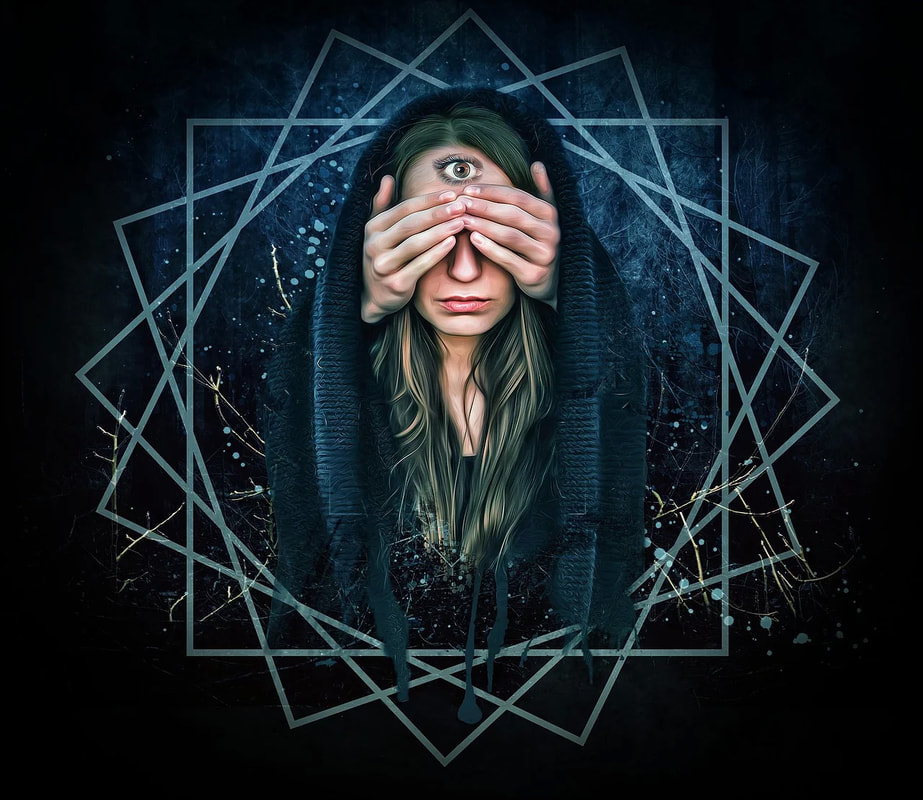
The Beginning of Spiritual Awakening
But within us we must establish order in our psychological house.
Before the Soul can see, the harmony within must be attained and fleshly eyes be rendered blind to all illusion. ―The Voice of the Silence
We need ethics. Ethics does not mean a religious code or doctrine to believe in. It means knowing in our heart what is right and what is wrong, what we should do moment by moment. It is not a belief. It is the harmony we experience when the mind settles because we are not throwing ourselves in the waters, thrashing with negative emotions of pride, hatred, fear, vanity, our defects. We put it aside.
Ethics is the key, the right ways of being here and now. In that way we have to learn to calm the mind, but also, we have to learn how not to identify with life, whether it is extreme or subtle, to not be distracted by the call of sirens which shipwreck men into the reef of destruction. We must be like Odysseus and become blind to that: close up your ears like in the Greek myth with beeswax. It is interesting. The bees are an interesting symbol. We are like a bee trying to transform pollen into honey and transform the mind into the sweetness of the soul. We must become deaf to the mind and what it wants, and to its illusions. Before the soul can hear, the image (man) has to become as deaf to roarings as to whispers, to cries of bellowing elephants as to the silvery buzzing of the golden firefly. Before the Soul can comprehend and may remember, she must unto the Silent Speaker be united, just as the form to which the clay is modeled, is first united with the potter’s mind. ―The Voice of the Silence
To comprehend divinity and remember divinity, we have to pay attention and follow our heart. There is a thread that connects us moment by moment with the truth, our own divine Being, our Divine Mother, our Divine Father, Christ, the many aspects of Being that we have within. We have to know that thread and follow it, to follow the thread of those hunches or intuitions so that when you sit to meditate, you can concentrate deeply, more deeply, and not get distracted.
For then the Soul will hear and will remember. And then to the inner ear will speak― 
How to Pass through the Three Halls
Those are the mystical experiences that we have talked about. So, here is a bit more advice from this scripture about how to transcend these halls and enter the heights.
If thou would’st cross the first Hall Safely, let not thy mind mistake the fires of lust that burn therein for the Sunlight of life. ―The Voice of the Silence
On a very basic level, we have a lot of fire in our body, our sexual energy. In the basics of every religion, they teach their students to conserve their energy. Do not waste it. Do not mistake the fire of lust, sensations of desire in the body, with the sunlight of life, the meaning of life. Passion is the main obstacle. Because when we lose those forces which can awaken the consciousness through passion, we shut the light off. With the power of the Holy Spirit, the sexual power can rise in us, when we save it, and that opens the wings of intuition, understanding, and wisdom.
If thou would’st cross the second safely, stop not the fragrance of its stupefying blossoms to inhale. If freed thou would’st be from karmic chains, seek not for thy Guru in those Mayavic regions. ―The Voice of the Silence
If you would be free from the Hall of Pistis, dreams, do not look for your Guru there in books. Do not look for it anywhere external. Look within your own consciousness. Yes, there are some people in the Gnostic movement and in other movements who may have some development, but that is not the point. No matter how elevated a master may be, do not look for wisdom in just words, from what someone says. Although it is useful to guide us on some basic level, but that will only take you to a point. We have to live the doctrine, experience it, so that we can transcend our karma, the consequences of our former actions.
The WISE ONES (of Dianoia) tarry not in pleasure-grounds of senses. ―The Voice of the Silence
Meaning that they do not identify with bodily appetites, cravings, and desires, even of the mind, because the mind has its own appetites and desires for anything.
The WISE ONES heed not the sweet-tongued voices of illusion. ―The Voice of the Silence
Meaning the intellect. We have to clarify the intellect.

Seek for him who is to give thee birth in the Hall of Wisdom, the Hall which lies beyond, wherein all shadows are unknown, and where the light of truth shines with unfading glory. ―The Voice of the Silence
The following verses are very interesting. If we would know higher dimensions such as through astral travel, we have to give up, again as I was saying, the mind.
That which is uncreate abides in thee, disciple, as it abides in that hall. If thou would’st reach it and blend the two (if would want to go from Dianoia to Nous, if you go from the awakened consciousness to the consciousness of a god, you have to) divest thyself of thy dark garments of illusion. ―The Voice of the Silence
If you study Blavatsky in Theosophy, you know about kama rupa and manas, desire body (or astral body) and mind.

In the Tree of Life, it is these two spheres. We use these two vehicles when we dream. Hod is the astral body. Netzach is the mind, the mental body. These are vehicles we use even physically. The brain is just the vehicle of mind and heart: mental body and the astral body. Thoughts emerge from that dimension from inside, and then are manifested in our brain.
We have to give that up. We have to give up our lunar ways of being, meaning, our mechanical ways of being. The mind is related to the moon. It is lunar. The moon is a symbol. In all religions, it does not have a light of its own. It steals. It takes from others. It takes from the sun. We want to be like the sun, radiating our own light, our own consciousness. Stifle the voice of flesh, allow no image of the senses to get between its light and thine, that thus the twain may blend in one. ―The Voice of the Silence
Obviously, people think of this basically as the fakirs who train their body with austerities to overcome appetite, or the craving for physical things. This flesh is psychological. It is our psychological appetite. What do we consume with our mind? What desires do we satiate with our intellect, with our heart, not merely the body? So that by allowing no image, no ego, no icon, no idol, no stone or statue can get between the light of divinity and the soul. We must erase that so that you can get beyond.
And having learnt thine own Agnyana, (your own ignorance) flee from the Hall of Learning. This hall is dangerous in its perfidious beauty, is needed but for thy probation. Beware, Lanoo (Disciple) lest dazzled by illusive radiance thy Soul should linger and be caught in its deceptive light. ―The Voice of the Silence
It is sad, but many people who have studied religion and spirituality for decades, who have attempted meditation, do not have that experience because they are not giving up their own mind. The mind is the obstacle. The intellect, the ego is what clouds our understanding. It is a false light, the Luciferian intellect. It thinks it has all knowledge of things, but it doesn’t know. It is just a machine. It has no life of its own. It imitates. It repeats. The light is different. The light is the source of genius and originality.
If through the Hall of Wisdom, thou would’st reach the Vale of Bliss, Disciple, close fast thy senses against the great dire heresy of separateness that weans thee from the rest. ―The Voice of the Silence
So, in synthesis, the feeling of “I, myself” and “other” must end. That is the nature or essence of Mahayana Buddhism. It is the essence of compassion in which we work not for ourselves, but for others, and that is going to be very important to remember as we study the rest of this scripture in relation to the Tree of Life and how to enter the higher stages of initiation.
Are there any questions? Questions and Answers
Question: There are these three halls of Ignorance, Learning, and Wisdom. Do you think there could be any relationship to the thought that Yesod and Malkuth are kind of one? Could that be ignorance and then the astral plane of Hod could be learning and then Netzach with the mental plane could be wisdom? But then you have to go past those into the causal plane with Tiphereth to really access your soul? Do you think that there is any relationship there or is she just talking about these four states of consciousness that you referenced?
Instructor: There is a relationship there. Now more importantly, Pistis and Eikasia, sleep and sleep without dreams, is here in Klipoth. These are the hell realms. Klipoth means “shells” and the ego is a shell. Anger is a shell that traps the light of love. Lust is a shell that traps chastity and purity. Fear is a shell that traps confidence in divinity. All the egos that we possess, our defects in which we dream, whether with some awareness or not, is hell. These regions are not somewhere outside. In fact, we are in hell right now. We have all these defects which belong to that level of nature. It is inferior, but as you are learning to awaken consciousness in this cave, you are gaining light. You are learning to escape to see reality even in Malkuth, this physical body. Dianoia, the state of consciousness of revising the beliefs of ourselves, occurs as we study who we are with meditation, not with books. 
This image of Manjushri with a sword and a book is a symbol of us. We are meditating and with insight, we look inside at our defects. We are examining our own hell realms in us, and by studying the book of our life, every day is a chapter and the book itself is an allegory of that. You learn to gain wisdom to cut through illusion so that you start to understand even higher dimensions. You learn to dream, but not down here. You dream above. It is a duality in nature. If your ego, which is dense, is trapping you downward in hell, you will experience those regions, whether through nightmares and what not. But with Dianoia, you are learning to ascend to higher dimensions.
Now there comes a point when you reach Tiphereth, you go beyond the physical body, the vital energies or the vital body, Yesod, Hod the astral body, Netzach the mental body, and you experience Nirvana, the causal world. Tiphereth means “beauty” in Hebrew. In a sense, that is the middle ground between Dianoia and Nous. In the higher regions of Geburah, the spiritual soul, and Chesed the Spirit, Being, Atman, the truth, no “self” can go there. That is Nous. There are levels of Nous, obviously levels of divine being. As I said, this was mistranslated as intellect, and above that we have even higher spheres. These are ways of being that are so sacred that it is really impossible to communicate with words. You have to experience it. Dianoia takes you to a point, but in the world of Tiphereth, the world of willpower, is where you learn to either follow selfish will or divine will. Question: You said Dianoia was back and forth. Does that have anything to do with the left brain and the right brain going back and forth? Instructor: Good question. I would say that Dianoia is a psychological attitude. It does not correlate physically with the brain. The brain itself has its mechanicity, but we need it as it is a marvelous instrument. It is a vehicle that has been created with so much intelligence that even scientists do not understand. But the thing to remember is that rather than focus on physicality, we must focus on our psychology. How can we as a psyche, as a soul, learn to evade the machinations of the ego, the intellect? The physical brain is a vehicle. It is not the mind. It is a machine we use to process the mental body physically. These dimensions are not only outside of us, but they are inside here and now. The way you practice Dianoia is when you see in meditation or in your day, certain egos that emerge while you are watching. Maybe pride starts to come up in relation to a person in your life and then you understand “Ah, this is an ego!” and then you do not act on it. Do not repress it. Do not feed it but understand it. That active understanding is Dianoia. You are revising your beliefs. You are thoroughly using the mind or going beyond the mind. You do not get caught up. 
It is interesting that even in Japanese mythology and even in the Chicago Botanic Gardens there is a bridge that leads to the garden. It looks like the Rune Sig (ᛋ), this bridge that leads from one part of the island to the other. I am sure you have seen it. The myth says that demons cannot cross bodies of water. More importantly, they cannot cross a jagged bridge because the mind, the devil, is mechanical. It only acts in accordance with its conditioning. But the consciousness knows how to adapt in the moment. It is interesting to know that demons cannot cross bodies of water. They are referring to the purity of the sexual energy. When you are transmuting that energy, you can form the Rune Sig, the fire of Kundalini. So, it is great that we have botanic gardens that have that, but Dianoia is that adapting, that side to side, being thorough in one’s analysis of the consciousness of the mind, knowing the intellect for what it is.

We are initiating a new course on The Voice of the Silence, an ancient manual of esoteric instruction. This work was translated by the eminent Helena Petrovna Blavatsky, founder of the Theosophical Society, whose scholarly and spiritual achievements cannot be easily estimated. This brief mystical text is a collection of fragments from The Book of the Golden Precepts, an obscure and rich scripture from which The Secret Doctrine was inspired.
The Voice of the Silence was not fully translated, since it would have required Blavatsky many years just to organize her documents, let alone translate the work in its totality. She also mentioned that much of this scripture is too sacred and profound to be understood by her students. This is a powerful statement, one that should not be overlooked. This guide, she said, is for serious practitioners who are awakening consciousness. Although The Voice of the Silence is brief, it is dense, and therefore difficult to interpret. As with any deep work, it requires an awakening consciousness to decipher, apply, and realize. Despite the brevity of this work, it synthesizes the entire path to liberation. This is no small feat. The origins and translation of this work has often been contested and disputed. However, the Panchen Lama affirmed its authenticity. In case you do not know, the Panchen Lama is second in command to the Dalai Lama within the Gelug school of Tibetan Buddhism. As he stated in 1925: It is the “only true exposition in English of the Heart Doctrine of the Mahayana and its noble ideal of self-sacrifice for humanity.” ―The Panchen Lama (1925)
This brief work is a condensation of many rich spiritual truths, which not only inform Tibetan Buddhism, but even Judeo-Christian and Western esoteric traditions. This might seem erroneous, especially for those who are very familiar with Blavatsky. She is well known for her expositions on Eastern mysticism, not so much with Western spiritual thought. However, we will demonstrate how both Western and Eastern mystical traditions can provide a deeper understanding of The Voice of the Silence. We will do so by juxtaposing and clarifying it with the writings of Samael Aun Weor.

Samael Aun Weor wrote about γνῶσις gnosis, the personal, experiential knowledge of divine reality. While this is a Greek term, gnosis is not the sole property of the Greeks. Different religions have different terms for this type of mystical experience, which are based on the language, culture, and idiosyncrasies of distinct messengers and time periods. Samael Aun Weor’s particular gift to humanity, given the ambiguity of many spiritual writings, is his clarity. He is direct, profound, insightful. More importantly, he is practical. He gave many keys for understanding the roots of all traditions. The root of all traditions, he emphasizes, is mystical experience.

What is the Voice of the Silence?
But what is the Voice of the Silence?
This title or principle is a paradox. How can a voice be silent? Who is speaking? To whom? More importantly, what, how, and why? What voice does one hear in the silence? What silence are we referring to? The Voice of the Silence refers to mystical experiences. In meditation, we can receive direct guidance from divinity. By their very nature, such experiences are paradoxical, especially to our sensual and materialistic mind. How can one possibly experience divinity? How is this even possible given our current limitations or state? How can one perceive without the physical senses? The root word for mysticism is the Greek myein, to close one’s eyes to illusion, so as to perceive inwardly, psychologically, spiritually. These are perceptions we experience even within dreams. Myein is also the root word for mystikos, an “initiate,” someone who has learned to develop their full conscious potential. An initiate is someone who perceives and understands realities beyond the body, heart, and mind. These are people who have some level of self-mastery over the causes of suffering, and therefore can immediately access knowledge from divinity. This scripture emphasizes that we are yet to awaken to reality, to divinity, to the truth. Blinded by our passions, appetites, fears, sensuality, desires―we do not see reality. We do not perceive the truth of our situation. We also do not perceive clearly when we dream. As stated in The Voice of the Silence: Before the soul can see, the Harmony within must be attained, and fleshly eyes be rendered blind to all illusion. ―The Voice of the Silence
This verse is exceptionally compelling. Perception is dual. While gradations and distinct qualities of perception exist, there are really two fundamental modalities of being. We either see divine reality or we don’t. We either perceive and comprehend, or we do not understand what we perceive. In the worst case, we don’t even perceive things at all, because we don’t pay attention. We are often blinded and confused by our own sense of self, our identity, which fluctuates, is impermanent. However, by transforming ourselves, we can not only experience, but unite with divinity through a state of perfection. This is the fundamental argument of this scripture.
So what harmony must be attained so as to perceive as a soul? What must we do to unite with our divine Being, the truth, the Voice that speaks in our inner silence? 
How Do I Hear the Voice of the Silence?
This harmony is psychological, internal. To use the technical language of meditation, harmony is serenity of mind, unwavering concentration on one thing without becoming distracted.
Tibetan Buddhism teaches that there are nine degrees of serenity or meditative concentration. These lead the disciple to the ultimate apprehension of reality. In the beginning of meditation, we do not perceive spiritual states easily, because we are distracted. But with gradual work in concentration, we do. The ability to exclusively focus on one object of meditation implies calmness of mind, silence of thought. Silence is the natural state of the consciousness. What is abnormal is our current state. How we see is usually obscured and filtered, conditioned, whether by pride or anger, negative thoughts, fear and desire. By observing thought and letting it subside, to cease in its activity, we access our true nature of being. This is why The Voice of the Silence teaches: Silence thy thoughts and fix thy whole attention on thy Master whom yet thou does not see, but whom thou feelest. ―The Voice of the Silence
In the beginning of our studies we may experience this. We may feel a pressure in our heart. We have a hunch or intuition about a teaching. We do not have all the evidence, but we are inspired to practice, experience, to know. This inner voice in our heart, this voice that speaks in the silence of our mind, the solitude of our practice, is conscience. It is knowing right from wrong, even if we lack an intellectual justification or explanation. This voice is the call of our inner divinity, who seeks to inspire us, to enter the spiritual path that leads to our true origins.
It is this spiritual inquietude in our heart that drives us to approach spirituality and religion, to seek answers to our deepest problems and sufferings. It is also the voice of inner judgment, the voice of inner discrimination. It is intuiting right from wrong behavior. By performing right action, we avoid suffering. We develop inner clarity. This is the prerequisite for awakening consciousness and experiencing the truth. This sense is developed the more we answer its needs, especially through daily meditation. Samael Aun Weor explained the following about this: The human being who allows that which is called self-judgment or inner-judgment to express itself in a spontaneous manner within will be guided by the voice of the consciousness. Thus, he will march on the upright path. ―Samael Aun Weor, The Revolution of the Dialectic
This is the key. Such an inner voice, inclination, or inspiration is spontaneous. It is not premeditated, planned, conceptualized. It lacks suffering. It is spiritual action free of desire, of attachment, fear, craving, aversion. It is intuition: knowing how to act without having to think. It is like lightning. But while brilliant and astonishing in its novelty, it is oftentimes followed by the rumbling thunder of doubt, thought, negativity, maybe even despair.
The clarity of that insight emerges the more we reflect upon ourselves and question our intentions, our impulses, motives, thoughts. We must sift through the mud of passion to find the lotus of virtue. Here is a compelling metaphor: when the lake of the mind is serene, it can reflect heaven upon its tranquil, clear surface. This is known as the faculty of imagination. This is when we perceive psychological images with great detail and depth. When our imagination is muddied, we see through impurity. When our imagination is pure, it reflects the revelations of heaven. Samael Aun Weor also explained this in The Revolution of Beelzebub: The intuitive person knows how to listen only to the voice of the silence. Thus, within his serene mind, the eternal truths of life are reflected with splendid beauty. The reasoning person converts his mind into a battlefield filled with prejudices, fears, anxieties, fanaticism, and theories, and his conclusions are always favorable to him. Yet, such a turbulent lake can never reflect the sun of truth. The mind of the intuitive one serenely and silently flows very far away from the black struggle of antithesis and from the storm of exclusivity. ―Samael Aun Weor, The Revolution of Beelzebub, “The Mind and Intuition"
Reasoning can provide false certainty. Our desires always feel justified. However, genuine mystical experience does not conform to our preferences, our prejudices, fears, anxieties, fanaticism, theories. The beginning of hearing the Voice of the Silence is abandonment of self. This requires conscious judgment.
Intuition or inner judgment can be intentionally strengthened. We do so through following the three levels or trainings of any meditative discipline. 
The Three Trainings
These three trainings have different names in different traditions. They represent the path through which our consciousness conquers suffering and realizes its divine nature. These three trainings also structure The Voice of the Silence in its three fragments.
Every religion has three levels of knowledge and practice: introductory, intermediate, and advanced. Buddhism outlines three schools or movements corresponding to these levels: Shravakayana, Mahayana, and Tantrayana respectively. Shravaka means “hearer.” Yana means “vehicle.” It is therefore the vehicle of instruction in which we hear about or learn religion for the first time. This level of knowledge is based in ethical discipline. Here we learn to not lie, kill, steal, lust, adulterate, consume drugs or intoxicants, envy, gossip, criticize, blame, hurt, or commit harms in any way. This is because negative actions pollute our mind stream. They make us confused, weak, disconnected from our inner divinity. These behaviors distance us from the voice of the divine. They condition our consciousness and cloud our ways of seeing in the world. They even affect our dreams. They put our consciousness to sleep and activate negative ways of being. Such individuals cannot see reality, because they are not willing to let go of their desires, whether for sensations, praise, fame, money, drugs, respect, security, status, etc. When practitioners have mastered some level of ethical discipline, cultivating a spiritual space within their bodies, hearts, and minds, they can begin working for the spiritual benefit of others. The more we recognize our sufferings and limitations, and the more we understand how and why people suffer, we become inspired to help them. This is compassion: selfless love based on the understanding of impermanence. Nothing in existence is eternal, including our appetites and desires. We often chase after sensations, experiences, satisfaction, ignoring that our very cravings and aversions control us. However, they are not permanent. They always change. When we don’t get what we want, we suffer. When we get what we want, we want more. We are never satisfied. But when we realize the futility of desire and how it produces pain, that nothing lasts, we also see how our own behaviors make others suffer, which is a great inspiration to change. Tibetan Buddhists uses a very specific term for compassion, guided by insight into reality. They call it bodhichitta. This is the awakening heart-mind of boundless compassion. This is a spiritual principle that focuses on liberating others from suffering, precisely because one understands the nature of selflessness. Therefore, we work to not only edify our own spirituality, but that of others. Mahayana is the Greater Vehicle (since Maha means “great”). This level of religion is where we actively work for the benefit of all beings regardless of our own desires. This is a superior way. However, it is not the most profound, expeditious, or powerful. The advanced level of religion is known as Tantrayana, the “Diamond Vehicle” or supreme way. This is divine sexuality. Tantra literally means “continuum,” whereby the consciousness conserves, harnesses, and elevates the most potent energies of the body for the spirit: the creative sexual force. 
(Padmasambhava to his consort Yeshe Tsogyal:
"Lustful people do not enter into the path of liberation.")
Tantra is often represented in Buddhist iconography with various buddhas, masters, prophets, or gods in a state of sexual embrace. This has nothing to do with lust, but love. Some people get confused. How can one have sex without lust? Lust must gradually be eliminated so that the sexual act becomes a sacrament, a sacred ritual. This is why years of training prepared disciples for this level of knowledge, because sexual power without responsibility produces problems.
When a couple conserves and transforms the sexual energy with supreme adoration, purity, and love, never allowing the continuum or flow of forces to leave the body, then they radically awaken the consciousness. This power allows married men and women to develop the deepest insights, since the power to create life, the creative energy, awakens their full potential. The Voice of the Silence addresses all three levels of religion. It is therefore a complete teaching, despite the fact that Blavatsky didn’t transcribe everything from her original source: The Book of the Golden Precepts. 
The Three Essential Spiritual Sciences
But what else must we study to better understand this scripture? We must look to the three essential mystical sciences of antiquity. These are:
Kabbalah can mean “tradition” or “knowledge.” It also comes from the Hebrew term קבל kabbel, which means “to receive.” This secret wisdom was originally transmitted from mouth to ear, from master to disciple. It more importantly signifies how we as a consciousness receive spiritual experiences. Kabbalah is often synonymous with the Tree of Life, a map of consciousness, the universe, and divinity. The Tree of Life shares its roots, biblically speaking, with the Tree of Knowledge of Good and Evil, otherwise known as alchemy. Alchemy, or اللّٰه Allah-χημεία Khemia, is an amalgam of Arabic and Greek wisdom, otherwise translated as “the chemistry of God.” Khemia means to “fuse or cast a metal.” Allah is the Arabic name for divinity. Traditionally, alchemy is associated with superstition, the belief that dense metals can be transformed, like lead into gold. Trans means “to carry over,” and mutation indicates how an inferior substance becomes a superior one. This is a symbol. By conserving and transforming energy, we become fully developed beings, masters or gods, with complete knowledge of good and evil. Psychology is understood today as the study of the mind. But etymologically, psychology is the relationship between psyche (the consciousness) and logos (the Word, the Being, divinity). By mastering our minds in meditation, we connect with and realize the truth. Many will argue that kabbalah and alchemy have nothing to do with The Voice of the Silence, since kabbalah supposedly originated in 13th century Spain and alchemy in medieval Europe, with roots in Pre-Islamic Arabian mysticism. These are Western, not Eastern esoteric traditions. When we reference kabbalah and alchemy, we do so in accordance with their principles, not to their appearance or moment in history. Kabbalah, the Tree of Life, is a map of consciousness. It is a map of our very being. These realities have always existed and will always exist, before and after medieval Judaism. Just in the same way that Sir Isaac Newton didn’t create, but documented gravity, likewise the medieval Jews documented the Tree of Life and didn’t originate it. Likewise, Eastern traditions taught the same truths, but in different forms, including Bhavachakra and Kalachakra. Therefore, the principles of kabbalah are universal. Also, alchemy, the transformation of personality―the dense lead of selfhood into the gold of spirit. This is much older than medieval Europe. This law of transformation predates even our known universe. It is eternal. There have always existed individuals who, once common and ordinary people, worked in this alchemical science to become buddhas, angels, perfected beings. Likewise, there will always exist beings in future cosmic scenarios who will enter the path of liberation and fully unite themselves with divinity. The same with psychology. Consciousness is inherent to life. Our psyche, our soul, when inspired to study spirituality, seeks a deeper, more personal relationship with divinity, the Voice of the Silence. There are levels to experiencing the Voice of the Silence. There are also levels of development whereby an individual unites with, realizes, and fully expresses that Voice. This is known through the path of initiation. The Voice of the Silence is based on their universal principles. Therefore, it is useful to explain the essence of kabbalah, alchemy, and psychology with this scripture, since they complement the text. Eastern symbols can become more clear through context. By looking at the root knowledge of these traditions, we can gain greater confidence into this scripture’s meaning. 
Initiation into Authentic Spirituality
However, to fulfill the requisites of these three sciences, we need absolute dedication and application. We call this the path of initiation.
Initiation refers to the beginning of something, or the conferral of recognition or membership to a group, such as through ceremonies celebrating coming of age, or entering adulthood, or even joining a secret society. Initiation is the spiritual process whereby we enter, gradually, the community of enlightened beings. As with any process of initiation, our candidacy for membership is tested. We receive challenging situations or ordeals. We must prove our ethical caliber. By overcoming ordeals, we develop the spiritual capacity to experience, and act, through the divine. Through meditation, through the three spiritual sciences, we hear, more and more, the Voice of the Silence. This means, we experience, in meditation and visions, more and more, the nature of divinity. We also see the way to transform our suffering into wisdom. This is obviously no easy task, which is why The Voice of the Silence states: Thou canst not travel on the Path before thou hast become the Path itself. ―The Voice of the Silence
Samael Aun Weor also iterated this fact in one of his most famous sayings:
Initiation is life itself, lived intensely, with rectitude and with love. ―Samael Aun Weor
This is not some distant reality. To experience divinity, we must transform our minds. We must transform our states, and actions in daily life. Daily life is a theater, whereby the drama of initiation is played. We are both the audience and the actor, since we both act out and watch our life, our states. We must reflect upon and observe our psychology during great crises, so as to catch our most hidden defects, to gather data about them, to understand them.
We must become conscious agents of our destiny. We decide, based on our choices, whether to fulfill selfless, enlightened action, transforming our communities for the better. Or, behaving with selfishness and desire, we condemn ourselves, and others, to suffering. If our spirituality is merely theoretical, if it does not impact our state of suffering in lasting and permanent ways, if we are repeating the same circumstances without changing our attitude or state of mind, if we are not eradicating suffering at its roots within our psyche, if we are not performing genuine service to our fellow human beings, it means we are not working effectively. This is why Jesus of Nazareth taught, “By their fruits you will know them” (Matthew 7:20). 
Why We Enter Initiation
But why enter initiation? Why intentionally take on a work that will initially provide tests, ordeals, challenges, and sufferings?
Many people enter our tradition and begin practicing it. However, they soon realize that their life is falling apart. Difficulties emerge in their personal, economic, professional, marital, or family life, seemingly without explanation. Things get so hard that many give up, saying, “This teaching is hurting me!” However, they don’t realize that they are getting exactly what they asked for. They are entering a probationary period whereby they must prove themselves to the work. Genuine spiritual practice catalyzes latent karma. Karma is often associated with a blind law of retribution, with suffering bad consequences for wrong action, or “What goes around comes around.” In truth, karma is not a blind law. It is intelligently managed by divinity. We will explain how and why. Karma comes from the Sanskrit karman, signifying “cause and effect.” We always follow the trajectory of our own actions and behaviors. We always receive the consequences of our former actions, including before our birth and after our death. What must happen will happen. But the question becomes: When? How, and why? Certain karma or results of former deeds are latent. They only activate when the time is ripe, such as when a wave rises in an ocean to finally crash upon the surface. Such an influence emerges from the depths. The same with karma. What happens is that we are asleep. We don’t see the source of these influences. Neither do we realize that such karma would happen regardless of whether we enter this work or not. To not work on ourselves is to magnify disaster, for if we are not striving to unite with divinity, if we do not help ourselves, if we do not act properly, then no one can help us. Divinity, out of compassion, seeing our sincerity, gives us challenges to bring us closer to Him. Also, when we suffer, we are more inclined to seek God. When in ease, we become complacent and lazy. We also get doses rather than the whole payment all at once, despite what some people might believe. This intelligent manager of affairs ensures that we do not receive more than we can handle. It’s the same karma, but it is parsed in relation to the totality of what we owe. Initiation, therefore, is the path of paying all our karma, all our debts, with intelligence, wisdom, and good deeds. All of this is managed by divinity, because if we had to pay karma unwillingly, unconsciously, we will only exacerbate the situation, acting out of retaliation and spite, blaming others, blaming God for our situation. This obviously does not improve things. It makes it worse. However, at times karma becomes more intense, because ordeals help us to burn away psychological impurities, to pay grievous debts from our past. By transforming ourselves in difficult circumstances, we pay what we owe. Oftentimes these karmic situations become intense because we need to learn valuable lessons as a consciousness. They also help us purify our mind stream. By dying to our defects, we become free. This is why The Voice of the Silence teaches: Strive with thy thoughts unclean before they overpower thee. Use them as they will thee, for if thou sparest them and they take root and grow, know well, these thoughts will overpower and kill thee. Beware, Disciple, suffer not, e'en though it be their shadow, to approach. For it will grow, increase in size and power, and then this thing of darkness will absorb thy being before thou hast well realized the black foul monster's presence. ―The Voice of the Silence
The scripture also states:
Kill thy desires, Lanoo, make thy vices impotent, ere the first step is taken on the solemn journey.
Some have also pointed out an apparent contradiction or paradox. How is this the path to liberation from suffering, and yet we must necessarily suffer? How is it that Samael Aun Weor stated that pain is Satanic, and yet we need to face karma and pain in order to grow?
Let us be very clear. Voluntary suffering is distinct from mechanical suffering. It is a difference in attitude. The first is by choice. When you choose to work on yourself, you diminish your pain through insight and will. By consciously taking on ordeals, we gain joy and happiness, because we know this is the way to pay our debts and do good deeds. It sounds strange, right? Why be happy when things go South? In reality, by perceiving our defects during the worst times, we can eliminate them. This recognition brings true joy. It is a strange dynamic to observe in oneself. The second, mechanical suffering, is unintentional. We experience hardship and we react, making things worse. By initiating this work and willingly taking on “the slings and arrows of outrageous fortune,” comprehending it and eliminating its roots in us, we in turn end strife. It is true that the self, the ego, our defects, suffer when unsatisfied. However, the soul, that which connects us with divinity, knows how to experience peace even in great turmoil. What matters is our psychological center of gravity. Are we situated in the consciousness, or the ego? In the soul, or desire? Wherever we direct our attention, we spend creative energy. When we face conflict, do we give into our reactions, or do we respond with intelligence? There is a major difference between these two modes of being. Following the Voice of the Silence in such crises will get us through them. Ignoring what we must do in the moment guarantees our failure. The path involves pain because we have defects that produce it. However, the true nature of the consciousness is serenity, understanding, and bliss. These strengthen the more we follow the Voice of the Silence, our intuition, our Innermost God. Therefore, examine your mind. The more we strive and intuit the voice of divinity in our heart, the more we align ourselves with our conscience within the silence of our being, the more proper our conduct―the better the results will be in our life. 
The Tree of Life: Solar and Lunar Nature
As we learn to eliminate defects, we awaken consciousness. We experience and come to inhabit the superior dimensions of the Tree of Life.
This diagram has ten spheres, known as sephiroth or “emanations” of the divine, from the most abstract and spiritual above to the most dense and material below. The Voice of the Silence speaks of seven important steps for developing spiritually. These lower seven spheres, along with the sacred Word, the Trinity or three spheres above, constitute the ten sephiroth of the kabbalah. These spheres are not only dimensions or places within nature, but also qualities and levels of being, and even vehicles that we inhabit in order to operate within those regions, whether physically or in dreams. We access these higher regions when we sleep, if we are removing defects, conserving energy, and creating vehicles that help us operate in the superior regions of nature. Blavatsky wrote extensively about the kama rupa or body of desires, the famous astral body of Hod. We also have an inferior manas or mental body, which we use to subsist within the world of Netzach, the mental world. What many don’t realize is that these two vehicles do not belong to divinity, but mechanical nature. They are lunar because they are given to us by nature and must return to nature, willingly or unwillingly. They relate to the moon in that the moon is mechanical, cyclical. It repeats. It does not have any autonomy or will of its own. It obeys nature’s laws. The problem is that our consciousness, trapped in defects and desires, is asleep. It also inhabits the kama rupa and inferior manas. When those lunar bodies must eventually be disintegrated within lower spheres, within inferior dimensions, within the hell realms (because it belongs there, to inferior nature), our consciousness will also go through that process or purification within lunar nature, within the inferior worlds, because the consciousness is trapped. Until our defects that trap consciousness are eliminated, then we will never be free. The problem is that this mechanical process is very painful, involving involuntary or mechanical suffering that does not produce enlightenment. The other way is to enter initiation. Destroy desire. Free the consciousness. Create superior vehicles. We call them the legitimate solar astral and solar mental bodies, along with superior manas, the solar causal body of Nirvana. These are solar bodies because they belong to the matter and energy of divinity, represented by the solar light. The power of life and generation is sexual. It is solar. It is creative and life sustaining. We create these bodies through tantra, through the sexual union of husband and wife, within The Perfect Matrimony as explained by Samael Aun Weor. Marriage is where we can harness the power of a sun, the solar logos, the divine. Nature is dual. It is lunar below, mechanical, impure, but heavenly, solar, pure, conscious above. We gravitate to places in nature in accordance with our level of being. The Voice of the Silence teaches: Help Nature and work on with her; and Nature will regard thee as one of her creators and make obeisance.
We create superior vehicles through harnessing the sexual energy for the spirit. This is the true meaning of being born again.

Initiations of Fire and Light
Only married couples, husband and wife, joined through conscious love and affinity in multiple levels of being, can use the creative sexual energy and give birth to superior bodies. This occurs when the sexual fire known as the Kundalini rises up the spinal medulla of each of the seven lower bodies of the Tree of Life. These bodies allow us to become conscious citizens and inhabitants of those regions. They also allow us to approach and even incarnate divinity.
The Kundalini is symbolized in the Torah, specifically Numbers, whereby Moses erected a brass serpent upon a pole. Whenever anyone gazed upon it, they were healed of their fiery afflictions, the biting serpents of passion. Remember that the Israelites disobeyed divinity and were punished by fiery serpents. The Israelites are the parts of our consciousness who seek divinity. By going against our conscience, we become afflicted by passion. As Moses wrote in the Book of Numbers: And Moses made a serpent of brass, and put it upon a pole, and it came to pass, that if a serpent had bitten any man, when he beheld the serpent of brass, he lived. ―Numbers 21:9
What is brass? It is an alchemical symbol. It is an amalgamation of copper and tin. Copper relates to Venus, woman, and tin represents Jupiter, man. Through pure tantra, the couple heals and elevates their souls, raising the fire and intelligence of the Divine Mother Kundalini, whose intelligent power only rises in accordance with the merits of the heart.
When the Kundalini rises throughout the spine to the mind, and reaches the heart, we acquire an initiation of Major Mysteries. These initiations are steps for approaching the Voice of the Silence, our Being. There are five Major Mysteries or Initiations of Fire, relating to each of the lower bodies or sephiroth below. 
The first initiation relates to Malkuth, the physical body.
The second initiation relates to Yesod, the vital body. The third initiation relates with Hod, the astral body. The fourth initiation relates with Netzach, the mental body. The fifth initiation relates with Tiphereth, the causal body. The divine soul, Geburah, and the Innermost Being, Chesed, never fall into temptation, and therefore have the creative fire already present in them. However, what few realize is that raising the first five Kundalini serpents within the lower spheres of the Tree of Life are just the beginning. Beyond the serpents of fire are the serpents of light. This is the Son of Man, our particular, individual, intimate Christ, the Logos, the Word, the Voice of the Silence. Christ is not a person, but a cosmic energy, universal, impersonal―a divine intelligence that can incarnate within any properly prepared initiate who has solar bodies. Without those bodies and without sacrifice, without a Mahayana attitude of bodhichitta, the Voice of the Silence, the sacred Word, our true Being, the Cosmic Christ, cannot enter, since solar bodies are the conduit through which this terrifyingly divine energy can express. Likewise, one needs true love for humanity and sacrifice for others to necessitate His incarnation. When a disciple achieves the Fifth Initiation of Major Mysteries, has raised the Kundalini within the physical, vital, astral, mental, and causal bodies, he or she has a choice to make: to stay in heaven (Nirvana) and forget about the sufferings of humanity, or to renounce happiness and return to Malkuth (the physical world) to serve others selflessly, til the end. Those who renounce Nirvana to serve humanity, and who have developed the Mahayana essence of bodhichitta, who embody selfless love and compassion for mortals, can enter what is known as the straight path, the path of renunciation, and therefore incarnate Christ. Upon incarnating Christ, the initiate becomes a बोधिसत्त्व bodhisattva. बोधि Bodhi is “wisdom,” and सत्त्व sattva is “essence.” Wisdom in kabbalah is חכמה Chokmah, the Second Logos of kabbalah, our Intimate Christ. Therefore, a bodhisattva is the essence of Christ, a master in the beginning of development. Only Christ can help the bodhisattva fully eliminate the ego and pay all their karma, even in one life. One continues by now raising the serpents of light, by raising Christ, the Son of Man, the solar light, within the spine of the lower sephiroth of the Tree of Life. These Venustic Initiations―relating to Venus, conscious love, Christ―are symbolized by different episodes in the life of Jesus of Nazareth, who exemplified the entire path to reaching and perfecting the Voice of the Silence in oneself. As stated in the Book of John 3:14-15: And as Moses lifted up the serpent in the wilderness, even so must the Son of Man be lifted up: That whosoever believeth in him should not perish, but have eternal life. ―John 3:14-15
Eternal life is the intimate Self-realization of the Being, the full perfection of our internal master within our psyche, the union of the soul with the Verb, Christ, divinity, the Voice of the Silence, through the path of initiation.

The Four Noble Truths
The Voice of the Silence is a remarkable scripture that emphasizes the essential tenets of Buddhism and Christianity. The following verses emphasize the reality and application of the Four Noble Truths, which elaborate upon and demonstrate the esoteric truths we have expounded:
Hast thou not passed through knowledge of all misery – Truth the first? (Ku)
We begin to hear the Voice of the Silence, to receive hunches, insights, inner judgments, through recognizing our state of suffering. We also gain more clarity in ourselves when we recognize how our desires manifest in relation to diverse circumstances, assembling or manifesting within the screen of our inner awareness. By observing ourselves, we begin to gather data about our defects.
Meditation is the third truth, whereby we go deep in concentration, reflecting upon our errors, vices, defects, desires, egos, so that by comprehending them, we can eliminate them. This is the path of initiation, the path of Tau, the Tau Cross, the Hebrew ת Tav, or the Tao, wisdom beyond dualistic notions and concepts. Bodhi is Sanskrit for “wisdom.” This is Christ, the Being, the true life of any initiate. We meditate and receive wisdom from the Bodhi tree, the Tree of Life in us, the totality of our consciousness, which must be perfected and integrated. The Bodhi tree can also represent the Tree of Knowledge of Good and Evil, alchemy, since through transforming the sexual energy and giving it to divinity, we gain wisdom about the nature of positive and negative, solar and lunar, man and woman. This energy awakens us to Samadhi, mystical experiences free of ego, perfect, lucid revelations from the divine. 
Friedrich Nietzsche’s Thus Spoke Zarathustra: The Stillest Hour
We will conclude with a chapter from Friedrich Nietzsche’s Thus Spoke Zarathustra. This excerpt synthesizes everything we shared today.
Nietzsche at one point knew the path of initiation. Here he relates, through his fictional depiction of the Iranian Prophet Zarathustra, how one enters meditation to communicate with the Voice of the Silence. One must enter a drowsy state to access the internal worlds, to meditate in the threshold between waking and dreaming. Also, he relates the difficulties and burdens that such a voice necessarily demands of us in the spiritual work. To give birth to the Voice, to the Word, to Christ, the Superman or Superhuman, we must die to our impurities, radically. Zarathustra refers to the Voice of the Silence as his angry mistress, his Divine Mother, who reprimands him for his hesitation and faltering in the path. This voice of conscience is oftentimes severe and demanding us our best. Here is what Nietzsche wrote: What happened to me, my friends? You see me distracted, driven away, unwillingly obedient, prepared to go―alas, to go away from you. Indeed, Zarathustra must return once more to his solitude; but this time the bear goes back to his cave without joy. What happened to me? Who ordered this? Alas, my angry mistress wants it, she spoke to me; have I ever yet mentioned her name to you? Yesterday, toward evening, there spoke to me my stillest hour: that is the name of my awesome mistress. And thus it happened; for I must tell you everything lest your hearts harden against me for departing suddenly. Questions and Answers
Question: Sure, I got two questions. This path of initiation, currently, at some point you emphasized the path of initiation into the Major Mysteries. Then you briefly talked about initiation into the Christic mysteries, the path of the light, and then also, going back to the Minor Mysteries for those of us who are single. Can you just go into a little more detail about how those three paths relate to each other?
Instructor: Great. We have the Three Mountains poster. The First Mountain is Initiation. In the beginning of the path, as we are single or even if we are married, we have to enter probation. We have the Minor Mysteries, nine in total. Single people take much longer than married couples in the nine Minor Mysteries. A Minor Mystery has to do with facing yourself in the beginning of the path. We learn for the first time that we are filled with ego. We realize that we are fallen, demonic, and so we may have experiences in the astral plane where you are being told, “Descend into the earth.” You may have the vision where a master might say, “Go down.” 
This is symbolized in the first arcanum of the Tarot with the Magician pointing his finger up with his right hand and pointing down to the earth with his left. This means that if you want to go up, you have to go down first. Face yourself. It’s probation because the divine lodges are looking to see whether we are going to be serious, you know? The way that we get serious is if we look at our defects and become accountable.
As we are discovering ourselves and eliminating defects, we may finally find a partner. Some people do find this path when they are already married and they can begin where they are at. With more fire, the quicker you go. So the Minor Mysteries can be accelerated. But obviously with the Forge of Hephaestus, which is the god of fire and smithery in Greek mythology, or Vulcan in Roman teachings, we take the fire of a matrimony and go up the Mountain of Initiation. What happens is that you enter the Major Mysteries. We say that there are five that are more important for us. When you raise the Kundalini up the physical body, you receive the First Initiation of Major Mysteries. When you raise the fire up Yesod, the vital body, the Second Initiation. Likewise with Hod, the astral body, the Third Initiation of Major Mysteries. Netzach, the fourth, relating to the mental body, Fourth Initiation, and then finally, the Fifth Initiation of Major Mysteries in Tiphereth, the causal body, superior manas. At that point―really because in the higher spheres the fire is always present within Geburah and Chesed, which never fall, the spirit and divine soul, Atman-Buddhi―you have a decision to make. When manas is united with Atman-Buddhi through initiation, the soul has a choice. Do you decide to fully eliminate the ego and even incarnate Christ, pay all your debts in one life? Or take a slower path, the spiral path, which you see in this poster people going onto the left and entering a spiral development, which is allegorized in The Voice of the Silence especially, I believe, in the second fragment that Blavatsky wrote. You must choose between the paths of liberation and renunciation. In the spiral path, you have, really, like a vacation. You get to enjoy Nirvana. You are in that level of nature. You are with the gods. Everything is easy. You drink ambrosia all day. You are happy. Many of the Nirvanis (you call them Nirvani Buddhas), they slowly enter development over many cosmic days, mahamanvantaras, up a path that leads eventually to the source, but involves very little hardship. They may incarnate physically, periodically, here and there. There are a number of them who stay true to that path and they are happy. It is a good work. But the straight path is different. It means you return to the physical world. You renounce your powers. You renounce happiness. You pay everything that you owe and you suffer the maximum. But as a grace, you receive Christ. You receive the Verb, the Voice of the Silence. That is when Christ is born in the manger, right? Because in Malkuth we have many animals surrounding us in our mind. Christ is born as a baby. It has to grow up. At that point, in the process of Christ growing up and developing in us, you have to raise what are known as the serpents of light. That is represented by the path of Jesus. As you see from the Gospels, that is a very tumultuous way. That is part of the First Mountain still. If you decide, if you have reached the Fifth Initiation of Major Mysteries, you descend down back into the physical world, you abandon Nirvana, you enter the path of renunciation, you return to serve humanity―then you can receive Christ, the Verb, the Logos. Then you have to raise the serpents of light up these bodies. But again, that is just the First Mountain. So as elevated as that might be, after you have raised the serpents of light―we call them the Venustic Initiations―you enter the Second Mountain. Now Venus, the Venustic Initiations is when Christ incarnates in the soul. It is related to Venus because it is the path of love. The Second Mountain is total death of the ego. Kill even the shadow of desire as Blavatsky taught. Fully eliminate the Tree of Zaqqum, the tree of death. You descend down into your hell realms, nine of them in total, and after annihilating all of the egos related to the inverted first sphere, the moon, you go up one initiation. You enter the higher worlds. Likewise you annihilate the egos relating to the mercurial hells, you go up one heaven. Likewise you descend into all these lower spheres relating to the Moon, Mercury, Venus, the Sun, Mars, Jupiter, Saturn, Uranus, Neptune, and you ascend up those heavens after you fully clean out your inner hell realms. Then, at the very height, what happens is that you pay all of your karma, usually in the form of an incurable sickness, a disease. The physical body will die and the soul will resurrect. There are some masters like Jesus who resurrected with their physical body. But others choose like Samael Aun Weor did, or Joan of Arc, to resurrect with the body of liberation, Yesod, the perfected vital body. So that is a very extreme path, very difficult, very powerful. But it is really the one that leads to the Absolute, the source of all things. To get to there, you have to pay all your karma, have no ego, and then at that point you’re on the Third Mountain. This is even more daring because those are levels of perfection that relate to the top trinity of the Tree of Life, which are very incomprehensible for us. But that level is a path relating to masters who are resurrected, so even they have to work. Long path. I know we say it is short but in a sense it feels like long because we face suffering. It can be intense. Nirvanis in the spiral path see how much the masters of the straight path suffer. We call them bodhisattvas. They incarnate Bodhi, the light of “wisdom,” the essence of wisdom or Christ. Wisdom in Hebrew is Chokmah, the second sphere in the Tree of Life. The Nirvanis say, “Don’t take the difficult path. It is very challenging. You will suffer.” The gods tempt the bodhisattvas. This is a decision that we should not make on our own. It is something that your inner Being will decide. If the Being says, “I want this,” then you do it. Ambition is one thing, like “I want to be more spiritual, go to these higher levels,” but really the one who decides that is your Innermost. Your Being can show you in meditation or experiences what He wants. Hopefully that is a very concise explanation of the three mountains. If you want to know more about the path in its totality, you can study The Three Mountains by Samael Aun Weor. When we study The Voice of the Silence, we are going to break that down in more detail. Question: Yes, a second question. You mentioned briefly that the Bodhi tree, if I caught it, is related to the Tree of Knowledge of Good and Evil, correct? Instructor: It can be. Usually the tree of wisdom is the Tree of Life. But it is ambiguous because, where do you get wisdom from but the sexual energy? When you raise the energy up your spine. You know the tree is like a Christmas tree. When you put the lights on it, you have wisdom, Chokmah, Christ manifest. The Bodhi tree is our Tree of Life that is illuminated by the Tree of Knowledge. They share the same roots. You can say that it is the Tree of Knowledge too. There is a duality of interpretation. The thing about kabbalah, even with Eastern mysticism―which may not be distinctly Jewish, but symbolic―that language is abstract. You can be fluidic with your interpretation because there is a lot of dynamic potential in a symbol, whether it is Eastern or Western. So there are levels of meaning. Question: I appreciated what you said about the gods tempting bodhisattvas. Could you explain a little more about that? Because it seems mischievous, right? It’s gods and bodhisattvas, which are also good factors in themselves. Instructor: Right. The Nirvanis have eliminated some level of defects. They have a level of purity which is very sacred, but they’re not perfect. They have one foot in heaven but still have much of their consciousness that is trapped in ego, in hell. While part of them is enjoying the bliss of Nirvana, they also don’t have their full consciousness developed. It is interesting. Samael Aun Weor mentioned that the temptations of the Nirvanis are worse than demons because they offer you solace and comfort with good things. “Stay with us! You won’t be hurt. You’ll be happy here. You’re peaceful. Forget about the world. Forget about humanity.” This is the opening lesson of Nietzsche’s Thus Spoke Zarathustra, where his fictional Prophet Zarathustra goes to the mountain cave to meditate for ten years, a symbol for how he worked in Malkuth, meditating in his cave. He said, greeting the Sun: “Behold, you great star! (Ain Soph, the origin we wish to return to). For what would your happiness be had you not those for whom you shine! For ten years you have climbed to my cave.” Ten years, Malkuth, the tenth sphere. “You would have tired of your light and of the journey had it not been for me, and my eagle, and my serpent.” Kundalini, Kukulcan amongst the Mayans, the feathered serpent Quetzalcoatl, the fires of the Holy Ghost rising up the spine as the wings of the spirit. In the opening of that book, he decides, “I must descend from my mountain, to go down to the valleys, and to teach the people who are lost there.” This is because he is a bodhisattva. But as he goes there, and he is leaving his cave and going down the mountain, he encounters a hermit, a person in solitude. He says, “Why do you go to the people, Zarathustra? They will laugh at you, and mock you, and shame you. They will spit in your face and condemn you. Why do you not stay in nature among the birds and the flowers and the trees? Here the bears and the animals will be your companions.” And Zarathustra says something like, “What is a hermit doing out here in the wilderness?” The hermit says, “I hum. I sing. I do mantras, prayers in the wilderness, and I am happy here.” Zarathustra replies, “Let me leave from you now so that I do not take something from you.” Then the two old men laugh at each other jovially and Zarathustra goes on his way. He then says the famous line that Nietzsche got in trouble for: “Doesn’t this hermit know that God is dead?” Really, God is dead in us if we do not descend, kill all the ego, take energies out of hell and return it as the Superman, the Superhuman. But the hermit tempts him, “You’ll be happy here.” In some ways, Samael says, this is worse than demons, because demons attack you or are suffering a lot and it is easy to say “no,” because it is obvious. But with the gods, the level of nature among the heavens, if you have an experience in Nirvana, it is very beautiful. You don’t want to leave. You see in the causal plane the trees and the waters moving and rippling with cause and effect like a perfect symphony, and the masters of Nirvana with their robes of heaven welcoming you. They treat you with a lot of love. But the bodhisattvas have to renounce that because there are higher levels beyond good and evil (even to use the title of one of Nietzsche’s books). So it’s really interesting. I mean, what’s worse? A temptation from someone who is a drug addict, saying, “Come take drugs with us”? Well, it’s obvious. But what about those who tempt you, but are kind? “Join us! Stay with us.” But that will open up to us if we first of all reach that point. It’s a decision we don’t make now. You have to become a master of Major Mysteries, incarnate your soul. Question: How many people accomplish all three of these mountains in one lifetime? Realistically, are we going to do it in one life? Instructor: Probably not. I mean, a few people do it. Question: So how many lifetimes would it take an average person? Instructor: It depends on their will, and karma, and what the Being manages. You know, you look a someone like Padmasambhava―one life. Joan of Arc, Christ, Jesus of Nazareth, or Samael Aun Weor, you look at the life that they lived, how intense it was. It is really… all that suffering from multiple lifetimes they accumulated are now condensed in the span of like twenty years, thirty years, forty years―very intense. Are we really willing to take it? If our Being says, “This is what I want for you,” so be it! It is not something we wish upon ourselves. Nobody likes the straight path. Question: When you say Being, who are you referring to? Instructor: So the Being has many levels. We obviously talk about the first lower five spheres relating to the soul. But above that we have Geburah, the divine consciousness known as Buddhi in Sanskrit, and then we have Atman, Chesed in Hebrew, the spirit. Atman-Buddhi is our Inner God. The spirit, Chesed, which is the light mentioned in the Light Surah of the Qur’an. “Allah is a light within a lamp.” Chesed, the spirit, and the lamp is Geburah from which the light of Nur, or Aur in Hebrew, Nur in Arabic, the top trinity, Christ, to use Gnostic terms. So we have Atman-Buddhi―which is the spirit and divine soul―never falls, really, the spirit and intuitive consciousness. But above that we have even more refined levels: Kether, Chokmah, Binah―Father, Son, Holy Spirit―or the supremacy, wisdom, and the intelligence of God, which are really just one light. They are a unity. But they are not people, which is why especially in the Muslim tradition, Prophet Muhammad denounced the degeneration of the Trinity because many Christians had devolved their faith, thinking these are three people. It is really one light. Just different expressions. Question: So when you say אהיה Eheieh, which means “to be,” which sphere does that term relate to? Is that the Being? Instructor: Kether. Question: The highest? Instructor: אהיה אשר אהיה Eheieh Asher Eheieh, “I Am That I Am,” is really the Father of the supreme light from the Absolute above the Tree of Life, the top, managing and governing the rest. There are different names in Hebrew and also in Arabic as well that relate to the Tree of Life. We have the ten spheres themselves, which are referenced in the Bible, the Old Testament, with sacred names of divinity. In Kether you have אהיה אשר אהיה Eheieh Asher Eheieh, “I Am That I Am.” You have יהוה Iod-Chavah within Chokmah. יהוה אלהים Iod-Chavah Elohim in Binah. אל El in Chesed. אלהים גיבור Elohim Gibur in Geburah. אלוה ודעת יהוה Eloah Va Da’ath Iod Hei Vau Hei in Tiphereth. יהוה צבאות Iod-Chavah Sabaoth in Netzach. אלהים צבאות Elohim Sabaoth in Hod. שדי אל חי Shaddai El Chai in Yesod, and אדני הארץ Adonai Ha’aretz in Malkuth. That’s one way of looking at things. It’s very deep, and obviously different traditions map out the names of divinity in different ways along with the Tree of Life. But the Being is really these top five spheres. These parts of the consciousness never fall. They are perfect, but they gain wisdom and understanding of their true nature when we are working and cooperating. Question: So you’re saying when we reach the highest sphere, when someone reaches that sphere, so there is no way of falling from this sphere, going down? Instructor: The soul can fall, but the Being never does. Question: So if there’s a being, so we really reach that level where we are one with the Being? Another Instructor: That level already exists within us. All these levels are already there. So when we say that the sphere of Kether never falls, what we mean is that level of divinity which is already present in us cannot fall. So the person who is doing the work to try to redeem itself, or ourself, is Tiphereth, the sphere that has fallen. So would you say that Tiphereth reaches Kether, or that Tiphereth comes to know that aspect of Kether that is already present within us? But Tiphereth can still fall again. We have seen masters like Jesus, Aberamentho, that had fallen multiple times even after completing the whole work. They fall and they have to do it all over again. Question: As Ibn ‘Arabi said, “The soul is a mirror.” The soul, if it is perfected and polished, will reflect the light. The light never falls. It is eternal. But whether or not we reflect that truth is another thing. We can enter the Absolute and know really the Ain Soph. We can return to that star of heaven. But so long as we have our foot in the door of the universe, within creation, we can fall, and that is a very delicate thing to think about. But masters at that level don’t fall because of lust. They are way beyond that, even way beyond love. Like Zanoni, in the book of his name by Edward Bulwer Lytton, he was Chaldean Master with a resurrected body. He was a resurrected master living in France right before the French Revolution. He fell in love with an actress from Naples, and he fell, with full knowledge that he was forbidden to do that. He fell because he loved this woman. Samael Aun Weor fell in Lemuria because he fell in love too. They said it was forbidden to him because when you reach those heights, sex is already conquered. You don’t need to use it anymore. You’re way beyond that. And so to abandon or go down from your first love, the Divine Mother, She says, “You can’t do that, unless the Father commands you to descend.” That’s another thing. But many masters fall because they fell in love and in the act they couldn’t control the energy. What happened with Zanoni is that as punishment he was decapitated in the French Revolution because he had more responsibility. You know, you’re a god, an immortal, you have a job to do. Then the law says, “OK.”
You find this symbolized in Hector Berlioz’s Symphony Fantastique. In the fourth movement you hear the French Revolution and the drum roll as the guillotine is decapitating the aristocrats. You find one part at the end of the fourth movement like a flute playing of a pleading, begging nature, where Berlioz was teaching how Zanoni was praying, “Please, forgive me!” Then, the drum roll as he is decapitated.
That is a level of responsibility. You’re the god of a planet, a cosmos, a galaxy, whatever it is, and if you fall, it is serious. There are more consequences for that level of knowledge. That is why in Ecclesiastes it states, “For in much knowledge is much grief. He who increases knowledge increases sorrow” (1:17-18), especially for those masters who were perfected and then they abandoned it. Trying to rise again is then very difficult. They have to pay a lot. |
The Gnostic Academy of Chicago
Free online courses, lectures, podcasts, and transcriptions. Categories
All
|


 RSS Feed
