
|
0 Comments

You might have noticed from that meditation that it can be difficult to be still, very challenging. The body is tense, agitated. It wants to move. That indicates to us that if our body is not in control, likewise, our mind is also not under our grip.
The fundamental definition of a master, in a spiritual sense, is someone who has full dominion of body, heart, and mind, someone who is aligned with the real divinity within, whom we denominate in our studies the Being, the spirit. I know it is a basic practice, but in truth, this can give us a snapshot of where we are, where we need to go, what we need to do. People often speak about liberation and the spiritual goal. Some religions have called it redemption. Some have called it the overcoming of suffering, freedom. If we cannot even tame the body, if we are not free of the body dictating what we want, it shows that we lack, again, that alignment with some higher principle. 
As we have studied in this course, there is strata of being, levels of being from the most divine to the most terrestrial, which we have explained in this glyph, the Tree of Life: a map of our Being―divinity from the heights down to this bottom sphere, our physical body. There are layers of being. Liberation in its fundamental sense means to be free of suffering, to overcome the causes, to understand the root of why we have pain, not only physically, but emotionally, mentally, spiritually.
Essential Points
We will talk about some very deep points about the nature of what this goal is: freedom from suffering, conquering the causes of real trauma, but it is also essential to clarify some common misconceptions, especially when we approach any religion.
In truth, every person wants to be free of pain. This is a fundamental axiom of human nature. However, not many people are willing to renounce that which causes real pain, not outside, but inside―our behaviors, which dictate whether we approach a state of communion with a real divine truth, or whether we, in dissonance of that, affect our well-being, but also our community. This state of liberation, ironically enough, occurs not by avoiding problems. It comes about by approaching them willingly, and this is a very distinct difference with our common psychology, because we all want to avoid pain. We do not want to suffer. In a real deep sense, we do not like to make other people suffer. But despite that, we tend to be driven to do things that are wrong, that we know in our heart. Voluntary suffering: it does not mean we go look for problems. It means that we face them willingly. As we are consciously trying to rectify our own mind, the things that we do, we also have to learn to face the consequences of our former actions. This is the teachings of karma that we explained previously in Buddhism. Every effect originates from a cause, and the situations in life that we experience were produced by us to some degree. We initiated this scenario. We set the stage in which we are both the director and the actor and the screenwriter. But unfortunately, we repeat the same drama again and again, suffering again and again, and not understanding this wheel (Samsara), which keeps repeating. संसार Samsara in Sanskrit meaning “cycling, repetition.” We have to face all that willingly and to work on our own defects consciously, to understand what in us, again, is perpetuating this motion. We will talk about renunciation too as a deep fundamental spiritual principle. Renunciation does not mean running away, avoiding, to avoid the problem. It means to give up that identity or self that is attached to the past. Renunciation is when we give up anger for love, fear for trust, and faith in the divine, lust for purity of mind, purity of heart. Renunciation is comprehension. When we understand in ourselves how certain things that we do really are wrong, not from some scripture or book, but our heart, we have peace, and we can willingly give up a lower level being for a higher one. In this way, we can say a fundamental truth is that we cannot renounce or give up what we do not have, and this is a very big problem within spiritual circles. Some people feel that they are spiritual because they renounce money or fame of a material sense. Meanwhile, we may covet power in spiritual groups, spiritual powers, abilities. We hear stories of astral projection and dream yoga, out-of-body experiences, the ability to talk to masters in the higher world like the kabbalah, Jinn science, many marvelous things that when we read, we become enamored. We are inspired and we say, “I want that,” and because we do not have material attachments, we think that we are spiritual and that is wrong. In truth, we can be coveting the spiritual itself. That is a form of desire, attachment. It is desire that we have to give up, wanting to be something else, and merely letting be. In a sense, in the context of this lecture today, we are going to talk about some very elevated spiritual things in terms of what a spiritual master must renounce to go to the highest regions, the truth. But I introduce this as a basic level instruction because this is going to be the doorway to understanding how it is a spiritual master renounces heaven, and goes even beyond anything we can conceive of. In our level, we have to renounce egotism in order to be spiritual, give up anger, pride, fear, lust, vanity, resentment, attachment, aversion, ignorance. What we are now has to be given up to go to a higher level of being, and that really prepares us to enter the path of spiritual mastery, to be a master of ourselves, such as when we meditate. Master the body. Master the heart. Master the mind. Master our will, concentration. Focus on one thing without being distracted, to not waver. But even then, to learn to give up our will for the divine. As Jesus proclaimed, “Not my will, but Thine be done” (Luke 22:42). Levels of mastery. You see that there is a hierarchy, degrees, which is what we call the path of initiation. That process that leads us through that development is compassion. That is really the heart of religion. That is how we really renounce what we are for something better. We have been talking a lot about initiation and that to enter this spiritual path, one has to learn to renounce. There are levels of instruction in religion, no matter what faith: introductory, intermediate, advanced, as we explained previously. Or to use Buddhist terms: Sravakayana, Mahayana, Tantrayana. Sravaka means “listener.” It is what we do in the beginning. We listen to instruction to be able to ascertain what we must do. Yana means “vehicle,” the means of instruction, ethics, basic character, good deeds. Reduce suffering by avoiding, or better said, comprehending and not acting on these lower emotions. That leads to the path of Mahayana: greater vehicle, love for humanity, love for others. The whole focus of this lecture is on the amount of compassion needed to go from the very beginning to the very end. 
The Requisites for Spiritual Initiation
This path is demanding because, obviously, the path of initiation is based on laws, but not material laws―spiritual ones.
Compassion is a law. It is a way of being. It is a superior state, which has its requisites, its demands, its longings. When we fail to live up to the law in our heart, we obviously feel pain, conflict. We feel the bitterness of wrong action, remorse. But compassion is, to use Gnostic terms, Christos, Christ, Avalokiteshvara, Chenrezig, Allah, Brahma―many names for one reality. In order to reach those heights, we have to follow and resonate with those levels of being, because if we do not, we do not go upward. We go down. We talked about in kabbalah, קליפות Klipoth, hell realms. Anger is hell. Fear is hell. Laziness is a state of inferno, pain. There are laws because what we are psychologically determines our trajectory in life and when we die. If our mind is not burdened with garbage, lack of density, lack of self, we obviously rise, because the mud goes down and the water goes up, like in a container, or like butter, or ghee floating on the surface of a river. It is in tune with that reality. This is why The Voice of the Silence emphasizes: Thou hast to be prepared to answer Dharma, the stern law, whose voice will ask thee at thy first at thy initial step:
Love is the requisite, selfless love, compassion. There are degrees of development that, if we wish to enter that stream―which is the river that leads to Nirvana (cessation, the end of pain in a psychological and ethical sense)―we learn to study the Tree of Life.

Initiatic Degrees
Again, this map, this glyph, depicts who we are, where we are, what we are, and what we need to do.
We have מלכות Malkuth, which means “Kingdom” in Hebrew. It is our physical body of which we are most acquainted, but there are other levels of nature that exists that are not merely physical. When we dream, we access regions like הוד Hod, “Splendor” in Hebrew. Some people call it the astral plane, the world of dreams, the world of visions. Below that we have יסוד Yesod, which means “Foundation.” It is our vitality. In a sense, if you studied Chinese medicine, acupuncture, Qi Gong, the vital currency of our health circulates through our nadis, these energetic centers, which give us animation in life. You wake up in the morning, you have your vital body charged and you are physically healthy. You feel rested. That vital body permeates and saturates the physical body and is a form of matter / energy that is not physical. It is semi-etheric. It is from the fourth dimension, different dimensions. These are layers of being, layers of dimensionality, places but also vehicles that we inhabit when either we are physically awake or when we dream. Beyond this astral vehicle, הוד Hod, the world of splendor, we have נצח Netzach, which in Hebrew means “Victory,” the mind, the intellect. This intellect is the mental body. It is the origin of thought, the origin of thought in our physical experience, because all these levels of nature really permeate here and now. You cannot physically point out your thoughts, but you sense them. You know them, even more real than your body, your emotions, your mind, your thinking, because these are forms of experience that are here and now, but different senses. Beyond that we have will, which in Hebrew is תפארת Tiphereth (causality). When you intend something, and you do it. It is action. It is interesting when you study this glyph that you see again the layers of density. Obviously, the physical body is most noticeable, but you can also sense vitality, energy. You can sense your emotions, your mind, and your will, and these get more subtle as you ascend. This is not verticality in space. It is verticality in terms of density, of expression, of being. Why study this? Because the path of initiation is precisely mastery of all of this. Mastery of self and initiation occurs when we learn to conquer, again, these lower levels of matter and experience, and make it resonate with God, with divinity. There are levels of this according to the Buddhist doctrine, when they talk about Srotapatti, Sakridagamin, Anagamin, Rahat or Arhat. These are these four level lower spheres that we must master. The one who has conquered the physical body through the spiritual path of initiation is Srotapatti: "He who was entered the stream" that leads to the Nirvanic ocean, because that is the beginning. Initiation means “to begin, to start,” and it is one level. Obviously with יסוד Yesod, when you conquer your vital energies, Sakridagamin: "He who will receive birth (only) once more," because really, if you think about it, if you conquer your life force, the creative energy, the power of sex, which can give life to a child, you really have the power of spiritual birth as we have been explaining. That energy, when it is mastered, gives you spiritual life. Therefore, at that point you have more control over where you go because you can create new circumstances instead of creating a physical body. It is very deep. Anagamin: "He who will be reincarnated no more." If you conquer the astral dimension, the heart, you create what is known as a superior astral body, as we have explained previously. This vehicle, which is a body belonging to divinity, will take you out of that wheel of recurrence. We talk about in Buddhist doctrine, 108 lives are given to initiates, or better said, people and humanity. We return again and again to new lives, but by mastering and creating what is known as a solar astral body, a vehicle belonging to divinity, we in turn can choose whether we incarnate or not. We overcome that wheel, mechanicity. As we master these lower parts of ourselves and resonate with higher laws, you have more decisions, or you can make more decisions in terms of your spiritual trajectory. Lastly, Rahat or Arhat, someone who conquers their mind, is “one who sees Nirvana during his or her life,” because above that is תפארת Tiphereth, Nirvana. Nirvana means “cessation.” It is a world of real peace, willpower. We talk about this in writings by Samael Aun Weor, such as his book called igneous Rose, where we call them Major Mysteries. These Major Mysteries or initiations are degrees given to the soul, the consciousness, the spirit. He emphasized the same points we made: The four great initiations of Major Mysteries are: Srotapanna, Sakridagamin, Anagamin, Arhan. These are the four paths that lead to Nirvana. ―Samael Aun Weor, Igneous Rose
This is the beginning of a spiritual master as we have been implying, but what people do not understand about higher truths and high realities is that mastery is a beginning level. There must be perfection in mastery, but that is a very different path, obviously. What I am talking about today may seem elevated and very beyond us, and it is. It is good to know, however, the map and the context, so that if we get there, we know what we want to do if we want it.
Nirvana―the beginning of mastery is someone known as a buddha at a certain level, levels of awakening, enlightenment, “awakened one” in Sanskrit. But, beyond that is what is known as an adept, and that term, to be adept at something, means to have perfect skill, control, some kind of harnessing and mastery of oneself. We also explained in our writings about Kundalini, the sacred fire known in Christianity as the Holy Spirit, the fire of Pentecost, the brazen serpent that Moses raised on a staff in the wilderness to heal the Israelites. Beautiful symbols for one reality: the creative power of God, which a married couple can harness in themselves and raise by not letting out that fire, but elevating it up the spine to the mind and then to the heart. Seven degrees. Every time that fire rises vertebra to vertebra, then to the mind and then to the heart, you accomplish an initiation, and that is a very slow process, very difficult. But it is the energy that allows the adept, the meditator, to master him or herself. When we are talking about initiation and these lower bodies, these vehicles, really in themselves they are like a cup. They need to be filled. That wine of divinity, of alchemy, divine ambrosia, is precisely that creative energy, which is raised up the spine up these lower bodies successively, degree by degree, until we reach תפארת Tiphereth. It is that energy that creates bodies that belong to divinity in different levels of nature. I talk about תפארת Tiphereth, but there are higher levels relating to גבורה Geburah, consciousness, justice. גבורה Geburah means “Justice” in Hebrew, and חסד Chesed means “Mercy.” It is the spirit, our inner Being, the truth―divine consciousness and spirit constitute divinity. Above תפארת Tiphereth are levels of divinity in which we transcend the human and enter the divine. It is very rare to reach and to experience and to master, even more so. Above this we have the famous trinity of of any religion: Father, Son, Holy Spirit: כתר Kether, חכמה Chokmah, בינה Binah in Hebrew―Crown, Wisdom, Intelligence in kabbalah―Brahma, Vishnu, Shiva―Osiris, Horus, Isis, in Egypt. But these are levels of being that are very difficult to comprehend and very rare. We call it Christos, Christ, the light of energy of compassion, which is empty of self. It is a universal cognizance that is eternal, in which in our studies we aspire to. Above this are higher levels. As Samael Aun Weor stated: Even when the Arhan is an Adept (reaching this level of תפארת Tiphereth), he must still raise the Fifth, Sixth, and Seventh Serpent of his eternal Divine Triad in order to convert himself into an Arhat of the "Mist of Fire." ―Samael Aun Weor, Igneous Rose
Notice we have three trinities here. The middle trinity is precisely our divine triad: spirit, soul, and will, which must be united in harmony. That creates what is known as an Arhat of the mist of the fire, because this region is animated by the fire of love, real compassion, divine being. It is an allegory. It is a metaphor. It is not literal.
These are the seven Great initiations of Major Mysteries. These are the seven serpents that any human being must raise by intensely practicing sexual magic with his spouse... ―Samael Aun Weor, Igneous Rose
Husband and wife can raise the fire of the Holy Ghost within themselves so as to enter initiation. Mozart, who was a Freemason who knew this teaching, allegorized this in The Magic Flute, in which the couple Pamino and Tamina go through the path of initiation together.

The Paths of a Buddha
What are the paths of a buddha? Obviously, now we are going into some more advanced elements of the spiritual path.
When someone reaches the Fourth Initiation of Major Mysteries, working with מלכות Malkuth, יסוד Yesod, הוד Hod, and then נצח Netzach, then that person becomes a buddha, a beginner at that level of mastery. Buddha means “awakened one,” to be conscious, awake in those regions. He or she has a mind under perfect control, has cleaned out their mind, is very pure. But even at that level, masters have choices. What do they want to do? Samael Aun Weor mentioned seven of them, which personally I find very moving and also very difficult to understand, because those are very elevated things, but you know, I mention them here because they provide context for what will await if you reach this level of development. When the master reaches the fourth initiation of major mysteries, seven paths are open before him:
This term, λόγος logos, is the term given to Christ, the Word. Logos means “word.” It is also the abstract principle before we think, thought that manifests.
So, at that level you can work with the divinities in relation to the solar system, because, obviously, with more mastery of oneself, more responsibility for others. This is the law of divinity. If you reach a certain level and you wish to go higher, you have to give. There are jurisdictions given to different hierarchies or divine beings. This is one of them. FOURTH: To remain as a Nirmanakaya, working in the Astral plane for humanity. ―Samael Aun Weor, Igneous Rose
Really, there are many beings like this who you can meet in the astral world, in your dreams, who are precisely doing this. Maybe you are practicing dream yoga. You physically fall asleep. You go to rest. You wake up in your dreams. You know that you are dreaming. Suddenly, an Egyptian woman comes to your home, and you immediately know, “This is a master,” because they are awake, and you are awake, and they can teach you things to guide you in that dimension. Very powerful and beautiful experience.
There are many of them who work in the astral plane to teach us very deep things about how to live. Maybe we are not at that point, but if we reach the Fourth Initiation of Major Mysteries, one can be like a Nirmanakaya. Instead of receiving that kind of help, you give it. Very beautiful gift. FIFTH: To work in the future Jupiterian period of our Earth. ―Samael Aun Weor, Igneous Rose
We talk about periods of manifestation within the universe. We call them cosmic days. Brahma breathes out and the universe a emerges. Brahma breathes in and then all this Tree of Life returns back to the divine cosmic space, the Absolute, in order to rest, to be in suspension. There are periods of development relating to, sometimes, the planets like Jupiter, which is a regal and royal planet with different astrological influences, relating to a future period in which there will be great work needed in different humanities.
SIXTH: To reincarnate in order to work for humanity. ―Samael Aun Weor, Igneous Rose
For our purposes today, this is the most important. This is the path of a bodhisattva. We will explain that.
SEVENTH: To enter the Devic or Angelic evolution in order to work in this great laboratory of nature under the direct orders of the Lord Jehovah… ―Samael Aun Weor, Igneous Rose
…who is a great angel, archangel, better said, to work amongst the gods, the divine beings who have perfected themselves.
We want to follow a path known as the straight path according to the Gnostics. If you have reached תפארת Tiphereth, you have created these lower vehicles relating to physicality, vitality, emotionality, mind and will, we have a choice. Do we want to go to Nirvana? Enjoy a vacation, stay there? It is a very welcome thing. Or, renounce it. Return to the world and serve humanity. It is a very lofty goal, and obviously it is a very difficult choice, especially, if you have ever experienced this dimension, a plane of being that is like nature. You see the cause and ripples of effects, action and consequences in perfect harmony.
The best analogy I can give of it is Beethoven's Sixth Symphony, his Pastoral. Really, the number six, if you count from the top to the bottom [of the Tree of Life], is תפארת Tiphereth, the beauty of nature. Beethoven was depicting that in his music because he was a Freemason. He was a master. He was rising in his perfection and mastery itself. He depicted that region very beautiful.

The Solar Bodies: An Obstacle or Steppingstone?
Honestly, having these lower vehicles: physical body, vital body, solar astral body, solar mental body, solar causal body, is very wonderful to have, very beautiful, because now as a divine human being, we have a certain level of communion with the truth. But it is not everything.
There are levels, levels of mastery. At that place, one can very easily lose sight of the suffering of humanity because that state is so blissful. In a sense, solar bodies, while necessary in the spiritual path, are really a steppingstone. They should not be the end in terms of perspective. Obviously, according to Blavatsky in The Voice of the Silence, these divine vehicles can be the source of the end of our compassion for humanity, because we forget the world: The Shangna (literally, “initiation”) robe, 'tis true, can purchase light eternal. The Shangna robe alone gives the Nirvana of destruction, it stops rebirth, but O Lanoo (disciple), it also kills ― compassion. No longer can the perfect Buddhas, who don the Dharmakaya glory, help man's salvation. Alas! shall selves be sacrificed to Self, mankind, unto the wheel of Units? ―The Voice of the Silence
Listen to Beethoven, the Sixth Symphony, because it depicts that level of beauty and nature that makes us forget the world. We have to understand that Nirvana is not the end, if that is what we want. There are higher degrees of initiation. There is mastery here, but there is perfection in mastery.
But to reach the heights, the absolute truth, requires renunciation of oneself, renunciation of bliss, happiness in a vacation, in which, metaphorically, you are given all that you want to eat, whatever you want to drink, happiness and peace, no strife, real beatitude, and love. Masters greet you at that level, who belong to that level of nature, who are very divine, and yet they are attached, and that is the problem. We call this path of nirvanis, people who remain at this level of nature, really the spiral path. It is a level of development that, like a spiral, takes aeons, cosmic days, centuries, millions of years, to finally reach the end goal. It just goes progressively, little by little, in terms of development, very patiently, but very little to overcome; very little suffering, barely any. It is the path of bliss, and it is a very beautiful thing. The Definition of a Bodhisattva
But there is another way. We call it the straight path.
This open path or the spiral path is what is open to every master who reaches that point. It is open because it is easy. Know, O beginner, this is the Open PATH, the way to selfish bliss, shunned by the Bodhisattvas of the “Secret Heart,” the Buddhas of Compassion. ―The Voice of the Silence
बोधि Bodhi means “light, wisdom, enlightenment.” Wisdom is synonymous with the kabbalah, חכמה Chokmah, which means wisdom. This is the level of Christ, the light of selfless compassion that is extended towards all beings without distinction. It is the energy of divinity, supreme, powerful, the intelligence of God.
सत्त्व Sattva means “essence, incarnation of,” the vehicle, the person―a person who has incarnated Christ, or to use Buddhist terms, Chenrezig, Avalokiteshvara―many names for that one reality. 
A bodhisattva is a master who incarnates the divine, symbolized by the Nativity of Jesus who enters the manger as a child from a pure virgin mother, meaning the initiate who has purified him or herself. But that child has to grow up. That is the beginning of perfection in mastery.
A bodhisattva, to receive that blessing, has to renounce heaven, everything, give it up, be willing to sacrifice personal satisfaction for the salvation of millions, humanity, many humanities. It is a responsibility that is very difficult to bear, but that path of renunciation and service is the doorway to entering higher levels of nature. The law of divinity, the law of Christ, is sacrifice, as we saw in the life of Jesus, the life of Buddha, of Krishna, Moses, prophets. They had what is known as bodhichitta, the altruistic, divine, compassionate, and enlightened state of mind that knows how to give to humanities without expectation or reward. It is true compassion empowered by an understanding of the selflessness of nature, how everything is impermanent. Nothing is static. Situations change. The mind constantly changes if we are watching, observing, examining. In those momentary states of anger, pride, fear, lust, these contaminants which trap our potential, in truth, are illusions. They have no real reality in ourselves. But we have to learn to clean that out and enter the path of Christ. 
The Superiority of Enlightened Compassion
Bodhichitta transcends solar bodies. It is good to have these vehicles so that you learn to navigate the astral plane, the mental plane, experience states of Nirvana and causality, the higher dimensions. But merely enjoying those states does not guarantee that we are going to enter higher regions. It is a work. It is a path. It is a discipline, very demanding.
The one who does not possess the Bodhichitta, even when he has created the superior existential bodies of the being, is still unconscious and absurd. ―Samael Aun Weor, The Pistis Sophia Unveiled
There are many people who have reached mastery. They enjoy powers and abilities. Sometimes they may even have their physical body here. They run spiritual groups and movements and have a lot of followers and are helping a lot of people, but it is an attachment. It is pride. Or there could be impurities that are mixed with the good intentions, which is why Jesus said, “Do not let your left hand know what your right hand doeth” (Matthew 6:3). We can not be attached. Learn to give but do not take credit. Really the one who takes credit is Christ.
They are unconscious. It is absurd. It explains why in many mythologies, there are gods who fight among themselves. This is the state of many spiritual movements because there are people who are at this level who are fighting for positions of spiritual authority, and this is wrong. Obviously, in a deeper sense, beings like Jesus, Buddha, Moses, were so far beyond that level of mastery that people cannot comprehend, because they are very revolutionary. You cannot fit them in a box. You cannot trap them in some ideology or belief. They know how to navigate with intuition in the moment. That is why the sayings of the Bible or Moses or the New Testament, when Christ speaks parables on the mount, the Mountain of Initiation to the multitudes, it is so profound and enlightening that it really escapes our ability to anticipate. You cannot predict what these initiates have to say or do. Having those bodies, again, is important, but they are just the beginning. Bodhichitta, selfless love for humanity, along with comprehension of these heights, is what allows the environment to be developed for the creation of a bodhisattva. 
The Source of Honor
This is the source of honor among any real master.
At the top of this glyph, we find כתר Kether, the “Crown,” the Father; חכמה Chokmah, “Wisdom,” the Son; בינה Binah, “Intelligence,” the Holy Spirit―three forces, not people―not anthropomorphized figures, but intelligences, principles. This light emerges from what is known as the cosmic Abstract Absolute Space. In kabbalah in Hebrew, it means אין Ain. It means “Nothingness,” אין סוף Ain Soph, “the Limitless,” אין סוף אור Ain Soph Aur, “the Limitless Light.” These are aspects of the origin and goal of any bodhisattva. But the law of this higher region is sacrifice. If what we want is to return to the bosom of the absolute truth, we have to be willing to give our last drop of blood for humanity. The one who incarnates Christ, Bodhi, the light, wisdom, חכמה Chokmah, renounces personal liberation, the enjoyment of a vacation in Nirvana, in order to return to the physical world and to teach and to help and to sacrifice for others. Know that the Bodhisattva who liberation changes for Renunciation to don the miseries of “Secret Life,” is called, “thrice Honoured,” O thou candidate for woe throughout the cycles. ― The Voice of the Silence
Why is this initiate thrice honored? Because the trinity: Father, Son, Holy Spirit. Those forces become more active in the individual and they seek to manifest that fully in themselves.

The Spiral and Straight Paths
To clarify, if you reach the Fifth Initiation of Major Mysteries, which is the sphere of תפארת Tiphereth, we have a choice to make:
But that means, at that point, all of the deeds that we have committed in the past are conglomerated. They are compressed into one life, in which the bodhisattva has to pay it all. This is why you see lives like Jesus, Moses, Muhammad, Krishna, are so revolutionary, because they were bodhisattvas. They decided, “I want to take the straight path. I want to renounce Nirvana.” Pay it all. All the Karma. All the suffering in one life. Padmasambhava is another example. Joan of Arc. Many initiates, you look at their histories whose lives were so fraught with pain, but in the end, they paid it all and they reunited and achieved what is known, in Christian terms, as resurrection, in which the soul is fully united within the divine. But that path is renunciation. Obviously, you have to give up what you have, which is that level of development, to go someplace higher. The PATH is one, Disciple, yet in the end, twofold. Marked are its stages by four and seven Portals. At one end ― bliss immediate, and at the other ― bliss deferred. Both are of merit the reward: the choice is thine. ―The Voice of the Silence
Four and seven portals, going back to numbers. The path of liberation begins after these four portals are achieved and we begin to enter Nirvana: four lower bodies. But, if you wish to enter the higher state of bliss, which comes through renunciation at the end, you have to enter seven portals. When you take the straight path, you learn to raise fire and elements relating to higher regions in this Tree of Life. So that is where the numerology comes into play.
“One way, bliss deferred,” meaning, the straight path. You wait. You pay all your karma in one life, and then at the end, you have peace, because you have achieved the goal. Or bliss immediate: stay in Nirvana. The One becomes the two, the Open and the Secret. The first one leadeth to the goal, the second, to Self-Immolation. ―The Voice of the Silence
What does a bodhisattva have to give up? Every defect, every error, every mistake. All that is imperfect must die, which is why Jesus, when he went through his Passion, dramatized with his body of flesh and bones, a metaphor, a symbol of what psychologically we need to do: die on the cross. Go up the mountain of Golgotha, “place the skull.” Raise the fire in your marriage, up to your mind. Crucify your mind. Endure the slings and arrows of persecution and hatred and pain and suffering, ordeals.
Be crowned with thorns, because the mind must be disciplined with will. But obviously it is a painful process. That which is immutable and divine must really manifest, but divinity cannot mix with impurity, like oil and water. Obviously, to incarnate Christ, there has to be some level of development, some level of mastery, where the mind, heart, body, will, and soul is clean. The mind must become virgin, which is why Christ is born, in any religion, through a virgin mother, to the purity of the sexual act, immaculate conception, the perfect matrimony.
The goal of the bodhisattva is to be like a drop. When it is fully pure, it goes back to the ocean to get lost in the Absolute, which we heard Wagner in his Das Rheingold, his opera, depicted in the first forty bars of the music descending to the Rhine River, like an ocean. Beautiful crescendos of music, describing the current of sound, of joy, that a soul experiences when lost within the origins of life.
The Nature of the Spiral PathWhen to the Permanent is sacrificed the Mutable, the prize is thine: the drop returneth whence it came. The Open PATH, leads to the changeless change ― Nirvana, the glorious state of Absoluteness, the Bliss past human thought. Thus, the first Path is LIBERATION. ―The Voice of the Silence
The spiral path. Nirvana is a level of bliss and happiness that is very profound. It is eternal. It is changeless. But also, it is the life and flux of causality and motion, of being. That is a level of liberation, freedom.

The Nature of the Straight PathBut Path the Second is ― RENUNCIATION, and therefore called the “Path of the Woe.” That Secret Path leads the Arhan to mental woe unspeakable, woe for the living Dead, and helpless pity for the men of Karmic sorrow, the fruit of Karma Sages dare not still. ―The Voice of the Silence
The straight path is the path of renunciation. It is the path of woe. Very difficult. Very hard. But it is the way, the life, and the truth.
After paying everything we owe, you are absorbed back, after serving many humanities, to the ultimate bliss, real liberation, which is so difficult to attain. Very few people have done it. Jesus is one of them. But their names are recited in the legacy of humanity. They have “woe for the living dead,” which is all of us. We are alive, but spiritually we are dead. Our hearts are hardened. We have problems. We suffer in life. We struggle. But we seek answers. “They have helpless pity for the men of karmic sorrow” because all of us are afflicted. Like in the last lecture, we talked about Carmina Burana, that classical piece, the wheel of fortune that strikes in its power the human being's heart. In a sense, these bodhisattvas seek to alleviate the suffering of humanity, but even then, karma, these sages, they are not still, because it is a very difficult thing to do, very hard, but they still work and try. The superior law of divinity is sacrifice. 
The Superior Law of Sacrifice
This path of the straight way symbolized by the crucifixion of Jesus is also embodied within the Mahayana doctrine of the Paramitas, the virtues―six in total. We will explain them.
पर Para means “beyond” in Sanskrit. पारमिता Paramitas are like the laws of reality beyond our physical senses. They are types of virtues that empower the soul on the path. To live to benefit mankind is the first step (bodhichitta). To practice the six glorious virtues (paramitas) is the second. 
The Paramitas or Perfections
These Paramitas also relate to the lower spheres of the Tree of Life.
If you studied Mahayana Buddhism, especially, such as Tsong Khapa, Shantideva’s The Way of the Bodhisattva, he talks about these: generosity, ethics, patience, diligence, meditation, and wisdom. We correlate them with the lower spheres of the Tree of Life. Generosity relates the יסוד Yesod, because the power of generation is the power of sex. The power of real virtue is the power of chastity― not the avoidance of sex, but its transformation into something pure, a sacrament. That energy can give life. It generates the virtues of the soul. Virtutis (Latin), virtue, relates to वीर्य virya, “strength,” virility. When that power is mastered, you have real virtue. Ethics relates to הוד Hod, the heart, because we need to learn how to restrain negative emotions, not give in to anger and pride and resentment and fear, not repress the heart or hide from it or avoid it, but understand it. Patience is related to נצח Netzach, the mind, because the mind gives the meditator many problems. The body is one thing. When we are trying to meditate, if we are moving around, we are agitated. But even when the body is still, the mind can be racing, distracted, going from thing to thing, and the mind is really the source of real pain. We have a problem. We think about trying to find a solution, and we are constantly agitated. We need patience. That is why Christ was wearing a crown of thorns and he needed patience to endure the pain of that. Diligence relates to תפארת Tiphereth, willpower, because we need great courage and zeal, enthusiasm, the will to work, to strive in order to advance in these higher degrees. Meditation relates to גבורה Geburah, the consciousness, because that is the practice, or better said, the state of being in which we balance everything. גבורה Geburah is “Justice,” not some arbitrary external law of divine punishment, but the equilibrium of the soul when we are in harmony with ourselves and humanity. Meditation teaches us that so that we can access real Wisdom (the final Paramita), प्रज्ञ Prajna, related with the spirit (חסד Chesed). This is real profound insight into any problem that we need to face or defect, so that by understanding it, we eliminate it. 
The אין סוף Ain Soph: The Supreme Goal
The goal for the bodhisattva on the path of renunciation is precisely the אין סוף Ain Soph, which Samael Aun Weor describes in his books as the Star of Bethlehem.
Above כתר Kether, Dharmakaya, the Father within the void, is like a light, a beautiful synthetic state of being, the root of all happiness and liberation―real liberation―not temporary. That light shines in the void, in the space, and is the synthesis of us. It is the real home, and that star shines upon the birth of Christ. As a symbol, it is limitless happiness, limitless joy. When you reduce everything about a human being to the root, it is that light: אין סוף Ain Soph. That light wants knowledge of itself, which we denominate परिनिष्पन्न Paranishpanna, self-realization, to know oneself. We came from that source, entered the universe down to this physical world. Now we are trying to return back upward with knowledge and experience, so that with developed consciousness, we have real appreciation or understanding of that root happiness, which is why The Voice of the Silence teaches: Have patience, Candidate, as one who fears no failure, courts, no success. Fix thy Soul's gaze upon the star whose ray thou art, the flaming star that shines within the lightless depths of ever-being, the boundless fields of the Unknown.
Everything in the universe will end, but the אין סוף Ain Soph is eternal. That is the goal of a bodhisattva. The Star of Bethlehem, “the house of bread,” and bread is a symbol of knowledge and wisdom that enlightens any initiate. That knowledge is precisely comprehension of oneself, elimination of defects, the birth of virtue, and sacrifice for humanity.
Conclusion
While we talked about a lot of elevated points, I wanted to just conclude that it is good to know the map, what's there. If we reach that point, we are more informed. We know what to do. But it can seem very discouraging, especially when we examine our life and talk about these very elevated things that are so abstract and profound. Personally, my experience, my very limited experience has been, when they have shown me things, they talked about these very elevated things, but also, they say, “Keep your feet on the ground. Do not get lost in the clouds.”
I mentioned the theory because it is beautiful and we need to know it, but we also have to be practical, which is why for the final lecture in this course, we are going to talk about the Paramitas [The Great Perfections], which can apply to any initiation, beginning, or whatever degree. A bodhisattva is perfected through those virtues, but also, we learn to enter the stream of Nirvana through virtue and those six degrees too. Any questions? Questions and Answers
Question: You mentioned four portals and then seven portals. If the first four are up to נצח Netzach. There are only six spheres above that, so is the seventh, אין סוף Ain Soph?

Instructor: Yeah, four and seven portals. This relates when you finish the Fourth Initiation of Major Mysteries and enter Nirvana―in a sense, you can count seven up. More specifically, when you become a master of the Fifth Initiation of Major Mysteries, you have worked with the serpents of fire, Kundalini, but for a master who seeks perfection, he has to work with the seven serpents of light.
So, First Mountain, right? The forge of Hephaestus, the perfect matrimony, finish the Minor Mysteries, then enter the Major Mysteries. If you reach this world of תפארת Tiphereth (after creating the four lower bodies, entering the four lower portals) and you take the straight path, now you have to descend back to מלכות Malkuth and raise the seven serpents of light, Christ. I know a lot of people are familiar with Kundalini and the serpents of fire (fiery serpents), but someone who takes the straight path and incarnates Christ has to raise now the serpents of Christ up the spine, up the seven lower bodies. It is another degree or level of initiation, which Jesus even allegorized to Nicodemus in the Book of John, I believe: And as Moses lifted up the (bronze) serpent in the wilderness (to heal the Israelites), even so must the Son of Man be lifted up:
Degrees to degrees. The serpent of bronze is fire. Bronze is an alchemical symbol. Copper and tin, male-female. But beyond the serpents of fire, the serpents of bronze that heals the Israelites in the wilderness of initiation, you know have to raise the serpents of light, which is much more elevated.
Question: I have two questions. The first one is, you mentioned we have solar bodies, right? Does that mean we also have lunar / moon bodies? Instructor: Yeah, so we begin with lunar bodies, but through initiation and the perfect matrimony, you create solar bodies. In The Perfect Matrimony, Samael Aun Weor explains that in the beginning, we are lunar. It is a symbol. The Moon is a symbol of mechanicity. We repeat things, not only psychologically, but all our behaviors, all of our actions in life. We also have what are known as lunar bodies. These are vehicles that we are given by nature so that when we dream, we have a vehicle by which to travel in the astral world (הוד Hod), to the mental world (נצח Netzach). It does not take any effort. We just have them. Solar bodies are created through a perfect matrimony. When a couple conserves the power of life, elevates it up the spine through tantra, that energy is accumulated like a surplus, and instead of creating a child, physically, you create inner vehicles. We call them “solar” because they resonate with Christ. They belong to a creative generative nature that is, in a sense, divine. Where else do find the power of creation, through love, but through sex? It is the power of divinity. Solar vehicles are what allow us to voluntarily travel in the astral world, travel the mental world, travel in the causal world. It is like, they have energy there that connects us like a circuit, so that the light can express, and only when you have those bodies created, can we possibly receive Christ, because that energy is so divine and powerful that it needs a conduit. If you try to put an electrical voltage through an imperfect wire, it would be obliterated. We need to resonate with that higher law, so lunar bodies are what we begin with. Solar bodies are a luxury. We have to create them. 
Question: The next one is, why is the yellow sephirah [דעת Da’ath] an unknown sephirah? Is it like an abstract place during the path?
Instructor: Yes, דעת Da’ath, the sphere in the middle of the Tree of life is “Knowledge.” This is alchemy. The kabbalists kept this secret because the rites of the perfect matrimony were secret for centuries. דעת Da’ath is precisely a marriage. When the Bible says, “Adam knew his wife, and they begot Cain,” or “Adam knew his wife and begot Seth, Abel.” Knowledge is intimately related to sex, to know your partner or know your spouse. But also, that energy, the Tree of Knowledge of Good and Evil, is precisely the creative force. It is when we ate from that Tree of Knowledge in the wrong way, we misused the energy and were kicked out of Eden. עֵדֶן Eden is “bliss” in Hebrew. We keep it as a secret sephirah because it is the knowledge that is related to the יסוד Yesod, the vital forces. You transpose or shift over some of the Hebrew letters, and you spell סודי sodi, which means “secret.” יסוד Yesod, the “Foundation,” and דעת Da’ath is the power of a matrimony that allows all this to be. 
In a sense, the Tree of Life is us, the human being: ten spheres that represent levels of being. In a sense you can call it the Christmas tree. What gives it light is the Tree of Knowledge. We have this Christmas tree, which is not lit up yet. We do not have the fire present. But with initiation, in Christmas, you decorate your tree. You put a star at the top. It is the אין סוף Ain Soph. It is the origin or symbol of that tradition. So, the Tree of Knowledge is the power of creativity that awakens all that. But the kabbalists were not allowed to talk about it until recently in 1950 when Samael Aun Weor unveiled it in The Perfect Matrimony.
Comment: Thank you! Instructor: You’re welcome! I know it is a lot. Yeah, Blavatsky can be very intense. There is a lot to condense in that scripture. But I also hope that with this course you are more inclined to study what she translated. The Voice of the Silence, despite its brevity, obviously, as you can see, is very compact, dense. There are a lot of levels to it. So, it is also very profound, and I invite you to meditate on it and seek to understand it from experience, because it enlightens the whole path from beginning to end. 
We are going to begin with some classical music. This is a very powerful piece. I am pretty sure you have all heard it before, but you might not have watched it to listen to the libretto, the lyrics. It is sung in Latin, and it is originated from a medieval, I believe, collection of writings which were attributed to a certain group of monks, mendicants.
So, Carl Orff took this music, or better said, took the writings of these medieval insights to talk about a very profound reality, the reality of the heart, and music is the language of the heart. In a way, music transcends intellect, mind, theory, rationality, and hits home to a core aspect of ourselves that is more profound than thought. Music can teach us many things, especially music from great initiates: people who had a certain level of spiritual mastery. We are going to watch this piece, Carmina Burana, the first two sections, to talk about the nature of spiritual action, or to use Sanskrit words, कर्म karma (cause and effect)―to be or not to be.
We chose this piece because it is powerful, and it speaks to the heart. The value of music, especially those from initiates, is that they communicate to our soul about the drama of the spiritual path, and what is ahead of us in terms of ordeals, of struggle and strife, but more importantly, to recognize in ourselves that we have agency.
We have a choice. What behaviors do we enact? What are the decisions we make, especially in moments of great crisis, like you listen to in the piece? Great turmoil, the suffering of fate, the arbitrariness of challenges, in a way, seeming injustices. When facing great pain, do we allow that weight to pull us down, or do we in effect, rise up? Part of the reason of talking about Carmina Burana is that it is about karma. Carl Orff was communicating that in life, we inevitably must face hardship. It is our basic destiny, because in our past we enacted causes that produced the pain we experience now. Obviously, the intensity of the music shows the gravity of the situation, spiritually speaking. Where we are at? To be or not to be. I am pretty sure anyone who approaches real spirituality, any religion, has suffered a lot because we want answers. We want to know: what is the truth? What is reality? What is the spirit? What is divinity? Not from belief, but from experience, from facts. Rather than change religions or change beliefs, adopt the garb: the vesture of a religion, learning the names of the language, the lingo, the belief system, we operate on a very different level. We operate from the heart, because the mind, our intellect, can think what it wants. We have beliefs or theories, assumptions, prejudices. But what do we actually know from our heart, from experience? I am pretty sure most people have had some type of spiritual experience, especially in our youth when our mind was less developed or acculturated to a society that is very materialistic. In our youth, we had a moment in which we knew joy, real freedom, real innocence. But with time, what we always see is that we lose that. We become adults. We mature. Maybe we become jaded because of some kind of trauma, some kind of pain. It is important to understand that real knowledge is of the heart. Real wisdom is what we live. Real knowledge comes from experience, and more importantly, that experience of higher realities comes when we investigate our own heart, our own mind, our ways of living, and to look, not to assume that we know, “I am of this race, this culture, this religion, this belief system, these politics, this upbringing.” It means to really look at what is inside in terms of our emotions, our impulses, our will. This active looking is precisely what every tradition teaches about meditation: to look, to observe, to acquire new information―not to assume that we already know who we are, but to be open and to watch in a state of stillness, of observation, of clarity. It is that inner discrimination of ourselves that really helps us to distinguish right from wrong. It is our heart, our conscience, that tells us what is right and what is wrong. We may have traditions that tell us these things, but what do we know in our being about what to do? ― especially when we are faced with situations that are so complex that we are baffled. We are confused. We are overwhelmed, like you heard in Carmina Burana. When fate hits, the hammer of karma, of hardship, strikes, and we find all of those things that we typically ignore come to the surface of our mind, things we may neglect or fail to look at. 
Inner Discrimination
Inner discrimination is precisely the beginning of knowing how to experience a state of being that is truly free, in which, really, is the qualifications of divinity, divine being. It is not any figure outside, but in our heart, because our own divinity, the spark of the spirit, is inside. It is a state of consciousness, a heightened state of consciousness, one that is not limited to pain, anger, fear, pride, resentment, laziness, desire. It is free of all that, and it is a spark of being that knows how to resolve problems in the moment. It does not have to presume what to do or think or plan or conjecture, but to know spontaneously without effort.
We have to distinguish the real from the false, but not in terms of beliefs: “What sounds more correct? What argument is better? What ideology fits my appetite, spiritually, culturally?”― whatever it may be. Instead, it is distinguishing in the moment what states in us create problems in our relationships, in our career, with our families, with our children, with our grandparents. What do we do, and what states in us are the progenitors of real pain? It means to be willing to look. Looking is a very painful thing, because we see that we have a lot of garbage. We have to learn to look at that and to be willing to break, like you heard with Carl Orff's music. It is a cry of real pain, of a real sorrow, with how overwhelming situations are. When that fate strikes and we feel like we are on the cross saying, “My Father, why have you forsaken me?” and to be willing to be vulnerable and to be humble, and to be willing to look at where we do not want to. That is the power of the heart. It comes through vulnerability. It comes when we face a real trial, and that, divinity wants us to know how we will prove ourselves, because that is the way that we grow. This is why in The Voice of the Silence, Blavatsky wrote: Search for the Paths, But, O Lanoo, be of clean heart before thou startest on thy journey. Before thou takest thy first step learn to discern the real from the false, the ever fleeting from the everlasting. Learn above all to separate Head-learning from Soul-Wisdom, the “Eye” from the “Heart” doctrine. ―The Voice of the Silence
What is real? Serenity, compassion, love, sacrifice―even for those who create our greatest pain. To give to them even when they are the ones who hammer in the nails. To love despite trauma and weakness and fear. That is divinity, or in Gnostic terms, Christos, Christ―the energy of divinity who can express when we learn to distinguish that presence in our heart, and not to look to appearances, "the eye doctrine,” to what seems to be what it is, but to look at what it really is: the power of the heart.
A Lack of Real Knowledge
We suffer from this lack of knowledge, not from the intellect, not from reading, not from studying a scripture or that we lack culture, that we have not read enough or done enough comparative religion, or whatever may interest us. Instead, real knowledge is in the heart.
When we experience something for ourselves that is so real that we cannot deny it, such as having a dream, or better said, a vision. We are asleep physically, and we are awake when our body is asleep. We see life and reality with more color and vividness and intensity than our daily life. It is a state like that you can experience reality, states beyond the senses. But that has to be cultivated. That has to be developed. It has to be worked with. It has to be intentional. It cannot be sporadic. That is the purpose of these classes, so that we learn practices to develop that and know for ourselves, because when we lack real understanding, real vision about how to orient our life, we suffer. That suffering is of the soul, and the soul suffers when it does not grow. I believe that anybody who is approaching religion of any kind feels a pain in their heart, a conscience, a bite, a yearning that is really gripping our very being and tells us, “Do something!” even though that voice is very far away, and we cannot hear it. In a way, ignorance is not a lack of book knowledge. It is a lack of experience about how to wisely navigate life. Yea, ignorance is likened to a closed and airless vessel, the soul of bird shut up within. It warbles not, nor can it stir a feather, but the songster mute and torpid sits, and of exhaustion dies. ―The Voice of the Silence
What is more important than this too is balance, because in life we need knowledge. We need the intellect. We need to live in society. We need to develop our personality, how we work with people, knowledge that can effectively help us to earn our daily bread, be in the world, and to be of service to some degree. However, that alone is the problem, because many people develop that part of their equation in life, focusing on the material, meanwhile not knowing how to live, how to be happy, how to be content, how to be serene.
But even ignorance is better than Head learning with no Soul wisdom to illuminate and guide it. ―The Voice of the Silence
There is a saying by Samael Aun Weor, the founder of the tradition who says that “we need to think with the heart and feel with the head.” Personally, I have a job that is very intellectual, but over the years I have learned to use more of my heart, especially in how I work with people, my clients. Finding that balance really teaches us how to be, how to be present. In that way, we discover what is truly valuable.

Discovering the Valuable
We see this image of the wheel of fortune that was cited in Carmina Burana: the wheel of fate, destiny, cyclical existence, where there is the rise and fall of moments of success and failure, victory and defeat, good and bad.
Life is precisely this wheel. It is cyclical. It is recurrence. It is mechanical. We get up for a job. We eat our breakfast. We go to work. We spend time with our families. We go home. We rest. We sleep... repeat. We repeat all the time, but how conscious are we in the moment? Are we just going through the motions of life, or are we seeing something new in each moment? So, obviously this wheel turns not because of some arbitrary force in nature or divinity, but our own decisions, our own will. We enact behaviors that are cyclical. We repeat certain thoughts, memories, behaviors, beliefs, emotions. But are we cognizant of that? Are we aware of what we are thinking and feeling and doing in the morning, in the daytime, at work, with our spouse, in the bedroom, with our children, at home, whatever it may be? Are we conscious of all of that? Are we watching? Are we observing? Are we trying to learn about our own mind and what in us is precisely turning this wheel again and again? Because to transcend this mechanicity requires originality of the soul, the ability to originate action that is free of dualism: “yes or no, good or bad. Should I do this? Should I not do this? How do I solve this?” It happens when we look, and we watch, and we wait. Suddenly the intuition, the knowing, inspires us about how to behave with whomever we are with, and if we let that guide our actions, the mind calms. We feel more at peace with ourselves, that we did not do something that we regret, that we have remorse for. But this wheel precisely turns, it elevates the proud but humbles the arrogant and, in a way, there are two doctrines as we are insinuating here: The Doctrine of the Eye, the Doctrine of the Heart. What do we believe through appearances, but what do we really know from experience? All the great masters of spirituality from whatever religion, whatever prophets, were humble. They did not assume that they knew more than others. They only wanted to help and never attached themselves to an identity like being a great priest, a great lama, a great imam, a great rabbi, but were really exemplary figures who, truly, because of their humility, received wisdom. Because, only when we are looking actively do we receive. If we think we know, we are full. The cup cannot receive new wisdom, new wine. False learning is rejected by the Wise and scattered to the winds by the good law. Its wheel revolves for all, the humble and the proud. The “Doctrine of the Eye” is for the crowd, the “Doctrine of the Heart,” for the elect. The first repeat in pride: “Behold, I know,” the last, they who in humbleness have garnered, low confess, “thus have I heard.” ―The Voice of the Silence
Knowledge of the world is necessary to a degree, but in its essence, it is very superficial. It can resolve some of our problems, in a sense, economically, having a job or career. But what about acting from a state of consciousness that is very pure and innocent?
"Great Sifter” is the name of the “Heart Doctrine,” O disciple. ―The Voice of the Silence
It is very difficult. It is very challenging to do. This is why in history and cultures, there have been very few masters and many believers. Life is that testing ground, that wheel that sifts through the corn, through the husk, to extract and to break the shell, and that as a symbol represents something psychological: how in our own spiritual path, we have to break the husk of desire, of egotism, of pride, of hatred, because the most valuable part of us is trapped in that.
In our anger is part of our consciousness. In our fear there is part of our consciousness. In our laziness there is something that is valuable there that is trapped, and when you break those defects, you will liberate the soul like the genie from Aladdin's lamp. That is the source of real genius, real ingenuity, real power, real wisdom, because in hate is trapped sweetness. In lust there is trapped purity. In fear there is security in God. In resentment, there is forgiveness. In that duality or in that cage is the identity of who we seek to liberate and to free. The Psychological Gymnasium of Life
Life is that testing ground so that we face hardship, because we need to extract soul, wisdom, from those terrible states of suffering, so that we can become radically free. That wheel, in a sense, is governed by justice. In a sense, she is blind, not in an arbitrary sense that she just “willy-nilly” punishes people who do not deserve it, but that justice is impartial. It does not show favoritism. It does not show favor unless we have earned it by the divine law.
The wheel of the good Law moves swiftly on. It grinds by night and day. The worthless husks it drives from out the golden grain, the refuse from the flour. The hand of Karma guides the wheel, the revolutions mark the beatings of the Karmic heart. ―The Voice of the Silence
Depending on how we act really transforms our situations, because if we want wisdom and real serenity, more alignment in our conscience, we have to be very humble and willing to change.
Psychological Purity Reduces Wisdom
From that process as we are looking at ourselves, observing our own errors and understanding what real virtue is and allowing that virtue to blossom, we gain real wisdom. We leave out the superfluous, the arbitrary, the fake, especially in terms of our personality, things that we just acquire in life, but are not really the essence of who we are.
True knowledge is the flour, false learning is the husk. If thou would'st eat the bread of Wisdom, thy flour thou hast to knead with Amrita's clear waters. But if thou kneadest husks with Maya's dew, canst create but food for the black doves of death, the birds of birth, decay and sorrow. ―The Voice of the Silence
So, what are these clear waters? It is a beautiful symbol. I was mentioning to some of you that Blavatsky's scripture is really a precursor to Buddhism, but also Hinduism as well. It is very ancient, but we will use some Buddhist terms to explain the heart of compassion, the heart of real wisdom, the waters of life as symbolized in Genesis, the Babylonian myths.
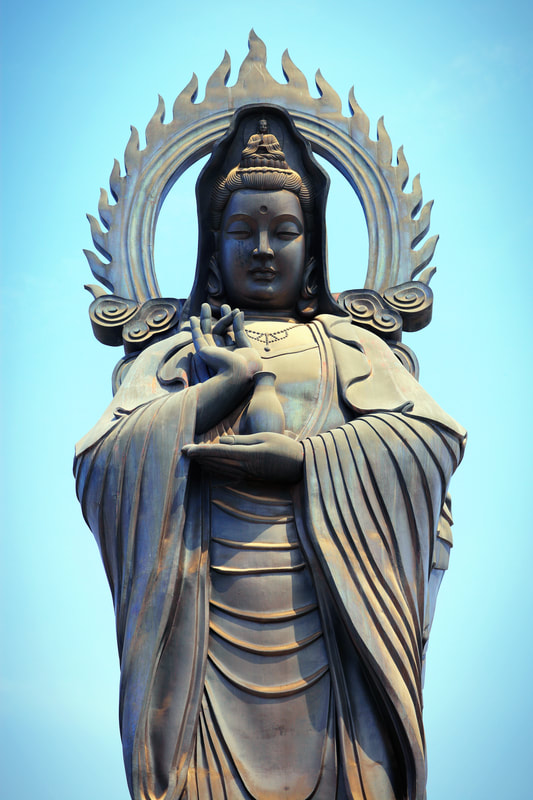
बोधिधित्त Bodhichitta
All scriptures talk about the purity of water, cleanliness, the purity of the mind, purity of the heart and the body. This term in Buddhism is बोधिधित्त Bodhichitta, and in many levels of instruction, in many levels of Buddhism, they teach that to awaken the powers of the heart real wisdom, requires understanding three levels of instruction, which you find in any tradition.
You find that there is an introductory, intermediate, and advanced path. Or in Buddhism: Shravakayana, Mahayana, Tantrayana. Or in Sufism: Sharia, Tariqa, Marifa. Amongst the Freemasons, you have the the apprentices, the journeymen, and the masters. It is all the same. They are the same steps, the same path, but just talked about in different words, different languages. Bodhi is wisdom. It is light. It is perception. It is when you see, and you understand the root of some problem and how to change it. It is enlightenment. It is knowing. Chitta is often translated as “mind.” It is better if we say consciousness, because in our common parlance, mind is intellect, thought, but chitta is really the essence, the seed, the heart. In some translations, Bodhichitta can mean “heart-mind,” “heart-wisdom,” “wisdom-love.” It is that state of being in which we are able to, again, transcend pain, to know how to solve problems. In the introductory level, this Bodhichitta is the altruistic intention to attain enlightenment for the benefit of all beings. It is the joy of saying, "I will serve in my life other people so that they are not suffering anymore," and “to make the effort to change my life to do so.” But intentions are not enough. Action is what is essential. Action is the Heart Doctrine. In Mahayana teachings―maha meaning “great,” yana meaning “vehicle”―it is an elevated state of awareness known as प्रज्ञ Prajna in Sanskrit, which directly perceives emptiness. This is a very beautiful philosophy if you have studied it. Emptiness, no self―no anger, pride, hate. It is clarity. It is not a mere absence. It is presence, but free of condition, free of our defects. It is heaven, and there is even a Sufi initiate who said that “Wherever you are, that is hell, but wherever you aren't, that is heaven.” It does not mean we do not experience it. It means that we transcend this lower self and put an end to the causes of pain. That is the quality of the heart. The heart knows reality from falsehood when it is clarified, especially with the last level of religion: Tantra. In Tantra, obviously in the West, it is the connotation about a relationship. A man and a woman in a marriage can take the most powerful energy that they have in life, the power to create, and by conserving it, transforming it, and elevating it with purity, it awakens the soul. Tantra means “continuum.” It is not just sexual connection. It is continuity of perception empowered by the power of life. It is the ability to see, to be awake, to not lose your presence, to be in that constant movement of consciousness: always watching, always learning, always seeing, always perceiving and knowing. Also, Bodhichitta refers to the seminal fluids of the body, because that fluid is the waters of life, which when transformed and never lost, can be the source of real power, real vitality, real strength. These are the waters of life mentioned in the Bible and is the source of Jesus' injunction: “You must be born again,” because it is a sexual problem. Obviously, there are levels to this. We will just touch on this briefly. In Tibetan, byan-sems, can be translated either “enlightened mind” or “semen,” and that energy can really give power if we know how. 
Heaven Cannot Mix with Hell
The Voice of the Silence emphasizes that with Tantra, purity is fundamental, and this is the great mistake of many westerners who approach Tantra with desire, with ignorance. It is very poorly taught, and actually, most schools that teach about Tantra today teach you how to take the energies of God and to feed desire, to feed lust.
Yes, there are people who awaken powers, abilities, perceptions, but not as an angel, but as a demon, because all religions teach and The Voice of the Silence teaches: desires are the root of pain―ego, pride, attachment, laziness, whatever it may be. The soul must be pure. The soul must be clean, and that is the power of the heart. But that energy depends on how we really use it, and that use determines our life. Think of it. You could have a child. You can create a human being who can change the world. One person can radically alter the fate of history because a man and a woman joined together to create that person. That is an extremely, unbelievable power. It is the power of the universe. It is the power of creation. It is the power of divinity. But there are ways to use the energy that are not taught in public, until now. That energy that can create, instead of a child, it can create a god inside. Two of the names in the Islamic faith for divinity, الودود Al-Wadud: The Loving, and الخالق Al-Khaliq: The Creator, is a reference to that sexual power. For where else do we find the power to create through love but in sex? It is the power of life, which is why the Jews toast, “L’Chaim, to Life!” ― the power of living, the power of creation. But that energy can be misused. The dew drops of heaven, of amrita, can mix with our impurities, and that is the problem. That is why in most of us, our heart is dead, because the heart is not nourished with the waters of life. It is not a fountain that flows inward and upward to the mind, to the heart. It needs energy as a circuit, as tantra, to clean out the mind, to purify it. Before that path is entered, thou must destroy thy lunar body, cleanse thy mind-body and make clean thy heart. Eternal life's pure waters, clear and crystal, with the monsoon tempest's muddy torrents cannot mingle. Heaven's dew-drop glittering in the morn's first sun-beam within the bosom of the lotus, when dropped on earth becomes a piece of clay, behold, the pearl is now a speck of mire. ―The Voice of the Silence Innocence: The End of Desire
I am pretty sure we all can think of moments in our life where maybe because we had innocence or purity. In a moment, we make a wrong decision. We give into maybe anger, desire, lust, and that purity of the soul is lost. It is extinguished. The heart is dead, but the heart could be reawakened with greater force if we cooperate with our inner divinity, with conscience, with the voice of the silence, the voice of divinity.
In our Western culture, we believe that by giving into desire we will be happy. We feel satisfaction for whatever it may be. It is precisely this belief which has made the world a mess, because everyone of every religion fundamentally ignores what the prophets taught: that desire is the source of pain. "Deny thyself, take up your cross, and follow me," said Jesus. Or “Desire is never satiated by feeding it,” according to the Laws of Manu, which is one of the oldest scriptures of Hinduism. The Voice of the Silence emphasizes these same points: Do not believe that lust can ever be killed out if gratified or satiated, for this is an abomination inspired by Mara (illusion, attachment, craving, passion). It Is by feeding vice that it expands and waxes strong, like to the worm that fattens on the blossom's heart. ―The Voice of the Silence
However, the rose of real love can be reawakened.
The rose must re-become the bud born of its parent stem, before the parasite has eaten through its heart and drunk its life sap. ―The Voice of the Silence
Again, the rose is a symbol of real purity, but purity through wisdom, because all of us, by the inevitability of life, have made mistakes, entered our karma in life, our situation, our struggle, and have erred, but that innocence can be reborn. The heart can be inflamed.

Compassion and Charity: The Seed of Awakening
In Mahayana Buddhism, especially the Heart Doctrine―which is the path of service and charity, but also our spirituality being focused on others, not ourselves―we really discover that as we awaken the heart, we feel the pain of others. We feel their sufferings. We are identified with them, and not attached to our own sense of fear and inadequacy or deficiency or pain. Instead, our spirituality, the Heart Doctrine, becomes working for the benefit of others and that helps us in many practical ways.
It really helps us to get over our own pain. We see that someone in our life is in a lot of suffering, even though we are. Our pain is alleviated when we help others. It is a basic law, the law of Christ: reciprocity; give and receive; sacrifice and be blessed. In this way, as we learn to give, even though it may hurt, there is real peace, because we know we do the right thing. In that way, the mind becomes stable. The heart becomes come strong, and compassion is the guiding force of our will. That is how we enter real serenity in silence. Many people try meditation. They sit down. They close their eyes, and they see that their mind is a mess: thoughts everywhere, associative thinking, images, memories, daydreams, passions, attachments, revenge, vengeful or spiteful images, a big conglomeration of just disturbance, dissonance. The reason why many people fail in meditation is because they do not develop their heart. They do not develop their ethics. In their daily life, they do not understand how they are perpetuating their own pain. But, if we are really observant and acting rightly in our heart, our conscience, in truth, we become like an arhat, which is a term for a meditator―stable and serene, able to deal with intense impressions in life. Maybe someone is yelling at us at our job, or our family members are cursing us out for something. We did not wash the dishes at home. Our spouses are mad at us. Someone gets really upset or angry. But in the end, we are calm. We do not feel bad. We do not feel guilt. We do not feel remorse. Let thy Soul lend its ear to every cry of pain like as the lotus bares its heart to drink the morning sun. 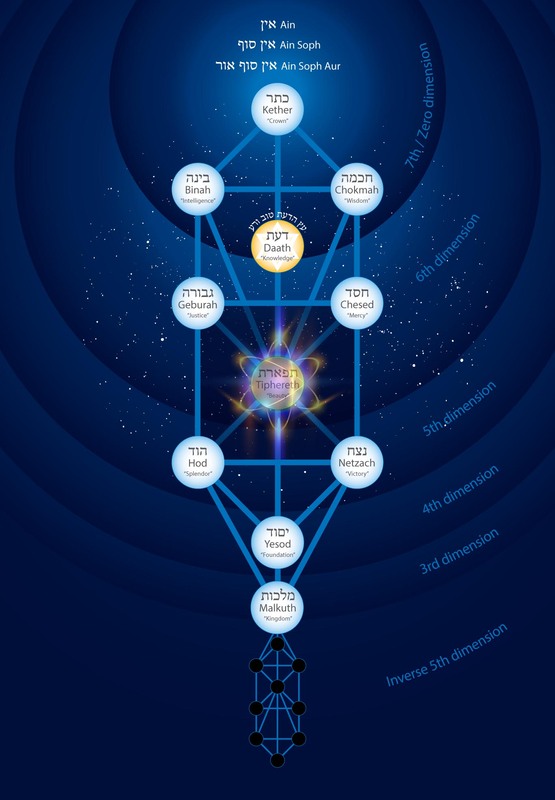
That Vogay tree is this: the Tree of Life, the kabbalah, levels of being, spheres: ten in alignment with three pillars, mapping out the highest divinity to us in terms of our physical experience, our psychology, our divinity. This Vogay tree, this Tree of Life, is born in us when we develop the heart, תפארת Tiphereth in Hebrew, meaning will, “beauty.” If you take this image and transpose it on a person, תפארת Tiphereth is the heart, our willpower, but that will needs to be guided by charity, by love.
It is the seed of freedom from rebirth. It isolates the Arhat (the meditator) both from strife and lust, it leads him through the fields of Being unto the peace and bliss known only in the land of Silence and Non-Being. ―The Voice of the Silence
So, this level of this map depicts levels of nature. In this lower sphere מלכות Malkuth, we have our physical body where we have a very strong sense of self. The higher up you go in levels of matter, energy in nature and perception, the less self you are and the more divinity is, until going even beyond that: the emptiness, the void, the Absolute, the cosmic space, which is real joy and freedom, real compassion.
It is the essence of Buddhism, especially, and even Christianity, because that Christos, that light which maps out this top glyph, emanates from that source (light from darkness, cosmology). So, the point is, charity is the way―service, giving―because the other solution for a lot of people is to develop their spirituality for themselves. 
Selfish Liberation
It might seem strange. What does selfish liberation even mean? How can a spiritual person be selfish? There are some people, actually many people, who believe that only they want to liberate themselves and that the weight of real freedom, to go beyond pain, is to just concentrate on oneself―simply to try to understand what one is doing wrong and not bother with the world, and this is wrong.
Obviously, in the beginning, in the incipient levels of the path, we obviously want to change our life in some radical way so that we suffer less. But there becomes a threshold or a point in which we have to decide: are we going to go further? That really depends on whether we are willing to give to others, to sacrifice. Sacrifice is the law of Christ, the law of Buddha, the law of Muhammad, the law of Krishna, the law of Moses. Giving charity does not mean money. It does not really mean material means. It does not really mean food. Those are beautiful things, and they really help, but really from the consciousness of the heart, our Being, the state of love is really what defines us. The Voice of the Silence touches on a lot of things that many authors did talk about, that spirituality is really profound when it is not about us. It is about humanity. Those were at least the explanations of the highest initiates. This scripture emphasizes a few points about some common tendencies amongst spiritual students. If thou art told that to become Arhan thou hast to cease to love all beings ― tell them they lie.
It is a very important thing to understand, because this path is very revolutionary, and it requires foundations. Someone who is not good at home with their partner will have problems, will have conflicts. Those fights and disagreements and hate saturate and spills over into life. In a way, what goes on at home determines many things, even in schools with parents, with children, who are very vulnerable, whose hearts are really awakening and who are not given the education that they need to really be.
There are many people who think that to be spiritual, to follow the Heart Doctrine, means to not be worldly. “Oh, I don't care about money. I don't care about my father or mother. I care about being spiritual!” ― and they abandon their families and life and world, and do not realize that they are causing a lot of pain. Really, their spirituality would be authentic if they learn to take their life and where they are at to be a good person, to be a good husband, to be a good spouse, a good child, a good father, a good mother. This is not really about joining a monastery, although that could be good. We live in very different times. Obviously, it is good to go out on a meditation retreat to be away from the cities to gain some stability of mind, but in this era, we live in a time of cooperation, and because of karma and life and modern living, we have to be in the world. It does not mean that you have to be of it. 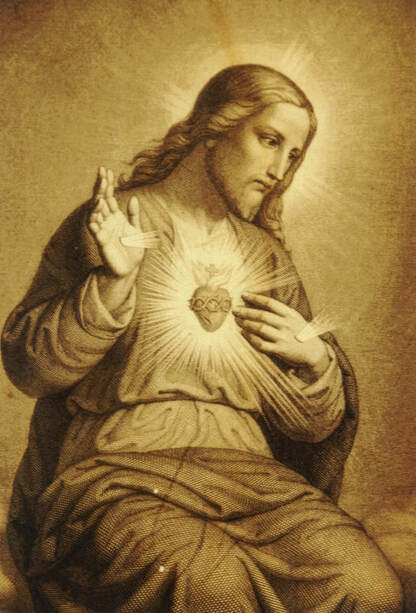
The Illusion of Duality
These Tirthikas mentioned a few things: kind of some common philosophical misconceptions about this Heart Doctrine. They often believe that any action is sinful and that by not acting, they are blissful, meaning, to avoid the world. “Go live out in the mountains. Abandon the world.” Sounds pleasing. Walden was very good in terms of getting out in nature and just being away from the cities. It is good for a time, but it is not enough.
Really, the quality of a prophet is one to maintain that high ethical ideal and live it, but also show it to others, to practice it. In this way, while they are in the world, they do not identify so much with the craziness of the world, in a sense, because life is impermanent. As intense as certain situations in life may be in modern living, these things will pass. They are not permanent. With that wisdom of emptiness that things change and are always fluctuating, one has the ability to let go, but also to know how to act clearly. That is the basic fundamental philosophy of Mahayana Buddhism and Bodhichitta: to understand that nothing is permanent. But at the same time, situations need to be changed and can be produced for the benefit of others. If thou art taught that sin is born of action and bliss of absolute inaction, then tell them that they err. Non-permanence of human action; deliverance of mind from the thraldom by the cessation of sins and faults, are not for “Deva Egos.” Thus saith the “Doctrine of the Heart.” ―The Voice of the Silence
This non-permanence of human action, the fact that things always change and that the mind can be freed from suffering and sins and faults, is not for ego, defects, vices, and errors. It is for the soul, the consciousness, the heart. So, it is a very interesting distinction, right? I mean, when pain ceases, when we get rid of anger, not repressing or hiding it or feeding it, but observing and studying it and disintegrating it and freeing love, that is really the transformation of the heart, the soul. That is the embodiment of the real. In that state, we realize that those former ways of being were illusory or a dream, false.
The Dharma of the “Eye” is the embodiment of the external, and the non-existing. ―The Voice of the Silence
…because these appearances are superficial. They change. They pass, like a wave in the ocean, like sand and foam, like a mirage.
The Dharma of the “Heart” is the embodiment of Bodhi, the Permanent and Everlasting. ―The Voice of the Silence
But to really know this requires experience. Knowing what in us is really in that state, that is very stable and secure and divine, without attachment, is everlasting and real. But obviously, we have to work, to be patient with it.
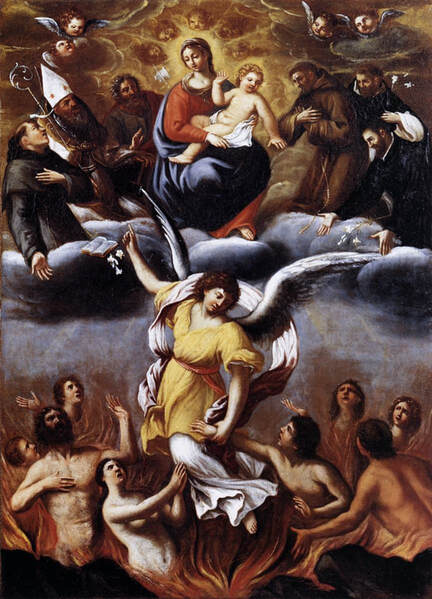
Inner Sacrifice on the Path of Spiritual Birth
The Voice of the Silence builds on a few other ideas in relation to the higher stages of the Heart Doctrine. We mentioned a few quotes about lunar bodies, right? You heard that line. There is an interesting teaching in Theosophy or by Blavatsky and also Samael Aun Weor, where they talk about the way that we inhabit our dreams. Just as we inhabit our physical body in the physical world, likewise in the dream worlds, we have a body: a dream body, an astral body.
But for most of us, it is not authentic, not spiritual. It is more of a lunar body, meaning, we are born with it by nature. We acquire it so that we can live in those dimensions when we sleep physically, and then we return to our body when we wake. They belong to mechanical nature. It is lunar because it belongs to a type of mechanicity. It was not intentionally created by us, not voluntary. There is another type of body that is something that we need to create in this Heart Doctrine so that, if we wish to go to higher states, more altered or divine states of consciousness, we create what are known as solar bodies, the soul, the Sun, the power of Christ. So again, talking about that creative energy, which is the power of life, that energy can create bodies that belong to higher levels of nature, divinity. They call them solar bodies. They are vessels or vehicles in which Christ can enter, our own inner divinity, so that we become fully developed. Those vestures are called, in terms of higher bodies, you can say at the top of the Tree of Life: Nirmanakaya, Sambhogakaya, Dharmakaya. This is Buddhism, or the essence of Tantra. In the process of sacrificing ourselves and being better people for our communities, we also learn to work with this creative energy so that we can give birth to higher states of being. If thou would'st reap sweet peace and rest, Disciple, sow with the seeds of merit the fields of future harvests. Accept the woes of birth.
These are the wedding garments of the soul mentioned in the New Testament. This top trinity is precisely those three higher bodies, which relate to the highest divinity: Dharmakaya, Sambhogakaya, Nirmanakaya: כתר Kether, חכמה Chokmah, בינה Binah. So different traditions teach the same thing.
What Should Be Our Spiritual Priority?
But the reality is creating solar bodies is not enough. Obviously, being born again is not enough. There needs to be compassion.
It is a strange thing. Why is it that if we create these higher vehicles of God, that it is not enough, to be born spiritually? Obviously in life, it is not enough just to be born. We have to get educated. We go to school. We learn from our parents. We learn from our families. That knowledge of the Heart Doctrine is really what informs our understanding of how to use those vehicles in the best way, because in that development, we obviously have imperfections and defects as we gradually purify, right? Bodhichitta is fundamental, that love for others. That it is the guiding force that drives our spiritual work, because any amount of attachment or a craving can be an obstacle. This is why Samael Aun Weor stated in The Gnostic Bible: The Pistis Sophia Unveiled: The one who does not possess the Bodhichitta, even when he has created the superior existential bodies of the being, is still unconscious and absurd. ―Samael Aun Weor, The Gnostic Bible: The Pistis Sophia Unveiled
So, lunar body below, solar body above. Obviously, having those vehicles, again, is not enough. I am sure you have all heard of mythologies in which the gods are fighting. Those are beings of these higher realms who have those vehicles, have their foot up in that level of the kingdoms of nature, but they still have pride, anger, resentment, and so, they struggle with each other.
Bodhichitta is beyond that. It is beyond just creating bodies. It is the selflessness of the higher worlds. 
Every Conscious Effort Counts
The Heart Doctrine can seem very intimidating because it involves a lot. It is very overwhelming, but the reality is that whatever we can do now, sets the stage for later.
Whether or not we believe in reincarnation or multiple births is one thing, but the Heart Doctrine teaches what we experience. It is not a theory. Personally, I know from my experiences and dreams and visions that I was in certain places of the world past, certain cultures, which explains my affinity for certain religions. So, it is not a theory for me. It is the Heart Doctrine. But everything we do will set the stage for future existences. It may be that in this life we are not capable of being like Jesus or Padmasambhava or Buddha, then we can do what we can, and that is enough. The pace depends on us, and whether the strength of impulse that we have and will and the inspiration. Yet, if the “Doctrine of the Heart” is too high-winged for thee. It thou need'st help thyself and fearest to offer help to others ― then thou of timid heart, be warned in time: remain content with the “Eye Doctrine” of the Law. Hope still. For if the “Secret Path” is unattainable this “day,” it is within thy reach “to-morrow.” Learn that no efforts, not the smallest ― whether in right or wrong direction ― can vanish from the world of causes (which is basically תפארת Tiphereth the world of causal nature, cause and effect. The world of will.) E'en wasted smoke remains not traceless. “A harsh word uttered in past lives, is not destroyed but ever comes again.” The pepper plant will not give birth to roses, nor the sweet jessamine's silver star to thorn or thistle turn. ―The Voice of the Silence 
Cause and Effect is Certain
This is because karma is certain. Cause and effect are a reality, not only what we do physically, but what think, what we feel, and what we desire. We see this even in dreams, and most times we are unconscious. We are not aware that we are dreaming, which is driven by our desires and impulses to satisfy whatever. Still, it is cause and effect, but in different levels of nature, within הוד Hod, the astral world, the dream world, because why else would we believe it to be true in the moment, even though we wake up later and say, “It was just a dream”? Why did we not believe that in the moment when we were dreaming? ― because there is a certain level of matter, energy, and perception there. This also applies to our thinking, our emotions, and our state of being, because these are real.
So, the thing to think about too is that every good deed counts. Thou canst create this “day” thy chances for thy “morrow.” In the “Great Journey,” causes sown each hour bear each its harvest of effects, for rigid Justice rules the World. With mighty sweep of never erring action, it brings to mortals lives of weal or woe, the Karmic progeny of all our former thoughts and deeds. ―The Voice of the Silence 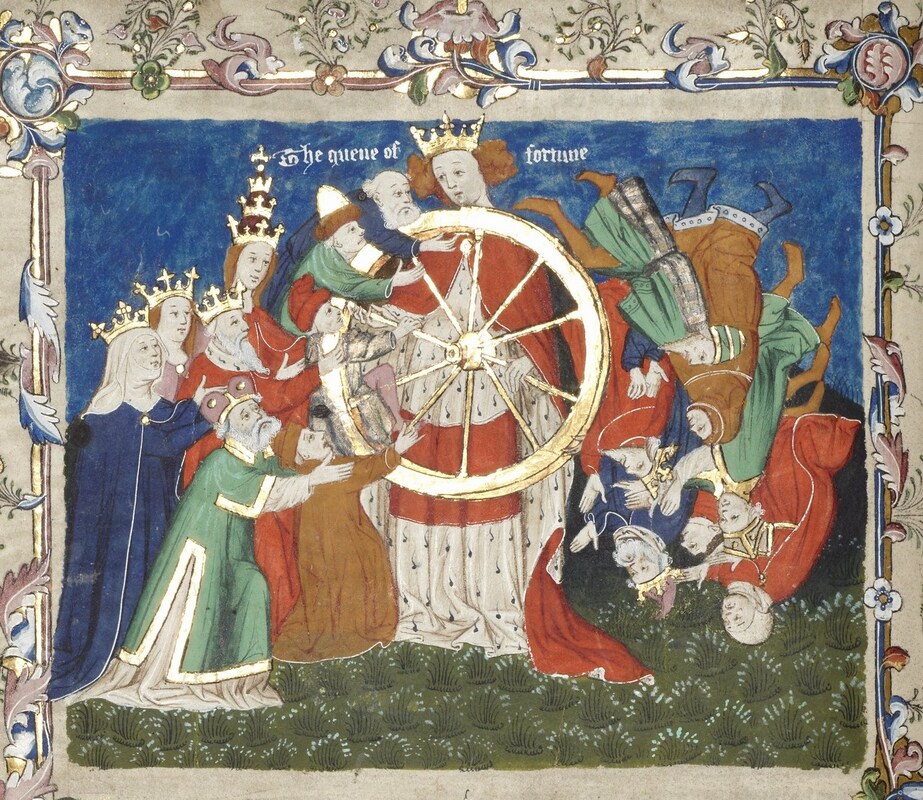
Acceptance and Aspiration
In this way, we should learn to accept our situation in life.
Obviously, we always want to improve, to aspire, to change. But contentment is a quality that really helps us to develop spiritually. Accepting what we have and being grateful for what we do have, so that by willingly bearing this karmic sorrow, that we heard in Carmina Burana, we can pay it. In a sense, we either pay with pain or we pay with negotiations, with the divine law, with the heart. We prove with our actions and our way of being how to resolve these issues. But sometimes we pay with pain, and it is inevitable. When it is over, it is good. It is done―no more. This teaches us patience, patience of the the heart, which is certain about its fate and knows that it is being guided by divinity. This is not a belief system. It is from experience. To have faith is to know. Take then as much as merit hath in store for thee, O thou of patient heart. Be of good cheer and rest content with fate. Such is thy Karma, the Karma of the cycle of thy births, the destiny of those, who, in their pain and sorrow, are born along with thee, rejoice and weep from life to life, chained to thy previous actions. ―The Voice of the Silence
So, this might seem a little bit fatalistic, right? That is the common idea about the wheel of fortune, that it just happens to you and that you just suffer, and you just go along with the flow. That tends to be the case for most people, because they are not willing to look at themselves, at what what is perpetuating that cycle. In Buddhist terms, Nirvana means “cessation,” to cut through cycling, to cut through Samsara, “repetition.” That happens in our life, moment by moment, in the decisions that we make and being awake in the heart, so that we do not repeat certain things, and we can originate new circumstances. That sets a new chain of events.
Awaken the Heart and Strive in the Spiritual Path
In this way, we learn to strive.
The fundamental axiom of religion is “Kill desire. Kill anger. Kill pride. Kill lust,” because it is the enemy. It is the unbeliever mentioned in the Qur’an, the infidels, which is not anyone outside our faith, but really, pride that does not believe in helping others, love that does not believe in serving God, because in a moment, as much as we love our traditions, when we have anger, we do not believe in God. We become an infidel, an unbeliever, and cause real havoc and pain. Kill out desire, but if thou killest it take heed lest from the dead should again arise.
Some people have spiritual ambition. We all do. We want to hear about these things, and we want to go to Nirvana and go to the highest heaven, and “I am going to make it to the end! I am so excited!” ― and then the reality hits: it is not easy.
Even the ambition has to die―to accept reality. Desire nothing. Chafe not at Karma, nor at Nature's changeless laws. But struggle only with the personal, the transitory, the evanescent, and the perishable. ―The Voice of the Silence
By desiring nothing, it does not mean don't enjoy life. The soul can enjoy life. It does not mean we become dead, such as dysphoric or zombie-like. It means that we are vivid and lucid in the heart, experiencing a rainfall without our labels or mind trying to mar the reality.
“Chafe not at Karma,” because cause and effect is certain. Certain things happen to us that may be unjust or painful. It is important to get at the root. Meditate why it happened. Find out, and “struggle with the personal, the transitory, the evanescent, and the perishable,” because really, all of our defects are that. They are not eternal. Conclusion
So, the Heart Doctrine is about personal spiritual experience, but what we outlined today was to talk about some principles that relate to many aspects of the path, because all of it is governed by the heart. Samael Aun Weor said in The Perfect Matrimony that “initiation is your own life, intensely lived, with rectitude and love,” with our heart.
Do you have any questions? Questions and Answers
Question: So, you have this slide selfish liberation, which actually was kind of a theme going through what Blavatsky's written here in this section. You said something like, some people believe that they can just work on themselves, not really worry so much about the world, but just focus on fixing what they are doing wrong, and they can reach liberation, and you said that that is wrong. I was always under the impression that, although that is kind of an introductory level of liberation, that that technique or that method actually could help a soul to reach some degree of liberation. Now, maybe that is more Shravakayana and not so much Tantrayana, but is it true that that really is wrong, and you can't reach liberation if you are just worrying about you, doing some good deeds, but not getting caught up in the world as much?
Instructor: I will clarify in terms of relativity. In terms of the higher path, it is wrong to be selfish. But obviously in the beginning, we start where we are at. In most cases, we need to fix ourselves first. Maybe take a year or two years, three years, however long to do what we have to do, and then once we have that stability, we can try to sacrifice in whatever way we can. Relative. Obviously, what is good for one person may be bad for another in the sense of life choices. But in terms of the prophets, obviously, their whole focus is on us. Beginners, we work with ourselves. Mahayana: intermediate, we try to help other people. Tantrayana, not even an inkling of self. That is how rare it is. But yeah, we have to start with where we are at. Question: So, some of these levels of being take lifetimes to develop. Is it possible that someone would spend a whole lifetime just as a monk, just working on themselves, getting separated from the world to kind of just build a foundation there and then maybe in a future lifetime they might keep going? Instructor: Yes. Question: It could still be helpful for us, but we have to kind of gauge where we are at, spiritually. How could we know if that is what we need or if we need to work with these higher teachings? Instructor: We get that answer in meditation, in our conscience. Personally, I would love to go live in a monastery. We do retreats with Glorian Publishing. We go out to Padma Samya Ling. In a sense, it is the best week and also the worst week of my life every year, because you get so much spiritual strength from the community and being out in nature with no cell phones, no technology, that you really get to settle down. It is also the worst week because you see clearly what you need to work on, and it could be tough. But there are many monks, people I have known who have gone to a monastery and they need it, and they choose, and they were guided to. Only divinity can decide. But, yeah, we have to learn to follow His will, not ours. Question: Related to the gymnasium of life, I was trying to understand that when you work on yourself, you have to stay away from the world because the world contaminates you, but at the same time we have to be in the world because that helps us to refine ourselves. So, it is very hard to put those things together and make them work. So, that has to do with that gymnasium of life? Instructor: Yes, and Samael Aun Weor mentions that for most of us, we need a gymnasium because we are at a point that we have so many defects and such heavy karma that this is probably one of our last opportunities. Divinity is exerting a lot of energy, which you see in Carmina Burana. Literally, the intensity of the music is like, literally, that karma hitting the soul, and the soul has the choice: take advantage of the gymnasium, or crumble. 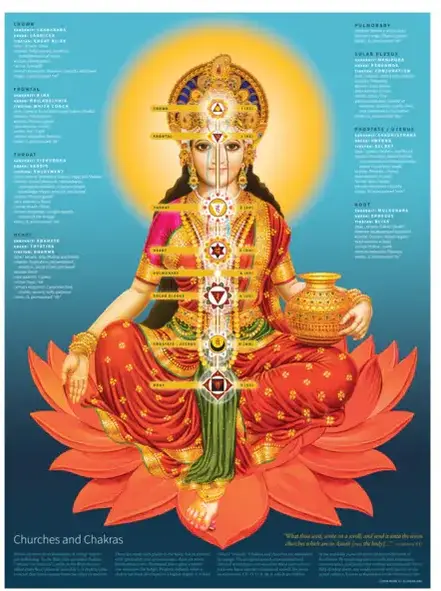
There is a line too that at the end of the first piece that is very optimistic, actually, despite the intensity, the severity the music. It says something like “pluck the vibrating string.” It is a weird line in the middle of a chorus of melancholy and pain. That string or that instrument is precisely in that image of the Divine Mother [from Glorian Publishing, available as a poster via their online store]: the chakras, the seven notes. In a way, in the midst of our pain, we need to endure it and learn to play music, which is what Carl Orff was doing. It is such a powerful, severe piece, but he obviously felt a lot of passion and joy making it because he needed to to talk about the severity of life and the gymnasium we need to face, so that we pay that Karma, but also play the music of the soul, despite it.
Seven strings, seven notes, seven chakras, right? That helps. We learn to vibrate with a higher law. Most of us, we are at the point where this might be the end, so it is all being thrown at us at once. So, we need the gymnasium, and divinity is the one who is organizing our life. So, if we need to be in that gymnasium, it is going to give us what we need, and if we need to be in the monastery, however long, He decides that. The circumstances will line up and the heart will tell, especially when we are meditating, and we get that insight. Personally for me, every time I ask for a break, I do not get one. When I need it, it comes and it is like, “Okay, I accept.” We take what we can and make music despite the the agony. That is the power of that piece, especially. Carmina Burana: कर्म Karma, Carmen [like the Virgin of Carmen, the Divine Mother], cause and effect, कर्मन् Karman in Sanskrit. Urana, Uranus, Ur, meaning “light,” Anas, meaning “water” in Chaldean. You make light, or you overcome karma by developing light and by working with the water of Bodhichitta. "Fate strikes down the strong man. Everyone weep with me!” Then there's that trumpet at the end of the first piece of O Fortuna, the trumpet, which is the trumpet of resurrection according to the Qur’an and the scriptures. That is how we find joy, by paying it. But yeah, divinity decides. Question: Are those levels you mentioned, are they related to what the teacher Samael says about the Three Mountains and how we we can spend lives in one mountain and then develop to the other, but the last one is the one when we sacrifice everything for humanity? 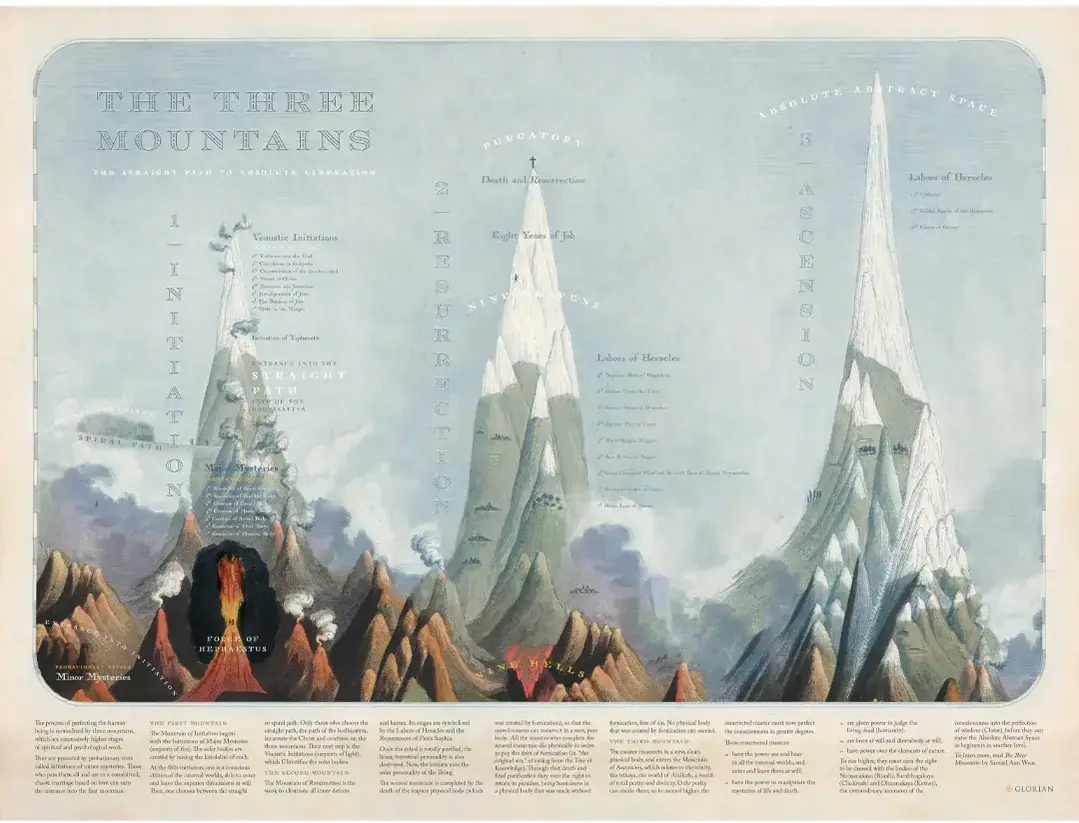
Instructor: Yeah, levels, right? I mean, in a sense, you have the Three Mountains poster, right? Glorian has this available. Three levels of initiation, or better said, three levels of spiritual work. You can even categorize them under introductory, intermediate, and advanced: Shravakayana, Mahayana, Tantrayana.
The First Mountain is the beginning. It is called Initiation. It is the path in which we first descend and face ourselves in our own hell realms. We enter what is called Minor Mysteries, nine. It is a probationary path. It is like divinity says, “Okay, you want to enter the path? Let's test you.” As the Qur’an says, truly Allah tests you to see who among you is righteous (29:2-3). This is precisely this, we get the karma and the ordeals. It happens and then we find the teaching and we suddenly face a lot of problems. Question: The dark night of the soul? Instructor: In a sense, it can be, but usually I would say the dark night of the soul occurs even later on when you have some level of development and suddenly divinity says, “Okay, here is a period in which We have to withdraw from your presence so that you face the loneliness.” Sometimes the dark night of the soul, as depicted by Beethoven's Moonlight Sonata, you know when real heavy ordeals hit. That is usually for masters, especially.
Beethoven was going deaf at that time. So, you hear his sorrow in his music that he wants to hear this prophetic work, but he cannot. It happens in many stages of the path.
But initiation is when you enter what is called the Major Mysteries. The Minor Mysteries can be performed by single persons (introductory level). But married couples can go through them very quickly and enter the Major Mysteries, which there are five major ones, which are talked about in a book called The Three Mountains. In a sense, this is all introductory in terms of scale or resolution, because for us, we have our own relative degree of introductory knowledge and intermediate knowledge, advanced knowledge, but there are higher stages of initiation. 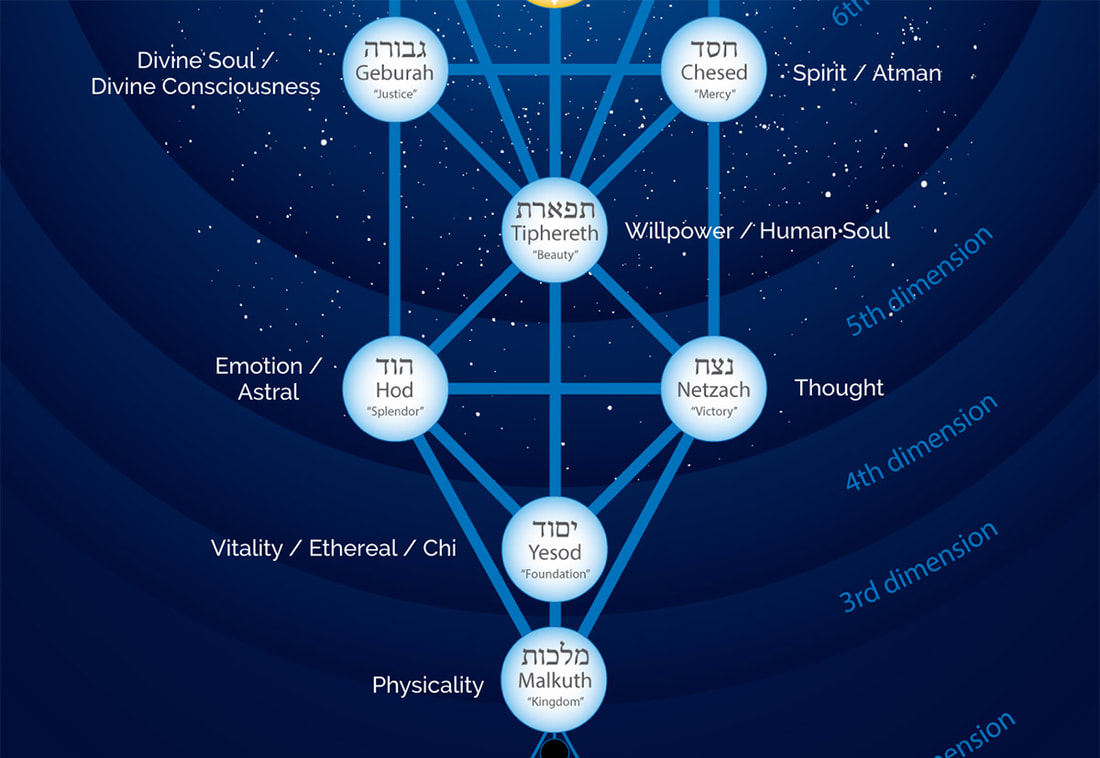
There is a decision that the initiate has to make after really working with these lower five spheres of the Tree of Life, creating the solar bodies of this lower diagram, raising what is called Kundalini of the body of מלכות Malkuth, the physical body; יסוד Yesod, the vital body; הוד Hod the astral body; נצח Netzach, the mental body; תפארת Tiphereth, the causal body. We create what is known as the wedding garment of the soul, and in a sense, at that point, the initiate has to make a decision:
Renounce everything and incarnate Christ, the light, or stay in Nirvana and take a spiral path, which is the selfish path of liberation, the path of the selfish gods, because they enjoy that level of nature. They do not return, and they stay in bliss. But an initiate who, at that point, decides to sacrifice everything and wants to return to the world, to give to humanity, to continue serving, they have the special blessing to receive what is known as the Venustic Initiation, the incarnation of Christ. They become what is known as a Bodhisattva like Jesus, Buddha. They incarnate the light. Then at that point, they enter higher development on the First Mountain, raising not only serpents of fire (Kundalini) up these lower bodies, but serpents of light. Fire and light―Ur-Anas in a sense. The Second Mountain is very elevated. The initiate has to learn to die all the ego. Imperfection and desire must be eliminated. This is the intermediate path, in a sense, because it is still very difficult. It is probably one of the most difficult parts of the work, but that is a level of work in which the soul is dying to every detail of defect. No imperfection can remain. 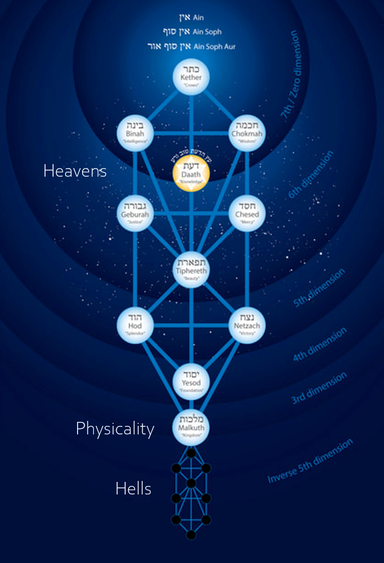
As they descend down hell realms―you can kind of see it in this glyph too, nine lower spheres mentioned by Dante, eliminating defects relating to the first sphere of hell―they then go up to the first heaven. Second sphere of hell, they go up to the second heaven, and likewise, down and up, down and up. Further down, further higher up, because every initiation is preceded by humiliation. It is challenging because the work of initiation is to eliminate all that is imperfect.
Obviously, at that point, when the ego is fully dead, the initiate prepares for what is known as resurrection, because there has to be no fault in the soul at all. That is a level of, say, Jesus, before he died. No ego left. He was crucified, but he had no ego on the cross. Dead. No defect, in a sense of a spiritual psychological state. No anger, no pride, no fear, no lust. Perfect, to a degree. But in the end, his physical body died, and he chose to resurrect. That is when the soul gets absorbed by the Holy Spirit (בינה Binah). Then there is a Third Mountain, which is for resurrected masters, which personally, I do not even understand because, I mean, I have had certain experiences, I have seen parts of this, but it is still very elevated. Even for resurrected masters, they have to go higher, from Nirmanakaya, Sambhogakaya, Dharmakaya, and even beyond. At that point, they are fulfilling the final labors in which they return to the אין סוף Ain Soph in kabbalah, which is the origin, the star of heaven, the star of Bethlehem, the synthesis of being. It is like a star that radiates light in the void, but is the real happiness of Bodhichitta, of Being. That star shone on the birth of Christ with the three magi. 
Three magi, depicting levels of work. You have a black king, a yellow king, and a white king. Those are symbols relating to alchemy, the alchemical tradition. Colors related to purification of the soul, levels. I recommend, if you are interested, obviously, for you to study The Three Mountains, but also, we have this poster available from Glorian Publishing. It maps out all the steps.
But obviously these levels are very elevated. A lot of us struggle even with just Minor Mysteries and getting our foot in the door of the Major Mysteries. Most initiates, if they get to this point, the Fifth Initiation of Major Mysteries, the causal body, create that vehicle, are tired. I had one instructor, he is from Glorian and he said that most of them weep tears of blood to get to that point, and then when they are given the choice, “You want to go to the spiral path, stay in Nirvana, enjoy your time, be peaceful up here, or take the direct path of Jesus? Renounce heaven, renounce hell… go beyond, in which you pay everything. You will pay all your karma.” In a sense like in Carmina Burana, that initiate is precisely that strong man or the strong: “Fate strikes down the strong. Let everyone weep with me!” That is the Mountain of Resurrection, because that pain is very intense. Most of them say, “I will take the spiral path.” It is not bad. It is joyful. It is peaceful. It is a good vacation. But the straight path is something else, very challenging. The next lecture we will give next week, we will talk about this in more detail, especially in The Voice of the Silence [Liberation and Renunciation]. I know it is a lot. Question: Can you expand on the law of the divine? Instructor: Sure, karma. Karma is divine. There are levels of karma too. Karma means “cause and effect.” What we do has consequences. In a sense, there are five aspects of the divine law:
Certainty, that cause, and effect, is certain. It will always happen in whatever we do. Our deeds always have a consequence. Magnification, the effect is always greater than the cause. Think of it like, you see a politician give a speech, and then people get mad because that person is speaking with a lot of hate, or any person. It is like putting a stone in the water, a lake. You throw the stone, the lake ripples, it spreads. The initial action was small, but it had a big consequence (magnification). The effect is always greater than the cause. Permanence, you cannot take back the actions that you have committed. You cannot take back a bullet. It always happens. My mind is escaping me in terms of the fourth, but there are five levels. [Compensation: you cannot receive the consequences of an action you did not perform]. But the more important one is transcendence, meaning, like a superior action overcomes an inferior one, and that is really where divine law comes into play―divine law being forgiveness. In a sense, there is karma for everybody: terrestrial people, everyone, all of us, laypeople, beginners. But there is also karma of the gods called Katancia, which is something very high. Question: Isn't it also dependent on our soul contract? Instructor: Yes, in a sense, initiation is a contract. In the beginning of the Minor Mysteries, you may have the experience in the internal worlds of being confronted by your own Being. In a vision, they say, “Do you want this?” and will show you what is ahead. In a way, divinity, the divine law, is saying, “Do you wish to move ahead? Are you going to sign this?“ Because if you do not pay up, there are worse consequences. You are more responsible. 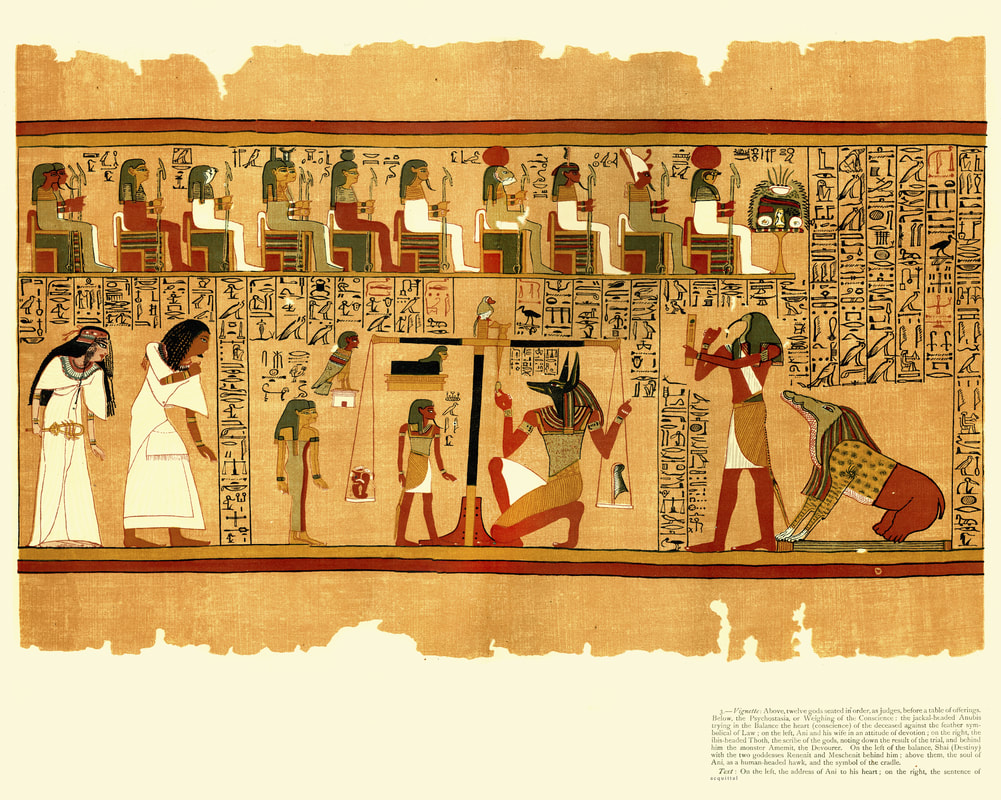
In a sense, that is Katancia, the law of initiates. The law of common people you can see in Egyptian mythology with Anubis. He has the jackal mask. He is judging the dead and the living, their souls of the defunct with a scale. He measures their heart and a feather, the equilibrium of their mind and their Bodhichitta, their Heart Doctrine or their heart. Anubis is a real being. He judges in the internal worlds the fate of humanity. He is an impartial judge. He has a mask to show that he is a divine representative, the blind justice, which is not arbitrariness, but impartiality.
But there is a higher law. In dreams, if you dream of wolves or jackals, it is a symbol of karma, the wolf of the law, the jackal (Anubis). If you dream of a lion, that is Judah, Katancia. The lion is the symbol of divine majesty, the might of God, Judea, יהשוה Yeshua, Savior, the Christ, יהודה Yehudah: י Iod, ה Hei, ו Vav, ד Daleth, ה Hei. Same letters as יהוה Jehovah, י Iod-הוה Havah, but with ד Daleth because ד Daleth in Hebrew, if you look at the Hebrew letters, they all represent principles. If you add in the sacred four-letter name of God, י Iod, ה Hei, ו Vau, ה Hei, יהוה Jehovah, י Iod-הוה Havah, you add ד Daleth, you spell יהודה Yehudah. ד Daleth refers to a “door,” and that is a door, once you cross, you can not go back. You are committed. That door is דעת Da’ath, knowledge, alchemy, the work with the creative energy, because when you start working with that, יהודה Yehudah, יהוה Jehovah, Judea, the higher law of divinity says, “You entered that door. You cannot go back. You are committed.” To dream of a lion means, you may have entered initiation in the past, but you fell, and the law, the lion, if it is calm, the law says, “We are on your side.” But if it roars, walk on eggshells―very severe―and that divine law has levels. Obviously for us in the beginning, we make mistakes. We fumble around. We are in the dark. Our mistakes are easily forgiven. But when there is more knowledge or responsibility, following divine law, that is higher, action and service of spirit, there are greater consequences, because the effects are always greater than the cause, according to Tsong Khapa in Tibetan Buddhism. That divine law is our own Being because He is a law in ourselves, the law of conscience, of what is right and what is wrong, the heart. Question: Does that develop virtue? Instructor: Yes, and those virtues are really developed when we eliminate defects, because the defects trap the virtue. You have the seven deadly sins in Christianity/Catholicism. The opposite is the virtue, but the virtues trapped in anger, like love is trapped in anger, chastity is trapped in lust, and if we eliminate the defects, we free the genie from the lamp. You break the bottle. You free the genie forever, and that is how by integrating consciousness little by little in the spiritual work, we become really virtuous. We become like Moses, a magician. Really, Moses could all these things because his power came from God, but he can only do that by getting rid of his self, so that the virtues could be spontaneous. Then also, by enacting those virtues when they are born, they get stronger. They become more powerful. 
Today we are going to be talking about karma. Karma has a Sanskrit root. It comes from the Sanskrit word karman, which means “to act.” Now, commonly many of us, especially in new spiritual circles toss this word around frequently, meaning karma is that people get what they are going to deserve, right? If you say something bad, it is going to be bad karma. Maybe you have seen the little tip jars that say, “If you leave money for your barista, you are going to get good karma.”
We hear the term karma quite a bit, but I think that karma should be taken very, very seriously for those of us who want to have mystical experiences and want to radically transform our life, want to achieve that self-knowledge and that mastery of self, which allows us to transform our experiences and our external situation by transforming our internal situation. If you're looking for a road map to do just that, you need to comprehend karma. Karma, in its true comprehended state, is the key to helping us to get out of ignorance. Ignorance is known as one of the three poisons of Buddhism along with craving and aversion. It is said that if you can eliminate one of those three poisons, you can escape the wheel of suffering, the wheel of samsara: cyclic birth and death, the wheel of existence and escape to Nirvana, right? The heavenly realms, cessation of this cycle that we are stuck in. But for that we need Gnosis. Gnosis is the opposite of ignorance. We see the same root there “gno.” Now, through true Gnosis and comprehension of karma, we can transform our own psychology quite a bit, and by transforming ourselves, we will see a consequence and transformation of our lives. So it is very, very critical, and it is also very accessible, because if you are really waking up, if you have really been applying the practices that we have been teaching thus far in this course, like self-observation, retrospection meditation, observing the three brains, observing your internal states and your external states, then you should be able to see karma. You should be able to see very directly how when you say a certain word, it affects the people around you. It affects your own psychology. You should be able to see how one action you do may be a kind action for someone else. It leaves you feeling happy. Maybe you go home at the end of the day and you feel good. Whereas another action, maybe a cruel word, leaves you feeling unhappy, unsettled, frustrated, or angry. That is karma. That is seeing how a cause that you put into motion produces an effect. 
The Perplexity and Reality of Karma
So we'll dive a little bit more into karma, but I wanted to start with a story from the Jewish tradition. This is a story about Moses after he died. He went to heaven and God gave Moses the opportunity to look down over the Earth at all of the events and situations and people, everything that was going on and to see it all from God's perspective. Moses was very pleased with this, and he saw that it was good. Its creation was good.
But there was one situation that Moses saw that really bewildered him. It perplexed Moses. He saw a soldier riding his horse along a hot dusty road. The soldier saw a shady tree next to a stream and he pulled over his horse, climbed down and got a drink out of the stream. He took a break. Now as he was climbing back on his horse, he didn't notice that he dropped his purse, a little bag of gold coins and he rode away. Not long after Moses saw that a young boy came walking down the road and next to the tree, he saw the purse full of gold coins. He opened it up and he was astonished to discover this. So he took the purse and he ran home in excitement. Only a short while later, a very tired merchant came walking down the road and saw the shady tree next to the stream and decided to have a drink and rest for a while, under the tree, and he fell asleep. He awoke when the soldier had come back having realized that he had lost his purse. The soldier shook the merchant by the shoulders and yelled at him, asking where his money was. The merchant swore to the soldier that he had not stolen the coins, but the soldier did not believe him. So he took out his sword and slew the merchant down. When Moses saw the situation, it really upset him. He went to God and he said, “I look at all of this creation that you show me and I see how all of it is orderly and good. But what is happening here in this situation with this merchant and the soldier? How could this merchant undergo such a tragic misfortune as to be killed by the soldier when he didn't steal the money?” God showed Moses a scene from previously. The same merchant was in a busy marketplace when he saw a man walking with a bag full of gold coins looking at different items to buy, and this man had at his side his young son. Now the merchant was looking to get enough money to buy something that he needed, and so he went up and he struggled with a man to get the gold coins. But when the man wouldn't give up the coins, he killed the man and ran off with the money, leaving the young boy orphaned. God showed Moses how that same merchant was the one who was killed by the soldier who lost his purse, and how that young boy, whose father had been killed and who lost his inheritance that day, came to grab the purse of the gold coins that should have rightfully been his. Now that is a nice story. But I think that this story is very relevant for what we are going to talk about today, because we often don't have that bird's eye view. More frequently, we find that we are in the situation of being down on the ground and being very frustrated with what we see, all kinds of horrible acts and all kinds of terrible tragedies that are happening in our world every day. And we wonder: how can it be that there is a just law, a conscious divinity organizing this world, this creation, when these types of terrible things happen? We might become frustrated. So as much as we liked the theory of karma as a belief system that things will turn out the way that they should, people get what they deserve, at the same time, we may have those moments of frustration in which we are not sure that we are able to make sense of them. The Force and Energy of Action
Now up to this point, we have been talking a lot about energy, and the way that we use our energy is very directly related with karma, which is the law of cause and effect. So I am going to share a quote here from another Gnostic instructor that I think summarizes two very essential points. And the first he says this:
In each moment of your life, you are creating. The human organism is a transformer of forces, and according to your will and your action, those forces are transformed, and those forces produce consequences, results. This is called karma in Sanskrit, from the word karman, which means “to act.” Karma is simply the Law of Cause and Effect. —Gnostic Instructor
So we can imagine a crowded marketplace where you are standing in a long line, and it's hot and somebody shoves you. That is a cause, right? And you might turn and respond to them and shove them back, and that creates another cause. What kinds of effects arise from the initial cause and the responding cause? We can see in that very simple scenario a chain begin, a chain of cause and effect.
In this teaching we talk about recurrence, the law of return. That is, all of us as Essences return lifetime after lifetime, pulled by the very energy that we have put into motion. We create an imbalance in nature, a disharmony, and that disharmony will be equilibrated by this law of cause and effect. Every cause will produce an effect, and so this will follow us from lifetime to lifetime until all of those energies have been balanced again. That is why we can understand from previous studies about our human machine, our three brains, sexual transmutation, how energy becomes very important, especially very powerful energy like our sexual energy, because that is the energy with which we create. In this present moment, we are creating consequences. Your thoughts are creating consequences. Your emotions are creating consequences. Your physical actions create consequences, your words. Everything is creating a consequence. But are we aware of it? Are we perceiving the effects of our actions? Are we perceiving the energies that come into us in each moment as we are stimulated by life, by all these difficult situations or happy situations, the varied experiences of life? Those energies strike us in a given way, strike our psychology, and produce an energetic reaction, a response from us. We want that response to be conscious. We want it to be a virtuous response. We want it to be a very serene, peaceful, loving response from a place of wisdom, but many times, as you know, being where we are at, we react mechanically and we produce consequences that perhaps increase our suffering rather than diminish it. Interdependence and Internal Responsibility
So when we look at these situations on life, which are very frustrating, it seems so removed from the small actions that we are taking day-to-day, but we really have to be aware of our small actions, because our society is a reflection of the individuals who live within it. We like to place the blame somewhere else. To say, “Oh, it's them, not us! It was this person's fault, not me.” We have to look very critically first at what is in our control.
What is our response to life? What are the things in our life that we can change?—because they are caused by us, the problems and the suffering caused by us. How can we change and address those problems first and then worry about larger problems that may seem unrelated to us? Although, of course, we know that everything is interdependent and related. So I'll continue with the rest of this quote from the Gnostic instructor that I mentioned. We are not here on this planet to do whatever we want, to just do whatever we please, even though this is the philosophy that our media loves to promote. Our culture loves to tell us that life is just about enjoying all of the pleasures we can, as much as we can, until we die. This is a very convenient lie for those who are benefiting from us behaving in that way, but we do not benefit from this behavior, neither does God, neither does humanity. The evidence is all around us. Because of our behaviors we have created this society. Because of how each of us behaves individually on a day-to-day basis, we have created this world, not God. We have created starvation, poverty, rape, war, nuclear weapons, chemical weapons. We are the ones who created all kinds of cunning ways to cheat one another. We have made all of that because of desire. To change this planet, we have to change ourselves. —Gnostic Instructor
Now I am not advocating for extremism by sharing this quote. Of course, you know, we might know that there are many pieces of technology, like your smartphone, that have negative effects on the other side of the planet, and yet to be able to function in society, it would be very hard not to support certain industries. We want to do the best that we can, but we also have to realize that the real problem that we need to be addressing is not, perhaps the material problems of life, but rather the problem of desire.
If we can't first understand that in ourselves and address that in ourselves, the root problem, the moral problem, and the spiritual problem which causes our own suffering, then we won't be able to truly address it in the most efficient ways in our world. We might be able to work on some of the symptoms, treat the symptoms, suppress the symptoms, but can we truly get to the root of the disease that is creating a society that is totally out of balance? That is disharmonious within itself and with nature. So as many things as we as we look at in this world that seem very unjust and unfair, until we truly understand within ourselves how we create those types of imbalances, we can't seek a greater comprehension and understanding of all of the greater things that are happening in this world. Our own divinity can teach us all of the reasons for the different situations that are happening on this planet right now, whether good or negative. But before all of that, our inner divinity is going to ask us whether or not we have been sincere with ourselves: whether or not we have addressed the problems that we have the power to change in our current situation. Now what is wonderful for us as Gnostics is that when we take this kind of radical personal responsibility for the state of our life and for the state of the world, we are able to use karma for our own self-transformation. We are able to use karma to our benefit, not as a law which mercilessly punishes us for our ignorance and for our mistakes, but as a law that we can use consciously to understand how we can take better actions and achieve a better, higher state of life, a higher state of consciousness, a state of life with less worries. Now, less worries doesn't necessarily mean that we're going to be rich. We might be, we might not be. It doesn't mean necessarily that we will have our dream job. We might, we might not. But it means that with harmonious actions we can create a harmonious state of being within ourselves and that means that whatever situation we find ourselves in, we are in a better position to experience that from a positive point of view and to respond to that situation from a positive point of view, rather than reacting negatively, unconsciously, and mechanically to situations in life and making problems even worse. We have a higher state of consciousness from which to comprehend our situation and respond to it. The Four Certainties of Karma
I recommend a book that is sold through the Gnostic Store online. It is called Karma is Negotiable. These four rules or the four certainties of karma are extracted from that book, and you can definitely read a lot more about them in the book.
But to cover them simply, this is the road map that I was telling you about. This is what we need to investigate to see if it is true, if we are really experiencing this in our lives and if we find and validate these laws to work with them to our benefit, rather than being unconscious victims of the law of karma, to work with the law of karma—to become, in a sense, a magi, a magician who uses this law to his advantage to very quickly and expediently transform his or her life. 1. Actions produce related consequences
So the first certainty of karma or rule of action and consequence is that actions produce related consequences. Simply put, if you plant the seed of a pine tree, you are not going to grow an orange tree. So whatever you hope to be the consequences, you have to examine if you are taking the actions that are really going to produce those consequences.
Let's say that you really want to have a consequence of great relationship with one of your family members. But in your actions, if you really sit and meditate on your actions, you see that the seeds you are planting are seeds of discord. Maybe you are criticizing them, or you know, doing different actions that create disharmony in that relationship. So you have to analyze your actions and ask yourself: “Are these actions that I am taking in my family life, in my work life, in my relationships and in my personal life, going to produce the consequences that I really want? Are they going to create a higher level of being, a more harmonious lifestyle? Or are they going to create more problems, more complications, more suffering?” Because our actions will produce related consequences. 2. Consequences are greater than their cause
The second is that the consequences of our actions are greater than the actions themselves. So if we think about throwing a pebble into some water, we know that the water will be displaced. But what about all of the creatures that are living in that water? What about the plants in the water? Yes, we might see the superficial ripples of that water, but what about all the ripples that move down through the deeper parts of the water as that stone travels downward?
We know that a few words on Twitter can have enormous consequences, right? A few words spoken at the right time and the right place can move a nation to war, to rebellion, maybe even inspire them to peace. At the same time, silence in just the right moment can have dramatic consequences. So when we do a small action, like maybe telling a white lie and we think it will have very small effects, we should really pay attention. We should really observe what those consequences are, not just physically, not just in our relationships with the people we have lied to, but also in our own heart, in our own mind, in our spiritual life. What are the consequences of that? 3. You cannot receive a consequence without committing its corresponding action
The third rule is that you cannot receive the consequence without committing its corresponding action. So if we hope to achieve a very high level of spiritual development and spiritual awakening, we have to commit their corresponding actions. You need to take the actions and invest the energy in order to receive receive that result.
If we are investing 99.9% of our time into a bunch of things that, in, perhaps, the spiritual view of things, are irrelevant, and only 0.01% percent of our time into our spiritual life, well, that is how much consequence we are going to get out of it. I am not saying that we should disregard our responsibilities. We absolutely need to live in a harmonious way in society. We need to take care of our family. We need to do our job. We need to be able to have the things to provide for ourselves to be able to live and have a good life and take care of ourselves, but at the same time, if we are over investing in certain areas of our life and yet expecting, you know, tremendous results in our spiritual growth, when we are not investing in that particular area, then we are kidding ourselves. 4. Once an action is performed, the consequence cannot be erased
The fourth law or fourth rule of the law of karma is that once an action is performed, the consequence cannot be erased. Once you pull the trigger, you cannot take the bullet back into the gun. Once you say that cruel word, you can never remove that from the other person's memory. The consequence and the effects of what we do are guaranteed.
So if we are performing good actions, we can have great joy in that because we know that those actions, those virtuous actions, selfless actions, that are not motivated by our own egotism, will produce positive results. But, if on the other hand, we are doing harmful actions, we will have to pay for that. It said in the Bible: Be not deceived. God is not mocked. For whatsoever a man sows, that he shall reap. ―Galatians 6:7
We see it in all traditions, that law of cause and effect.
So we should take these, and we should examine our actions and look at the consequences they produce. Try doing something kind for someone and observe, self-observe yourself. What are the consequences within yourself, within your heart, your mind, your body? What are the observations you have of the other person in that situation? And conversely, maybe you catch yourself doing something else, something that you have come to regret. Well, observe the consequences of that and consider these four certainties of karma, and investigate them for yourself. Don't take our word for it, but truly investigate them in your own life. Now many of us might feel that it can be a heavy weight to think that we have had many previous lifetimes where we might have done bad things, good things, and we are not sure and now we can't erase the consequences of those actions. Well, the important thing is that we have this present moment and we have each moment after this to use it to our advantage. This is where that line at the bottom of the screen becomes very important. 5. A superior law always overcomes an inferior one.
The law of karma is an infallible law. Actions produce consequences. We see that in physics. We all know that. But a superior law, a spiritual and divine law of mercy, perhaps, or the law of sacrifice, can be used by us consciously in order to overcome our karma. There is some karmas that we can't totally erase, certain karmas related with our sexual energy. Karmas related to adultery and fornication are crimes against the Holy Spirit, which, we have been taught especially in the Christian tradition, cannot be forgiven. But many of our actions that might have produced negative consequences for us or will produce negative consequences for us, can be overcome by working with superior laws like the law of sacrifice for others.
If we have done something wrong to hurt someone, if we said a cruel word, we can apologize. We can go and try to make it up to them. Now we can't erase the consequence of the previous action, the previous wrong that we have done, but if we are sincere in our action to make up for that or our apology, we may be able to overcome some of that damage. That would be working with a superior law in that case. 
Personal Accountability and Causality
So let's talk about superior laws that we want to work with. Well, actually before we get to that, that's actually a few slides ahead, I want to talk first about how we usually respond to any situation. So this is a quote from Samael Aun Weor. He is talking about how many times we experience injustices or what we what we believe to be injustices, and it is very difficult for us to transform them. We, many times, feel like we are the victims of others’ cruelty. The victims of others’ criticisms. That it is other people's fault that we are suffering the way that we are and if other people, you know, would just understand us or respect us or do their share of the work better, then we wouldn't have these problems.
We very rarely want to look at ourselves. We very rarely want to assume that radical personal responsibility that I talked about earlier, where we accept that if something bad is happening to me, I have caused it in one way or another. I have contributed to causing this result. That also means I have the power to change it. If I had the power to create this, I have the power to change it in a fundamental way. Perhaps not entirely, but I have some power in the situation. We see here that many of the times, more in these situations where we are very upset, we feel overwhelmed by negative emotions and we complain. Rather than taking that type of responsibility for our lives, we rebel against our circumstances. We get mad at God. We get mad at karma. I think that this is a really powerful quote from Samael Aun Weor, so I'll share it with you. We ask for love when we have been merciless and cruel. We demand comprehension when we have never known how to comprehend anyone, when we have never learned to see the other person’s point of view. We long for immense good fortune when we have always been the origin of many misfortunes. We protest against persons who insult us when we have always insulted everyone who surrounds us. Slander annoys us terribly when we were always slanderers and filled the world with pain. Gossip upsets us, we do not want anyone to gossip about us, however we were always involved in gossip and backbiting, talking badly about our fellowmen, mortifying the lives of others. That is, we always demand what we have not given; we were evil and we deserve the worst, but we suppose that we should be given the best. —Samael Aun Weor
So we should examine ourselves in the way that we respond to situations. When something bad happens to us, do we immediately criticize and gossip about the other people involved? When we are mad that somebody is not understanding our point of view and how much they are causing us to suffer, have we taken the time to meditate on their point of view and how they may be suffering? We want a ton of fortune for ourselves, but how much have we contributed to the well-being and good fortune of others? We make some very profound statement here, and I think it's worth meditating on and reflecting more.
When we respond to life in that way, we are not using our energy in a way that will produce positive results for us. We are actually making our situation worse. We're in a bad situation and we go and we say bad things about the other person, we are going to create more problems for ourselves. If we are in a bad situation and people are saying bad things about us and we learn to control ourselves, to recognize that what other people are saying. If it's not true, then it will pass away, and if it's true, then they are speaking the truth and why should we protest against that? If we learn to be calm and not react mechanically to life, soon enough people will be on talking about something else and we will have freed ourselves from the cycle of creating more and more problems in that situation. We will pay the karma and that situation will dissolve, eventually. Some situations take longer to resolve themselves than others. But Samael Aun Weor taught us that the best way to get rid of a problem is to stop thinking about the problem. Many times we obsess about our problems and we put a lot of mental energy into that, and then the next time we see that person, we start screaming at them without them even saying anything, because we worked ourselves up over it. That might be an exaggerated example, but if we would merely let the problem be and move on to the other duties that we have to take care of, many times things resolve themselves. And when they can't resolve themselves, we should meditate on it, ask for guidance within. Ethics: The Foundation of Spirituality
So the best way for us to work positively in any situation we are in life and to start cultivating a foundation for our own spiritual developments, the right environment for us to awaken, to be able to observe more, to be able to comprehend more, to have mystical experiences, is to work with ethics.
Here is another quote from Glorian.org I am going to share: Ethics are not just mechanical laws that some external authority is trying to impose upon us. These rules, commandments, or vows have a very specific function, which must be clearly grasped, and that is this: If you perform actions that are harmful, you create disharmony not only in your environment but in your mind. Yet if you follow these ‘observances,’ or positive practices, you create positive energy, not only into your environment, but in your mind. So the purpose of Yama and Niyama or the Commandments of Moses is to stabilize our psychology so that we are no longer vibrating with so much negative emotion. —Gnostic Instructor
How do we cultivate an energetic environment in which we can have a connection with divinity? Well, if we are going around all day lying, cheating, stealing, gossiping, talking about nonsense, what is the quality of our mind? Our mind is filled with energetic garbage, so to speak. So we need a way, we need a method, in which we can harness positive energies and we can restrain negative energies. Working with energy is a form of magic, right? All of us wish that we could snap our fingers and have a better situation in life where we were happier, right? Well if you truly master ethics, if you truly learn how to work with the energy of your own psychology and to respond consciously and positively to the energies in your environment, you become a magician in that sense. This is the basis for magic, is to be conscious and to be controlling energies.
Now we talked in our last lecture about harnessing our sexual energy. That is an extremely tremendous force. And if we don't harness that energy alongside a tremendous effort of ethics and self-discipline, we will create a lot of problems for ourselves, because we will be working with a large, powerful force of energy and we will be pouring it into all of the directions that create more and more disharmony, more suffering for ourselves and for others. We need the Ten Commandments of Moses or Twelve Commandments Moses. We need teachings like Yama and Niyama to be our map, so that we can understand how to work with our own energy within us and the energy that we want to give into our environment. Because when we know how to master ourselves and become masters of the energy within ourselves and within our own psychology, then we have the foundation for becoming masters and kings and queens of nature. 
The Eightfold Path of Yoga
I have taken the first two steps from Patanjali's Yoga Sutras of his Eightfold Path: Yama and Niyama. Yama means “restraint” and Niyama means “precepts.” So with Yama, we will be talking about what types of actions we want to restrain and with Niyama, we will be talking about what types of actions we want to put forward. We want to follow those precepts. We want to take those actions in order to produce the type of psychological and spiritual environment in which we can awaken and have a more harmonious lifestyle.
All of us know, if our life is very chaotic, if we have a lot of problems, it is very hard to calm down your heart, to calm down your mind, to calm down your body and to sit for meditation and try to communicate with God. It is very difficult if you have a very disharmonious environment or a very chaotic life with lots of problems. By following these steps little by little, getting control over our own actions, we will gradually be able to transform ourselves and transform our environment as a result. “As within, so without.” This is a very common Gnostic adage. Ahimsa: Non-Violence
In Yama, restraint, the first principal is ahimsa, non-violence. Each one of these builds off of the previous one, so that means that before we can even go on to the next steps, we need to look at what mastering non-violence is within ourselves, to the best of our ability. Okay? So first we should have a good grasp on what non-violence means, and how we can restrain violence within ourselves and within our actions in order to then build on to the next one.
I want to point out that violence is not just physical violence, going and punching somebody or hurting someone physically. There are other levels of violence. We can have violence against ourselves. How do we talk to ourselves? Are we constantly saying negative things about ourselves? Because if we know that in our Essence we have divinity within, we shouldn't be performing those types of violent emotional actions against ourselves. In the same way, we shouldn't be criticizing others, whether we are saying those words out loud or whether we are thinking them mentally or emotionally, just having evil will towards others. Those are forms of violence. You can kill someone with a word, with a look, to a degree. You can emotionally wound people with your silence. Sarcasm is a tremendous example of violence on the mental plane. There are many times where people will use sarcasm as a way to criticize and mock others in a very cruel and demeaning way, but then to brush it aside and say that they were joking when all along, mentally, they meant it. And you can sense that. You can feel that disconnect in between somebody's words and what you feel is their intention behind them. But before we look at it in others, we need to look at it in ourselves. So just becoming aware of what we are doing is the first step, and if we observe something in ourselves that we think is creating violence mentally, emotionally, physically, against someone else or against ourselves and our own inner divinity, then we should try to restrain that as best we can, because it's going to produce negative consequences. It is going to imbalance our mind, our heart, and our physical life, and our relationship with others. Satya: Truthfulness
So after that we have satya, which is truthfulness. Now this doesn't mean to go around just all honesty all the time in everyone's face, because sometimes that would be a form of violence. If we know that being bluntly honest would really hurt someone, then perhaps it is best to keep silence.
What we want to restrain is our inclination to deceive people. Maybe we are a secretive person and we take a lot of actions that are very deceptive. Are we living in a genuine, sincere way in our interactions with other people? Or are we being deceptive? Are we lying? Are we presenting ourselves as one sort of person so that we can win somebody's favors, so we can impress the people on the interview committee for a new job, so we can attract a partner that we want? Are we presenting ourselves in a false way or are we being genuine and humble and showing ourselves for who we truly are? Because it may be the case that you get that spouse or that job based on a false presentation of yourself, and sooner or later that will crumble, because you aren't actually meant to be in those situations. It is based on a lie. So truthfulness goes beyond just what we say. It goes into the very way that we express ourselves in life, and it starts with honesty with ourselves, sincerity with ourselves. As long as we are pointing our fingers at everybody else and blaming them for our situation, and we refuse to take any personal responsibility for our situation, we are not being fully honest. Yes, there are systemic problems that exist in this world, but there are also many problems that we ourselves create in our lives, and we have to address those before we can address anything else. Asteya: Non-Stealing
After we have mastered, or I guess gotten the basics of non-violence and truthfulness, we move to asteya, non-stealing. So again, this isn't just stealing people's money and stealing other people's possessions, although of course, it includes those. How do we steal other people's time? How do we steal other people's attention or goodwill? Do we steal the credit for something when we weren't actually the person who put in the hard work and the effort to do it? Do we, through a false presentation of ourselves, steal a relationship from someone because we attracted them based on a lie, when they should have been perhaps with another partner?
Stealing hits on many levels, and again, all of these are working with energies. You know if we are violent against other people, that violence will come back and will strike us mentally, emotionally, physically. If we are deceiving others, how will we ever see the truth of God, the truth of reality, the truth of divinity, if within ourselves we are producing deception and lies? And if we were stealing from others, then that energy will again be stolen from us. We say that people who practice black magic, because they don't get their energy from their own inner divinity, they steal energy from other people. They hypnotize other people through those people's desires, whether lust or greed or so on, and they feed their energy from those people. So in this, we want to practice harmonious action, trusting that, you know, by performing good deeds, by doing our daily responsibilities, we will have what we need. Brahmacharya: Chastity
The next is brahmacharya, chastity. So in our previous lecture, we spoke about this at length. It is essential that we keep our energies pure, that we transform our energies and transmute them. If we are wasting those energies, if we are pouring those energies into harmful desires, into lust, which only seeks personal satisfaction at the expense of others, then how will we ever have peace and harmony within ourselves?
This is our root force, our creative power. Our sexual energy is directly related with our consciousness, our mind, our soul. If we don't have good control over that force, then our mind is going to be all over the place. Our conscious attention is going to be all over the place. Now if we can harness that force through purity, we will have sexuality, but a pure type of sexuality. We will transform that energy according to its divine archetype, rather than in a way that is against the laws of divinity. 
We see this in a tree or a rose, which perfectly takes the energies of nature, its own sexual energies, and transforms those energies and follows its own archetype. It becomes something beautiful and harmonious. It does not have to steal from nature, because it's in balance with nature. That is what chastity is.
Many times people equate chastity with celibacy and they think, “Well, if I am not lustful, then I just won't have any sexual desire. Well, then I am just going to have nothing, right? I just won't feel anything.” Chastity is a form of sexuality. There is sexual impulse there, but it is pure. It is loving. It is about divinity. It is about what is best for others and not about selfish desire. Aparigraha: Non-Avariciousness
Now, building upon those foundations, we come to aparigraha, which is non-avariciousness, non-greediness: not trying to take more than what we need. This is restraining the part of the animal instinct that always wants to hoard and hoard and get more and get more. You know, it is accepting having enough, to be comfortable, to live a secure life, but not having to always be chasing more and more material things, or more and more emotional sensations.
Maybe we are somebody who is addicted to praise, and so we are always trying to put ourselves in situations where more and more people will praise us and think highly of us, dressing a certain way or making certain jokes or talking a certain way to get more attention. Well, are we stealing in that case? Shouldn't we be happy with enough? Why are we always seeking more? Why are we addicted to those sensations? So again, all of these go beyond just physicality. How are we emotionally using our energy, our sexual energy? How are we mentally using those energies? Niyama: Precepts
Now once we have restrained these negative energies, we have tried to restrain our actions physically, emotionally, and mentally to a certain degree, we need to take actions that are positive physically, emotionally, mentally, spiritually. So these are Niyama, precepts. These are the positive actions which will produce positive results. The ones we talked about before will produce negative consequences for us. These will produce positive consequences for us and for others.
Saucha: Purity
The first saucha is purity from desire. So again, purity is not just the absence of impurities. Purity is not just having nothing in it that makes it dirty, the way that many times we think of it. Purity itself is virtue. It is beauty. It is harmony. It is divinity in a pure form. Divinity has an energy, has a presence, a very powerful presence, but it is not seeking something. It exists. It has will, but it is not motivated by egotistical desires. Having purity from egotism is what this principle is all about. It is about being in harmony with the energy and the will of our inner divinity, cultivating that connection, and when other things come up to pollute that energy, we choose to hold true to our conscience rather than following egotism.
Santosha: Contentment
Next we have santosha, contentment with what one has. So this is pretty much the opposite of aparigraha, non-avariciousness. In non-avariciousness, it is non-attachment. It is non-grasping. It is about not seeking more. Santosha is about the quality of just being genuinely happy with what you have.
Unfortunately, this is becoming rarer and rarer. You see people on the street. Often they don't look very happy. Many people are often looking stressed or worried, but if we were at peace, if we were like a child connected with our inner divinity and fully conscious of everything that is happening in life, we would have this contentment, this peace and serenity with what we have. We would feel joy to be alive, to be in a beautiful world like this, to have the relationships we have with people. So it is quality in itself, but of course, as I mentioned before, we can't often reach these states and so we have at least a basic grasp on Yama, on restraint. Tapas: Austerities
Tapas are austerities, spiritual practices. So we have many practices in Gnosis, which work with energy, and produce very positive and harmonious results for us—to cultivate a lot of energy, a lot of will power, a lot of joy in connection to divinity, and gives us the energy that we need for mystical experiences.
These are things that many times beginning practitioners complain about, having to sit to meditate or do runes or different yogic exercises. We will actually talk about them in a forthcoming lecture, but when you have worked with these and you truly see energetic results that come from them, you understand the value. These practices awaken consciousness, awaken the compassion of the heart, the wisdom of the mind, strength and vitality in the body. So we work with those practices daily in order to produce positive effects for ourselves and for others. Svadhyaya: Scriptural Study
Next is svadhyaya, the study of scriptures. No matter which tradition you have a relationship with, studying the root scriptures from the highest teachers in those traditions is important, not the modern commentaries that are watered down, but actually going to those roots scriptures, reading a verse, sitting and reflecting on it, meditating on it, praying to divinity, “God, help me understand what is meant by this verse.” Maybe you read a passage and one line sticks out to you. Taking that one line and sitting down praying, praying for guidance and then meditating on it for 15 or 20 minutes, writing down the results that you got from your meditation—that is a great way to study the scriptures, not just on an intellectual level, but emotionally and spiritually engage with them.
Ishvarapranidhana: Remembrance of Divinity
And finally, Ishvarapranidhana, continual remembrance of God. This is our shield. If we are in remembrance of God, deeply and profoundly feeling the presence of our own inner divinity, how can we steal from others? How can we lie, or be violent, or be greedy, or be lustful? If we feel God within us, if we feel this contentment with what we have, if we feel energized by our spiritual practice, inspired by the wisdom of scriptures, and we feel pure in our heart like a child, innocent like a child, well then, why would we want to harm others? Why would we want to do these egotistical actions, which we know from our own study of our life and of karma, produce harmful effects for us and for others.
Working with these steps is the foundation for being able to manage your own energy, and as a result, transform your life, to create a lifestyle that is harmonious for spiritual practice. This might mean giving up, temporarily or for a time, distancing yourself from certain people or certain environments: not going out to bars or places where you know there are many lustful people, places where there is violence, but staying in environments and with people who you know cultivate positive energetic responses in you. Especially at the beginning, this is really critical, because we kind of have a bandwidth, energetically, of how much we can transform before we become overwhelmed and hypnotized and fall asleep and just get sucked in again—like turning on a really really powerful engaging TV show and just becoming immediately hypnotized. Now, maybe a master could do that and have no problems staying awake and maintaining themselves, but for many of us, we might get sucked in. So maybe we need to take a break from those types of TV shows and just focus on calming down our mind, calming down our heart. Stop taking in tons of impressions and energy that is disharmonious and actually let our mind set a little bit so that we can see: “Why am I suffering? What is hurting in me?” rather than running away and distracting ourselves, really looking at our suffering, looking it in the face because it's there. Whether we choose to see it or ignore it, it's there. By looking at our suffering, we will be able perhaps to see what has caused it and then perhaps to understand what actions we can take, such as these positive ethical actions, to resolve it. So we work with that energy daily. Conclusion
Now finally, I want to conclude with sacrifice, because sacrifice is the ultimate tool that we use to negotiate our karma. Previously, the instructor mentions that we have three factors in Gnosis that are very commonly talked about. The first being death, psychological death, which we gave a lecture on. The second being spiritual birth, which was the previous lecture. And the third is sacrifice for humanity, conscious, willing sacrifice for humanity.
If you have ever done something and then you felt remorse for it, genuine remorse, you wish that there was a way you could take back that deed. You wish that there was a way you could go and make it up to that person. That is the type of longing that the sincere spiritual aspirant has. When we look at ourselves, when we look at the problems that we have created for ourselves and the pain that we have caused others, we have a longing to do something positive to resolve that. Not just so that we won't have to have those negative consequences, but because we genuinely, deeply comprehend the harm that we have produced and no longer being ignorant of that. Now having the knowledge of how much good we could have done instead, we wish to take actions to produce that amount of good, to achieve our potential as a spiritual being. We follow the guidance of our inner divinity and we find the best way that we can sacrifice for others. Sometimes that means going to the soup kitchen or donating money, or donating clothes. Those are good acts, but many times sacrifice goes beyond mere service for others. It is a sacrifice to practice the ethics that we just talked about. For many of us, that is a tremendous sacrifice to change our lifestyle, our way of thinking, our way of talking and acting and feeling, to try to transform our lives down to a more ethical lifestyle. But the results of doing that for the people in our lives and for everyone we may meet in the future, the results of that for ourselves, are extremely positive. So whether or not we have money to donate or time to go volunteer, or perhaps opportunities to teach spiritual teachings to others, we can all make a tremendous sacrifice by working on ourselves to become better people. People who follow their own inner divinity, who live a harmonious lifestyle, feel sincere compassion and act on that compassion in intelligent and wise ways for the benefit of others. If we can't create that environment for ourselves, it becomes very hard to truly create it for others many times. We think we are helping someone, and really we are just adding more trouble to the situation. Many times we want to help someone else so that we don't have to look at our own problems and deal with our own problems. So in the beginning, let's not get confused with over-sacrificing ourselves and giving up everything to take care of others, so that then we have no energy left to take care of ourselves. We need to be able to take care of our own responsibilities, to manage our own energy, to be living a harmonious life ourselves. By doing that, we are producing a tremendously good effect for others, everybody around us and for humanity as a whole. And then from that state, we might be able to know what is intelligent action, to be able to help others whether spiritually, physically, emotionally, mentally, whatever ways we have a unique vocation or calling to do so. But we should not be sacrificing for others to the extent that we ourselves are getting burnt out, and then have no energy left to work on ourselves spiritually. That would be counter-productive. Sacrifice builds upon birth and death. We need the death of our own egotism. We need that work on our own psychology and our own defects related with Yama, restraint. And we need the birth of our soul related with Niyama, those spiritual precepts that we can follow, those positive actions that we can take. But in addition to that, we need to also have a mindset which values the benefit of others as well, which hopes for the good benefit of those around us, of our family members, our friends, of all of humanity and all beings. As our teacher Samael Aun Weor stated: Those who only preoccupy themselves with their own spiritual progress and do not work for others achieve absolutely nothing. Whosoever wants to progress must sacrifice the self for others. —Samael Aun a Weor, Tarot and Kabbalah
We know, as we talked about at length, that to sacrifice the self is to sacrifice our egotism. That doesn't mean that we run ourselves dry trying to run here and there and do favors for everybody. We sacrifice our self-interest, our selfish desires, our desire for more attention, for more pleasant sensations, for more praise—whatever these desires are that are beyond what we actually need to survive and to be able to take care of ourselves and our duties. We sacrifice those egotistical desires and instead spend some time reflecting on how we can be a source of benefit to the people around us.
We all have jobs. Many of these jobs are focused on service, customer service. How can we transform our job and make it a place where we don't just drag our feet and try to get the next paycheck, but really try to do a good job so that our customers or our clients or our co-workers benefit from from having us in that environment, from speaking with us from the work that we do? That is a great place to start, working with this factor sacrifice. But in addition to that, we need to be conserving our energies, putting them into positive actions, positive spiritual actions, and we need to be restraining our own egotism, our own negative habits, our own negativity, and trying to replace that negativity through meditation with positive insight and comprehension from our inner divinity. If we have a negative thought, it's not just repress it and push it down, but to truly investigate, “Why am I so angry?” To go, to pray, to sit and to meditate on your anger and look at it. Maybe meditate on the other person's point of view whom you are angry with and see how they are suffering, and to truly work at it until you gain some comprehension that helps you to feel a positive state, a virtuous state, a compassionate state. Then you have achieved Gnosis. You have achieved a bit of Gnosis about yourself in that situation, and when we know ourselves, we come to understand others much, much better. When we understand others, then we know what we can truly do to help them. |
The Gnostic Academy of Chicago
Free online courses, lectures, podcasts, and transcriptions. Categories
All
|



 RSS Feed
